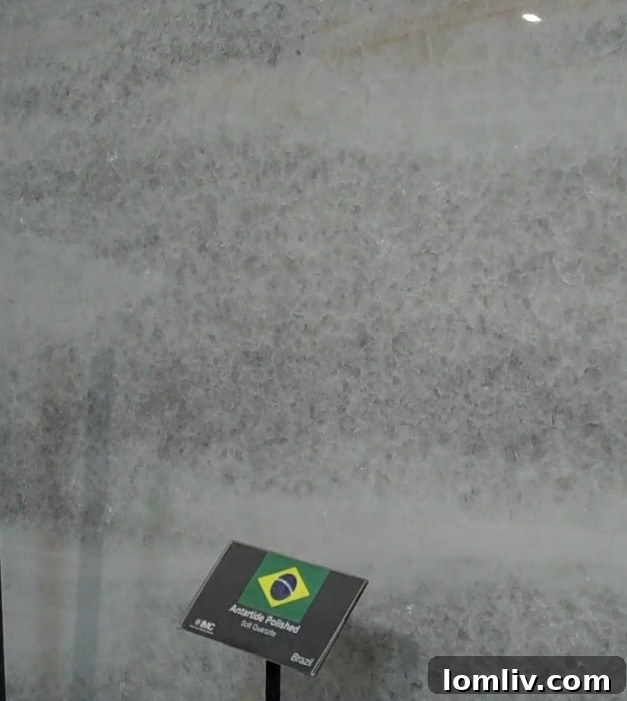
The Hidden Truth About Quartzite Countertops: What Stone Suppliers Won’t Tell You
This story has since been updated here, here and here. Please read.
By Jon Anderson
Special Contributor
Choosing the perfect countertop is a pivotal decision in any kitchen or bathroom remodel, profoundly impacting both the aesthetic appeal and long-term functionality of your space. The market presents an overwhelming array of options, catering to diverse tastes and budgets. From economical laminates like Formica and versatile ceramic tiles, to more luxurious choices such as sleek stainless steel, elegant slab glass, industrial concrete, timeless marble, resilient granite, consistent manufactured quartz, and the increasingly sought-after natural quartzite, each material offers unique properties. Understanding these distinctions is crucial for homeowners aiming to make an informed investment.
At the very least, homeowners anticipate that their countertops will be durable enough to withstand the daily rigors of spills, heat, and general wear and tear. There’s a widespread belief that the higher the price of a natural stone, the greater its durability and rarity should be. However, this assumption doesn’t always hold true, and some premium stones can surprise owners with unexpected vulnerabilities. Marble, for instance, particularly its lighter-colored varieties, is celebrated for its classic beauty but is notoriously delicate. It is highly susceptible to both staining and, more critically, to etching from acidic substances. While regular sealing can mitigate stains, it offers no protection against etching, which chemically dulls the stone’s surface. This inherent sensitivity often makes marble a better fit for bathroom vanities, where acidic spills are less frequent, rather than high-traffic kitchen environments.
Demystifying Quartz: Engineered vs. Natural Quartzite
The term “quartz” is frequently used in the countertop industry, often leading to confusion among consumers. It’s important to distinguish between two fundamentally different types of materials: manufactured quartz and natural quartzite. Manufactured quartz, exemplified by brands like Silestone and Caesarstone, is an engineered product. It’s created by combining approximately 90-95% crushed natural quartz aggregate with polymer resins, pigments, and other binders, then subjecting this mixture to intense heat and pressure to form dense, non-porous slabs. This process results in a highly durable material with consistent patterns and colors, requiring minimal maintenance. Its engineered nature allows for a wide range of aesthetic options and superior resistance to stains and scratches.
In contrast, natural quartzite is an all-natural stone, mined directly from the earth. It originates from sandstone that has undergone metamorphic transformation under extreme heat and pressure, recrystallizing the individual sand grains into a robust, interlocking quartz structure. This geological process yields a stone that is exceptionally hard and naturally beautiful, akin to the formation of granite and marble. The appearance of natural quartzite varies significantly, showcasing unique veining and patterns that range from solid, crisp colors to a distinctively crystalline look, often described as resembling crushed ice. Some patterns are remarkably uniform, while others boast brilliantly crazy, captivating designs that truly stand out. Yet, despite its stunning natural beauty and high price point, quartzite harbors a problematic secret that every potential buyer should be aware of: a high likelihood of mislabeling, which can lead to significant performance issues down the line.
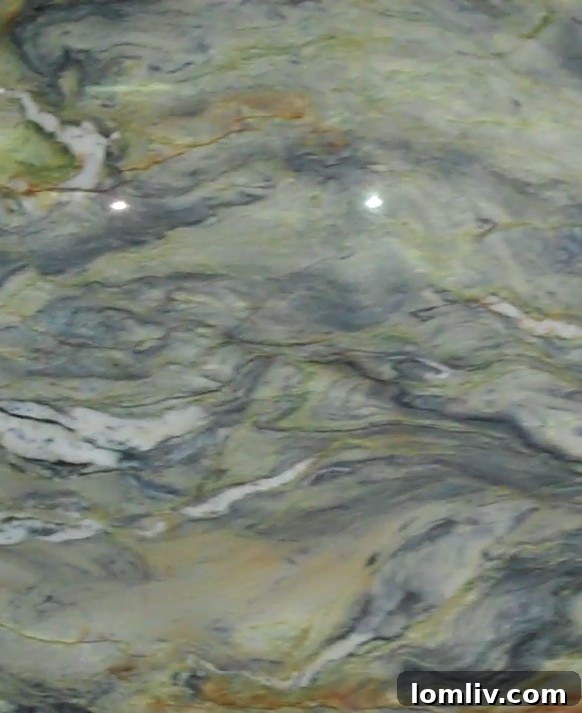
The Etching Enigma: The Dirty Secret of Some Quartzite (and Onyx and Marble)
The most unsettling “dirty secret” surrounding certain natural stones, particularly some varieties sold as quartzite, as well as onyx and marble, is their susceptibility to etching. Etching is a chemical reaction that occurs when acidic liquids come into contact with the stone’s surface, dissolving or dulling the polished finish and leaving behind a permanent, lighter, or ghostly mark. Unlike staining, which is a discoloration that can often be cleaned, etching is a physical alteration of the stone’s surface itself, changing its texture and sheen.
According to the Marble Institute of America (MIA), a leading authority in the stone industry, some quartzite etches because of the specific methods employed during slab preparation. To enhance the slab’s structural stability and achieve a glossy finish, resins are often infused into the stone. While these resins, which can be natural or synthetic compounds derived from tree or plant sap, significantly improve the stone’s integrity—allowing previously brittle or unsellable stones to become marketable—they also react adversely with acidic substances. If liquids like wine, tomato sauce, citrus juices, or even certain household cleaners containing hydrofluoric acid are not immediately wiped away, they can interact with these resins, resulting in noticeable etch marks. This resin impregnation is typically done at the quarry or a large-scale processing facility, meaning it’s an inherent characteristic of the slab long before it reaches your local distributor or fabricator.
Note: It’s crucial to understand that most stones marketed as “quartzite” that exhibit etching are often mislabeled. True, unadulterated quartzite is exceptionally hard and highly resistant to etching. The real challenge for consumers is discerning whether they are purchasing genuine quartzite or a misidentified, more fragile material like marble or calcite, which are known to etch readily.
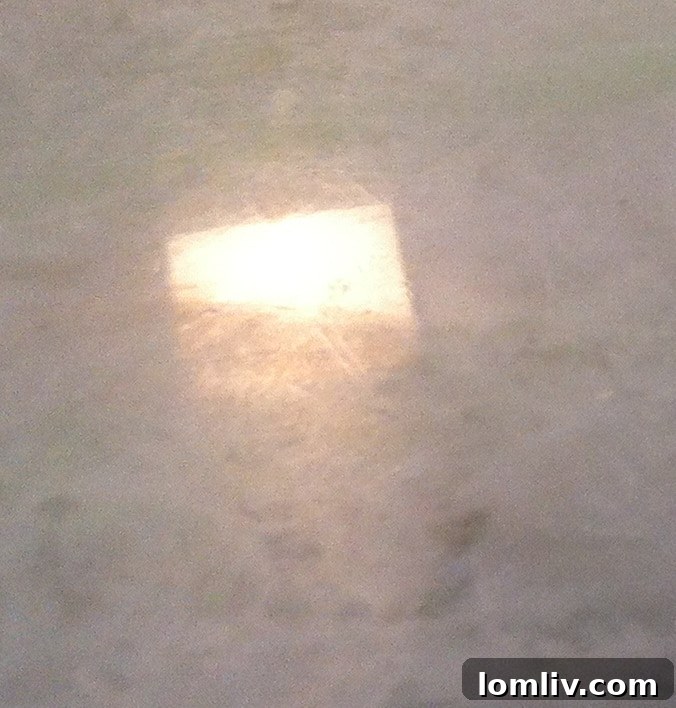
Etching is particularly conspicuous on light-colored or white stone surfaces, where the contrast between the polished and dull areas is stark. However, the dulling effect of etching will be visible on any colored quartzite, diminishing its inherent beauty and shine.
Extensive discussions across various online forums and among stone experts reveal a complex situation: etching from resins is not universal. Its occurrence and severity depend significantly on the specific quarry, the type of resin used, and even the resin’s ingredients. Some resins are reportedly more resistant to acidic reactions than others. While a few voices in the industry suggest that finding truly untreated (un-resined) quartzite is possible, the prevailing consensus among stone experts is that such slabs are incredibly rare, if not nearly impossible, to find in today’s market. The composition of these resins varies not only by country but also by individual quarry, making it exceedingly difficult to trace which specific ingredient might react with acids on a countertop, further complicating the issue for both consumers and fabricators.
Note: Even if some dispute the widespread use of resins, the practical outcome for the consumer is the same: if a stone sold as “quartzite” etches, it is almost certainly either not true quartzite or has been treated with a resin that is vulnerable to acid.
This begs the question: why doesn’t this problem commonly occur with granite? The answer lies in geology. Granites are igneous rocks, formed from the slow crystallization of molten magma deep within the Earth’s crust. This volcanic formation process results in an incredibly dense, stable, and inherently durable stone that typically does not require resin impregnation to maintain its slab form or enhance its stability. Quartzite, conversely, is a metamorphic rock formed when sandstone undergoes intense heat and pressure. While this transformation makes it extremely hard, its crystalline structure can sometimes make it more brittle in slab form, particularly during quarrying, transport, and fabrication. This inherent brittleness is precisely why resins are often used – to stabilize the slabs and prevent breakage.
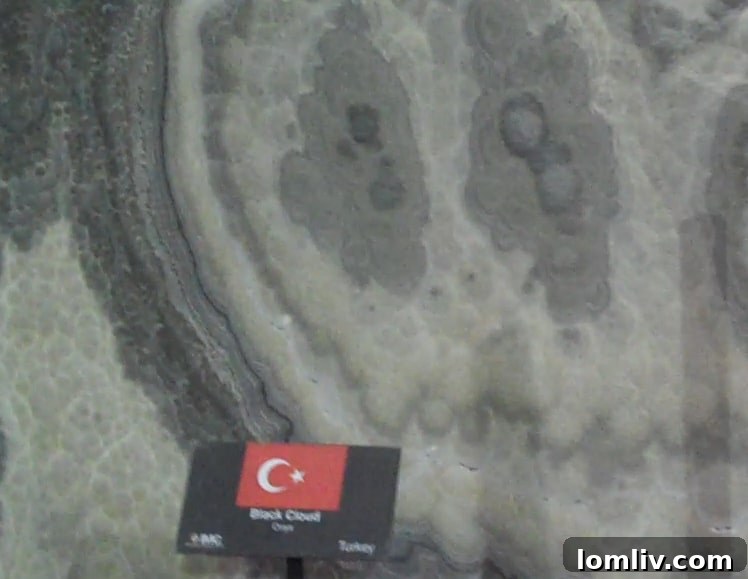
My personal encounter with this issue occurred only after I had already installed what I believed to be durable quartzite (which was, in fact, mislabeled Calcite) in my kitchen. It wasn’t long after I began regular cooking that I started noticing unsightly, un-cleanable etch marks. When I recently spoke with IMC, my stone supplier, they expressed surprise that no one had warned me about this possibility. Yet, despite my numerous trips to IMC and other stone yards across Dallas (including Allied Stone), not once was I cautioned about the etching properties of the specific stone I selected. Had I been properly informed, I would have unequivocally chosen a different material, certainly not one that commanded a higher price than granite, only to present such significant vulnerabilities.
This problem is not isolated. A neighbor of mine, who chose the exact same stone, is experiencing identical issues. Furthermore, I recently observed this very material being installed during a remodel on Hanover Street in University Park, prompting me to wonder how long it will take before the new homeowners discover the ticking time bomb of fragility lurking within their seemingly beautiful countertops.
Based on my extensive personal experience and research, the only consistently 100 percent safe, reliably durable, and unequivocally un-etchable natural stone for kitchen countertops is granite. Its robust composition and natural resistance to acids make it an incredibly dependable choice. Unfortunately, I now find myself grappling with etched countertops, leading me to explore potential options for minimizing the damage and managing the ongoing problem.
Exploring Solutions: Are There Real Fixes for Etched Countertops?
The unfortunate reality regarding etched natural stone countertops is that a truly permanent, completely reversible, and cost-effective fix remains largely elusive. Once etching occurs, particularly if it’s related to acid-sensitive resins or stone composition, it’s often considered permanent. The speed at which this damage can manifest is alarming; one fabricator shared an anecdote of a homeowner’s stone etching in the mere seconds it took to grab a towel to wipe up a spot of lemon juice. After eighteen months with my mislabeled countertops, I estimate that roughly 10% of the surface now exhibits noticeable etch marks. Despite the grim outlook, various suggestions circulate within the industry, ranging from professional re-polishing to the application of specialized clear-coat treatments.
Re-polishing: A Temporary and Costly Cosmetic Solution
One common suggestion is to have the stone professionally re-polished. This process typically involves carefully grinding down the etched surface to remove the dull layer, followed by polishing it back to a shine. While this can temporarily restore the stone’s original luster, it comes with a substantial cost. For my kitchen, the estimated expense for re-polishing was $1,200. Crucially, re-polishing does not address the underlying issue of the stone’s susceptibility to etching. This means any future contact with acidic substances will inevitably lead to new etch marks, requiring repeated re-polishing and incurring continuous costs, making it an endless cycle of expense. Furthermore, there’s no guarantee that the re-polished finish will perfectly match the original factory finish across the entire slab, potentially resulting in an inconsistent or uneven appearance.
Clearstone Treatment: A Protective Overlay with Significant Caveats
Another option that has gained some attention, particularly in Australia where it was developed, is a product called Clearstone. This treatment involves the professional application of a durable, 1-2 mm thick resin overcoat to the stone surface. It’s designed to provide a protective barrier against future etching, staining, and other forms of damage, typically backed by a 10-year warranty. However, real-world reviews and experiences with Clearstone are notably mixed. Common complaints often center on its aesthetic impact: some users report that it can give the natural stone a slightly “plastic” or artificial appearance, and in certain cases, it may cause a subtle darkening or greying of the stone’s natural color. A significant functional trade-off is also explicitly stated on the official Clearstone website: placing hot pots directly on the treated surface is no longer recommended. This effectively swaps one form of countertop fragility for another, requiring diligent use of trivets or pot holders.
My personal meeting with the Dallas Clearstone representative offered further insights. While the sample stone he presented looked acceptable, the critical restriction regarding hot pots was confirmed. He added that after a four-month curing period, while still “not recommended,” it might be “kinda-sorta-maybe-OK.” This evasive language strongly implies that any damage resulting from hot pots would likely not be covered under their warranty, shifting the risk entirely back to the homeowner. The financial implications of Clearstone are equally sobering. After having already invested $6,500 in the installed stone, the Clearstone treatment would command an additional $4,200. This staggering combined cost effectively nears the price of completely removing the problematic counters and installing carefree, un-etchable granite from the outset. Given the costs and compromises, it’s a difficult proposition to justify.
Honed or Leathered Finishes: Masking the Problem, Not Solving It
A third suggestion, arguably the most specious, proposes opting for a honed or leathered finish instead of a traditional high-gloss polish. The rationale behind this is that if the stone already possesses a matte or textured appearance, any subsequent etching will be less visually apparent. While it is true that a dull spot on an already non-reflective surface is less conspicuous than on a highly polished one, this approach fundamentally sidesteps the problem rather than resolving it. It compromises the inherent beauty and visual appeal that many homeowners seek in a polished natural stone, essentially accepting an imperfect aesthetic from the very beginning. Moreover, it does not prevent the underlying chemical alteration of the stone; it merely camouflages the damage, denying the stone’s true aesthetic potential and offering no real solution to its fragility.
Empowering Your Choice: Lessons Learned and What to Do Before You Buy
My experience has been a costly and frustrating ordeal, a lesson I sincerely hope other homeowners can avoid. Eighteen months ago, I invested significantly in what I believed to be beautiful, durable “cool” quartzite, only to discover it was mislabeled Calcite, prone to etching with every party and every pot of homemade spaghetti sauce. I’ve resorted to cumbersome protective measures, such as covering my counters with clear plastic tablecloth sheeting from Jo-Ann Fabrics during gatherings and using silicone Silpats for work areas when cooking with acidic ingredients like tomatoes or citrus. These stop-gap solutions, while effective in preventing further damage, are a far cry from the carefree luxury I envisioned when purchasing natural stone countertops.
This journey has left me feeling deceived and financially wronged, prompting me to question if a humble, resilient Formica countertop might have been a more pragmatic and less stressful choice. The pervasive lack of transparency in the stone industry, where consumers are unknowingly sold fragile materials under misleading labels, is a serious ethical concern. It feels nothing short of criminal that homeowners are being “bilked” into purchasing what they believe to be resilient quartzite, only to receive a product that is inherently more delicate and demanding. At an absolute minimum, if these (fake) quartzites continue to be sold, their price should realistically include the cost of a protective sealant or treatment like Clearstone as an integral part of the deal, ensuring consumers are fully aware of and protected against its inherent vulnerabilities from the outset.
Essential Steps Before Committing to Natural Stone:
- Perform an Acid Test: This is arguably the most crucial step. Demand a sample chunk of the exact slab you are considering. Take it home and conduct a literal “acid test.” Leave drops of common acidic liquids—lemon juice, vinegar, or red wine—on different areas of the sample overnight. Observe the results carefully: Does it dull? Does it etch? While incredibly helpful, be mindful of the test’s limitations; etching rates can vary across different sections of the same slab due to inconsistent resin distribution. Therefore, test multiple spots on your sample.
- Ask Probing Questions and Seek Documentation: Do not hesitate to thoroughly question your stone supplier and fabricator. Specifically ask if the stone is true quartzite or if it contains any calcite. Inquire about any resin treatments applied to the slab and their specific resistance to acids. Demand written confirmation of the stone’s precise geological composition and its etching resistance. A reputable dealer should be able to provide this.
- Understand Geological Differences: Educate yourself on the fundamental differences between stone types. Granite, an igneous rock, is known for its inherent stability and natural resistance to acids. True quartzite, a metamorphic rock, can be an excellent choice, but its crystalline structure can sometimes necessitate resin stabilization. Be extremely wary if a stone supplier cannot clearly articulate these geological distinctions or is vague about the use of resins and their impact on performance.
- Research Beyond the Showroom: Never rely solely on what you see or are told in a showroom. Conduct independent research, read reviews from other homeowners, consult with multiple fabricators for their professional opinions, and engage with online communities dedicated to home renovation and natural stone. This broader perspective can offer invaluable insights into real-world performance.
Having experienced firsthand the frustration and deception caused by misleading labels and unfulfilled promises from some stone suppliers, my unwavering advice to anyone considering natural stone countertops remains clear: When it comes to truly durable, low-maintenance, and genuinely resilient kitchen surfaces, “Go Granite or Go Home.” It is, in my experience, the most reliable choice for lasting beauty and unparalleled peace of mind.
Remember: Do you have an HOA story to tell? A little high-rise history? Realtors, want to feature a listing in need of renovation or one that’s complete with flying colors? How about hosting a Candy’s Dirt Staff Meeting? Shoot Jon an email. Marriage proposals accepted (now that they’re legal in Texas)! [email protected]