Dallas Developer Accused of Offering Cash for Zoning Votes: The Northaven Trail Village Controversy
A heated debate surrounding a proposed residential project in North Dallas has taken an unexpected turn, sparking widespread discussion about developer ethics and community engagement. At the heart of the controversy is a serious accusation: did a developer offer to pay residents for their official approval votes on the contentious Northaven Trail Village development?
The incident surfaced when Doug Bedell, a prominent resident leading the opposition against the project, shared an email from fellow resident Amy Wallace. Titled, “Northaven Trail Village buying votes,” Wallace’s email, dated June 12th, detailed a startling encounter. She recounted being approached by Mr. Gleeson, identified as David Gleeson, a representative working with David Weekley Homes on the proposed development. According to Wallace, Gleeson initially tried to collect her blue notification form for the city. After she declined, Gleeson reportedly called her the next day, offering $300 if he could pick up and deliver the form to City Hall himself. Wallace’s email emphatically concluded: “He’s trying to buy us off!” This allegation has ignited a firestorm, raising profound questions about the integrity of the community engagement process in urban development.
Understanding the Northaven Trail Village Project
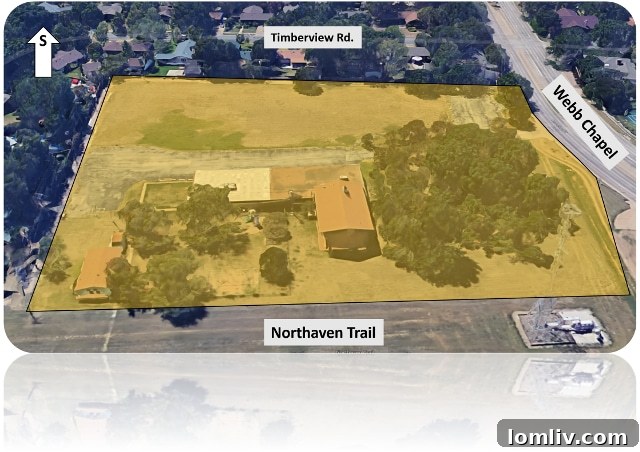
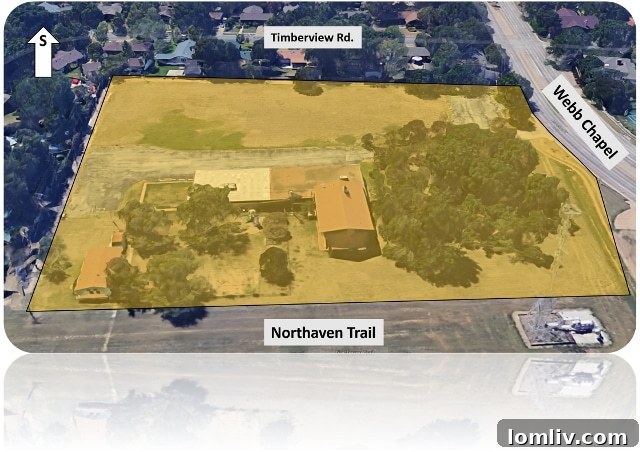
The proposed Northaven Trail Village project envisions the construction of 35 homes on a 4.4-acre parcel of land in North Dallas. The central point of contention stems from the property’s current zoning, which permits only 19 homes. This significant discrepancy between the proposed density and existing regulations immediately set the stage for community pushback. The development proposal has been a lightning rod in local politics, even featuring prominently in former Dallas Mayor Laura Miller’s anti-development campaign rhetoric, and influencing election outcomes in District 13. Residents, protective of their neighborhood’s character and the beloved Northaven Trail, view the increased density as a threat to their quality of life, traffic patterns, and overall neighborhood aesthetics. The backstory of this development is intricately tied to broader political crosscurrents and previous community debates over similar projects in the area, highlighting an ongoing tension between urban growth initiatives and established neighborhood concerns. (For more context, see previous reports here and here).
The Developer’s Defense: Frustration or Flawed Strategy?
In response to the serious accusation, David Gleeson acknowledged making the offer, but strongly refuted any intent to corrupt the voting process or influence the outcome of the ballot. He explained his actions as a desperate measure born out of “frustration and exasperation” at the notoriously low response rates for city notification forms. Gleeson clarified that his aim was simply to facilitate the collection and submission of forms, regardless of their content, to boost overall participation. He recounted extensive efforts to engage residents: hand-delivering letters and presentations to 49 homeowners who hadn’t responded, making numerous phone calls and follow-ups, knocking on doors, and sending emails. “MOST of the 119 residents in the Notification Area designated by the City obviously do not care about this case,” Gleeson lamented, underscoring the challenge developers face in garnering comprehensive feedback. He further assured that “no payments have, or will be made,” indicating that the offer was merely an attempt to encourage participation, not an actual transaction.
This explanation paints a picture of a developer struggling with civic apathy, trying to increase the total number of responses to get a more accurate representation of neighborhood sentiment. While Gleeson’s actions might appear questionable, his stated intent was to overcome a systemic hurdle: the widespread lack of engagement in local zoning issues. Is it possible that he was merely attempting to improve the response rate, hoping to uncover some silent support from “apathetic homeowners” who simply couldn’t be bothered to mail a form?
The Ethical Tightrope: Bribe, Incentive, or Tacky Tactic?
The incident forces us to confront a complex ethical dilemma: where does an incentive end and a bribe begin? Gleeson’s offer of $300 was ostensibly for the collection and delivery of a form, not explicitly for a “yes” vote. He did not ask Ms. Wallace to change her sentiment, merely to cast it. While any exchange of cash in a civic process inherently feels “sleazy,” the line between an illicit bribe and a legitimate incentive can be blurry, especially in development negotiations.
Consider other common developer tactics: offering to install taller fences, enhance landscaping, or contribute to local amenities to gain community support. How about developers who pay for buses and provide box lunches to transport supporters to City Hall for key votes? Are these acts fundamentally different from offering $300 for a ballot? A bush, a fence, or a catered meal might be seen as community benefits, tangible improvements that enhance property values or quality of life. Yet, they are undeniably designed to garner support and overcome opposition. Is the direct exchange of cash, even for a procedural task, qualitatively worse than these other forms of persuasion? Arguments can be made that physical improvements come with implicit “strings attached” – a long-term commitment or expectation – that a one-time cash payment for a ballot might not. Furthermore, in affluent neighborhoods, $300 might be a relatively minor inducement, perhaps equivalent to an August electricity bill, and hardly enough to sway a resident against a development with permanent implications for their property and community.
The critical distinction often lies in intent and influence. If the $300 was offered with the explicit condition of a positive vote, it would unequivocally constitute a bribe. However, Gleeson’s defense frames it as an attempt to overcome apathy and increase the raw number of submitted forms. This raises the question: can paying people to simply participate in a civic process be a legitimate strategy to combat low engagement, or does it inherently undermine the democratic integrity of that process?
Civic Apathy and Response Rates in Zoning Cases
The context of notoriously low response rates for city notification cards in development areas is crucial to understanding Gleeson’s actions. During the recent election, for instance, only 42 votes were cast in the precinct where the Northaven Trail Village project is situated. For the proposed development, the city sent ballots to 119 property owners within its 500-foot notification area. As of the time of the incident, only 32 had responded – a mere 27 percent. While this figure is actually considered “pretty high” in the often-disengaged world of local zoning, it still leaves a vast majority of notified residents unheard. Typically, those who do respond are disproportionately the opposition, given that those who “just don’t care” often don’t bother to respond at all. This imbalance can create a skewed perception of community sentiment, making it challenging for developers and city planners to gauge true public opinion.
This brings us to a broader societal question: in an era of declining civic engagement, is a financial incentive a legitimate, albeit unconventional, tool to encourage participation? If the city of Dallas offered $300 to every registered voter to cast a ballot in a mayoral race, would turnout exceed the often-laughable 10 percent? While few would argue that such a practice is anything but tacky, it highlights the desperate measures sometimes considered to chisel away at pervasive apathy and achieve a more accurate picture of public sentiment.
The Political Fallout and Procedural Transparency
Regardless of the legal interpretation or Gleeson’s intent, the incident has undoubtedly inflicted a “self-inflicted wound” on the Northaven Trail Village project. The perception of “vote buying” alone can significantly increase community opposition and make the project politically untenable. Doug Bedell, the opposition leader, swiftly brought the matter to the attention of city officials, including Sarah May and Margot Murphy, and urged the city to suspend the entire process, arguing that the balloting has been “corrupted.” These are indeed the proper steps for concerned citizens to take.
It’s important to note that Gleeson and David Weekley Homes are not city employees and are not subject to municipal ethics policies in the same way. However, the city will undoubtedly review the situation carefully. The critical question for city officials is whether such an offer, even if not fulfilled, crosses a line that compromises the integrity of the public input process for zoning amendments.
An interesting side note to this controversy involves a misunderstanding of the city’s transparency policies. Bedell expressed concern that Gleeson “evidently has access to the ballots as they arrived at the city,” believing results were only revealed at the zoning commission meeting. In actuality, the City of Dallas posts real-time, person-by-person responses to zoning cases on its website. This publicly accessible data revealed that of the 119 notified residents, 32 had responded, with 26 opposing the project and only 6 supporting it. This publicly available information explains Gleeson’s visible “frustration” and his energetic efforts to “shake the bushes” in an attempt to increase the response rate and potentially find some unexpressed support.
Conclusion: An Unresolved Ethical Quandary
The Northaven Trail Village controversy leaves us with an enduring ethical quandary. Is paying residents a modest sum to simply cast a vote, without dictating its content, a legitimate effort to combat apathy and ensure broader participation, or does it fundamentally corrupt the democratic process? While the offer was seemingly made to one person and not acted upon, its revelation has undoubtedly cast a long shadow over the project, potentially making its approval significantly more challenging.
Ultimately, the incident highlights the delicate balance between developer objectives, community concerns, and the often-frustrating realities of civic engagement. The irony remains that Amy Wallace, who so quickly alerted her neighborhood to the perceived attempt at “vote buying,” had not, as of the time of this report, managed to mail her own ballot. This observation underscores the persistent challenge of encouraging broad civic participation, even when controversial issues directly impact residents’ homes and neighborhoods.

About the Author: Insights into Dallas Real Estate & Urban Planning
With a keen focus on high-rises, HOAs, and renovation trends, I delve deep into the dynamic world of Dallas real estate. My passion lies in exploring the delicate balance between modern and historical architecture, always considering the impact of the evolving YIMBY (Yes In My Backyard) movement. My commitment to insightful journalism has been recognized by the National Association of Real Estate Editors, honoring my writing with three Bronze awards in 2016, 2017, and 2018, alongside two prestigious Silver awards in 2016 and 2017 for my contributions to real estate discourse.
Do you have a compelling story about Dallas development, an intriguing real estate trend, or perhaps even a marriage proposal you’d like to share? I’d love to hear from you! Reach out directly via email at [email protected]. While you’re welcome to search for me on Facebook and Twitter, please be advised that my online presence is intentionally understated.