

Texas’ Early Voting Plagued by Electronic Machine Malfunctions and Election Integrity Concerns
As Texans flocked to the polls in record numbers during early voting periods, a troubling wave of reports began to surface across the state and locally. Voters encountered malfunctions in electronic voting machines, sparking widespread concern over election integrity and the reliability of digital electoral processes. These issues ranged from alleged vote switching on “straight ticket” ballots to mysterious alterations of individual candidate selections, casting a shadow of doubt over the fairness and accuracy of the democratic process.
Accounts of Vote Switching: A Deep Dive into Voter Experiences
The most alarming reports centered on instances where voters claimed their selections were changed without their consent. This particular problem seemed to disproportionately affect straight-party voting options, though subsequent incidents would prove the issues extended beyond this specific method.
Harris County’s “Straight Ticket” Controversy
In various areas, notably Harris County, numerous voters reported a critical issue: after selecting a straight party ticket, their vote for one candidate was seemingly flipped to their opponent. A prominent example involved voters attempting to cast a ballot for Democratic U.S. Senate candidate Beto O’Rourke, only to find their selection inexplicably changed to the incumbent, Ted Cruz.
Writer Leah McElrath, who participated in early voting in Harris County, meticulously documented her experience in a series of tweets that quickly garnered attention:
I chose the “straight ticket” option for the Democratic Party on the first screen.
Once I toggled through the 16+ page ballot and reached the final screen to review my choices, I saw that my vote for @BetoORourke had been changed to a vote for Ted Cruz.
Photo below.
2/x#TXSen pic.twitter.com/x0cdHSpFts
— Leah McElrath (@leahmcelrath) October 26, 2018
McElrath’s account was far from isolated. Martha Merino shared a similar unsettling experience after voting at Friendswood City Hall. “I voted straight ticket and it did that to me. I then found checked, triple-checked before I cast my ballot,” she recounted, highlighting the necessity for diligent verification. Another voter reported that her husband encountered the same switch – from straight Democrat to straight Republican – while attempting to vote in Richardson. They promptly alerted an elections judge, underscoring the immediate need for intervention at polling places.
The Official Response: User Error or Systemic Flaw?
In the wake of these numerous complaints, the Texas Secretary of State’s office weighed in, offering an explanation that sparked further debate and frustration among voters and local officials.
Secretary of State’s Stance: Blaming the Voter
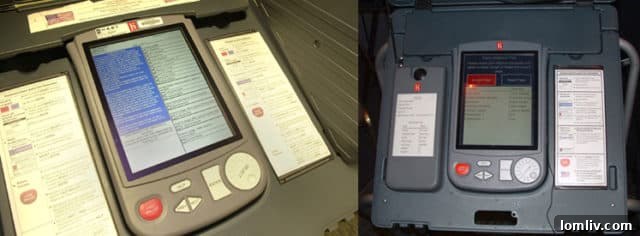
The Secretary of State’s office issued a statement attributing the issues primarily to user error, particularly concerning one specific type of machine: the Hart eSlate. Keith Ingram, Director of Elections, explained, “We have heard from a number of people voting on Hart eSlate machines that when they voted straight ticket, it appeared to them that the machine had changed one or more of their selections to a candidate from a different party.”
Ingram detailed that this phenomenon could occur if a voter takes keyboard actions before a page has fully loaded on the eSlate, inadvertently de-selecting the pre-filled party candidate. He further clarified that the Hart eSlate system, which utilizes a keyboard with an enter button and a selection wheel, could register an error if both are pressed simultaneously or if actions are taken before the page is completely rendered. “It is important when voting on a Hart eSlate machine for the voter to use one button or the other and not both simultaneously, and for the voter to not hit the ‘Enter’ button or use the selection wheel button until a page is fully rendered,” Ingram advised. He stressed the importance of observing the machine’s response to each action and verifying selections before casting a ballot.
Industry and Local Officials Push Back
Despite the official explanation, many local election administrators and political leaders expressed skepticism and frustration, arguing that the problem ran deeper than mere user error. John Oldham, Fort Bend County election administrator, revealed to Houston station ABC-13 that this issue was not new. Oldham stated, “We’ve heard from voters over a number of elections about this,” adding that he had observed the problem for years and had even reported it to the Secretary of State’s office long ago. He concluded, “It’s not a glitch, it’s a user-induced problem that comes from the type of system that we have.”
Texas Democratic Party Chair Gilberto Hinojosa was particularly critical of the Secretary of State’s response. “The first step in solving a problem is recognizing that you have one. And the Texas Secretary of State’s office has one,” he asserted. Hinojosa accused the Republican government of Texas of deflecting blame onto voters and failing to address known flaws in their voting machines for years. Hart InterCivic, the Austin-based manufacturer of the eSlate, echoed the Secretary of State’s position, maintaining that the issues stemmed from user error. The Associated Press reported that the state last certified the eSlate systems in 2009, highlighting the age of the technology in question.
The Hart eSlate System Under Scrutiny
An Aging Technology
The Hart eSlate system, a direct-recording electronic (DRE) voting machine, is extensively used throughout Texas, serving approximately 80 counties, including Tarrant County, which also employs the Hart JBC system. Its prevalence means that any widespread issues with the eSlate have significant implications for state elections. The fact that these systems were last certified over a decade ago raises concerns about their long-term reliability and compatibility with modern electoral demands.
A Patchwork of Systems Across Texas
It’s important to note that not all Texas counties use the same voting technology. For instance, Dallas County relies on the ES&S IVotronic system, while Collin County utilizes the Premier Accu-Vote system. Denton County employs a newer Hart system, the Verity system. This diversity in systems means that malfunctions can vary in nature and cause, complicating statewide analysis and solutions. The Secretary of State’s office maintains that it lacks the legal authority to compel vendors like Hart to upgrade their systems, as long as existing equipment adheres to state and federal statutes.
Looking ahead, a significant change is on the horizon: straight-ticket voting will cease to be an option starting in 2020, thanks to a bill signed into law by Governor Greg Abbott in 2017. While this change might alleviate some of the reported straight-ticket related issues, it does not address the underlying concerns about machine reliability and voter confidence.
Beyond Straight Tickets: New Forms of Malfunction
Even as the straight-ticket voting controversies dominated headlines, voters in counties using different systems began reporting entirely distinct malfunctions. These new incidents, independent of straight-ticket selections, highlighted that the problem of unreliable electronic voting was not confined to a single machine type or voting method.
Independent Voter Challenges
Carrie Duck’s experience in Wylie, where she opted to vote per candidate rather than straight ticket, serves as a stark example. Upon selecting Beto O’Rourke for U.S. Senate, an ‘x’ mysteriously appeared in the Ted Cruz box. “This occurred a few more times on this page — where I selected the Democratic candidate and it selected the Republican candidate — but I was able to correct my choices,” Duck explained. The issues escalated when she attempted to navigate back to a previous page for verification. “When I hit ‘BACK’ the machine locked up. The selection closest to the ‘BACK’ button also defaulted to a Republican candidate as well,” she recalled. Forced to involve an election judge, her initial vote was canceled, and she was issued a new card and machine, ultimately resorting to straight-party voting on the new machine for peace of mind.
Touchscreen Sensitivity and Persistence
In University Park, a voter described a different, yet equally frustrating, scenario on a machine distinct from the eSlate. She observed that when selecting choices on the left side of the screen, moving to the right side would inexplicably alter her prior selections. Despite adapting her interaction with the touchscreen to seemingly correct the issue, her final ballot review revealed that at least seven of her choices had been switched to opposing candidates. This required her to go through the correction and review process four times before her ballot was finally accurate. This voter not only informed poll workers but also escalated the issue to Dallas County elections and a non-profit dedicated to election integrity, emphasizing the serious nature of these persistent errors.
Widespread Concerns
At least one other individual corroborated a similar experience at a different Dallas County polling location, indicating a broader, systemic issue. Another long-time Dallas County voter simply stated, “It happened to me last year,” suggesting these malfunctions are not isolated to the current election cycle but are recurring problems that erode voter trust over time.
The “Scandal” Comparison and Expert Perspectives on Election Security
The accumulation of these diverse and unsettling reports—from straight-party vote switching in Harris, Fort Bend, and Tarrant counties to individual selection changes in Dallas and Collin—led some to draw parallels to a fictional political drama. Voters wondered if Texas was embroiled in an “Olivia Pope-style situation,” referencing the ABC series “Scandal,” where a presidential election was controversially rigged through manipulated voting machines in a single town to sway the outcome.
Echoes of Fiction: Rigging Allegations
While the comparison to “Scandal” may seem dramatic, it reflects the deep public anxiety when the integrity of the voting process is questioned. In an age of heightened awareness regarding election interference, any perceived malfunction can quickly ignite fears of deliberate manipulation, even if the reality is far less theatrical.
The Age Factor: Deteriorating Technology
Experts, however, suggest that while vigilance against malicious intent is crucial, the more prosaic issue of aging technology often plays a larger role than nefarious, statewide rigging attempts. Larry Norden of the Brennan Center for Justice in New York, a leading voice on election security, told NPR’s Pam Fessler in 2016, “If you were actually trying to rig an election, it would be a very stupid thing to do, to let the voter know that you were doing it.”
Norden explained that the likely culprit for many touchscreen issues is the sheer age of the voting machines. Many are over a decade old and still rely on outdated technology from the 1990s to calibrate their touchscreens. Over time, the sealant bonding the screen to the machine deteriorates, causing misalignment. “Over time, as people vote, that calibration becomes less and less accurate,” Norden stated. He noted that this degradation can be surprisingly rapid, with a busy day of voting capable of impacting the accuracy of a machine that was perfectly fine that morning. This explanation points to a problem of infrastructure neglect rather than intentional malice.
Cybersecurity Threats: A Modern Vulnerability
Despite the “age factor,” concerns about genuine cybersecurity threats remain valid. Dan Wallach, a computer science professor at Rice University and an expert in election security issues, warns that Texas elections are indeed vulnerable to hackers. Wallach, a JJ Pearce graduate, highlighted a critical oversight in their design. He told Texas Monthly, “From a security perspective, the systems that we use, these electronic voting systems, were never engineered with the threat model of foreign nation-state actors.” He emphasized that while he couldn’t confirm any plans to exploit these vulnerabilities, “there’s no question that the vulnerabilities are present.”
This concern is echoed at the national level. The U.S. House Committee on House Administration included Texas in its list of the “Top 18 Most Vulnerable States” for election security. Wallach attributed Texas’s inclusion to the widespread use of paperless electronic machines. “The reason why I suspect they listed Texas … is that a substantial number of Texans, including me here in Houston, vote on paperless electronic machines that are difficult to audit, difficult to secure, and [that] many other states have banned,” he explained. Indeed, Collin, Dallas, Denton, and Tarrant counties all rely on these direct-recording electronic (DRE) voting machines, which crucially do not generate a verifiable paper trail—a critical backup that could provide concrete evidence of a voter’s true selections.
Safeguarding Your Vote: Recommendations and Future Outlook
The Importance of Verification
In light of these various issues, election officials and experts consistently reiterate a crucial piece of advice: voters must diligently review their selections before finalizing their ballots. Keith Ingram and other officials are quick to stress, “As a reminder, voters should always carefully check their review screen before casting their ballots.” They urge voters to immediately notify a poll worker if any problems arise, ensuring that issues can be addressed on the spot and properly reported for investigation.
The Call for Paper Ballots
For some voters, the anxieties surrounding electronic voting machines have led to a clear preference for a more traditional method. Megan Stewart succinctly stated, “I always do paper,” reflecting a sentiment shared by those who believe a physical record offers an undeniable layer of security and auditability that DRE machines lack.
Looking Ahead: The Evolution of Voting
The challenges experienced during early voting in Texas underscore a critical need for robust, transparent, and trustworthy electoral systems. As technology evolves, so too must the infrastructure supporting our democratic processes. Whether through mandated upgrades, the widespread adoption of paper ballot systems, or enhanced security protocols, addressing these malfunctions and vulnerabilities is paramount to maintaining public confidence and ensuring the integrity of every vote cast. The conversation around election security is no longer confined to theoretical discussions but is a tangible reality impacting citizens at the ballot box.
Have you experienced issues while early voting? Let us know!
Bethany Erickson is the education and public policy writer for Daltxrealestate.com. She is also the Director of Audience Engagement for Candy’s Media Group. She is a member of the Online News Association, the Education Writers Association, the International Academy of Digital Arts and Sciences, and the Society of Professional Journalists, and is the 2018 NAREE Gold winner for best series. Contact her at [email protected].