Unlocking Renter Desires: What Dallas-Fort Worth Renters Truly Seek in Today’s Market
The landscape of urban living is constantly evolving, and nowhere is this more evident than in the dynamic rental market. What renters prioritize has shifted significantly, moving beyond just affordability and square footage to encompass a holistic living experience. In recent years, particularly leading up to and since 2016, a wealth of studies and analyses have illuminated these changing renter preferences, signaling a crucial era for understanding tenant needs.
The Dallas-Fort Worth metroplex stands as a fascinating case study in this evolving market. While Dallas has historically offered rental rates that consume a smaller portion of residents’ paychecks compared to many other major U.S. cities, the region has also seen a robust expansion in its renter population. This growth underscores how renters are claiming an ever-larger share of the housing market, fueled by strong demand. Despite these positive trends, the market isn’t without its challenges; there’s a persistent discussion around affordability issues for Dallas properties, even amid its competitive pricing structure.
Beyond the raw numbers and market dynamics, understanding the qualitative aspects of renter demand is paramount. It’s not just about where people live, but how they want to live. This article delves deep into what renters truly want, drawing insights from industry reports and examining specific amenity trends, with a particular focus on the vibrant Dallas-Fort Worth rental scene.
The Evolution of Renter Expectations: More Than Just Four Walls
In the past decade, the rental market has transformed from a purely transactional space into one heavily influenced by lifestyle and community. Economic shifts, demographic changes, and technological advancements have all played a role in shaping what renters consider essential. Millennials and Gen Z, in particular, have contributed to a culture that values flexibility, experiences, and convenience, significantly impacting apartment design and service offerings.
While the allure of owning a home remains strong for many, factors such as rising home prices, student loan debt, and a desire for mobility have extended the average tenancy duration and made renting a more attractive long-term option for a diverse demographic. This sustained demand has empowered renters, making their preferences a driving force for property developers and managers.
Key Insights from Leading Studies: Pinpointing Renter Priorities
To truly grasp what current and prospective tenants are seeking, we turn to comprehensive industry research. A pivotal study conducted by the National Multifamily Housing Council (NMHC) and Kingsley Associates shed significant light on renter priorities. This research moved beyond superficial observations, aiming to uncover the fundamental desires that influence rental decisions. And as it turns out, the core desires can be distilled into three key areas: peace and quiet, proximity to vibrant nightlife or entertainment, and a reasonable commute.
Let’s unpack these critical preferences and explore their implications for the Dallas-Fort Worth rental market and beyond:
1. The Sanctuary of Peace and Quiet
In an increasingly connected and often noisy world, the desire for a serene living environment has become a top priority for many renters. Whether it’s to concentrate on work from home, unwind after a busy day, or simply enjoy personal space without disruption, tenants are actively seeking apartments that offer a refuge from urban clamor. This preference translates into demand for well-insulated units, quiet common areas, and thoughtful community management that enforces noise policies.
For property developers, this means investing in soundproofing technologies, strategic building layouts, and the creation of tranquil zones within apartment communities. Renters are willing to pay a premium for properties that genuinely deliver on the promise of a peaceful home, recognizing its direct impact on their quality of life.
2. Proximity to Nightlife and Urban Vibrancy
On the flip side of tranquility, renters also crave connection and excitement. The ability to easily access nightlife, dining, cultural attractions, and entertainment venues is a major draw. This doesn’t necessarily mean living directly above a bustling bar, but rather being within a short walk, bike ride, or public transit trip to lively districts. This preference speaks to a desire for convenience, social engagement, and the rich experiences that urban living offers.
The Dallas-Fort Worth metroplex, with its burgeoning arts districts, diverse culinary scene, and vibrant entertainment hubs, is particularly attractive to renters seeking this lifestyle. Neighborhoods offering a blend of residential comfort and immediate access to urban amenities are consistently in high demand, reflecting a dynamic balance between relaxation and engagement.
3. The “Just Right” Commute: Balancing Convenience and Lifestyle
Commuting time remains a perennial factor in housing decisions, but renters aren’t necessarily seeking the shortest possible commute at any cost. Instead, they are looking for a “just right” commute – one that balances travel time with access to work, family, and leisure activities, without dominating their daily lives. This often involves proximity to major highways, public transportation options, or employer hubs, minimizing stress and maximizing personal time.
The DFW area, known for its extensive highway network and expanding public transit, offers various opportunities for renters to find this ideal balance. The specific preferences here can vary greatly, from those prioritizing walkability to work in downtown Dallas to those who prefer a suburban apartment with quick highway access to their office in Plano or Fort Worth.
Beyond the Big Three: A Deep Dive into Desired Amenities
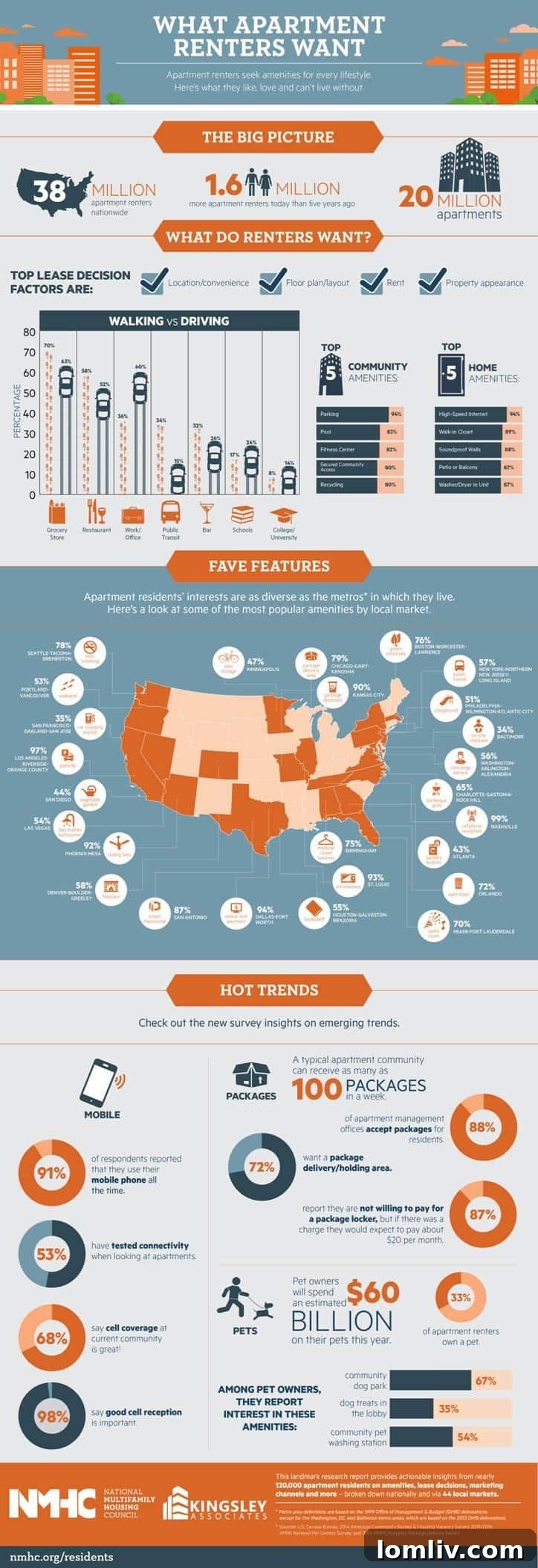
While peace, nightlife, and commute form the foundational trio of renter desires, the amenity package plays a crucial role in distinguishing properties and meeting specific lifestyle needs. The infographic alluded to in the original content (and often produced by NMHC/Kingsley) provides a comprehensive look at the specific features and services renters are searching for. Let’s explore these in more detail, categorizing them for clarity.
In-Unit Features: The Heart of the Home
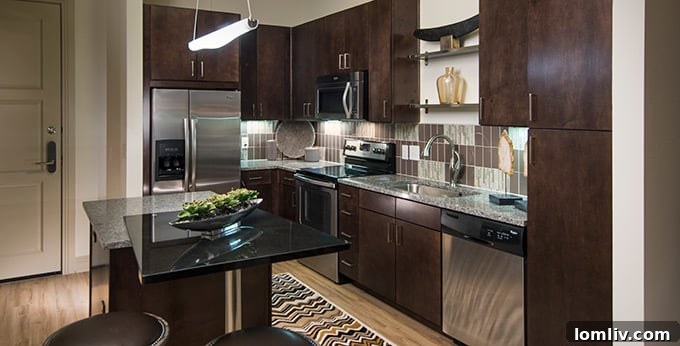
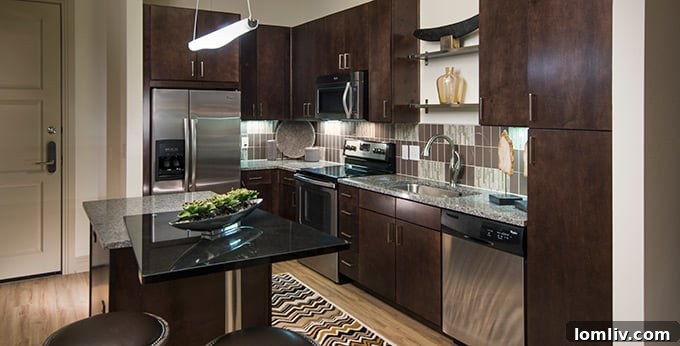
Renters increasingly expect their individual living spaces to be modern, functional, and aesthetically pleasing. The initial caption perfectly summarizes this: “clean, updated units with great appliances.” This goes beyond basic functionality to include:
- Modern Kitchens: Stainless steel appliances, granite or quartz countertops, ample cabinet space, and often a kitchen island. Renters view the kitchen as a central hub for cooking and entertaining.
- In-Unit Laundry: A washer and dryer within the apartment is consistently one of the most requested amenities, saving time and inconvenience.
- Spacious Layouts & Storage: Flexible floor plans that accommodate various furniture arrangements, along with sufficient closet space and additional storage options.
- Updated Bathrooms: Contemporary fixtures, good lighting, and efficient design contribute significantly to renter satisfaction.
- Smart Home Technology: Features like smart thermostats, keyless entry, smart lighting, and high-speed internet readiness are becoming standard expectations.
- Balconies or Patios: Private outdoor space, however small, is highly valued for relaxation and fresh air.
Community Amenities: Enhancing the Living Experience
Beyond the four walls of their apartment, renters look for a community that supports their lifestyle, fosters connection, and offers convenience. These shared spaces and services are crucial differentiators:
- Fitness Centers: Well-equipped gyms, often with dedicated areas for yoga or spin, allow residents to maintain their health without leaving the property.
- Swimming Pools & Outdoor Areas: Resort-style pools, comfortable lounging areas, grilling stations, and green spaces provide recreational and social opportunities.
- Co-working Spaces/Business Centers: With the rise of remote work, dedicated areas with reliable Wi-Fi, meeting rooms, and quiet workstations are highly sought after.
- Pet Amenities: Dog parks, pet washing stations, and pet-friendly policies are essential for the growing number of pet owners.
- Package Lockers/Concierge Service: Secure and convenient package retrieval systems address a common urban living pain point.
- Community Lounges & Event Spaces: Areas for residents to socialize, host gatherings, or simply relax outside their units.
- Security: Gated access, controlled entry systems, and on-site security personnel offer peace of mind.
Location-Based Amenities & Services: The Neighborhood Effect
While proximity to nightlife and commute are significant, the broader neighborhood also plays a role in renter satisfaction:
- Walkability: Easy access to grocery stores, cafes, pharmacies, and other daily necessities.
- Access to Public Transit: For those who prefer not to drive or wish to reduce their reliance on a car.
- Green Spaces: Nearby parks, trails, and recreational areas for outdoor activities.
- Dining & Retail Options: A variety of restaurants, shops, and services within easy reach.
The Dallas-Fort Worth Conundrum: Balancing Luxury and Affordability
The DFW market perfectly illustrates the tension between increasing renter expectations and the challenge of affordability. While we’ve previously explored the 10 most expensive rentals in Dallas-Fort Worth, showcasing the top tier of luxury, the majority of renters operate within different budget constraints. Developers and property managers in DFW are constantly strategizing to offer desirable amenities and updated units without pricing out a significant portion of the market.
The key lies in understanding which amenities provide the most value to specific target demographics. For example, a young professional might prioritize a modern gym and co-working space, while a family might value a quiet neighborhood with a good school district and a pet-friendly park. Dallas’s diverse neighborhoods, from the bustling urban core to its expansive, well-planned suburbs, cater to these varied demands, offering a spectrum of living experiences.
Conclusion: Adapting to the Modern Renter
The rental market is no longer a static entity; it’s a dynamic ecosystem driven by evolving renter preferences. As we move further into the decade, understanding and responding to what renters truly want – from the fundamental desires for peace, vibrancy, and a manageable commute to the specific amenities that enhance daily life – will be crucial for success in the competitive housing landscape.
Property owners and developers who prioritize clean, updated units with great appliances, invest in thoughtful community amenities, and strategically locate their properties to meet core lifestyle needs will be best positioned to attract and retain tenants. The Dallas-Fort Worth market, with its robust growth and diverse population, serves as a prime example of how adapting to these renter demands is not just good practice, but essential for long-term prosperity.