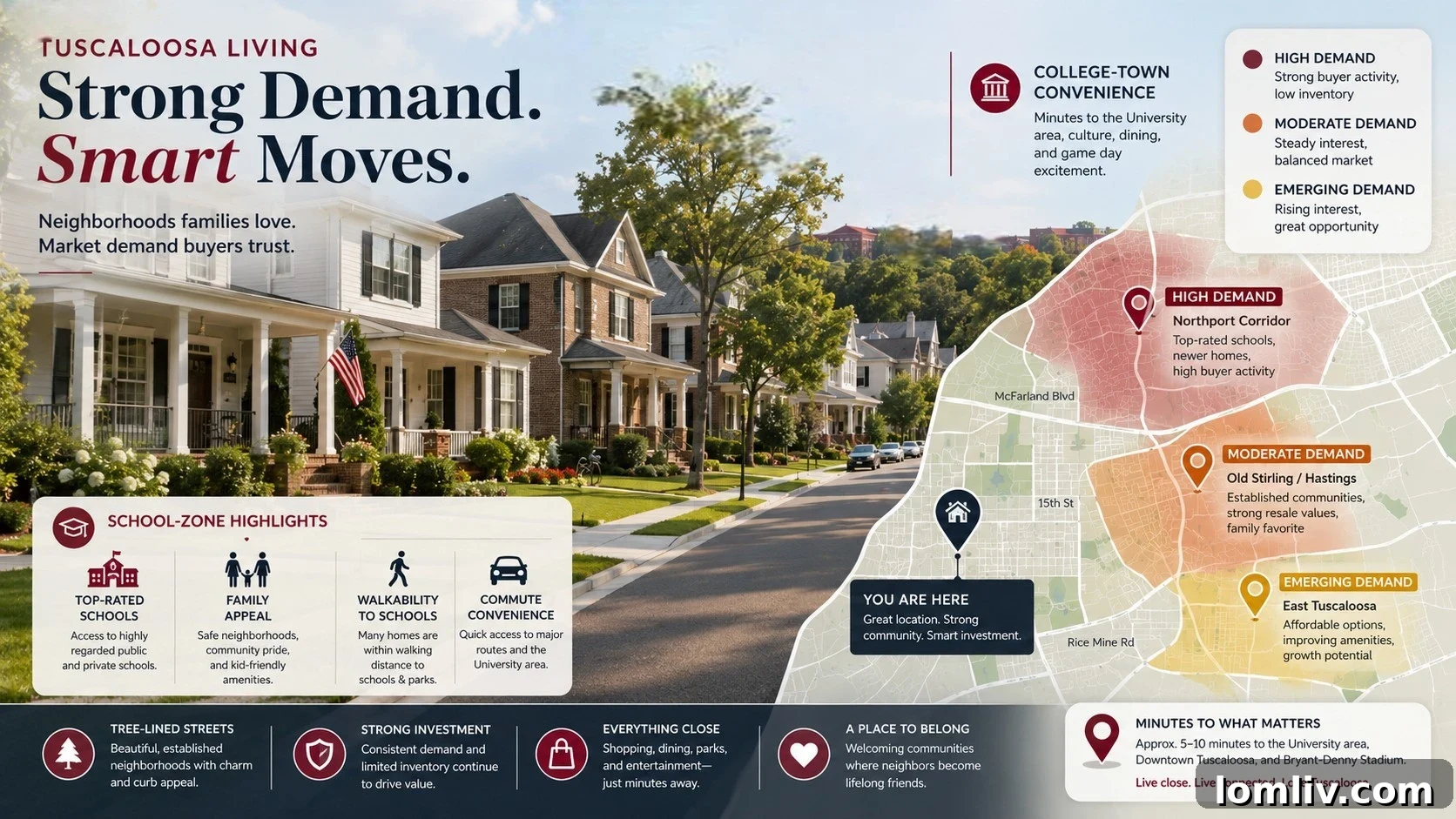
The Insider’s Guide: How Cash Home Buyers Evaluate Property in Tuscaloosa, Alabama
In the fast-paced real estate world of major metropolitan areas like Dallas or Atlanta, cash home buyers operate within a predictable ecosystem. A steady stream of comparable sales provides clear data, a vast network of contractors competes for jobs, and robust buyer demand ensures that nearly any renovated property finds a new owner quickly. However, the moment you step into local Alabama markets like Tuscaloosa, the entire equation changes. These markets are vibrant and active, but they play by a different set of rules that can easily trip up inexperienced investors.
Buying a distressed property in Tuscaloosa, Northport, or surrounding communities requires a more nuanced and cautious evaluation process. The cash buyers who achieve consistent success here are not just investors; they are local market experts who have honed their approach to account for unique local variables. They understand that a spreadsheet model built for a major city will fail spectacularly when applied to a single-family home in West Alabama. Let’s pull back the curtain and explore the meticulous process an experienced local cash buyer follows when they assess a property.
Calculating the After-Repair Value (ARV) in a Data-Thin Market
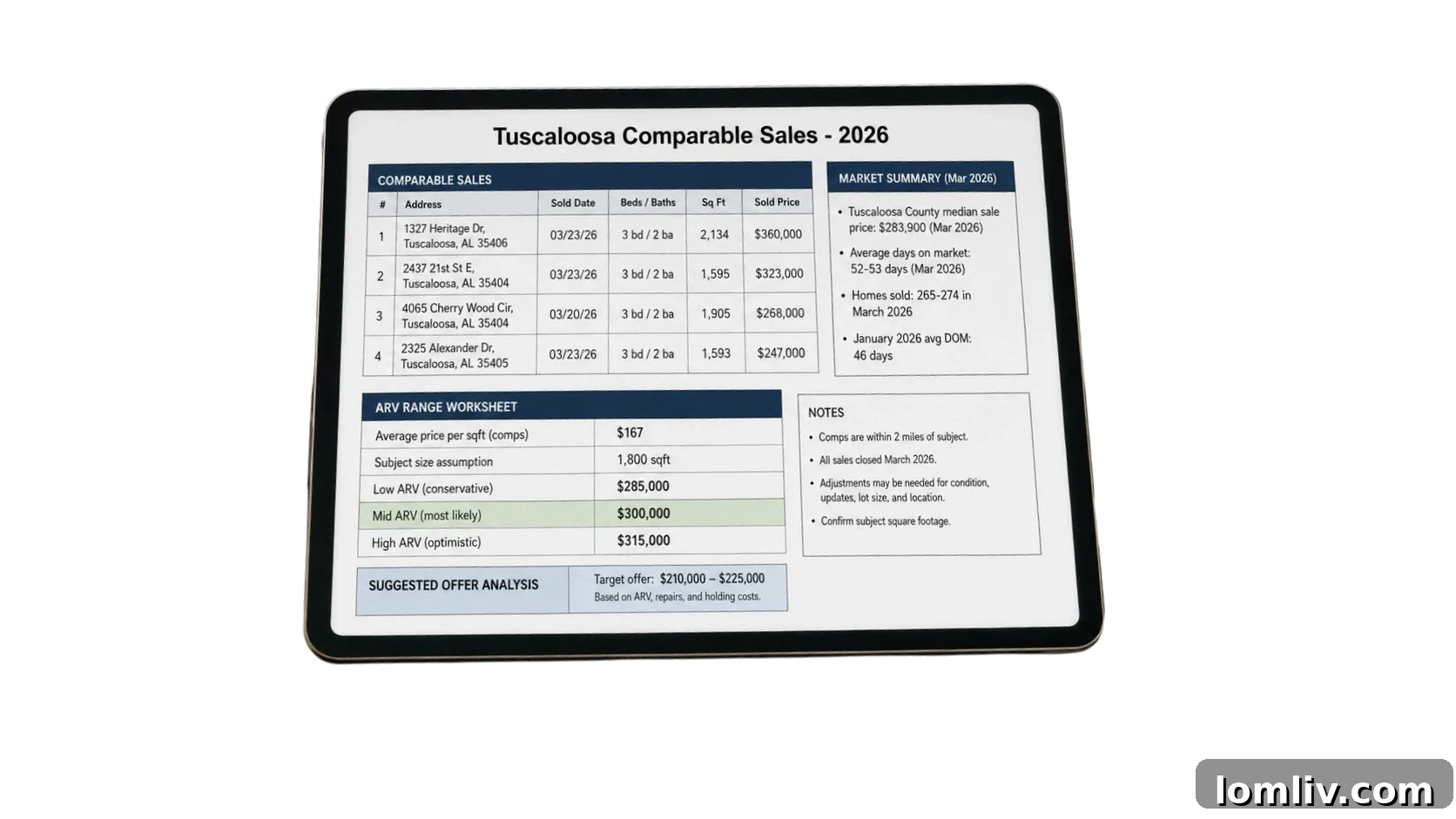
The first and most critical step in any real estate investment is determining the After-Repair Value (ARV)—the projected market value of a property after all renovations are complete. In a large city, an investor can often find half a dozen recently sold homes within a half-mile radius that are nearly identical in size, age, and style. This wealth of data makes calculating ARV a straightforward process.
In a smaller market like Tuscaloosa, this data is far scarcer. You might only find two or three comparable sales, or “comps,” in the last six months. Worse, one of those comps might be an outlier—a property sold between family members for well below market rate, or a home with a unique feature that skews its value. This is where inexperienced, often out-of-state, investors make their first critical mistake. They treat a thin set of comps with the same confidence as a robust dataset from a major metro, leading to an inflated and overly optimistic ARV that sets the entire project up for failure.
A More Realistic Approach to ARV
Seasoned local cash buyers have developed a more sophisticated method. They understand they must expand their search parameters, but they do so with extreme care. Here’s how they adjust:
- Weighing Comps Carefully: Instead of treating all comps equally, they prioritize recency over proximity. A sale from two months ago a mile away is often more relevant than a sale from ten months ago two streets over. They also heavily discount any sale that appears to be a statistical outlier without a clear explanation.
- Analyzing Days on Market (DOM): They pay close attention to how long renovated properties sit on the market. A beautifully flipped house in Northport that took 120 days to sell tells a story of a soft market or an overpriced listing. Conversely, a similar house selling in under 20 days indicates strong demand. This DOM data provides crucial context that raw sales prices alone cannot.
- Using a Value Range: Perhaps the most important adjustment is the shift from a single point estimate to a conservative value range. An amateur might insist a house will be worth exactly $225,000. An expert will establish a more realistic range, perhaps $210,000 to $230,000, and base their entire financial model on the lowest end of that spectrum. This built-in cushion is a vital risk management tool that protects them if the market shifts or the renovation reveals unexpected problems.
Estimating Renovation Costs with Alabama’s Local Labor Market
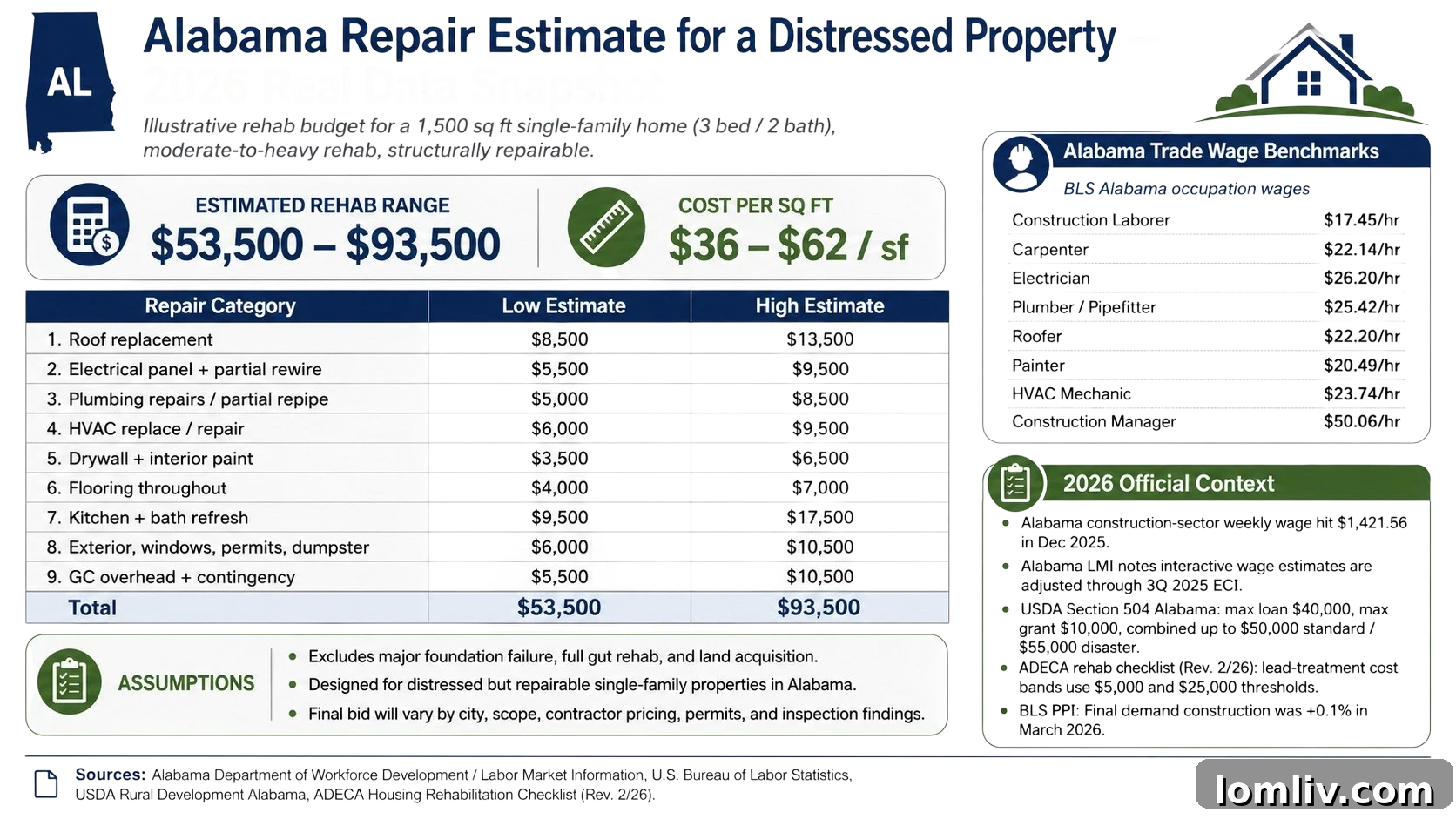
The second pillar of a property evaluation is the repair estimate. In a city like Houston, an investor can get ten quotes for a new roof within 48 hours. In Tuscaloosa, there might be four highly reputable general contractors, and three of them are booked solid for the next six months. This limited labor pool has a significant impact on both the cost and timeline of a renovation.
This reality influences two critical factors:
- Renovation Costs: It’s a common misconception that labor is always cheaper outside of major cities. While material costs are relatively standard nationwide, a tight labor market in Alabama can drive prices up due to a simple lack of competition. When contractors have more work than they can handle, they don’t need to offer competitive bids.
- Project Timelines: In a major metro, a standard renovation might take six to eight weeks. In a local Alabama market, that same project could easily stretch to 12 or 16 weeks. Subcontractors may only work in the area on certain days, and a delay with one trade (like plumbing) can create a domino effect that halts all other progress for weeks.
Smart cash buyers bake this reality into their underwriting. They don’t use national cost averages; they use current, local quotes. They add a substantial contingency fund—typically 15% to 20% of the total repair budget—to cover the inevitable surprises found behind walls or under floors. Furthermore, they budget for extra months of holding costs (insurance, taxes, utilities, and loan payments) to account for likely delays. A deal that looks profitable with a $30,000 budget and a three-month timeline can quickly become a loss when it turns into a $45,000 project that takes six months to complete.
Understanding Local Demand: The Key to a Successful Exit
In a deep, liquid market, an investor almost always has a viable exit strategy. If the flip doesn’t sell, they can rent it. If they can’t rent it, they can wholesale the contract to another investor. The large pool of buyers and renters provides multiple escape routes.
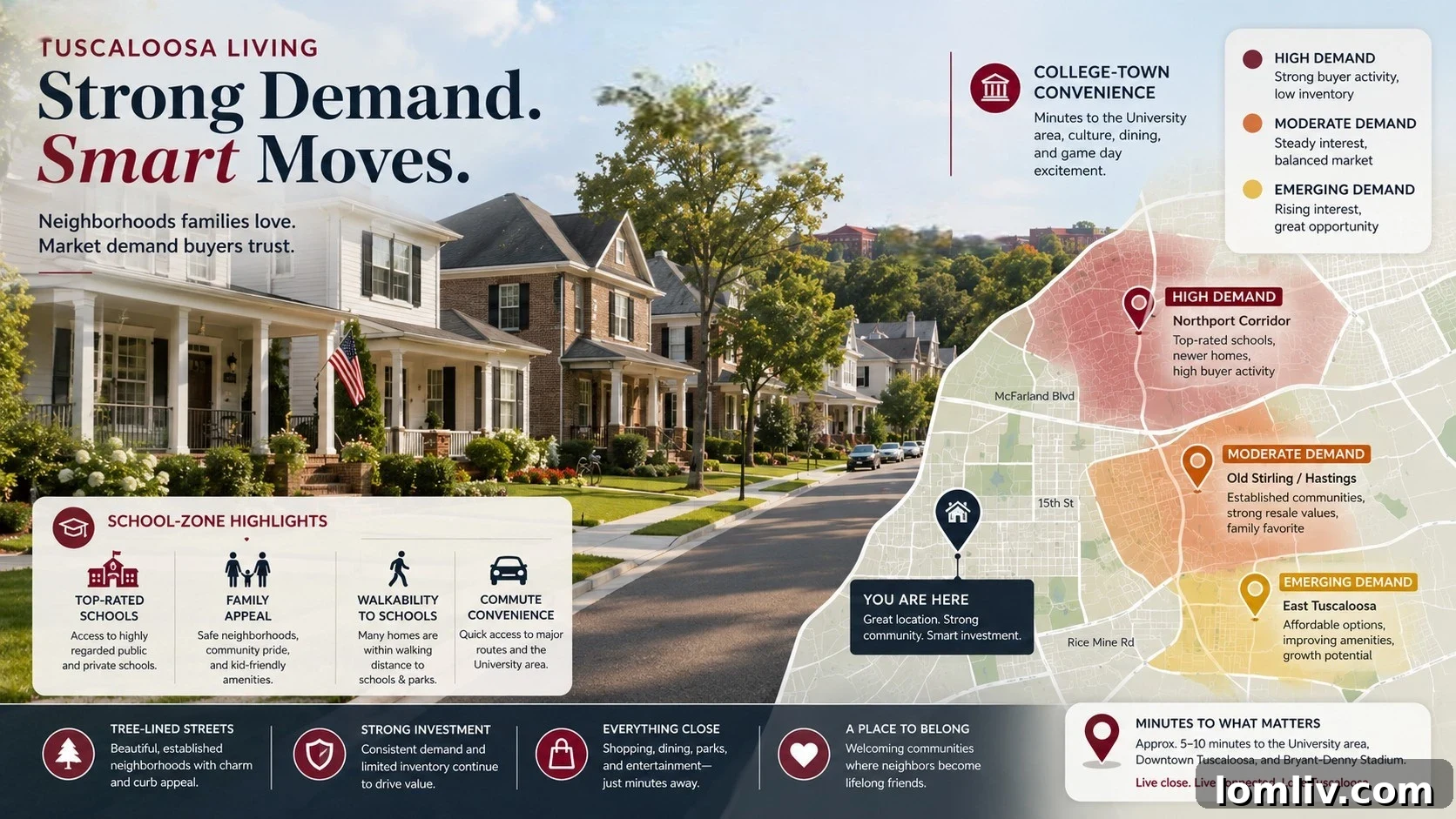
Outside of these metros, exit strategies become much narrower and are intensely dependent on hyper-local conditions. The potential buyer pool for a three-bedroom home near the University of Alabama is completely different from that for an identical house in a small, rural town 40 miles away. Reputable companies that buy houses for cash in Tuscaloosa have this granular knowledge because they live and work in the community. They know which neighborhoods are seeing growth due to medical center expansions, which school districts are most desirable for young families, and which streets have a persistent demand that simply evaporates two blocks over.
This on-the-ground intelligence is impossible to replicate with software or data analysis alone. It explains why out-of-state investors who try to buy remotely in Alabama often misjudge the market, either by over-improving a property for the neighborhood or by failing to include features that local buyers expect. A smart local buyer is always asking: “Who is my most likely end buyer, and is that group growing or shrinking?” If the target demographic is a first-time homebuyer using an FHA loan, the investor needs to be aware of any shifts in lending standards or local employment that could affect that pool. If the pool is shrinking, their offer on the distressed property must come down to compensate for the added risk, regardless of what past comps might suggest.
Pricing in Risk: The Defining Trait of Local Investors
Ultimately, the biggest differentiator between a metro and a local market evaluation is the approach to risk. If a renovation in a major city takes too long or the market cools slightly, the investor can drop the price by 3% and still find a buyer within a week. In a smaller Alabama market, that same miscalculation could mean the property sits vacant for an entire season, racking up costs with no interested parties.
Experienced local buyers price this liquidity risk into their offers from the very beginning. They run multiple scenarios, including a worst-case analysis where they are forced to rent the property for a year at a modest rate. The deal must remain viable even under these stressed assumptions. This disciplined, risk-adjusted approach means their initial offer on a property might be a lower percentage of the ARV than what a buyer in a hotter market would offer. This isn’t about being greedy; it’s a necessary business practice to survive in a market with a smaller margin for error.
Factors like insurance and property taxes also play a larger role. A home in a flood-prone area near the Black Warrior River will require costly flood insurance that can decimate rental cash flow. An older home might have an electrical system or roof that makes it difficult or prohibitively expensive to insure. These are not minor details; they are major financial liabilities that must be identified and quantified before an offer is ever made.
What This Means When Selling Your Tuscaloosa Home for Cash
The cash home buyers who thrive in Tuscaloosa and similar markets are not gamblers; they are meticulous risk managers. Their success is built on a foundation of conservative estimates, deep local knowledge, and a disciplined process that prioritizes capital preservation. They rely on realistic ARV ranges, generously padded repair budgets, and offers that reflect the genuine challenges of turning a distressed property into a marketable home.
For a homeowner considering selling a distressed property, understanding this process is empowering. The cash offer you receive is not an arbitrary number pulled from thin air. It is the end result of a detailed calculation that balances the potential of your property against the real-world costs, timelines, and risks involved in realizing that potential. Knowing the careful thought behind the offer allows you to see it not as a “lowball” figure, but as a “certainty” figure—one that provides you with a fast, hassle-free closing while the buyer takes on all the future uncertainty and hard work.