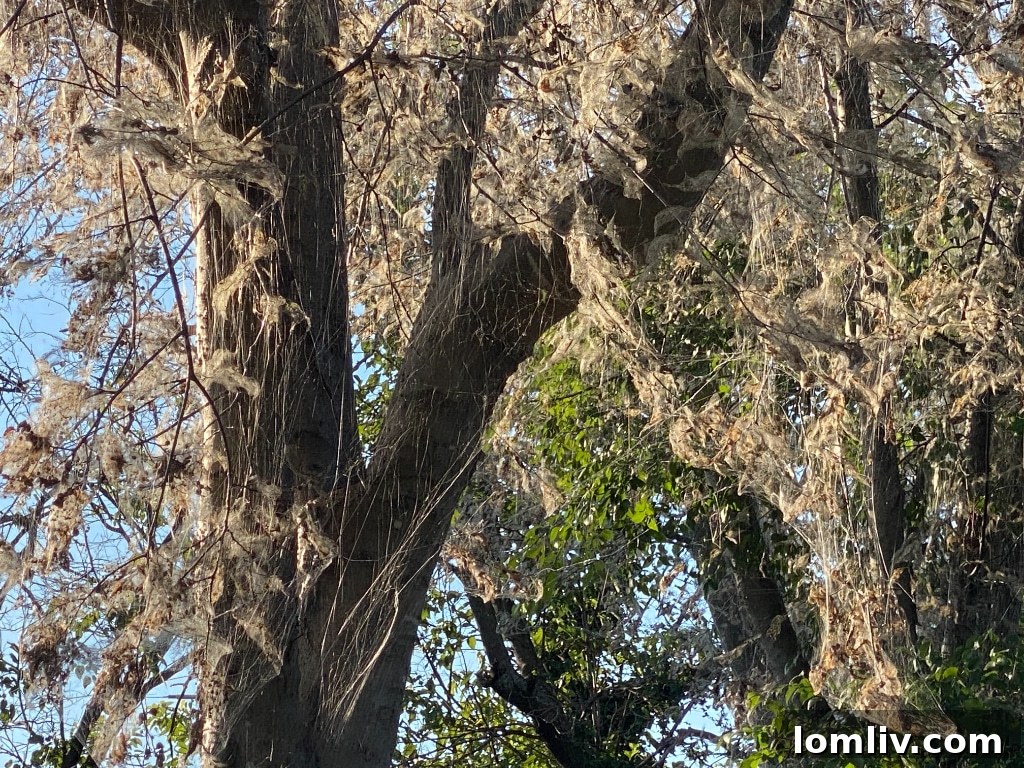
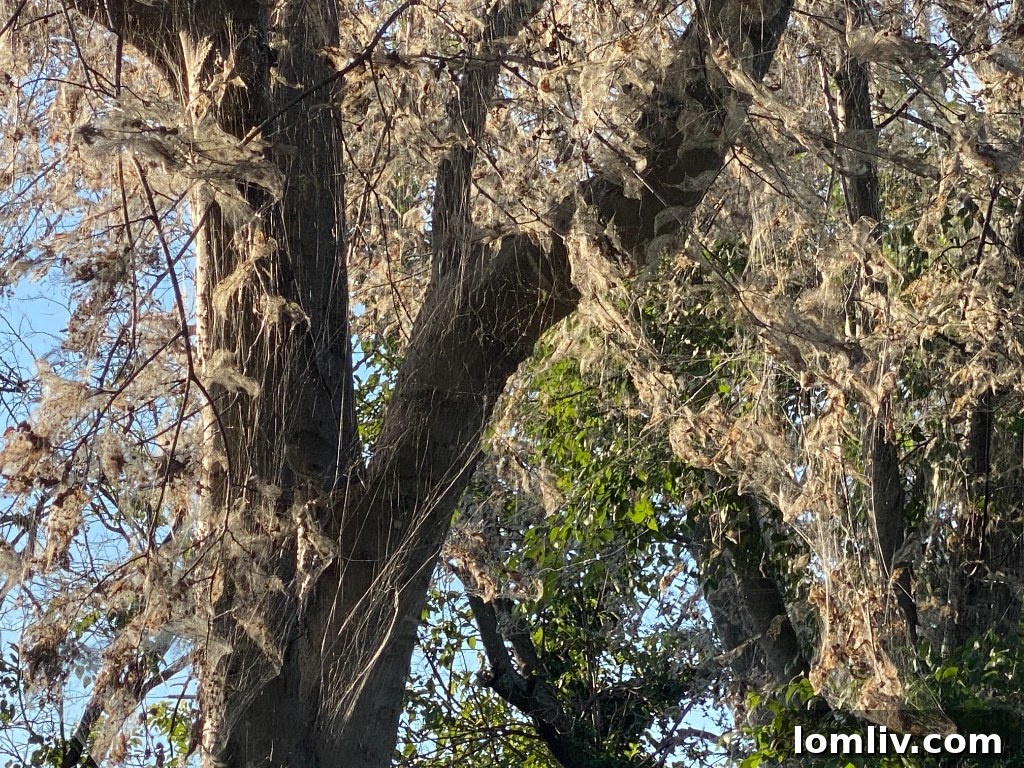
The crisp autumn air in Dallas-Fort Worth usually signals vibrant fall foliage, but recently, many residents have been met with a more unsettling sight: trees draped in ghostly, silken webs. On a recent morning run, my AirPods were serenading me with Depeche Mode when I unexpectedly ran face-first into a curtain of fine, silky thread. My neighbor’s healthy hackberry tree, which had been perfectly normal just the day before, had seemingly transformed overnight into something reminiscent of a scene from the Addams Family’s yard.
The tree’s entire canopy was so heavily ensnared in web that it looked like a colossal practice range for Spider-Man. Numerous silken strands stretched downwards towards the ground, some still hosting the very caterpillars responsible for this impressive, albeit alarming, architectural feat. While encounters with fall webworms are a common autumnal occurrence, the sheer scale and widespread nature of this particular infestation across North Texas is leaving homeowners perplexed, and frequently finding themselves brushing webs off their homes, cars, and even their faces.
Understanding these pervasive pests is crucial for residents looking to protect their trees and maintain the aesthetic beauty of their landscapes. This year’s outbreak presents a fascinating, yet challenging, scenario for both seasoned gardeners and casual observers alike, highlighting the dynamic relationship between urban environments and the natural world.
Understanding the Common Fall Webworm
When you spot large, conspicuous webs in your trees, it’s typically the work of one of two types of caterpillars. The most common and widely recognized culprit is Hyphantria cunea, affectionately known as the typical fall webworm. These native insects are well-adapted to the North Texas climate and are a familiar sight during late summer and fall.
According to Neil Sperry, a highly respected North Texas garden expert with decades of experience, fall webworms usually produce at least two generations each year: an initial brood in the spring, followed by another significant outbreak around late summer or early fall. For the trees these particular webworms favor—such as pecans, walnuts, persimmons, and many other common Texas tree species—there’s often little that can be done to completely eradicate the infestation without resorting to drastic measures or harmful chemicals. Their feeding occurs later in the growing season, which generally lessens their long-term impact on the tree’s health, though their presence is undeniably unsightly.
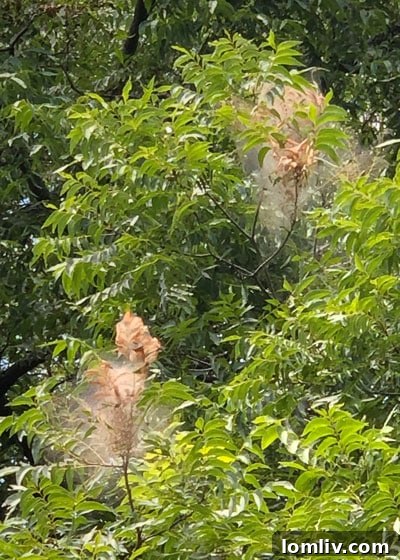
Rick Williams, who volunteers at the Dallas Arboretum and operates the invaluable Dallas Master Gardener help desk, shared his insights: “I have been volunteering at the Dallas Arboretum for over 15 years, and I can recall maybe 10 years ago when there was another webworm outbreak. They had ‘cherry picker’ trucks with buckets that were raised so the infected pecan tree limbs could be cut off.” This anecdote underscores a critical point: “Just another indication that insecticides don’t work, so mechanical removal was used.” Williams also noted, “I used to have a Mulberry tree in my backyard, and web worms seem to enjoy those leaves as well.” His observations highlight the preference of these webworms for a variety of deciduous trees, and the practical challenges of chemical treatments.
Typically, these common fall webworms do not inflict significant, lasting damage on mature, healthy trees. Their feeding period in the fall occurs after the tree has completed the majority of its annual growth cycle and has stored sufficient energy reserves. Therefore, while defoliation can look alarming, it rarely jeopardizes the tree’s overall health or survival. However, their aesthetic impact is undeniable. They create large, unsightly bags of worms that can make even the most majestic tree appear diseased or neglected. Within these silken sanctuaries, the caterpillars feed, grow, and eventually drop to the ground to pupate. Once the fall webworms have completed their feeding and metamorphosis, they emerge as a delicate, fuzzy white moth.
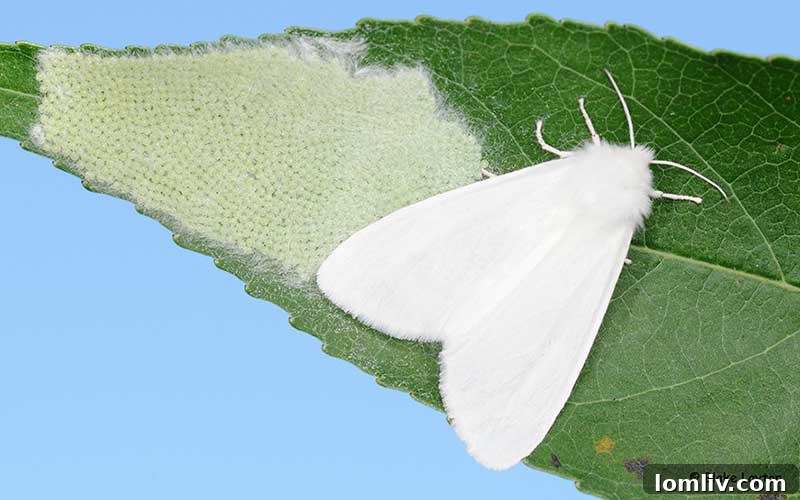
Neil Sperry eloquently describes the adult moth: “It’s actually a lovely little creature,” he notes, “but as with humans, its kids make quite a mess.” This humorous observation perfectly encapsulates the paradox of the fall webworm: an innocuous adult form that produces a larval stage capable of transforming entire tree canopies into temporary, eerie ghost-like structures. While their defoliation might seem alarming, it’s important for homeowners to understand that mature trees are remarkably resilient and can typically recover from a fall webworm infestation with minimal long-term effects. The primary concern is often the cosmetic appearance of the tree and the removal of the vast webs that can cling to surrounding structures.
The Enigmatic Hackberry Defoliator: A Different Species on the Rise
This fall, however, many North Texas residents are contending with a double dose of sticky string in their trees, thanks to a different, more mysterious species of webworm. Unlike their more common cousins, these particular defoliating caterpillars have specifically targeted hackberry trees, causing widespread defoliation across the Dallas-Fort Worth metroplex. This shift in host preference and the sheer scale of their activity have caught many by surprise, prompting a closer look into their origins and impact.
The sudden and intense proliferation of webworms on hackberry trees presented a unique challenge, even for experienced horticulturalists. Rick Williams highlighted this difficulty, stating, “I was not familiar with the hackberry tree caterpillar until multiple questions came into the [Dallas County Master Gardeners] Help Desk recently.” He added, “Some research shows that in 2015, the exact ID was a challenge even for experts.” This difficulty in identification underscores the dynamic nature of pest outbreaks and the continuous need for research and observation in the field of entomology.
Initially, the primary perpetrator of these severely webbed hackberry canopies was thought to be Sciota celtidella, a species specifically known for attacking hackberry trees and previously observed in areas like Grapevine and Flower Mound within Tarrant and Denton counties. However, as entomologists and garden experts continued to study the outbreak, a more complex picture emerged. When the adult moths eventually emerged from their pupal stage, further analysis revealed that the infestation was not solely attributable to one species. Instead, it was found to be a mixture of several webworm species—primarily Sciota rubrisparsella and a moth belonging to the Pococera genus. This discovery illustrates the intricate ecological interactions at play and the potential for multiple insect species to contribute to a single, large-scale defoliation event.
While hackberry trees are generally robust and resilient, capable of withstanding significant stress, repeated or severe defoliation can weaken them over time, especially if they are already stressed by drought, poor soil conditions, or other environmental factors. Therefore, providing supplemental care to infested hackberry or sugarberry trees is crucial for their recovery and long-term health. The City of Euless offers practical and effective strategies to support trees experiencing late-summer stress and defoliation:
– Supplemental Deep Watering: During periods of dry weather or prolonged drought, providing deep, thorough watering around the base of trees can significantly alleviate late summer stress. This ensures that the root system receives adequate moisture, which is vital for recovery and nutrient uptake.
– Nutrient Enrichment: Most mature shade trees do not require specialized fertilization. However, enriching the soil around the base of the tree with a layer of compost and organic mulch can provide a slow release of nutrients, improve soil structure, and conserve moisture. This “foot feeding” approach supports overall tree vigor.
– Soil Aeration: For trees situated in lawns with compacted soil, aeration can be highly beneficial. Compacted soil hinders water penetration and nutrient absorption. Aerating the lawn and the area around the tree roots improves air circulation in the soil, allowing the tree to better absorb essential water and nutrients.
The City of Euless
Implementing these measures can help your hackberry or sugarberry trees rebound from a severe webworm infestation, bolstering their natural defenses and promoting robust growth in subsequent seasons. Beyond these immediate steps, maintaining overall tree health through proper pruning, monitoring for other pests, and ensuring adequate sunlight exposure are also vital for fostering a resilient landscape.
The presence of these webworms, while visually jarring, also highlights the intricate balance of local ecosystems. They serve as a food source for birds and other predators, playing a natural role in the food chain. While homeowners may find the webs inconvenient and unsightly, it’s a temporary phase in the life cycle of these insects and the natural resilience of the trees they inhabit. For those who embrace the macabre, there’s always an unexpected upside to this fall’s massive webworm infestations:
Halloween decorating just got a lot easier and significantly more authentic.