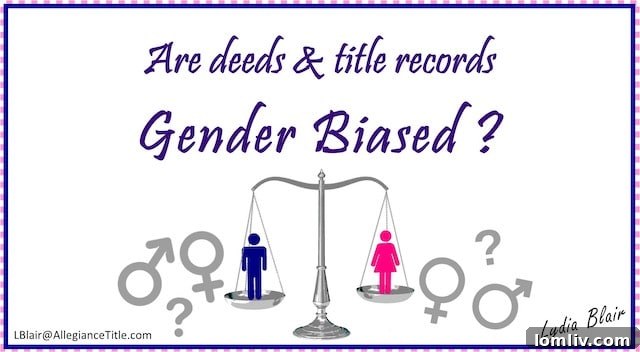
Decoding Real Estate Deeds: Unpacking the Truth Behind Name Order in Texas Property Titles
For many individuals embarking on the journey of purchasing a home or property in Texas, a subtle but often noticed detail can spark curiosity, and sometimes, even concern. When a married couple, or any man and woman, jointly acquire a piece of real estate, it’s a common observation that the man’s name frequently appears first on the deed and subsequent legal and tax documents. This seemingly entrenched practice often leads people to question its origins: Is it an outdated tradition? Does it reflect an underlying gender bias within the system?
The perception is understandable. In a world increasingly focused on equality and breaking down historical biases, any practice that appears to favor one gender over another naturally draws scrutiny. Historically, property ownership was often a male-dominated domain, and the vestiges of such traditions can linger in various forms. However, when it comes to the specific order of names on a Texas real estate deed, the reality is far less controversial and entirely practical. The reasoning behind this seemingly gender-specific listing has nothing to do with chauvinism or antiquated customs; it is purely a function of sequential documentation and procedural consistency.
This comprehensive guide aims to demystify the process, explain the factors that determine the order of names on property titles in Texas, and reassure prospective homeowners that their ownership rights remain equal, regardless of whose name appears first. We will delve into the roles of various entities involved in a real estate transaction, from the initial contract to the final recording of the deed, providing clarity and shedding light on a frequently misunderstood aspect of property ownership.
The Perception of Gender Bias and Its Origins
Before we dive into the factual process, it’s crucial to acknowledge why the idea of gender bias might even arise. Society has a long history of patriarchal structures, where men traditionally held more prominent roles in business, finance, and property ownership. Even as these dynamics evolve, certain visual cues, like a man’s name consistently appearing first on legal documents, can evoke memories of a bygone era. For some, it might subtly reinforce an unconscious bias or simply feel like an unnecessary continuation of an old convention.
The concern is valid, particularly for individuals who value equitable representation in all aspects of life. In an era striving for gender neutrality and equal standing, any perceived imbalance, no matter how minor, warrants examination. However, in the context of Texas real estate titles, the good news is that this specific practice is not rooted in discriminatory intent or a system designed to elevate one gender’s status over another. Instead, it’s a byproduct of a systematic process designed for accuracy and uniformity across multiple legal documents.
The Real Story: It’s All About Process, Not Prejudice
The true determinant of whose name appears first on a Texas property deed lies in a meticulously coordinated process involving several key players: the buyers themselves, their real estate agent, the mortgage lender, and the title company. Each entity plays a crucial role in maintaining consistency across all documentation, and the sequence of names is often established at the very beginning of the transaction.
The Initial Spark: Your Purchase Contract
The journey begins long before the deed is drafted, often with the initial purchase contract. When buyers decide to make an offer on a property, their names are entered onto the contract. The order in which these names are listed on the purchase agreement typically sets the precedent for all subsequent documentation. If the buyers themselves, or their real estate agent, list “John Doe and Jane Doe” on the contract, then John’s name will usually be the first to appear on the title documents and eventually, the deed. Conversely, if it’s “Jane Doe and John Doe,” then Jane’s name will take precedence. This initial listing on the purchase contract serves as the foundational reference point for everyone involved in the transaction.
The Title Company’s Critical Role
The title company plays a pivotal role in ensuring a smooth and legally sound property transfer. Their primary responsibilities include conducting thorough title searches, resolving any existing liens or encumbrances, and issuing title insurance to protect both the buyer and the lender. When the title company receives the executed purchase contract, their standard operating procedure is to reference the buyer or buyers’ names exactly as they appear on that contract. This ensures consistency and accuracy from the outset. Whichever name is listed first on the contract becomes the first name listed on all title documents, including the crucial ownership deed, often referred to as a warranty deed.
Their objective is not to impose a gender preference but to accurately reflect the information provided to them. Any deviation could lead to delays, legal complications, or even jeopardize the closing process. Their adherence to the contract’s specified order is a matter of diligence and procedural integrity.
The Lender’s Influence: Mortgage Applications and Lien Documents
For the vast majority of residential real estate purchases, buyers obtain a mortgage. In such cases, the mortgage lender introduces another critical layer of influence on the name order. When buyers apply for a mortgage, their names are listed on the loan application. Typically, the individual designated as the primary borrower, or simply the first person whose name is entered on the application, becomes the first name listed on the lender’s official documents.
This order then carries over to the mortgage lien, also known as a deed of trust. The title company is obligated to ensure that their documents, including the ownership deed, precisely match the names and their order as they appear on the lender’s paperwork. This strict requirement for consistency is paramount because the deed of trust (mortgage lien) and the warranty deed (ownership deed) are interconnected legal instruments. Any discrepancy could invalidate the lien or create severe legal challenges for both the lender and the property owners. Therefore, at the time of closing, the names on all documents requiring signatures must appear exactly the same and in the same sequence.
Identity Verification: Matching Names to Official IDs
Another crucial step in the process involves identity verification. To prevent fraud and ensure legal accuracy, the names on all purchase documents must meticulously mirror the names as they appear on the buyers’ official identification, such as a driver’s license or passport. This often means using full legal names rather than common nicknames or shortened versions. For instance, if a buyer commonly goes by “Billy Bob” but their legal name is “William Robert,” then “William Robert” is how their name must appear on all purchase documents. Similarly, if “Sally Sue” is legally “Sarah Susan,” then “Sarah Susan” will be used.
This rigorous matching process is a safeguard designed to protect all parties involved. It ensures that the individuals signing the documents are indeed the rightful buyers and that the property is legally transferred to the correct legal entities. This step reinforces the fact that accuracy and legal compliance, rather than gender, dictate how names are presented.
Understanding Ownership: What “Whose Name Comes First” Truly Means
Perhaps the most reassuring aspect for co-owners concerned about the order of names is that, in most residential real estate scenarios in Texas, the sequence of names on the deed has absolutely no bearing on the extent of each owner’s interest or rights in the property. Regardless of whose name appears first, both owners are typically considered joint owners with equal, undivided interests in the property. Neither party owns a larger share or holds more authority than the other simply because their name is listed first or second.
In Texas, community property laws often apply to married couples, meaning that assets acquired during the marriage are considered jointly owned by both spouses equally. Even outside of community property, many couples or co-owners opt for forms of joint ownership that grant equal rights, such as joint tenancy or tenancy in common, where each party holds an undivided interest in the entire property. The deed simply records the legal transfer of title to these individuals; it does not assign a hierarchy of ownership based on the order of names.
This fundamental principle means that for practical purposes – such as selling the property, refinancing, or making decisions about its use – both owners have equal say and equal rights. The primary name on the tax record might receive property tax statements, but that does not confer sole ownership or superior rights. It is merely a designation for administrative contact.
When the Order Matters (or When to Speak Up)
While legally insignificant for ownership rights, buyers may still have a personal preference regarding the order of names on their deed. Perhaps one spouse prefers their name to be listed first for sentimental reasons, or perhaps there’s a practical consideration for receiving official mail. If the order of names is a matter of importance to the buyers, it is absolutely essential for them to communicate this preference early in the process.
This discussion should take place with both their mortgage lender (if applicable) and the title company well before the closing date. Since the name order typically originates from the initial purchase contract and is solidified by the loan application, addressing these preferences at the very outset can prevent complications and ensure the final documents reflect their wishes. It’s much simpler to make adjustments before documents are drafted and signed than to attempt corrections after the fact, which can involve re-recording deeds and incurring additional costs.
The Recording Process and Public Records
Once all documents are signed at closing, the title company’s work continues. They are responsible for recording the ownership transfer and any associated liens (like the deed of trust) with the county clerk’s office. This recording process makes the property transfer a matter of public record, providing official notice of ownership and any encumbrances on the property.
After these documents are recorded, county tax appraisal districts and other governmental entities update their records to reflect the new ownership. The names on the tax records will then mirror the names and their order as they were officially recorded with the county. Again, this is a purely administrative reflection of the recorded legal documents, not an indication of superior or inferior ownership.
Conclusion
The common observation of a man’s name often appearing first on Texas real estate deeds is a result of established procedural requirements, not gender bias. From the initial purchase contract to the meticulous demands of mortgage lenders and the title company’s commitment to accuracy, the order of names is dictated by a systematic process designed to ensure legal consistency and prevent fraud. While the perception of bias is understandable given historical contexts, the underlying truth is that for most residential properties, both owners hold equal and undivided interests, regardless of whose name takes precedence on paper.
Understanding this process empowers buyers, allowing them to focus on the excitement of property ownership rather than being sidetracked by misconceptions. If the specific order of names is important to you, proactive communication with your real estate professionals, lender, and title company early in the transaction is key to ensuring your preferences are accommodated within the framework of legal accuracy.
The opinions expressed are of the individual author for informational purposes only and not for the purpose of providing legal advice. Contact an attorney to obtain advice for any particular issue or problem.