Understanding Seller Concessions: A Comprehensive Guide for Buyers and Sellers
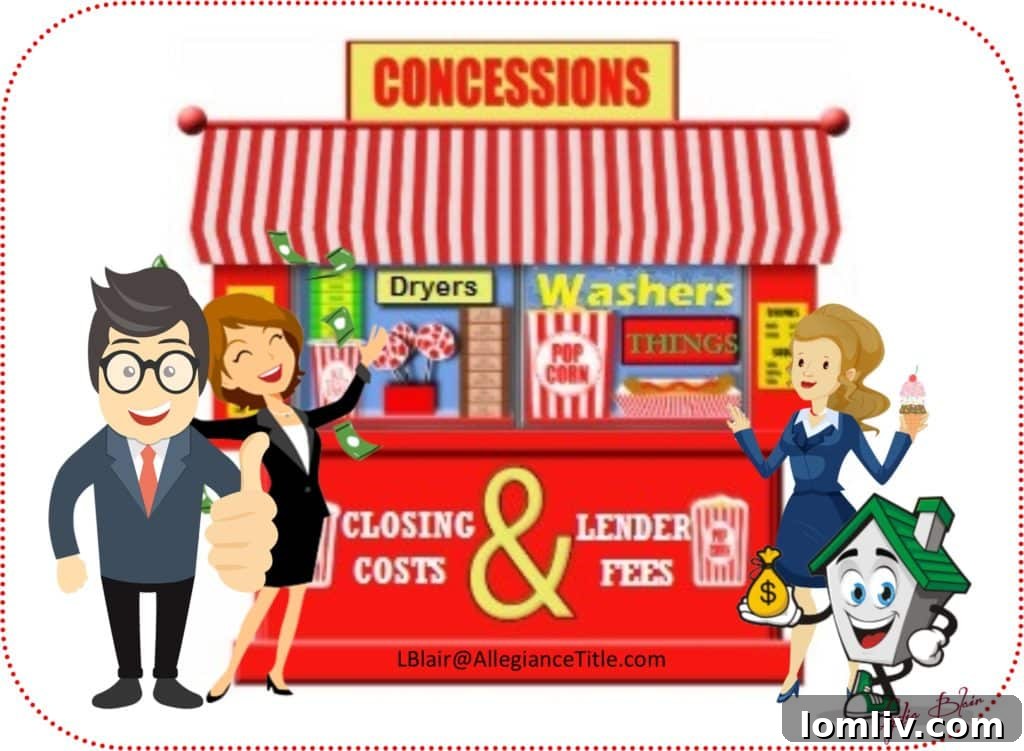
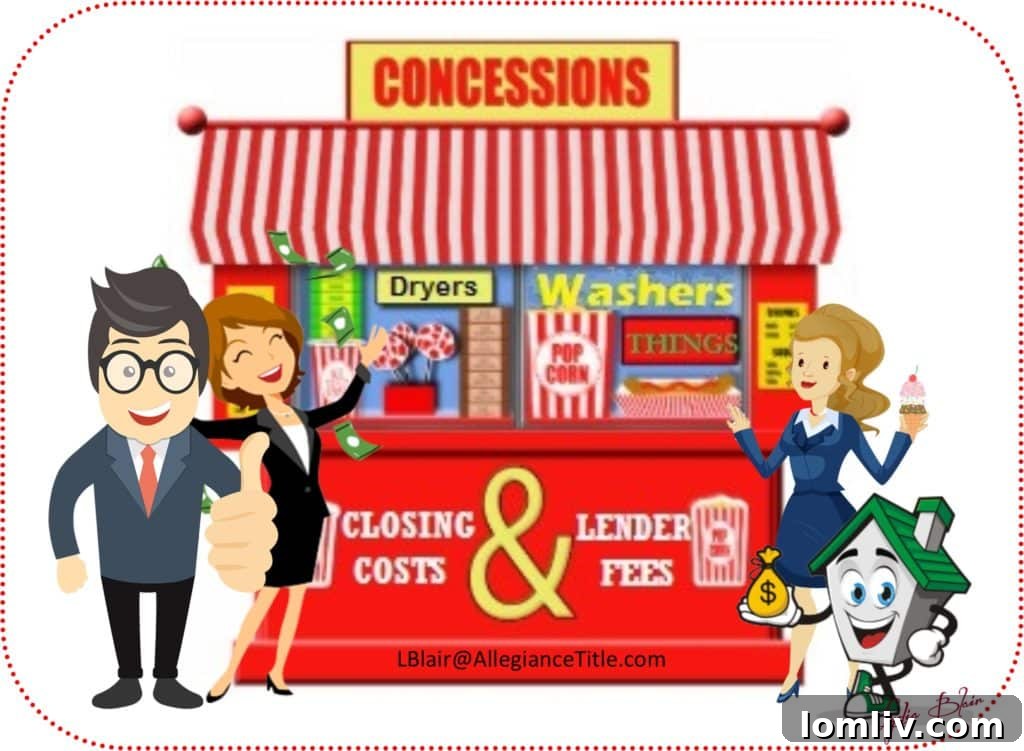
When you hear the word “concession,” your mind might drift to the tempting aroma of popcorn and hot dogs at an amusement park. However, in the realm of real estate, seller concessions carry a completely different, yet equally significant, meaning. Far from being offered in a cone or on a stick, these concessions are valuable allowances or incentives provided by a property seller to a potential buyer.
Seller concessions are a strategic tool in real estate transactions, designed to make a deal more attractive or financially feasible for the buyer. While some sellers might proactively include enticing incentives, such as including certain appliances or patio furniture in their MLS listing, it’s far more common for buyers to request and negotiate these concessions as part of the purchase contract. Typically, these negotiations revolve around the seller contributing to the buyer’s closing costs, alleviating some of the upfront financial burden associated with purchasing a home.
What Exactly Are Seller Concessions?
At its core, a seller concession is an agreement where the seller pays for a portion of the buyer’s expenses, either directly or indirectly, to facilitate the sale of a property. These can manifest in two primary forms: non-financial items or financial contributions toward closing costs. Understanding these distinctions is crucial for both parties involved in a real estate transaction, as they impact everything from the final price to the buyer’s out-of-pocket expenses.
The motivation behind offering or requesting concessions can vary widely. For sellers, it might be a strategy to entice buyers in a slow market, sweeten a deal for a property that has been on the market for a while, or simply to close a sale quickly. For buyers, concessions are an excellent way to reduce the significant upfront costs associated with homeownership, allowing them to preserve their savings for other important expenses, such as moving costs, immediate repairs, or new furnishings.
Two Main Types of Seller Concessions
Seller concessions generally fall into two categories: those involving non-realty items and those providing financial assistance for closing costs.
1. Non-Financial Concessions (Non-Realty Items)
These types of concessions involve personal property that the seller agrees to leave behind for the buyer, even though they are not permanently affixed to the home. While not directly financial, they offer tangible value to the buyer by saving them the cost of purchasing these items new.
Common examples of non-financial concessions include:
- Appliances (washer, dryer, refrigerator, microwave)
- Window treatments (blinds, custom drapes)
- Patio furniture or outdoor grills
- Large decorative items or artwork
- Specialty items like a piano or pool table
It is absolutely critical that any non-financial seller concession is clearly documented in the purchase contract or a specific addendum. For instance, in standard residential contracts, items like furnishings or appliances are typically addressed by attaching a “Non-Realty Items Addendum.” This document should meticulously spell out exactly what items are being transferred with the sale, leaving no room for ambiguity. Failure to properly document these items can lead to disputes after closing, potentially souring the buyer’s experience and even resulting in legal complications. For example, if a seller verbally promises to leave a high-end refrigerator but it’s not in writing, the buyer has no recourse if the seller removes it before closing.
2. Financial Concessions (Closing Cost Credits)
This is arguably the most common and often most impactful type of seller concession. Financial concessions involve the seller agreeing to pay a portion of the buyer’s closing costs. These are handled under specific clauses in the real estate contract, where a specific dollar amount is filled in for the seller to pay towards “buyer’s expenses as allowed by the lender.”
Understanding “Buyer’s Expenses”
The term “Buyer’s Expenses” is precisely defined within the purchase contract and generally encompasses a wide array of costs associated with obtaining a mortgage and finalizing the home purchase. These can include, but are not limited to:
- Lender Fees: Such as loan application fees, loan origination charges, credit report fees, underwriting fees, and document preparation fees.
- Appraisal and Inspection Fees: Costs associated with evaluating the property’s value and condition.
- Pre-paid Interest: The interest accrued from the closing date to the end of the month.
- Title Policy Endorsements: Additional coverage for the title insurance policy.
- Escrow and Recording Fees: Charges for the escrow service that holds funds and documents, and for officially recording the new ownership.
- Reserves/Escrow Accounts: Funds collected at closing to set up escrow accounts for future property taxes and homeowner’s insurance premiums.
- Courier Fees: Costs for delivering important documents.
It’s crucial for buyers to understand that a seller concession is not a direct cash credit or a separate check issued to them at closing. Instead, it’s an adjustment made on the closing statement, reducing the total amount the buyer needs to bring to the table for their closing costs. The funds essentially go directly to cover eligible third-party fees, not into the buyer’s pocket.
The Critical Role of Lender Limitations
One of the most vital aspects of financial seller concessions is that they must be “allowed by the lender.” Mortgage lenders impose strict limits on how much a seller can contribute to a buyer’s closing costs. These limitations are in place to protect the lender’s interest, prevent inflated property values, and ensure the buyer has sufficient equity in the home. The maximum allowable concession varies significantly based on the type of loan (Conventional, FHA, VA, USDA) and the loan-to-value (LTV) ratio.
- Conventional Loans: For conventional mortgages, the maximum seller contribution is typically tied to the buyer’s down payment percentage:
- Up to 10% Down Payment: Seller can contribute up to 3% of the purchase price.
- 10.01% to 25% Down Payment: Seller can contribute up to 6% of the purchase price.
- Over 25% Down Payment: Seller can contribute up to 9% of the purchase price.
- Investment Properties: Generally limited to 2% of the purchase price, regardless of down payment.
- FHA Loans: Federal Housing Administration (FHA) loans typically allow sellers to contribute up to 6% of the lesser of the sales price or appraised value towards closing costs, prepaid expenses, and discount points. This is a significant allowance that makes FHA loans very attractive to buyers with limited cash on hand.
- VA Loans: Veterans Affairs (VA) loans are incredibly generous, allowing sellers to pay all of a buyer’s reasonable closing costs, up to 4% of the loan amount in concessions. This 4% limit applies to specific fees such as pre-paid taxes and insurance, discount points, and some other charges, while other standard closing costs (like appraisal and title fees) can be covered outside of this limit.
- USDA Loans: Similar to FHA, USDA (U.S. Department of Agriculture) loans typically allow up to 6% seller concessions towards closing costs.
It’s imperative for buyers to consult with their mortgage lender early in the process to understand these specific limitations based on their chosen loan program. A lender will provide clear guidance on which expenses are eligible for seller contributions and the maximum amount allowed.
What Happens When Concessions Exceed Allowable Expenses?
A common scenario arises when the seller agrees to pay a certain amount in concessions, but the actual “buyer’s expenses as allowed by the lender” turn out to be less than that agreed-upon amount. For instance, if the contract specifies a $4,000 seller concession, but the lender only allows $3,500 in eligible closing costs, the seller will only pay the $3,500. The remaining $500 does not go to the buyer as cash. In this situation, the seller saves $500, and the buyer might feel disappointed if they were expecting the full $4,000 credit.
In such cases, the parties might attempt to amend the contract to apply the leftover amount to other permissible costs, such as reducing the sales price (which impacts the loan amount) or covering additional pre-paid items. However, any such amendment would require the lender’s explicit approval. Therefore, if financial concessions are a significant part of the deal, the buyer should strategically arrange their loan and anticipate their closing costs to maximize the utilization of those seller contributions.
Seller Concessions in a Cash Transaction
Even in an all-cash transaction where there are no lender expenses or loan-related closing costs, seller concessions can still play a role. Buyer expenses in a cash deal might include inspection fees, attorney fees, homeowner’s insurance premiums, title insurance, and property taxes. If buyers and sellers openly communicate and understand how concessions work in advance, they can structure the transaction to meet everyone’s expectations effectively, potentially influencing the negotiated sales price.
The Undeniable Importance of Documentation
Regardless of whether a seller concession is advertised in an MLS listing or verbally agreed upon, it is absolutely meaningless unless it is explicitly included in the written purchase contract or an official addendum. A casual mention in a listing description, such as “washer and dryer included,” does not make it a contractual obligation. To avoid misunderstandings, disputes, or even legal issues, every single seller concession – be it an appliance, a piece of furniture, or a financial contribution to closing costs – must be clearly spelled out in writing and signed by all parties involved.
Navigating Concessions: Tips for Buyers and Sellers
For Buyers:
- Communicate with Your Lender Early: Understand the maximum seller contributions allowed for your specific loan program and which expenses are eligible.
- Prioritize Needs: Focus on negotiating concessions for major financial hurdles like closing costs rather than minor non-realty items, unless those items are particularly valuable to you.
- Be Realistic: In a strong seller’s market, requesting significant concessions might make your offer less attractive. Gauge market conditions carefully.
- Review the Closing Disclosure: Scrutinize your final closing disclosure to ensure all agreed-upon concessions are accurately reflected.
For Sellers:
- Consider Market Conditions: In a buyer’s market or if your property has unique challenges, offering concessions can be a powerful incentive.
- Price Strategically: If you plan to offer concessions, factor that into your initial asking price. A slightly higher list price with concessions might appeal more than a lower price with no flexibility.
- Document Everything: Ensure all agreed-upon concessions are explicitly written into the contract to prevent future disputes.
- Understand the Impact: Recognize that financial concessions reduce your net proceeds from the sale.
Conclusion
Seller concessions are an integral part of modern real estate transactions, offering flexibility and financial relief that can help bridge the gap between buyer and seller. From including specific appliances to contributing towards closing costs, these allowances can make a significant difference in closing a deal. However, their effectiveness and successful implementation hinge on clear communication, thorough documentation, and a comprehensive understanding of lender limitations and contractual obligations. By approaching seller concessions with knowledge and transparency, both buyers and sellers can navigate the complexities of real estate more smoothly, leading to a mutually beneficial outcome.
The opinions expressed are of the individual author for informational purposes only and not for the purpose of providing legal advice. Contact an attorney to obtain advice for any particular issue or problem.
Lydia Blair (formerly Lydia Player) was a successful Realtor for 10 years before jumping to the title side of the business in 2015. Prior to selling real estate, she bought, remodeled and sold homes (before house flipping was an expression). She’s been through the real estate closing process countless times as either a buyer, a seller, a Realtor, and an Escrow Officer. As an Escrow Officer for Allegiance Title at Preston Center, she likes solving problems and cutting through red tape. The most fun part of her job is handing people keys or a check.