The Smart Path to Homeownership: Leveraging Strategic Renting and Market Uncertainty
Homeownership stands as one of the most reliable and consistent avenues for building substantial wealth and securing your financial future, especially as you approach retirement. For many, the equity accumulated over a lifetime in their home becomes the cornerstone of their retirement nest egg, providing the freedom to downsize and cash out while ensuring financial independence. While numerous reports suggest that renting might offer a better financial outcome in certain markets, these claims are almost always predicated on a critical, often unmet condition: the renter consistently investing the difference between their rent and what a mortgage payment (including taxes and insurance) would cost. The reality, however, is that most renters, when flush with extra cash, tend to indulge in discretionary spending – whether it’s dining out more frequently, acquiring new fashion items, or embarking on globetrotting adventures to collect selfies. This trend highlights a fundamental challenge: without the forced savings mechanism of a mortgage, saving becomes a less disciplined endeavor.
The increasing prevalence of renting across many countries is a concerning economic and social indicator. As noted in a recent conversation with HGTV presenter Richard Blanco in London, the long-term impact on tenants’ financial well-being, particularly in later life, is significant. While student loan debt poses a considerable hurdle for younger generations in various regions, a shared underlying issue in both the U.S. and the UK is a growing desire among young people for a “catered” lifestyle – reminiscent of living with parents – where the practical realities and responsibilities of independent living are outsourced. This preference, while offering immediate comfort, often postpones financial maturity and the accumulation of vital assets.
For individuals wise enough to recognize the profound benefits of property ownership, the initial hurdle of accumulating a down payment often feels insurmountable, particularly for younger buyers navigating competitive urban markets. With premium urban apartments commanding rates that can easily exceed $3 per square foot per month, how can an aspiring homeowner save effectively without resorting to living in their childhood bedroom adorned with Star Wars memorabilia? The key lies in strategic thinking and an informed approach to temporary housing solutions.
One effective strategy involves seeking out older apartment complexes that prioritize practicality over lavish, tenant-paid amenities. These complexes often eschew the trendy but costly “coffee butlers,” “kitty concierges,” or weekly wine tastings – luxurious perks that tenants ultimately subsidize through higher rents. By opting for a property that focuses on essential services and comfortable living spaces, renters can significantly reduce their monthly outgoings. A second, often overlooked, and highly advantageous option is to seek out rental units within existing condo buildings.
The Condo Building Advantage: Quiet Living and Strategic Savings
Renting a unit within a privately owned condominium building presents a unique opportunity for aspiring homeowners. Such properties typically offer a quieter environment and are often better maintained than traditional rental complexes. This is largely due to the fundamental difference in ownership: condo units are owned by individuals who have a direct financial stake in the property’s condition, as opposed to multi-unit apartment complexes often managed by corporations whose primary goal is profit maximization, sometimes at the expense of long-term maintenance. Owners are generally more invested in preserving their property values, leading to a more pleasant and well-kept living space. Furthermore, diving deeper into this strategy, a truly savvy approach involves targeting condo buildings characterized by a degree of “uncertainty.” Why uncertainty? Because uncertainty invariably translates to lower prices.
Consider the logic: when there’s public discourse or even rumors about controversial developments nearby – such as the proposed construction of an industrial facility like a tannery or a landfill – residential property values in the affected zone are highly likely to experience a significant decline. Correspondingly, rental prices in these areas will also drop as current residents, panicked by the potential impact on their living conditions, seek to relocate. This exodus creates an opportunistic environment for the strategic renter. If the proposed development progresses from talk to reality, tenants have the flexibility to “up sticks” and move on during the period between project approval and actual completion. This allows the astute tenant to capitalize on depressed rental rates, saving a substantial amount towards their down payment, all while retaining the ability to vacate the premises before any deterioration in living conditions or quality of life occurs. This calculated risk, when managed effectively, can be a powerful tool in accelerating your journey to homeownership.
Turtle Creek Gardens: A Case Study in Leveraging Uncertainty for Savings
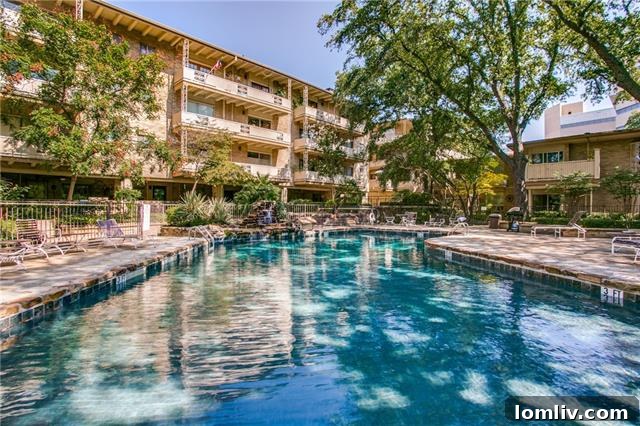
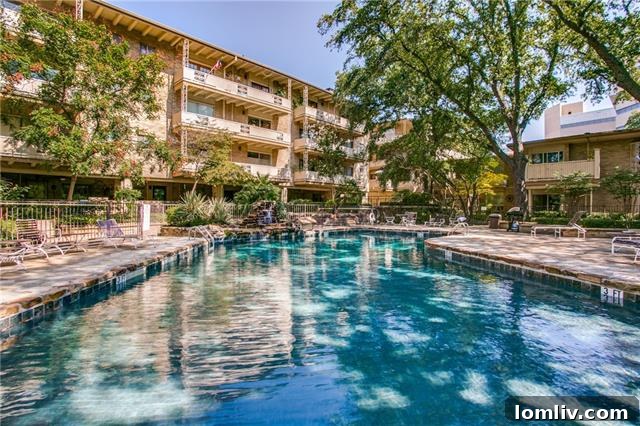
Nestled at 2525 Turtle Creek Blvd., Turtle Creek Gardens presents a compelling real-world example of how market uncertainty can be leveraged in a surprisingly desirable location. This 4.7-acre complex, despite its prime address, currently offers a unique blend of benefits for a strategic temporary renter. The uncertainty surrounding Turtle Creek Gardens stems from its multiple attempts to sell the entire complex to developers in recent years. This ongoing sales saga has naturally led to years of reported deferred maintenance; after all, why invest heavily in upkeep if the ultimate goal is demolition and redevelopment? This situation creates a scenario where rental prices are likely held below market rate due to the perceived instability and lack of long-term investment in the property’s infrastructure.
Adding another layer to this strategic equation is a “certainty” that also enhances negotiability for renters. Directly adjacent to Turtle Creek Gardens is 2727 Turtle Creek, a luxury development poised to begin construction in 2021. The initial phase of construction will inevitably generate noise, dust, and disruption, which typically depresses rental rates in the immediate vicinity. While temporary, this period offers an opportunity for renters to secure a unit at a reduced price. Once the 5-star neighbor is completed, the area’s desirability and property values, including potential rental rates at Turtle Creek Gardens (should it remain), are likely to rise, making the temporary inconvenience a worthwhile trade-off for significant savings.
It’s crucial to understand that purchasing a unit within a complex like Turtle Creek Gardens, under these specific circumstances, might not be a sensible long-term investment if the intention is to reside there indefinitely. The complex could be sold for redevelopment at any time, potentially with or without individual unit owner approval, depending on the thresholds outlined in the HOA documents. Furthermore, from a maintenance perspective, becoming an owner during a period of deferred maintenance carries significant financial risk. Like a game of musical chairs, you wouldn’t want to be burdened with escalating HOA dues or hefty special assessments when the music stops and major, long-overdue repairs become absolutely essential. The strategic value here lies purely in its potential as a temporary, cost-effective rental for saving.
Breaking Down the Numbers: Renting vs. Buying at Turtle Creek Gardens Unit 204
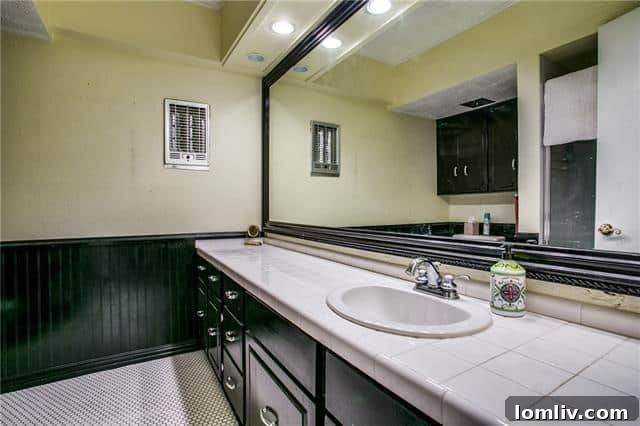
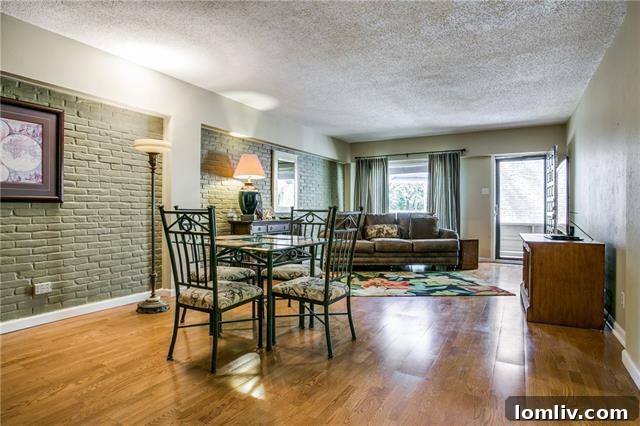
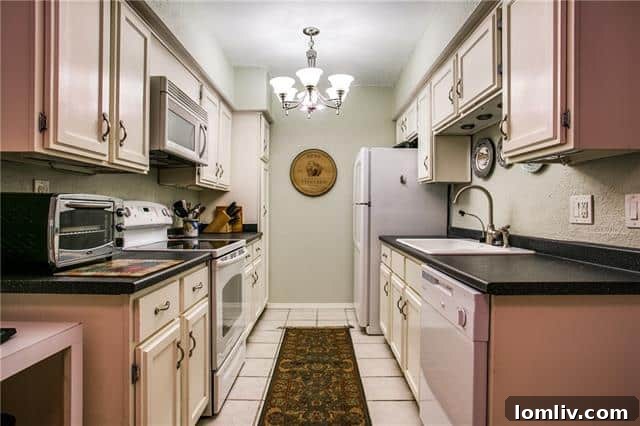
To illustrate the financial advantage, let’s conduct an apples-to-apples comparison using Unit 204 at Turtle Creek Gardens, which is currently available both for sale and for rent through Linda Lunn of Keller Williams Urban. This modernized unit offers a comfortable 1,338 square feet, featuring two bedrooms and two bathrooms. The entire complex, comprising 104 units, is characterized by its low-slung buildings set within a rare, park-like environment – a highly desirable and increasingly expensive amenity in this part of the city.
As a property for sale, Unit 204 is listed at $225,000, which translates to an appealing $168 per square foot. The estimated annual property tax bill for this unit is $3,929, or approximately $327.42 per month. Monthly HOA dues, which remarkably include all utilities, stand at $919. Assuming a 20 percent down payment and a favorable interest rate, a 15-year mortgage would result in a monthly payment of $1,395, while a 30-year mortgage would be $980. Combining these figures, the total monthly housing cost for an owner, including mortgage, taxes, and HOA dues, would be $2,226 for a 30-year term or $2,641 for a 15-year term. While the mortgage payment itself is fixed, the uncertain variables for an owner are potential increases in property taxes and HOA dues. The primary positive uncertainty, of course, is the potential for the complex to sell, offering owners a payout significantly above their purchase price.
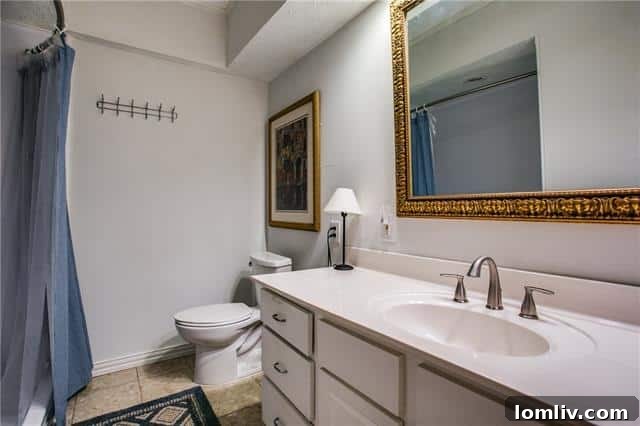
Conversely, Unit 204 is also available for rent at $1,850 per month, which calculates to approximately $1.38 per square foot – a figure that *includes all utilities*. This presents a significant opportunity for a savings-minded tenant aspiring to live in the desirable Uptown area. By choosing to rent this unit, an individual would be effectively “pocketing” or saving between $376 and $791 per month, compared to the ownership costs, assuming they diligently put this difference aside. Imagine the accelerated savings towards a down payment without the temptation of new shoes or extravagant double-foam-iced-mochaitinos. Introduce a roommate into the equation, and the monthly cost per person drops to an incredibly affordable $925, while the potential for savings doubles. In stark contrast, securing a smaller unit in one of the newer luxury Uptown apartment buildings could easily cost upwards of a thousand dollars more per month, and often would not even include utilities. This direct comparison clearly illustrates the tangible financial advantage of strategically renting in a situation like Turtle Creek Gardens to build your down payment faster.
Paving Your Way to Property Ownership: A Strategic Approach
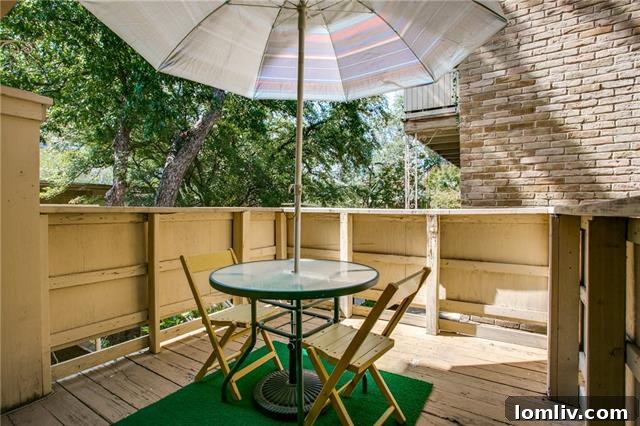
Turtle Creek Gardens serves as a compelling model for future homebuyers who require a strategic saving period before taking the monumental leap into property ownership. Irrespective of which part of the Metroplex you ultimately wish to call home, there are invariably smart rental options available that are perfectly suited for a few transitional years, allowing your down payment fund to steadily accumulate. The diligent effort spent investigating and identifying those unique places where market uncertainty actively works in your favor – offering lower rents or temporary discounts – is an investment of time that pays substantial dividends. Ultimately, achieving the dream of owning your own home will provide a sense of stability, accomplishment, and financial security that far surpasses the fleeting satisfaction of any selfie or the temporary convenience of an apartment concierge. It’s a foundational step towards genuine financial independence and a lasting legacy.

About the Author: My expertise lies in high-rises, homeowners’ associations (HOAs), and property renovations. Beyond these core areas, I possess a deep appreciation for both modern and historical architecture, always considering it in the context of the YIMBY (Yes In My Backyard) movement’s call for sensible development. My contributions to real estate journalism have been consistently recognized by the National Association of Real Estate Editors, earning me three Bronze awards in 2016, 2017, and 2018, along with two Silver awards in 2016 and 2017. If you have a compelling real estate story to share, a question, or even an unconventional marriage proposal, please feel free to reach out via email at [email protected]. You’re welcome to search for me on Facebook and Twitter, though you might not find me there.