The Battle for Dallas’s Future: Trinity Toll Road Faces Mounting Opposition
The proposed Trinity Toll Road has long been a contentious issue in Dallas, sparking a fierce debate about the city’s urban development, environmental stewardship, and future mobility. What was once envisioned by some as a solution to traffic woes, or a complement to a grand new park, has increasingly become a symbol of outdated planning and a threat to the potential of one of Dallas’s most vital natural assets: the Trinity River Corridor. The discourse has intensified recently, with prominent professional organizations and grassroots movements stepping forward to voice their strong opposition, urging a complete reconsideration of the project.
At the forefront of this renewed opposition is the Dallas Chapter of the American Institute of Architects (AIA Dallas), an organization whose professional insights and historical perspective lend significant weight to the discussion. Their formal stance against the Trinity Toll Road, as it is currently designed, marks a pivotal moment in the ongoing saga. This declaration arrived just months after AIA Dallas hosted a screening of the impactful 1967 documentary, The Walls Are Rising. This film served as a stark critique of the haphazard planning and zoning practices that characterized Dallas’s rapid building boom in the mid-20th century. The echoes of that era’s lack of foresight, particularly concerning major infrastructure projects and their long-term impact on the urban fabric, resonate powerfully with the current debate surrounding the Trinity Tollway. It serves as a poignant reminder that the consequences of poor planning are often reaped generations later, and the Trinity Tollway has undoubtedly become a critical benchmark against which the vision and integrity of today’s politicians are being measured.
Architects Speak Out: A Call for Modern Urbanism
The formal statement from AIA Dallas is not merely an objection; it’s a comprehensive vision for a healthier, more prosperous Dallas. Their position underscores a fundamental shift in contemporary urban planning principles away from highway-centric solutions towards integrated, sustainable approaches that prioritize quality of life and environmental resilience. It was truly encouraging and affirming for many to read their clear and unequivocal stance:
AIA Dallas supports a great Trinity Park as essential to the future health and prosperity of Dallas. Any highway similar to the Trinity Toll Road will divide our city and destroy the park’s unique potential and its recreational, economic, and environmental benefits. We oppose the Trinity Toll Road; it is an outdated approach from the past and will not solve the current or future mobility needs of our region.
This statement encapsulates several critical concerns. First, the emphasis on a “great Trinity Park” highlights the desire for a cohesive, accessible green space that can serve as the city’s natural heart, fostering community, providing ecological benefits, and enhancing the urban experience. Such a park would be a tremendous asset, offering recreational opportunities, improving air and water quality, and increasing property values in surrounding areas—benefits that are diametrically opposed to the construction of a major highway through its core. Second, the assertion that the toll road “will divide our city” speaks to the physical and psychological barriers that elevated highways create, severing neighborhoods, impeding pedestrian access, and disrupting the natural flow of urban life. Dallas has already grappled with the divisive legacy of its interstate system, and residents are wary of repeating past mistakes.
Furthermore, AIA Dallas’s critique of the toll road as an “outdated approach from the past” challenges the very foundation of the project. In an era where sustainable mobility, multimodal transportation, and smart growth are priorities for modern cities, a new, massive toll road is seen by many as a relic of 20th-century thinking. It fails to address the complex and evolving mobility needs of a growing metropolis, potentially exacerbating issues like induced demand (where new roads simply create more traffic) rather than truly alleviating congestion. The vision for Dallas’s future, articulated by its leading architects, clearly leans towards integrated public transit, walkable urban centers, and vibrant green spaces, not additional asphalt and concrete barriers.
A Generational Shift: The Voice of Dallas’s Future
The sentiment expressed by AIA Dallas is far from an isolated opinion. It turns out that a significant portion of Dallas’s younger generation, particularly Millennial residents, strongly echoes these concerns. There’s a growing consensus among younger urban dwellers that the era of massive urban highway construction should be relegated to history. This demographic group, often more environmentally conscious and amenity-focused, increasingly advocates for dismantling existing elevated interstate highways, such as I-345 and others, which they view as costly burdens to maintain and unsightly scars on the urban landscape. These elevated structures, once hailed as symbols of progress, now represent physical barriers to urban connectivity, generate noise and pollution, and consume vast amounts of public funds for perpetual upkeep.
The idea of replacing urban highways with at-grade boulevards, public parks, or mixed-use developments – a movement gaining traction in cities across the nation – resonates deeply with this demographic. Such transformations promise to reconnect fragmented neighborhoods, spur economic redevelopment, create new green spaces, and significantly improve the pedestrian experience, transforming once-blighted areas into vibrant, livable urban districts. This generational shift reflects a desire for more human-scaled cities, where green infrastructure, public transit, and walkable communities take precedence over car-centric planning, positioning the Trinity Toll Road as an antithesis to this evolving urban ideal.
Political Firestorm and Community Mobilization
While the measured statement from AIA Dallas, along with their extended list of policy remarks, undoubtedly garnered enthusiastic applause from organizations like the Dallas Green Alliance and the Coalition for A New Dallas, it was the impassioned tirade from District 1 Dallas City Council Member Scott Griggs that truly ignited the room, likely prompting a rowdy standing ovation. His blistering response to a pro-Trinity Toll Road comment from Rick Callahan’s park board appointee encapsulated the deep-seated frustration and fervent opposition felt by many community leaders and residents. Griggs did not mince words, launching a scathing critique that resonated far beyond the council chambers.
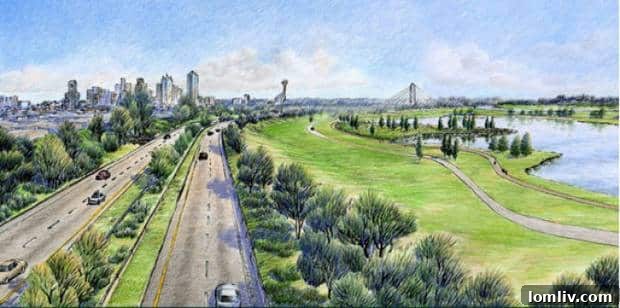
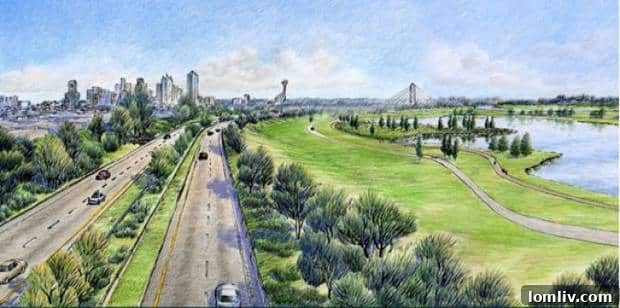
“This is the worst boondoggle imaginable, and it’s time to get serious about developing southern Dallas, think of what we can do with this money and the opportunity cost,” he declared. “This thing has been nothing but a sales job based on some watercolors. Fancy watercolors. It’s time now to just kill this road and get on with business.”
Griggs’s characterization of the project as a “boondoggle” speaks to the perception that the Trinity Toll Road is an exorbitantly expensive undertaking with dubious benefits, draining resources that could be far better utilized elsewhere. He pointedly highlighted the crucial concept of “opportunity cost”—the immense potential for investment in vital areas such as southern Dallas, which historically has been underserved and underdeveloped. Diverting funds and attention to a controversial highway project, Griggs argued, squanders the chance to address pressing social and economic needs within the city. His dismissal of the project as a mere “sales job based on some watercolors” further underscores the widespread cynicism regarding the project’s real-world feasibility and benefits, suggesting that its proponents have relied on appealing but ultimately unrealistic renderings rather than sound urban planning and fiscal prudence.
Building Momentum: Can the Toll Road Finally Be Stopped?
The chorus of opposition, now amplified by respected professional bodies and powerful political voices, raises a critical question: Could this surge in organized resistance finally provide the momentum needed to kill the Trinity Toll Road once and for all? For years, the project has lumbered forward, often seeming to defy logic and public sentiment. However, the current climate, characterized by heightened awareness of environmental issues, a demand for fiscally responsible governance, and a growing desire for equitable urban development, might just be different. The alignment of diverse groups—architects, environmentalists, urban planners, and progressive politicians—creates a formidable force that previous opposition movements may have lacked.
The true test of this momentum will undoubtedly unfold in this year’s city council elections. The Dallas Green Alliance has shrewdly positioned the Trinity Toll Road as a litmus test for every candidate in every district, posing a direct and unambiguous question: “Do you support the construction of the Trinity Toll Road in any way, shape or form?” This strategic move ensures that the issue remains front and center in political discourse, forcing candidates to take a clear public stance and providing voters with transparent information about their representatives’ views on a highly controversial topic. The responses, publicly available on the alliance’s website, will undeniably play a significant role in shaping electoral outcomes, demonstrating the power of organized community engagement in local politics.
The Stakes Are High: Real Estate, Environment, and the Promised Park
The implications of the Trinity Toll Road extend far beyond traffic patterns; they touch upon the very economic and ecological fabric of Dallas. What do you think? Is this colossal infrastructure project truly a boondoggle that could paradoxically hurt real estate values in areas immediately surrounding the Trinity River corridor, despite claims of improved connectivity? Opponents argue that a noisy, elevated highway running through a potentially vibrant park diminishes its appeal, deterring residential and commercial development that could otherwise flourish adjacent to a truly “great” urban park. The prospect of increased noise pollution, visual blight, and reduced access to natural areas could easily offset any perceived benefits, leading to stagnation or even decline in property values in sensitive riverfront zones. Conversely, a well-developed, accessible Trinity Park could become a significant draw, boosting property values and attracting investment in a sustainable, community-friendly manner.
And perhaps the most fundamental question that continues to haunt Dallas residents: will we ever truly get the magnificent Trinity Park we were promised? For decades, the vision of a sprawling, verdant park along the Trinity River has captivated the imagination of Dallasites. This vision of a natural oasis, offering unparalleled recreational opportunities and ecological benefits, has often been used as justification or a sweetener for various infrastructure proposals, including the toll road. Yet, the very act of building a major highway through the heart of this envisioned park threatens to undermine its integrity, fragment its spaces, and compromise its potential. The debate, therefore, is not merely about transportation; it’s about the soul of Dallas, its commitment to environmental preservation, and its ability to deliver on long-held promises for a truly transformative urban amenity. The decisions made regarding the Trinity Toll Road today will undoubtedly shape the legacy Dallas leaves for generations to come, determining whether the city embraces a future of green, connected spaces or remains mired in the outdated paradigms of the past.