Dallas’ I-345 Freeway: A Crossroads for Urban Redevelopment
Dallas stands at a critical juncture, contemplating a monumental decision that could redefine its urban core for generations. At the heart of this debate lies Interstate 345, an aging, elevated freeway whose future is now under intense scrutiny. Will this 1.4-mile concrete artery be torn down, redesigned, or merely patched up? The question isn’t just about traffic flow; it’s about connecting communities, fostering economic growth, and reimagining downtown Dallas as a more vibrant, pedestrian-friendly urban landscape.
Leading the charge to explore these possibilities is the Texas Real Estate Council (TREC), a powerhouse collective of commercial real estate leaders in North Texas. This influential group has committed a significant sum—$125,000—to fund a comprehensive study. This isn’t merely an academic exercise; it’s a strategic investment aimed at understanding the full implications of I-345’s potential transformation, a move that could shape the future of Dallas’s downtown district and surrounding neighborhoods.
The Dilemma of I-345: An Aging Artery Dividing Dallas
Interstate 345 is more than just a road; it’s a prominent feature on the eastern flank of downtown Dallas, serving as a crucial connector between U.S. 75, Interstate 30, and Interstate 45. For decades, commuters have navigated its ramps and lanes, often experiencing the congestion and occasional confusion that characterize this elevated structure. Built in the 1970s, I-345 has reached a point where it demands substantial attention. The Texas Department of Transportation (TxDOT) faces the daunting task of deciding between costly repairs to prolong its life for another quarter-century or an even more expensive, ground-up rebuilding effort.
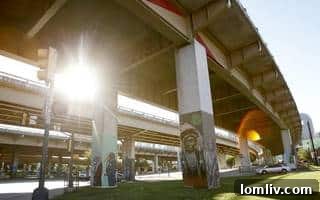
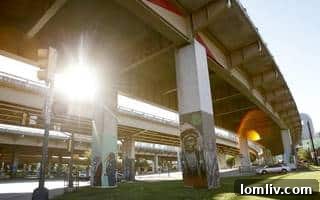
However, the conversation extends beyond mere infrastructure maintenance. For many, I-345 represents a physical barrier, an imposing concrete wall that fragments communities and stifles urban potential. Its elevated presence casts shadows over prime real estate, effectively isolating areas like Deep Ellum from the Central Business District. This division not only impacts connectivity but also hinders economic development and the organic growth of a cohesive urban environment. The question now is whether Dallas can afford to simply maintain the status quo, or if a bold, transformative approach is necessary to unlock the city’s full potential.
TREC’s Visionary Investment: Charting a New Future for Dallas
The Texas Real Estate Council (TREC) is no stranger to ambitious urban projects. Comprising an impressive 95% of North Texas’s top commercial real estate businesses—including developers, builders, brokers, attorneys, architects, and finance professionals—TREC has a vested interest in strengthening the region’s commercial real estate industry and enhancing its communities. Their track record speaks for itself; TREC played a pivotal role in funding and bringing to fruition Klyde Warren Park, a project that successfully transformed an urban highway deck park into a beloved public space and a symbol of Dallas’s revitalization efforts.
Building on this legacy, TREC views the I-345 debate as its next major community-focused real estate endeavor. The $125,000 commitment for a comprehensive study is a clear indication of their dedication to informed decision-making. As Linda McMahon, president and CEO of The Real Estate Council, articulated to the Dallas Business Journal, “We felt this was a good way that we can be engaged in the discussion and help a process that could determine the future of downtown Dallas. We want to look at all options and not just tearing down the freeway. We want to look at what could possibly happen if it was either redesigned or removed.” This inclusive approach underscores TREC’s commitment to a thorough evaluation, ensuring that all potential outcomes—from repair and redesign to complete removal—are carefully weighed against the long-term vision for Dallas.
“A New Dallas”: The Push for Connectivity and Walkability
Behind the growing momentum for I-345’s transformation are forward-thinking urban planners Patrick Kennedy and Brandon Hancock. Through their initiative, “A New Dallas,” they have passionately advocated for the removal of the freeway, envisioning a downtown that prioritizes people over cars. Their arguments align with contemporary urban planning trends observed in cities worldwide, where obsolete urban highways are being reimagined for greater public benefit.
Kennedy and Hancock highlight several compelling reasons for a radical change:
- Urban Connectivity: Tearing down I-345 could seamlessly reconnect Deep Ellum with the Central Business District, fostering a more unified and accessible urban core. This physical reconnection would undoubtedly spark new economic activity and cultural exchange between these vital districts.
- Land Reclamation: The land currently occupied by the freeway, estimated to be substantial, could be freed up for transformative development. This prime real estate could be allocated for much-needed affordable housing—townhomes, apartments, and condos—addressing a critical need in Dallas. Beyond residential, the space could host mixed-use developments, bringing new retail, office spaces, and vibrant public amenities to the heart of the city.
- Enhanced Walkability and Green Spaces: Replacing concrete with green infrastructure would not only improve the aesthetics of downtown but also mitigate the urban heat island effect. Imagine tree-lined boulevards, public parks, and pedestrian plazas where an ugly, heat-absorbing concrete overpass once stood. This aligns with the global trend of creating more walkable and bikeable cities, similar to efforts seen in places like San Francisco (with the removal of the Embarcadero Freeway) or Seoul (transforming the Cheonggyecheon Expressway into a linear park). While Dallas as a whole may not be entirely walkable, its downtown certainly has the potential to become a pedestrian haven.
The aesthetic argument is also strong; the sheer visual blight of the elevated freeway diminishes the urban experience. Repurposing sections of the old highway creatively for public art, innovative patios, or climbing walls could further symbolize a shift towards a more imaginative urban design.
Voices in the Debate: Supporters and Skeptics
The I-345 debate has naturally drawn strong opinions from various corners of Dallas. Mark Lamster, the esteemed architecture critic for the Dallas Morning News, is a staunch advocate for removal. He provocatively describes I-345 as “a noose that segregates the urban core from the rest of the city, suppressing its vitality and economic prospects.” Lamster, who has previously championed the need for diverse retail options within the Arts District, sees the freeway’s removal as a critical step toward a more integrated and economically robust downtown.
However, not everyone shares this enthusiastic vision. Some, like fellow Dallas Morning News columnist Steve Blow, are openly skeptical, dismissing the idea as “the silliest notion to come along in years.” Their concerns often revolve around the massive logistical challenge of rerouting the approximately 160,000 to 200,000 vehicles that use I-345 daily. Critics question where this significant volume of traffic would go, particularly for commuters traveling south on U.S. 75 to Houston or north to Plano. The thought of rerouting such traffic onto already congested arterial roads like Northwest Highway, which carries 80,000 cars daily without being a freeway, raises significant anxieties.
Adding another layer of complexity is the position of TxDOT, which initially seemed disinclined to consider removal, focusing instead on repairing I-345 to sustain it for another 25 years. This approach, essentially a “facelift,” represents a significant philosophical divergence from the transformative vision put forth by urban planners and TREC. Yet, the seriousness of the debate has permeated political circles, with Mayor Mike Rawlings publicly stating that the proposal “deserves more consideration, a second look.” This acknowledgment from the city’s highest office signals a willingness to engage with the possibility of profound urban change.
“We want to look at all options and not just tearing down the freeway. We want to look at what could possibly happen if it was either redesigned or removed.”
Linda McMahon, President and CEO of The Real Estate Council, to the Dallas Business Journal
Beyond the Freeway: A Holistic Vision for Downtown Dallas
The debate surrounding I-345 is not an isolated issue but rather an integral part of a broader conversation about downtown Dallas’s future. Any decision regarding the freeway must be meticulously integrated with a holistic plan for the entire urban core. This includes a critical examination of the existing street network, which many drivers and pedestrians describe as a “schizophrenic mess.” The current system of one-way streets, while designed for vehicle throughput, often creates confusion and discourages pedestrian activity, making it challenging for people to navigate the area on foot until they reach well-designed spaces like Klyde Warren Park.
A “freshening” of downtown Dallas streets could entail a multi-faceted approach:
- Re-evaluating One-Way Streets: Converting some one-way streets to two-way traffic can significantly improve accessibility, reduce driver confusion, and encourage lower speeds, making the environment safer and more pleasant for pedestrians and cyclists.
- Adding New Street Grids and Side Roads: Strategic additions of new streets and side roads could help disperse traffic more effectively, reducing reliance on a few major arteries and creating more permeable urban blocks.
- Investing in Pedestrian and Cycling Infrastructure: Beyond traffic concerns, a truly redeveloped downtown requires dedicated bike lanes, wider sidewalks, improved crosswalks, and inviting public spaces. This infrastructure is essential to support a walkable lifestyle and reduce the perceived stigma of “low income housing” often associated with walkable urban areas due to historic planning mistakes. Addressing the practicalities of a car-less existence—such as carrying groceries without plastic bags or navigating in stylish footwear—requires careful planning for public transport, shared mobility options, and convenient amenities.
- Integrating Public Transportation: Robust expansion and enhancement of DART services and bus routes would be paramount to mitigate traffic congestion if I-345 were removed. A comprehensive public transit system is the backbone of any successful car-optional urban environment.
The Real Estate Council’s study will delve into these complex interdependencies, investigating whether having a freeway slice through the city center truly represents the “best and highest use” of this valuable urban land, not just for today but for the next five decades. Could the land be used more effectively to generate economic opportunity, foster community, and improve the quality of life for Dallas residents? This in-depth analysis is crucial for charting a course that balances transportation needs with the aspirations for a vibrant, connected, and sustainable downtown Dallas.
The I-345 debate is a pivotal moment for Dallas. It represents an opportunity to move beyond incremental improvements and embrace a bold vision for urban transformation. The outcome of TREC’s study, coupled with ongoing public discourse and political will, will ultimately determine whether Dallas chooses to maintain its concrete past or forge a new, greener, and more connected future.