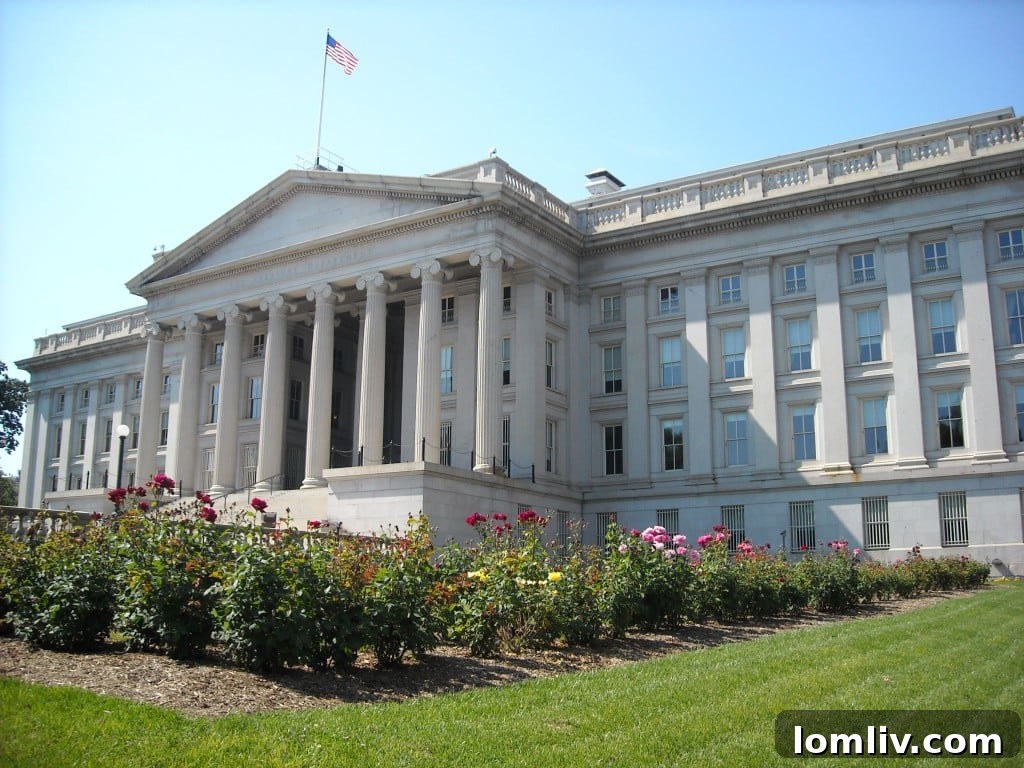
Unveiling the Owners: Treasury’s Landmark Push for Transparency in Luxury Real Estate
A significant development emerged today, as reported in The New York Times, signaling a potential paradigm shift in the luxury real estate market. The United States Treasury Department has announced a targeted initiative to track the identities of secret buyers making all-cash purchases of high-end properties. While this groundbreaking measure initially focuses on key markets like Manhattan and Miami, it represents a clear statement from federal authorities: the era of anonymous, cash-fueled real estate transactions may be drawing to a close. This move is particularly welcomed by those who have long struggled with the opaque nature of property ownership concealed behind various legal entities.
The Rising Tide of Secrecy: Why the Government Stepped In
For years, the anonymity afforded by shell companies, often structured as Limited Liability Companies (LLCs), has been a double-edged sword in the real estate world. While these entities offer legitimate benefits for privacy, asset protection, and estate planning, they have also become a preferred vehicle for illicit financial activities. Federal authorities, including the Treasury Department and various law enforcement agencies, have grown increasingly concerned about the use of these opaque structures to launder money, evade taxes, and stash ill-gotten gains within the seemingly secure confines of U.S. luxury real estate.
The problem is not a minor one. Data indicates a substantial portion of high-value real estate sales across the United States involves shell companies. Since the year 2000, a striking 44% of U.S. real estate transactions exceeding $5 million have been attributed to such anonymous entities. This alarming trend was meticulously documented in a series of investigative reports by The New York Times, which shed crucial light on the extent of this financial secrecy. These comprehensive reports served as a powerful catalyst, influencing policymakers in Washington D.C. to take decisive action.
Officials said the new government efforts were inspired in part by a series last year in The New York Times that examined the rising use of shell companies as foreign buyers increasingly sought safe havens for their money in the United States.
The use of shell companies in real estate is legal, and L.L.C.s have a range of uses unrelated to secrecy. But a top Treasury official, Jennifer Shasky Calvery, said her agency had seen instances in which multimillion-dollar homes were being used as safe deposit boxes for ill-gotten gains, in transactions made more opaque by the use of anonymous shell companies.
As Jennifer Shasky Calvery, a senior Treasury official, highlighted, while LLCs serve many legitimate purposes, the agency has uncovered numerous cases where high-value residential properties function as veritable “safe deposit boxes” for funds acquired through illegal means. The deliberate opaqueness provided by anonymous shell companies has historically made it exceptionally difficult for law enforcement to trace these funds back to their beneficial owners.
FinCEN’s Targeted Approach: Manhattan and Miami Under the Microscope
This federal intervention marks a pivotal moment, as it’s the first time federal authorities are compelling real estate-related businesses to fully disclose the identities behind all-cash transactions. The Financial Crimes Enforcement Network (FinCEN), an agency within the Treasury Department, is spearheading this effort through the issuance of Geographic Targeting Orders (GTOs). These GTOs mandate that title insurance companies, which are integral to nearly every real estate transaction, gather and report information on the true identities of individuals behind these anonymous purchases.
How Geographic Targeting Orders (GTOs) Work
The mechanism is straightforward yet impactful: title insurance companies are now required to identify the natural person or persons who ultimately own or control the shell company used in an all-cash luxury real estate transaction. This crucial information will then be submitted to the Treasury Department, where it will be compiled into a centralized database accessible to law enforcement agencies. This database is designed to empower investigators in their fight against money laundering and other financial crimes, providing an unprecedented level of transparency that has long been absent from this segment of the market.
The selection of Manhattan and Miami for this initial rollout is strategic. Both markets are global hubs for luxury real estate investment, attracting significant international capital and a high volume of all-cash transactions. Anecdotal evidence, supported by investigative journalism, suggests these cities have been particularly susceptible to the misuse of shell companies for anonymity. For instance, The New York Times previously delved into the ownership records of the Time Warner Center, an iconic condominium complex near Central Park, uncovering a web of hidden owners linked to government investigations, including international political figures and businessmen entangled in corruption scandals. Similarly, investigations revealed luxury condominiums in Florida tied to foreign officials under scrutiny. The raw data further underscores the problem: in Miami, 37% of buyers used shell companies, a figure surpassed only by the Bay Area, where 48% opted for such structures, hinting at potential future expansions of this initiative.
The Times examined a decade of ownership at an iconic condominium complex near Central Park, the Time Warner Center, and found a number of hidden owners who had been the subjects of government investigations. They included former Russian senators, a former governor from Colombia, a British financier, and a businessman tied to the prime minister of Malaysia, who is now under investigation. In Florida, The Times uncovered a condominium in Boca Raton tied to Mexico’s top housing official, who recently stepped down and is now a leading contender for the governor’s office in the southern state of Oaxaca.
Initial Scope and Thresholds
The GTOs specifically target all-cash sales involving shell companies. The financial thresholds for reporting are significant: in Manhattan, any residential real estate sale of $3 million or more will trigger the reporting requirement. In Miami-Dade County, the threshold is set lower, at $1 million for cash sales. These figures are not arbitrary; they encompass a substantial portion of the luxury market in these regions. For context, in the latter half of 2015 alone, Manhattan saw 1,045 residential sales priced at $3 million or higher, collectively representing approximately $6.5 billion in real estate transactions. In Miami, the $1 million threshold likely covers about half of the luxury market.
This initial phase is designed as a field test, running from March through August. The temporary nature of the program allows Treasury officials to assess its effectiveness in identifying suspicious money flows. If the findings reveal widespread involvement of illicit funds, the agency has made it clear that permanent and potentially nationwide reporting requirements will be developed, extending this enhanced scrutiny across the country.
In addition to starting in only two markets, the requirement runs from March through August. If Treasury officials find that many sales involved suspicious money, Ms. Calvery said, they would develop permanent reporting requirements across the country.
Beyond the Pilot Program: A Broader Federal Anti-Money Laundering Effort
This initiative is not an isolated measure but rather a critical component of a broader, intensified federal effort to combat money laundering, with a pronounced focus on the real estate sector. Federal law enforcement agencies, including the Federal Bureau of Investigation (FBI), have been allocating greater resources to investigate luxury real estate sales involving shell companies. The FBI has even established a new unit specifically dedicated to financial crime, with real estate money laundering as a central emphasis. This signals a unified and determined stance from the government to bring greater accountability and transparency to what has historically been a murky area of finance.
The implications of such scrutiny are vast, affecting billions of dollars in real estate transactions annually. It forces a recalibration of how business is conducted, particularly for those who have thrived in environments of minimal oversight. The message is clear: the federal government is watching, and it expects a higher standard of compliance and transparency from all participants in the luxury real estate market.
Implications for the Luxury Real Estate Market and Beyond
The real estate community, especially those involved in high-end sales, is bracing for the impact. Real estate agents, who often maintain strict confidentiality regarding their ultra-wealthy clients, will need to navigate new compliance requirements. While clients often value privacy for legitimate security concerns or personal preference, the government’s priority now leans towards preventing the abuse of anonymity. This could send “shudders” through certain segments of the market, particularly those accustomed to operating with minimal disclosure.
Potential Market Shifts and Compliance Challenges
The immediate effects in Manhattan and Miami could include a temporary cooling of the market for anonymous cash buyers, or a shift in capital flows. Developers, brokers, and title companies will face increased administrative burdens and the necessity to adapt to stringent new reporting protocols. This could necessitate greater investment in compliance departments and training. The requirement for title insurance companies to act as data gatherers places significant new responsibilities on an industry traditionally focused on property rights and risk mitigation.
The Future of Real Estate Transparency
Looking ahead, the success of this pilot program could dictate the future landscape of luxury real estate across the nation. Markets like San Francisco, where a high percentage of shell company purchases mirror Miami’s statistics, are likely next in line for similar GTOs. Other high-value urban centers or resort destinations could also find themselves under similar scrutiny. The challenge for these markets will be to balance legitimate privacy concerns with the imperative to prevent illicit financial activities.
However, an inevitable question arises: will this simply push illicit funds to alternative havens? Some speculate that buyers seeking ultimate anonymity might redirect their capital to offshore islands renowned for their financial secrecy, such as Grand Cayman or Nassau. This could, paradoxically, lead to a surge in property values in these international markets if the U.S. successfully tightens its domestic controls. Furthermore, for states like Texas, which are “non-disclosure states” and currently allow cash transactions to remain relatively private, the implications could also be significant if the federal government eventually mandates national reporting. More regulations and increased scrutiny, particularly for title companies, appear to be on the horizon, potentially creating more headaches but ultimately fostering a healthier, more transparent market.
What Does This Mean for You?
This evolving story underscores a crucial shift towards greater transparency in the global financial landscape. As the U.S. government strengthens its resolve to combat money laundering through real estate, understanding these changes is vital for investors, real estate professionals, and policymakers alike. We will be closely monitoring how these new regulations shape the future of luxury property ownership. But what are your thoughts on this landmark initiative? Do you believe it will be effective, or will it simply redirect illicit funds elsewhere?