Preston Hollow Development: Unpacking the Transwestern Delay and Community Dynamics
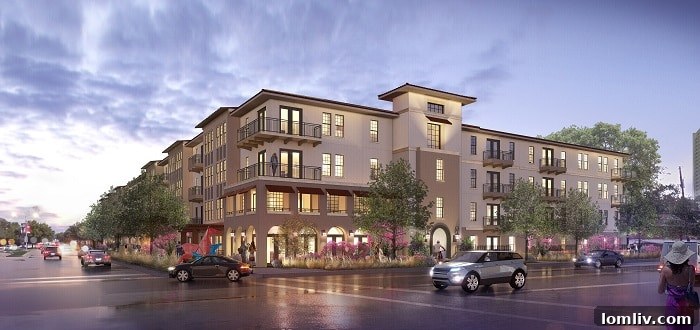
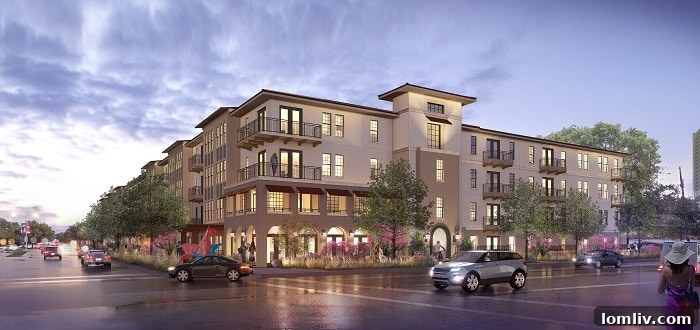
The recent two-week postponement of the Dallas Plan Commission’s decision on Transwestern’s proposed multi-family luxury apartment development at the pivotal intersection of Northwest Highway and Preston Road has sent ripples through the Preston Hollow community. After months of intricate discussions, compromises, and a particularly harmonious meeting at Park Cities Baptist Church, many anticipated a straightforward approval. The unexpected delay, however, has ignited fresh debate, casting a spotlight on the delicate balance between urban development ambitions and deeply rooted neighborhood concerns.
This delay, a surprise to many who had followed the project’s evolution closely, immediately sparked speculation regarding its origins. Fingers were quickly pointed at Ashley Parks, the former president of the Preston Hollow East Neighborhood Association. A vocal segment of single-family homeowners within her association—those residences immediately north of and adjacent to the revered “Pink Wall” neighborhood—reportedly contacted Councilman Lee Kleinman, asserting they had not received adequate notification about the latest development proposal. This claim, while seemingly simple, unpacks a more complex narrative surrounding evolving development plans and the intricacies of zoning compliance.
Evolving Plans and the Intricacies of Zoning Notification
The core reason for the alleged lack of notification among some residents stems from a significant modification in Transwestern’s development strategy. Under municipal law, developers are typically mandated to inform property owners within a specific radius, often 500 feet, of any impending zoning changes that could directly impact their properties. In this particular instance, Transwestern had revised its blueprint, requesting a zoning change for a considerably smaller segment of the overall property situated at the Northwest Highway/Preston intersection.
Crucially, the developer’s revised plan now entails constructing a substantial two-thirds of the project completely within the existing zoning parameters. This includes the portion of the development closest to the established single-family residential areas. Consequently, while the initial comprehensive re-zoning of the three-acre parcel “Behind the Pink Wall” might have affected 15 to 20 single-family homes, the current, scaled-back zoning request now directly impacts only a handful—approximately five to seven residences. This strategic shift, while potentially mitigating widespread opposition, also altered the legally defined notification zone, inadvertently leaving some residents who were previously within the scope, now outside it.
Community Leadership and the Challenge of Outreach
The narrative surrounding the delay quickly brought Ashley Parks into focus. She vehemently denied playing “games” or deliberately instigating the postponement. Speaking directly, she articulated the immense challenges of her volunteer role: “I’m a mother, I work, but I am not knocking on 1,100 doors to contact people.” She confirmed her awareness of the hearing and height modifications, having been contacted by me personally following our initial report on March 21st, though she hadn’t had the capacity to return the call at the time. Parks expressed her displeasure with the previous coverage of the Commission hearing, feeling it constituted a personal attack.
In her defense, Parks outlined the extensive communication efforts undertaken by her homeowner’s association. She confirmed that all relevant information was disseminated via the association’s website and through mass email correspondence to its members. She pondered whether the summer season contributed to reduced engagement, noting, “Maybe people don’t read emails in the summer?” She reiterated with conviction, “I did not ask for the two-week delay. Our association did not ask for a two-week delay. And I feel like I’ve done everything I can.” The identity of Margot Murphy, who reportedly requested the delay, remained unclear to Parks. It’s also important to note that just days before the August 20th Public Hearing, Parks had distributed approximately 400 emails, underscoring a proactive, if not universally effective, communication strategy.
The Persistent Question of Informed Consent
While acknowledging Ashley’s diligent efforts in disseminating information, it remains challenging to reconcile the claims of being uninformed with the neighborhood’s history of robust activism. This community has a well-documented track record of energetic engagement, particularly when it came to initially challenging the Transwestern development. The previous year saw residents actively campaigning, with “Not in Preston Hollow” signs prominently displayed from Northwest Highway to LBJ, and organized efforts to reach hundreds of households. The paradox is striking: a neighborhood that was once so unified and effective in its outreach now grapples with accusations of communication breakdown.
However, it is also crucial to contextualize the vigilance of homeowners like the Parks. Living on the very periphery of a community, particularly adjacent to a major proposed development, often instills a profound sense of protectiveness over one’s property and neighborhood character. Their determination to influence what is constructed in their immediate vicinity is entirely understandable. Indeed, many would likely react similarly when faced with significant changes to their residential landscape.
Urban Growth vs. Neighborhood Character: A Dallas Dilemma
Ashley Parks’ current stance on Transwestern’s latest plan reflects this complex dynamic. While she expresses greater satisfaction with the revised proposal, her ultimate conviction rests on the findings of an ongoing Land Use study, in which she is an active participant. “I would want to see how the Land Use study turns out in May,” she stated, emphasizing concerns about increased traffic. “If this area gets redeveloped, there will be more traffic. Can it handle it? We already know traffic is an issue.” This highlights a central tension in Dallas’s growth story: the imperative for modernization and increased density against the preservation of existing community fabric and infrastructure capacity.
This very discussion was at the forefront of the 17th Annual Dallas Homeowners League (DHL) Bootcamp, where urban expert Brandon Castillo delivered a compelling presentation on “The Return of the City.” Castillo underscored the evolving urban environment and what Dallas neighborhoods must do to adapt. His data-driven presentation highlighted the stark differences in tax revenues generated by various neighborhoods. For instance, West Village contributes a remarkable $290,320 per acre to the city’s coffers. In contrast, the 12 homes at Townhouse Row yield approximately $78,000 across roughly two acres. These figures provide a powerful economic argument for thoughtful, higher-density developments that can significantly bolster municipal tax bases, funding essential city services and infrastructure improvements.
While the concerns of homeowners like the Parks regarding their property are valid and deserve consideration, the broader perspective for Dallas’s long-term prosperity demands a vision that transcends individual backyards. For Dallas to mature gracefully and sustainably, it must embrace a degree of growth, and traffic, whether welcomed or not, is an inevitable component of that expansion. It is within this context that the Land Use study assumes critical importance. If conducted with genuine objectivity and comprehensive analysis, it possesses the potential to recommend not just the current proposed density, but potentially even higher density for the area “Behind the Pink Wall,” guided by data rather than purely emotional or localized objections.
The Political Subtext of the Delay
The two-week delay, in my assessment, extends beyond simple notification disputes. It appears to be a calculated political maneuver, primarily aimed at safeguarding Councilwoman Jennifer Gates, who had previously recused herself from this particular development deal. There is a strong suspicion that the phone lines were inundated with intense pressure, potentially even veiled threats of opposition campaigns against her, or worse. This delay, therefore, functions as a classic “Cover Your Ass” (CYA) strategy: a meticulous effort to ensure every “i” is dotted and every “t” crossed, leaving no room for future political vulnerability. This cautious approach is entirely understandable, especially considering the political fallout from previous controversies, such as the “Sam’s fiasco at City Place.” Elected officials, particularly in high-stakes zoning decisions, operate under immense scrutiny and must navigate a landscape fraught with community expectations and political pressures.
The Economics of Timing in Real Estate Development
In the high-stakes world of real estate, timing is often the most critical variable. The recent drop in the stock market, mentioned in passing, underscores the broader economic uncertainties that can swiftly impact large-scale investments. A two-week delay, while seemingly minor in the grand scheme of a multi-year project, can introduce unforeseen risks. For a developer like Transwestern, contemplating a monumental $100 million investment at a prominent Preston Hollow intersection, even short delays can alter financial projections, interest rates, and market sentiment. Could such a brief postponement, coupled with prevailing economic shifts, lead Transwestern to reconsider its commitment, or even withdraw from such an ambitious undertaking?
The answer, in real estate, is unequivocally: anything is possible. Large-scale urban developments are not merely architectural endeavors; they are complex tapestries woven from financial markets, community relations, political will, and the unpredictable currents of time. The Transwestern project, therefore, remains a compelling case study in the ongoing negotiation between progress and preservation in a rapidly expanding city like Dallas.