

The Rise of the “Baby Chasers”: Grandparents Redefining Retirement Living
In a fascinating shift in demographic trends, a growing number of Baby Boomers are making significant life changes, including cross-state relocations, to be closer to their grandchildren. This heartwarming phenomenon has earned them a distinctive new moniker: “Baby Chasers.” Far from being a niche trend, this movement is profoundly reshaping residential real estate markets, influencing everything from urban planning to home design across the United States. This article delves into the motivations behind this significant migration, the economic implications, and how the housing industry is adapting to meet the unique needs of this increasingly active and family-oriented demographic.
The concept of retirement once conjured images of tranquil, sun-drenched communities far from the hustle and bustle of family life. However, for a significant portion of today’s Baby Boomers, the golden years are defined not by serene solitude, but by the joyful presence of their grandchildren. This evolving perspective on retirement is a powerful driver of relocation, signaling a profound desire for deeper family connections and active involvement in the lives of younger generations. The “Baby Chaser” trend reflects a societal shift where geographical proximity to family is prioritized, even if it means navigating the complexities of selling a long-held home and settling into a new community.
Understanding the “Baby Chaser” Phenomenon and Its Impact
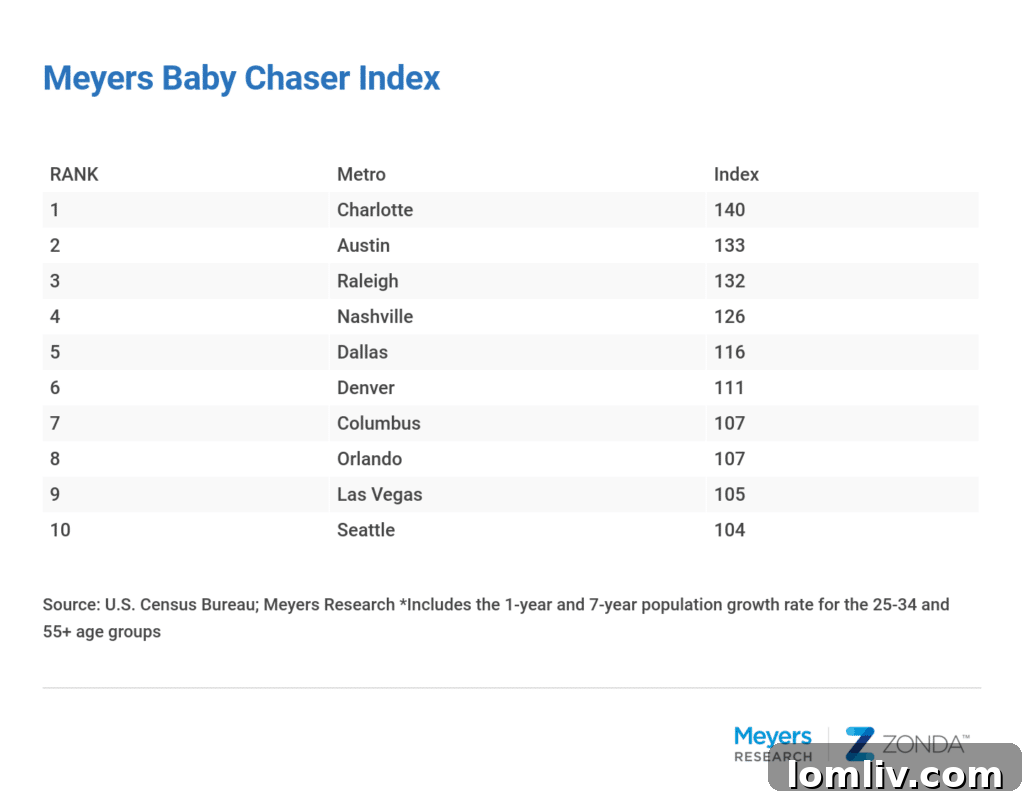
Recent research from the prominent real estate firm Meyers Research illuminates the scope of this trend. Their pioneering Meyers Baby Chaser Index reveals that a remarkable 25 percent of Baby Boomers are likely to retire in close proximity to their grandchildren. This often necessitates a move to an entirely new state, highlighting the strong emotional pull that overrides other typical retirement considerations. This statistic alone underscores the significant influence this generation has on housing markets and urban development, as their collective movement creates new demands and opportunities.
The Baby Chaser Index was specifically developed to identify the convergence points between Baby Boomer and Millennial migration patterns. By analyzing long-term demographic shifts alongside current real estate trends, the index offers invaluable insights into where these multigenerational households are choosing to establish their roots. This data is critical for developers, city planners, and real estate professionals seeking to understand and cater to the changing landscape of American communities. The focus isn’t just on where people are moving to, but also the broader economic and social factors influencing these family-centric relocations.
Key Destination Cities for Grandparent Relocation
According to Meyers Research, certain cities have emerged as prime destinations for “Baby Chasers.” Dallas, Texas, consistently ranks at the top of this list, alongside other thriving urban centers such as Charlotte, North Carolina; Austin, Texas; and Nashville, Tennessee. While Dallas’s growth for both Baby Boomers and younger age groups saw a slight deceleration in the latest data, it still maintains one of the highest migration rates in the country. These cities share common characteristics that make them attractive:
- Strong Job Markets for Millennials: These cities offer ample career opportunities, drawing in younger families and thus creating a gravitational pull for grandparents.
- Vibrant Communities: They boast diverse cultural scenes, excellent amenities, and a high quality of life for all age groups.
- Relative Affordability: Compared to coastal or traditionally expensive urban centers, these cities often present more accessible housing options, appealing to boomers looking to manage their retirement finances effectively.
The continued growth in these areas, particularly among the senior demographic, signals a robust and sustained interest in environments that foster both economic opportunity for their children and a comfortable, engaging lifestyle for themselves.
Reshaping Housing Dynamics: What Boomers Really Seek
Ali Wolf, Director of Economic Research at Meyers Research, emphasizes that “Baby Chasers” are fundamentally altering housing dynamics nationwide. As the Boomer generation ages, their housing requirements diverge significantly from those of younger buyers. They are not merely seeking smaller homes; they are looking for properties and communities that support their desire for active living, accessibility, and most importantly, proximity to family. This means developers must think beyond traditional single-family homes or age-restricted communities, focusing instead on integrated living solutions.
The Financial Prudence Behind Grandparent Moves
While often perceived as having substantial assets, affordability remains a paramount concern for Baby Boomers, just as it is for homebuyers of all ages. For many “Baby Chasers,” the relocation strategy is deeply rooted in financial pragmatism. They often aim to capitalize on the equity accumulated over decades in their current, larger homes. By selling their existing property and purchasing a somewhat less expensive residence in their new location, they seek to “pocket some money,” securing financial stability for their retirement years and potentially contributing to their grandchildren’s futures.
The success of this financial strategy, however, can vary significantly depending on the origin and destination markets. As Wolf’s report highlights, “That success depends on where they are coming from. In our top Baby Chaser market, Charlotte, for example, Rust Belt state relocators more frequently enter with less equity than those from New York.” This illustrates the critical importance of understanding regional economic disparities and housing market conditions when analyzing Boomer migration. Developers and policymakers must consider both the “where to” and “where from” to accurately assess the financial capacity and needs of these relocating seniors.
The “Secret Sauce”: Downsizing Without Downgrading
Tim Sullivan, Senior Managing Principal at Meyers Research, articulates the core philosophy driving the “Baby Chaser” market as a “secret sauce” characterized by the ability to “downsize, not downgrade.” This isn’t about sacrificing quality or lifestyle for a smaller footprint. Instead, it’s about optimizing living spaces and financial resources to achieve a desired quality of life, often with surplus cash from a previous home sale.
The key drivers for this active adult market are twofold:
- The ability to move down in size but not quality: Boomers want smaller, more manageable homes, but they are unwilling to compromise on finishes, amenities, or overall living standards. They seek well-designed, modern spaces that reflect their accumulated tastes and preferences.
- Paying for the new home with proceeds from the sale of a previous home with some cash left over: This financial flexibility is crucial, allowing them to not only secure a new residence but also to free up capital for travel, hobbies, healthcare, or supporting their families.
Crucially, Sullivan differentiates this trend from previous generations’ retirement moves. “What differentiates the Boomer buyer from their parents’ retirement process is that the Boomer is moving to, not away, from the kids.” This simple yet profound distinction underscores the primary motivation: family connection and active engagement, rather than a retreat from responsibilities.
Designing for the Grandparent Market: Features and Preferences
So, what exactly are these “Baby Chasers” looking for in their new homes and communities? The Consumer Sentiment and Product Insights Survey by Meyers Research provides a clear picture:
- Manageable Home Sizes: Homes under 2,500 square feet are highly desirable, offering less maintenance while still providing comfortable living space.
- Grandkid-Friendly Layouts: Despite smaller overall sizes, homes must feature ample common areas, spare bedrooms, and engaging outdoor spaces (like patios or small yards) to accommodate visiting grandchildren and host family gatherings.
- Accessibility and Universal Design: Features that ensure long-term livability, such as wider doorways and hallways, easy-to-use faucets, and accessible showers, are increasingly important. This allows for “aging in place” and accommodates potential mobility changes.
- Community Amenities: Access to parks, walking trails, community centers, and social activities that cater to active adults, fostering a sense of belonging and promoting a healthy lifestyle.
- Financial Incentives: Information on senior discounts or exemptions on property or income taxes can be a significant draw, further enhancing the financial appeal of a relocation.
Real Estate Developers Responding: Case Studies
The real estate industry is keenly aware of this burgeoning “downsizer” market. Developers are increasingly partnering to create housing options specifically tailored to these unique demands. A notable example is the collaboration between Grenadier Homes and California-based The Resmark Companies, who have teamed up to develop “right-size, right-price” housing options in Prosper, Texas, catering to both first-time buyers and grandparents.
Their development, The Villas at Windsong Ranch, embodies the ideal “Baby Chaser” home. These single-story, two or three-bedroom plans feature small private yards and/or patios, minimizing upkeep while maximizing outdoor enjoyment. Critically, these homes are built with Universal Design principles, a popular feature within the fast-growing 55-and-older market. This includes thoughtful touches like wider doorways and halls, lever-style door handles, and easier-to-use faucets and showers, ensuring that the homes remain comfortable and functional for buyers with varying mobility needs as they age.
Michael Zarola of Resmark explains, “We call them a move down buyer, and a lot of those folks are typically empty nesters where they might have had four or five people in a house at one point, and now they’re down to two. So what we’re finding is that they don’t need as much space.” This highlights the practical need for less square footage, but without compromising on the quality or modern conveniences expected by today’s sophisticated senior buyers.
Overcoming Challenges in the Downsizing Journey
Despite their strong financial standing, often boasting excellent credit and a history of homeownership, “Baby Chasers” and other downsizers sometimes face unique challenges. One significant hurdle is finding properties that they can comfortably live in for several more decades. The market, until recently, has not always offered a sufficient inventory of homes that are both smaller and age-friendly, without feeling like a compromise.
Zarola also points out the emotional aspect: “Sometimes it’s hard even though they’re very well-qualified buyers because they’ve owned a home for many, many years. They typically have equity built up in their current homes, but the dynamics of what we’re finding is that some of those buyers take a while to come to the conclusion that they want to downsize, and they think they need to hold on to that big home because they want the kids to come and visit and grandkids to be there.” This sentiment perfectly aligns with Meyers’ “Baby Chaser” findings, revealing the deep-seated desire to facilitate family gatherings, even if it means holding onto a larger, less practical home.
The Suburban Draw and Community Integration
Resmark’s market experience further corroborates the “Baby Chaser” research, particularly regarding location preferences. Zarola notes, “You don’t want to be far from the grandkids, and you actually want to be close to your children and your grandchildren. And so what we’re finding is that there’s a lot of these buyers want to be in suburban markets. They don’t want to be out in the middle of nowhere – they want to go to the same church that they went to, or that their kids and grandkids go to, and they want to go to the same grocery store, and so on.”
This insight underscores the importance of community and familiarity. “Baby Chasers” are often seeking to integrate seamlessly into existing suburban fabrics, valuing proximity to familiar social structures, amenities, and essential services. They want to maintain their routines, their social circles, and their sense of belonging while also being a vital part of their extended family’s daily life. This preference for established suburban areas, rather than remote retirement enclaves, further shapes the demand for specific types of housing and community planning.
The Enduring Appeal of Family: A New Retirement Paradigm
The “Baby Chaser” phenomenon is more than just a real estate trend; it represents a powerful cultural and social movement. It signifies a redefinition of retirement, where the focus shifts from self-indulgence to intergenerational connection and mutual support. Grandparents are not merely spectators in their grandchildren’s lives; they are actively seeking to be integral participants, offering childcare, wisdom, and boundless affection. This movement offers tremendous benefits to families, fostering stronger bonds, providing practical assistance, and enriching the lives of both young and old.
As the Baby Boomer generation continues to age, their collective decisions will continue to exert significant influence on housing markets, urban development, and community planning for decades to come. The “Baby Chaser” trend is a testament to the enduring power of family ties and the evolving desires of an influential demographic that continues to shape the world around them. Developers and policymakers who recognize and adapt to these profound shifts will be best positioned to meet the needs of this dynamic and deeply connected generation.