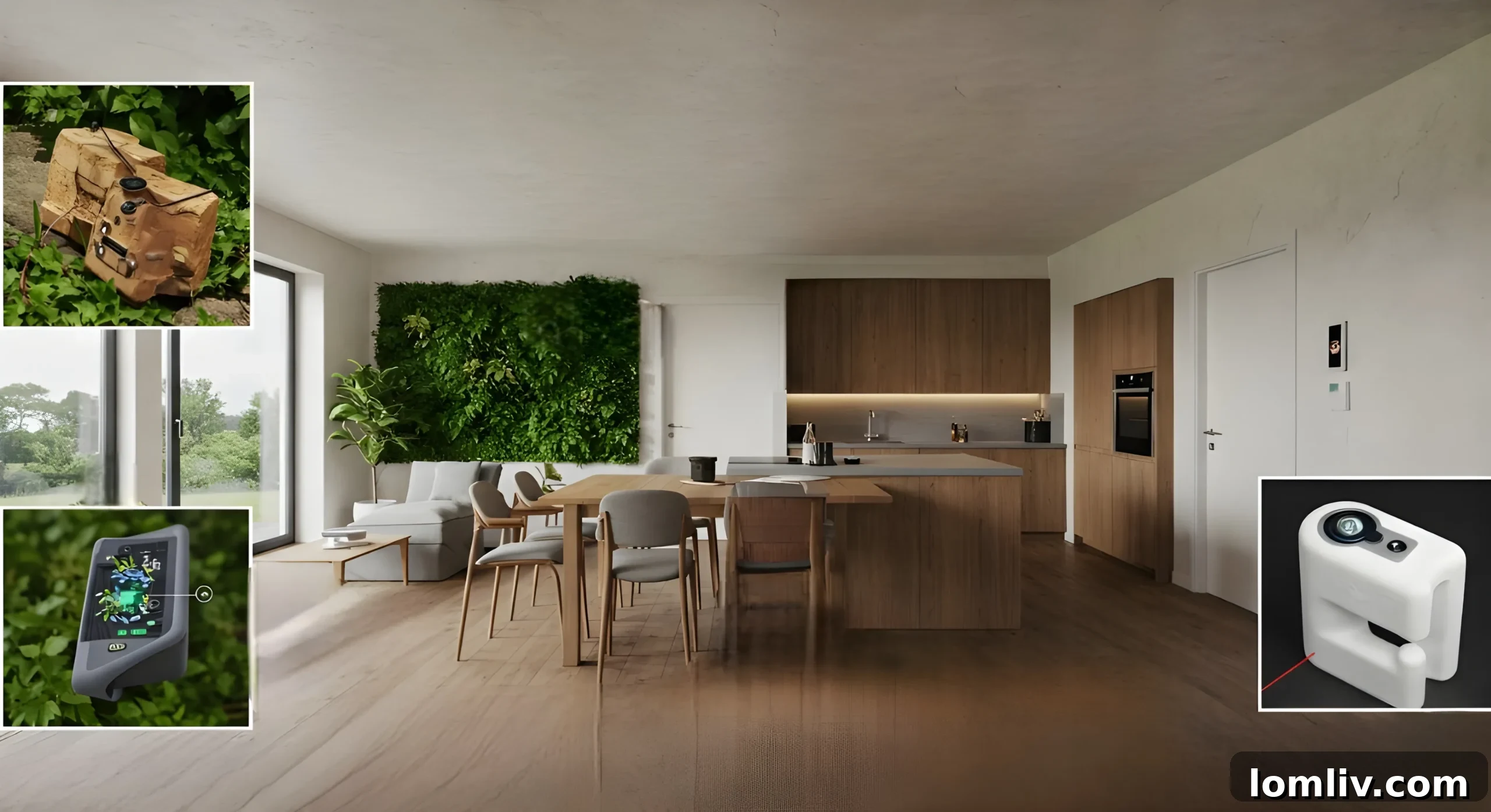
Technology has fundamentally transformed every aspect of our lives, and the world of interior design is no exception. Through the seamless integration of the Internet of Things (IoT), Artificial Intelligence (AI), and advanced design software, designers are now equipped with unprecedented tools to create spaces that are not only aesthetically pleasing but also smarter, more efficient, and deeply personalized. This technological revolution is redefining the possibilities within interior environments, pushing the boundaries of creativity, functionality, and sustainability.
The primary purpose of integrating technologies like IoT is to foster smarter, more efficient, and interconnected designs. IoT allows designers to embed digital attributes and sensors directly into products and spaces, thereby enhancing the interactive and personalized experience for users. Imagine living in a home where lighting adjusts to your mood, temperature adapts to your presence, and appliances anticipate your needs – all orchestrated by interconnected devices. Moreover, IoT significantly boosts the overall efficiency of a design, facilitating remote monitoring and dynamic control over various elements within a space, leading to optimized energy consumption and enhanced user comfort.
Simultaneously, AI technology has emerged as an incredibly powerful ally in interior design. It excels at generating innovative concepts, visualizing complex spaces, and even suggesting design solutions tailored precisely to individual preferences. Modern interior design applications and websites increasingly leverage AI to perform sophisticated tasks such as scanning existing rooms, recommending suitable furniture options, and proposing harmonious color schemes based on a user’s aesthetic likes and dislikes. This intelligent assistance streamlines the design process, making it more accessible and intuitive for both professionals and homeowners.
Further amplifying these capabilities, 3D software and Virtual/Augmented Reality (VR/AR) technologies bring a multitude of advantages to the interior design industry. Advanced 3D modeling tools empower designers to visualize their creations with exceptional accuracy and detail, moving beyond traditional sketches and blueprints. Meanwhile, VR and AR technologies offer an even more profound leap forward, providing a highly realistic and immersive preview of how a finished space will look and feel long before construction even begins. This enables clients to “walk through” their future homes, making informed decisions and adjustments in a truly interactive environment.
Let’s take a closer, in-depth look at how various technologies are not just shaping the interiors of today but are actively defining the future of design:
Foundational Tools: Precision, Visualization, and Immersive Experiences
At the very core of modern interior design lies a suite of foundational tools that have set a new benchmark for both accuracy and creative expression. These technologies are indispensable, transforming initial ideas into tangible realities, guiding the entire process from the earliest conceptualization stages all the way through to the meticulously crafted finished space. They represent the digital backbone that empowers designers to innovate with confidence and precision.
1. CAD (Computer-Aided Design) Software
In the realm of interior design, programs such as AutoCAD, SketchUp, and Vectorworks are extensively utilized for both precise 2D drafting and sophisticated 3D modeling. AutoCAD is renowned for its unparalleled precision in creating technical 2D drawings, essential for detailed floor plans and elevations. SketchUp, on the other hand, stands out for its intuitive and user-friendly 3D modeling and visualization capabilities, making it ideal for rapid prototyping and conceptual design. Vectorworks expertly combines robust 2D design features with advanced 3D modeling functionalities, offering a comprehensive solution that caters to diverse design needs and project complexities.
2. BIM (Building Information Modeling)
BIM (Building Information Modeling) takes the interior design process to an entirely new level, making the entire project workflow smoother, more integrated, and remarkably connected. With BIM, all stakeholders—designers, architects, engineers, contractors, and clients—work concurrently from a single, intelligent 3D model. This “single source of truth” approach dramatically improves communication and coordination, minimizing misunderstandings and errors. Designers can effortlessly generate realistic visualizations, meticulously fine-tune space planning, and accurately estimate costs and material quantities. BIM significantly streamlines processes, saving considerable time and resources throughout the project lifecycle. Clients particularly value the ability to visualize their space with extraordinary detail before any construction begins, providing peace of mind and allowing for early adjustments. It also fosters greater collaboration, ensuring that the entire project team remains perfectly aligned, regardless of their individual backgrounds or specialties. Planning becomes more strategic, and integrating new technologies or making design revisions is handled with ease, as updates propagate instantly across the model. This early detection of potential issues prevents costly mistakes, and budgeting becomes far more accurate. Furthermore, BIM is a powerful tool for analyzing and ensuring the energy efficiency and sustainability of a design, allowing for informed decisions regarding material selection and system integration.
3. 3D Rendering and Visualization
3D rendering and visualization are critical components in contemporary interior design, transforming abstract concepts into tangible, photorealistic representations. Rendering is the process of converting a 3D model into a realistic 2D image, complete with textures, lighting, and environmental effects, making it indistinguishable from a photograph. 3D visualization, broadly, encompasses the use of software to create a three-dimensional view of the design, allowing for exploration from various angles. These powerful tools enable both designers and clients to experience the intended look and feel of a space long before any physical construction or material procurement. This pre-visualization capability is invaluable for making confident design decisions, obtaining client approvals, exploring different material palettes, and mitigating any potential surprises or disappointments down the line, ultimately leading to more successful project outcomes.
4. Virtual Reality (VR) and Augmented Reality (AR)
VR (Virtual Reality) and AR (Augmented Reality) are rapidly gaining traction in interior design, offering designers and clients unparalleled opportunities to experience spaces in profoundly immersive and interactive ways. With VR, users can step into a completely digital, hyper-realistic environment, allowing them to virtually walk through a proposed design, change materials, adjust lighting, and experience the scale and flow of a space as if they were physically present. This level of immersion significantly enhances understanding and decision-making. AR, conversely, overlays digital details and 3D models onto the real world around you, typically through a smartphone or tablet. Imagine holding up your phone and seeing a virtual sofa placed perfectly in your living room, or visualizing different paint colors on your walls in real-time. Both technologies dramatically bridge the gap between imagination and reality, helping clients fully grasp the design vision and make informed choices.
5. Interior Design Apps
Mobile applications and dedicated websites have become indispensable tools for interior designers and design enthusiasts alike. These platforms offer a vast array of functionalities, from realistic visualizations and intuitive space planning tools to extensive databases for sourcing new ideas, exploring product catalogs, and staying abreast of the latest design trends. They empower users to create mood boards, experiment with layouts, and visualize furniture placement with remarkable ease and accuracy. In essence, digital technology has democratized and transformed the way designers and homeowners conceptualize and bring their interior ideas to life, making the entire process more streamlined, creatively liberating, and widely accessible for everyone.
6. 3D Scanning
3D scanning technology provides an incredibly precise method for creating an exact digital replica of an existing space. By employing laser scanners or photogrammetry, it accurately measures dimensions and captures the current visual state of a room or building. This digital copy can then be seamlessly imported and utilized within CAD or BIM software. This “scan to BIM” process yields a highly detailed and accurate model of the existing building, which proves invaluable for a multitude of applications. It is particularly beneficial for renovation projects, allowing designers to plan interventions with perfect knowledge of existing conditions. It also aids in facility management, historical preservation, quality control during construction, and creating comprehensive asset records, ensuring that every design decision is based on highly accurate foundational data.
The Intelligent and Connected Space
The advent of smart interior technology empowers designers to work with unprecedented speed, unleash greater creativity, and craft spaces that are inherently comfortable, highly personalized, and exceptionally responsive to their occupants. By integrating sophisticated tools like advanced 3D design, immersive VR experiences, and intelligent systems for lighting, climate control, furniture, and security, designers can now create environments that are not only aesthetically captivating but also significantly safer, more energy-efficient, and supremely functional. These intelligent spaces represent the pinnacle of modern design, where technology enhances every aspect of daily living.
1. Smart Home Integration
Smart home technology is rapidly becoming a cornerstone of modern living, and its seamless incorporation requires the expertise of a professional interior designer. These designers go beyond merely making a space look beautiful; they possess the knowledge and skill to integrate discreet elements like smart lighting systems, intelligent thermostats, automated blinds, and advanced security cameras in a way that harmoniously blends with the overall design aesthetic. Their expertise ensures that homeowners can fully embrace the convenience, energy efficiency, and enhanced security offered by smart technology without compromising the style or integrity of their living space. The result is a home that is intuitive, responsive, and effortlessly sophisticated.
2. Artificial Intelligence (AI)
Artificial Intelligence (AI) is rapidly transforming interior design by offering analytical power and creative assistance that was previously unimaginable. AI can meticulously analyze interior designs against user preferences, learning from past choices and feedback to refine future suggestions. It provides invaluable assistance with optimizing space planning and generating realistic visualizations. Leveraging sophisticated algorithms, AI is capable of delivering personalized recommendations for furniture, decor, and layouts, conducting comprehensive trend analyses to predict future styles, generating efficient layout plans that maximize space utilization, and creating stunningly realistic visualizations that aid in decision-making. Beyond ideation, AI can also analyze vast datasets to predict emerging interior design trends, assist with complex project management tasks by automating scheduling and resource allocation, and even contribute to the creation of highly functional and environmentally friendly designs through material optimization and energy performance simulations. With AI as a partner, interior designers can significantly boost their efficiency, expand their creative horizons, and consistently deliver more personalized and higher-quality design solutions that precisely meet the unique needs and desires of their clients.
3. Innovations in Smart Materials and Textiles
Technology is a powerful catalyst for innovation in interior materials, driving the development of a new generation of sophisticated products. This includes the production of lightweight yet incredibly high-strength composite materials, offering durability and flexibility for diverse applications. Furthermore, there’s been significant progress in creating novel materials, such as temperature-responsive glass that adjusts transparency based on external conditions, and smart textiles that can change color, generate light, or even monitor health. Advanced manufacturing techniques like 3D printing play a crucial role, enabling the creation of intricate forms while simultaneously minimizing material waste. Beyond this, technology facilitates the development of energy-saving and environmentally friendly materials, such as bio-based composites and recycled content, contributing to sustainable design practices. These innovations, combined with intelligent systems, further enhance comfort, efficiency, and aesthetic appeal within modern interior spaces.
Creation, Customization, and Streamlined Collaboration
The interior design process is dynamically evolving, empowered by innovative tools that significantly enhance a designer’s ability to customize their work and collaborate effectively with others. These technological advancements provide designers with unparalleled freedom to explore daring creative ideas and intricate bespoke solutions without compromising project timelines or efficiency. The result is a design landscape where imagination meets practicality, leading to more unique, client-centric, and smoothly executed projects.
1. 3D Printing: Customization Unleashed
3D printing has truly revolutionized the furniture design and production landscape. It has made the creation of custom pieces with complex geometries and intricate forms—previously considered nearly impossible or prohibitively expensive using traditional manufacturing methods—remarkably accessible. Designers can now rapidly tweak the size, shape, material, and even texture of a design in mere moments, offering unparalleled flexibility when crafting bespoke items for specific clients or unique spaces. This technology facilitates rapid prototyping at a fraction of the cost and time, making small-batch runs and highly individualized production economically viable. From elegantly ergonomic chairs that contour perfectly to the human form to ingeniously creative modular shelving systems, 3D printing is enabling a new era of personalized and innovative furniture design. The continuous advancements in materials and printing techniques suggest an exciting future where furniture will be more adaptable, personal, and sustainable than ever before.
2. Collaboration Tools: Connecting Teams and Clients
Effective communication and seamless teamwork are paramount to the success of any interior design project. Modern cloud-based collaboration software, such as Miro, Asana, Trello, and specialized design project management solutions, have dramatically simplified this critical aspect. These platforms centralize all project-related information, from direct messages and secure file sharing to detailed design critiques and version control, into one easily accessible location. This integration ensures that teams, clients, and contractors can communicate effortlessly and efficiently, regardless of their geographical location. The result is a significant reduction in workflow friction, a highly streamlined project management process, and a substantial improvement in overall project performance and client satisfaction. These tools foster transparency and allow for real-time feedback, ensuring everyone remains perfectly aligned throughout the project lifecycle.
3. Designing for a Better Future: Sustainability and Data
Designing for sustainability means embedding eco-friendly principles into every decision point of a project. This involves making informed choices about materials—prioritizing those that are recycled, renewable, locally sourced, and non-toxic—ensuring product longevity and considering the end-of-life cycle through reuse or recycling. It’s about creating durable, repairable items that minimize waste, supporting a circular economy. Crucially, it also involves leveraging data to make smarter decisions about energy consumption, water usage, and indoor air quality, ensuring resources are utilized wisely. All of this must be achieved while striving to minimize the environmental impact of the digital tools and processes themselves, from cloud computing energy footprints to the manufacturing of design hardware. This holistic approach ensures that designs are not only beautiful and functional but also responsible and future-proof.
The Rise of Sustainable Design Technology
The growing popularity of eco-friendly design is intrinsically linked to advancements in technology. Technology acts as a powerful enabler, making it significantly easier for designers to assess the environmental impact of their material choices, accurately predict a space’s energy consumption, and optimize the utilization of natural elements like daylight and fresh air. Sophisticated tools, often integrated directly into design software or available as standalone applications, can perform detailed energy simulations to forecast a building’s energy needs. Furthermore, online platforms and databases simplify the process of sourcing materials that are certified sustainable, made from recycled content, or reclaimed from previous uses. Post-occupancy, smart building technology plays a vital role by continuously monitoring and managing energy and water usage, providing valuable data for ongoing optimization and ensuring the space operates as sustainably as designed.
1. Data-Driven Design and Personalization
The strategic application of data is profoundly transforming our ability to create interior spaces that are truly tailored to individual occupants and their specific needs. With the proliferation of advanced technologies, designers can now analyze a wealth of information derived from various sources, including environmental sensors, direct client feedback, behavioral patterns, and even broader market trends. This data-driven approach facilitates smarter decision-making across the entire design process. It enables the creation of layouts that are optimally functional for how people genuinely use a space, the selection of materials that enhance well-being and meet specific performance criteria, and the development of rooms that precisely match individual preferences—not just in terms of aesthetics, but also in terms of functionality, comfort, and environmental responsiveness. This ensures every design choice is substantiated by real-world insights, leading to highly effective and deeply satisfying environments.
2. Navigating the Technological Shift: Challenges and Considerations
While the offerings of technology to the interior design industry are immense and transformative, its wholesale adoption is not without its unique set of challenges and important considerations. Designers must proactively address these hurdles to fully harness the potential of digital tools and integrate them effectively into their practice. The initial investment required to acquire cutting-edge software and hardware can be substantial, posing a barrier for smaller firms or independent designers. Furthermore, mastering new, complex programs often involves a steep learning curve, requiring dedicated time and resources for training. Significant concerns also arise regarding data privacy and security, particularly with the widespread deployment of IoT devices and AI systems that collect vast amounts of personal and environmental data. Ethical implications surrounding AI-driven design, potential job displacement, and the need to ensure equitable access to these powerful new devices across the industry are also paramount. Ultimately, it is crucial to ensure that technology serves as a supportive catalyst, enhancing and expanding the natural creative process of designers, rather than dictating, stifling, or mechanizing it.
What’s Next for Tech in Interior Design?
The trajectory of technological innovation in interior design shows no signs of slowing; rather, it promises to accelerate, ushering in an era of unprecedented possibilities. We can anticipate the emergence of even more intelligent AI co-designers, equipped with sophisticated problem-solving abilities and generative design capabilities, working alongside human designers to push creative boundaries. Hyper-personalization, driven by biometric data and advanced AI, will allow spaces to adapt and respond to an individual’s unique physiological and psychological needs in real-time. Robotics are poised to perform increasingly sophisticated tasks in on-site construction, modular fabrication, and custom production, streamlining processes and enhancing precision. Furthermore, the burgeoning concept of the metaverse holds the potential to profoundly reshape how we experience and interact with virtual or pre-construction spaces, offering digital twins for real-world projects, immersive client presentations, and collaborative design sessions in virtual environments. The continuous research and development of sustainable, intelligent, and even self-assembly materials will unlock entirely new innovative opportunities, leading to adaptable, responsive, and environmentally conscious interiors. Ultimately, tech-savvy designers who consciously and thoughtfully integrate these new technologies into their practice will be best positioned for success, capable of designing innovative, highly efficient, sustainable, and exquisitely customized environments for the future. Technology is not merely transforming how designers work; it is fundamentally broadening the very definition of what is creatively and functionally achievable within interior spaces, inviting us into a future where design is truly intelligent and limitless.