By Phil Crone
Executive Officer, Dallas Builders Association
The Lumber Crisis: How Skyrocketing Prices Imperil the Booming Housing Market
The residential construction sector has demonstrated remarkable resilience, largely thriving amidst the widespread disruptions and economic despair triggered by the COVID-19 pandemic. Fueled by historically low mortgage rates and a renewed emphasis on the sanctity and importance of home, the stage was set for 2021 to potentially achieve an unprecedented regional record for housing starts. However, a formidable obstacle now casts a long shadow over these aspirations: the skyrocketing cost of lumber, which is rapidly pushing the dream of homeownership out of reach for thousands of families across the nation.
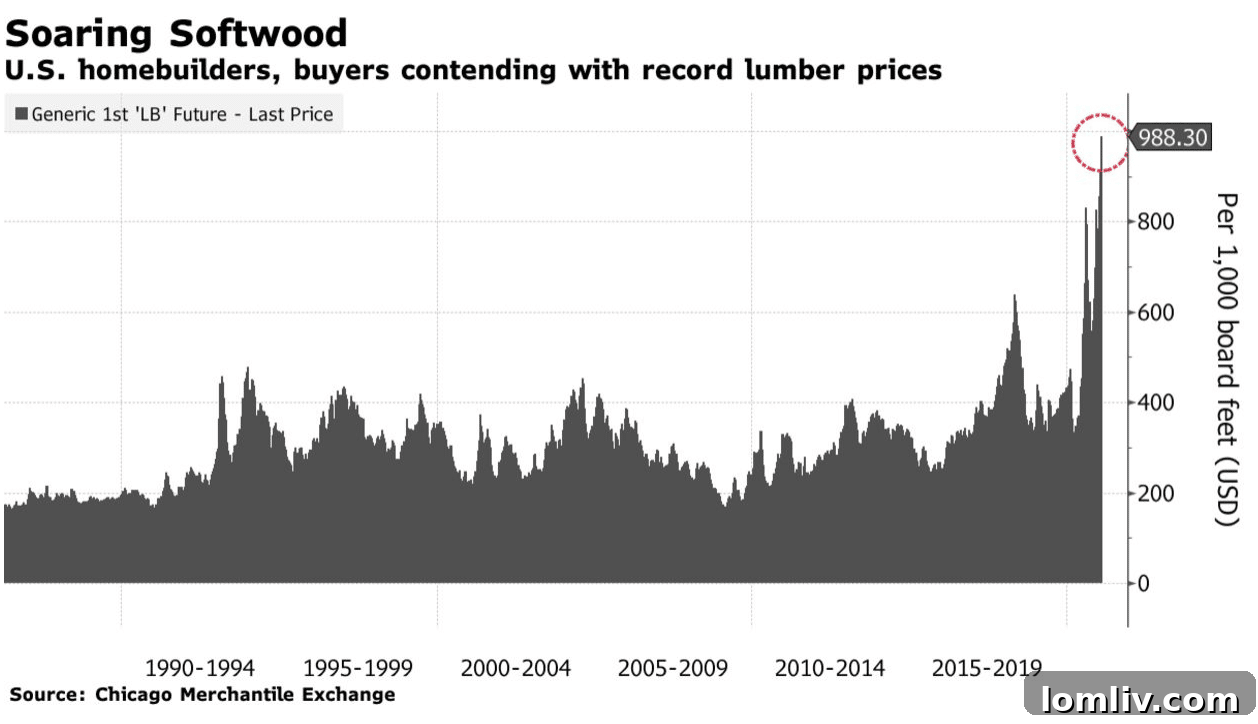
This unprecedented price surge in building materials presents a significant headwind that threatens to derail the projected 52,000 housing starts we might otherwise anticipate. Beyond mere projections, the tangible impact of these inflated costs is profound, directly eroding the affordability of new homes and creating a ripple effect across the entire housing ecosystem. The National Association of Home Builders (NAHB) reports that since last spring, lumber prices have escalated by more than 180 percent. This dramatic increase translates to an additional cost of over $24,000 for the average new single-family home. To underscore the severity of this issue, the Texas Real Estate Research Center at Texas A&M highlights that even a modest $1,000 increase in home costs can prevent approximately 20,000 Texas families from affording a new single-family home. This statistic alone paints a stark picture of the crisis at hand.
Understanding the Roots of the Crisis: More Than Just Demand
While much discussion has focused on how surging demand for housing is driving these price increases, and it certainly plays a significant role, the full story is far more complex. A critical, often overlooked, component of this crisis is the severe deficiency in supply. The challenges stem not merely from an insatiable appetite for new homes, but from systemic failures within the lumber production and supply chain that have compounded the issue.
A year ago, amidst the nascent stages of the pandemic, both mill operators and lumber dealers profoundly misread the market signals. In fairness, the uncertainty of that period led many industries to similar miscalculations. Prior to the pandemic, national trends for housing starts and remodeling showed a slight softening. At this sensitive juncture, the industry was already contending with substantial tariffs imposed on Canadian lumber during the early days of the Trump administration. These tariffs, which have since been halved and critically deemed to lack factual justification by the World Trade Organization, played a pivotal role in distorting market dynamics.
As illustrated by historical price data, this period marked a significant pre-COVID price spike. Domestic lumber producers, who had actively lobbied for these tariffs, found themselves in a unique position. With competition stifled from Canada, historically the overwhelming majority supplier of foreign lumber to the U.S., these producers were able to reduce their production output and concurrently raise prices with relative impunity. It was only when the housing industry raised serious concerns about potentially nefarious market behavior to the Commerce Department that prices saw an almost immediate normalization, albeit temporarily.
By May and June of last year, it became unequivocally clear that the housing boom was not a fleeting phenomenon but a powerful, enduring trend. The profound impact of the pandemic had fundamentally shifted consumer priorities, elevating the importance of “home” to an unprecedented level. This surge in demand was projected to persist for many months as the pandemic continued its grip. Yet, despite these glaring market signals, lumber producers inexplicably failed to ramp up production, allowing inventory levels to plummet to record lows by the fall of 2020. This failure to respond adequately to overwhelming demand set the stage for the current crisis.
DFW’s Resilient Growth Amidst Supply Shortfalls
The Dallas-Fort Worth (DFW) metropolitan area serves as a prime example of this robust demand. The fourth quarter of 2020 was, in fact, the best final quarter on record for the DFW region, providing more than 13,000 housing starts, according to Zonda. This outstanding performance marked the fourth-highest quarter ever for our region, representing a remarkable increase of nearly 40 percent year over year. These figures were not anomalies; month after month, quarter after quarter, the indicators were crystal clear, and the upward trends were glaringly obvious to anyone observing the market.
Despite these undeniable signs of a thriving market and rampant unemployment across the nation, most lumber mills bafflingly operated significantly below their full capacity. Many were running only two of three possible shifts, a decision that has fueled skepticism and frustration within the building community. The stark contrast between overwhelming demand and underutilized production capacity strongly suggests a deeper, more systemic issue within the lumber industry. Indeed, something within this supply chain “stinks,” as many industry observers have aptly noted.
The Persistent Failure of Competition and Production
It is understandable to excuse the initial “sky is falling” reaction that gripped us all in March and April of last year, leading lumber mills to be caught unprepared during the subsequent demand surge in the summer. What remains far more challenging to explain or justify is the continued persistence of this situation. The fundamental principles of economics dictate that if a product is in high demand, producers should naturally increase supply to capitalize on market opportunities; if they do not, another competitor will step in. Unfortunately, in the current lumber market, this basic economic law appears to be suspended due to a critical lack of effective competition.
The “someone else” who should be stepping up is either foreign competition or domestic competition. Foreign competition, particularly from Canada, remains curtailed by the aforementioned tariffs, or by prohibitively high transportation costs from other global regions. Domestically, despite fervent promises to address the issue, there has been a stunning lack of competitive response in the wake of the Trump tariffs. This absence of robust domestic competition, even when profit margins are historically high, is a significant part of the problem. It raises serious questions about market concentration and the motivations behind maintaining lower production levels.
Recognizing the gravity of this situation, bipartisan efforts are underway to address the crisis. On March 4, Representatives Jim Costa (D-Calif.) and Jodey Arrington (R-Texas) dispatched a compelling letter to President Biden and the Department of Justice. Their letter urged the administration to take decisive action in response to the escalating prices and persistent supply shortages of critical building materials, especially lumber, which are severely harming the housing market and jeopardizing the broader economic recovery.
Reps. Costa and Arrington echoed the concerns widely shared by industry professionals, emphasizing the urgent need to significantly boost sawmill activity. “Unfortunately, this unprecedented price increase on new homeowners, as well as home builders, will persist until new sawmills come online and current mills re-open and operate at full capacity,” their letter articulated. They further stressed the imperative for governmental intervention: “To address this issue, we ask your Administration to facilitate a discussion with all stakeholders, including sawmills, home builders, loggers, and distributors, to ensure all needs are met in a timely manner.” This call for a collaborative, multi-stakeholder approach underscores the complexity and systemic nature of the challenge.
Advocacy and the Path Forward for Housing Affordability
Builders nationwide are bracing for massive limitations in 2021 due to these pervasive supply-side challenges. Every member of the Dallas Builders Association I interact with consistently identifies material pricing, availability, and extended delivery times as their foremost concerns. This collective anxiety highlights the critical need for a concerted industry response. Consequently, these pressing issues will be a central focus of our upcoming State of the Industry Summit on March 25, an event designed to foster dialogue and strategize solutions within the building community. Registration details are available at DallasBuilders.org.
A recent study conducted by the NAHB confirms that builders across the nation share these sentiments, identifying materials pricing and availability, along with delivery times, as the two most significant market impediments. With the increasing rollout of safe and effective vaccines bolstering optimism on both the employment and broader economic fronts, the demand for housing and, consequently, lumber, is projected to remain exceptionally high. This sustained demand, coupled with constrained supply, means that prices will continue their upward trajectory unless producers commit to supplying the market with the volume it urgently requires. The future of housing affordability and the stability of the residential construction sector hinge on swift and decisive action from all industry participants and governmental bodies to resolve these critical supply chain dysfunctions.

Phil Crone is the executive officer of the Dallas Builders Association, the premier trade association and vital network for builders and associates in the Dallas area. For more information about the DBA’s advocacy efforts and community initiatives, please visit dallasbuilders.com.