

As the calendar turns to a new year, the real estate landscape buzzes with anticipation. Yet, time and again, we witness a familiar pattern: “experts” emerge with a barrage of vague predictions – insights so broad they’re almost guaranteed to be “in the ballpark,” offering little in the way of actionable intelligence. At Daltxrealestate.com, we believe real insights should be precise, impactful, and dependable.
That’s precisely why we’re taking a different approach. We’re committed to delivering exact and concise real estate predictions for the upcoming year that we confidently guarantee will materialize. Our promise is simple: if our predictions don’t come true, you’ll receive a full refund on your annual subscription. Such a bold guarantee underscores our conviction in the thorough research and deep market understanding that underpins every forecast we make. We can’t afford to be wrong, and you deserve nothing less than certainty.
For those eager to stay ahead of the curve with daily, reliable real estate insights, we invite you to subscribe to Daltxrealestate.com’s daily newsletter here. It’s your direct line to the most relevant trends and expert analyses in the Dallas-Fort Worth metropolitan area and beyond.
Beyond the Obvious: What We Won’t Predict for Tarrant County Real Estate
In reviewing past real estate forecasts, a consistent theme emerges: many predictions merely reiterate well-trodden ground. While accuracy is always commendable, redundancy offers little value. For 2022 and moving forward, our “Tarrant County Tuesday” series aims to cut through the noise, providing fresh perspectives rather than rehashing worn-out narratives. Therefore, we will deliberately avoid making statements or predictions about the following topics, which have been dissected ad nauseam over the past half-decade:
- The ongoing population growth of the Greater Fort Worth area, which continues its vibrant expansion, visibly transforming the region.
- The persistent challenges within the global supply chain, an issue whose resolution is clearly not on the immediate horizon.
- The fluctuations of interest rates, a topic that often garners more discussion than it yields clarity or actionable insight.
- The chronic shortage of existing home inventory, a refrain that has become an almost constant backdrop in market discussions.
- The parallel scarcity of new home inventory, prompting continuous pleas for accelerated development and construction efforts.
- The escalating rental rates, a trend that unfortunately shows little sign of abatement.
- And, for a touch of levity, we won’t be discussing bow ties, despite their undeniable coolness and timeless appeal.
These subjects, while undeniably important, have been extensively covered. There’s little new insight to glean by revisiting them. Instead, Daltxrealestate.com is ready to unveil a set of truly novel and impactful predictions for Tarrant County and the broader North Texas region, offering a clearer, forward-looking view of what to expect in 2022 and the years to come.
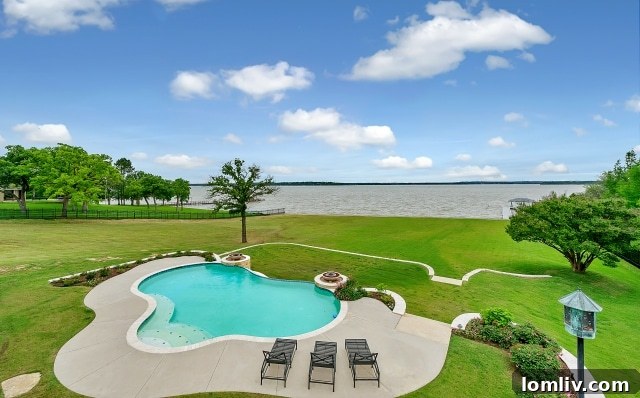
1. The Rise of the Beyond-Burbs: Tarrant County’s New Frontier
It wasn’t long ago that areas like Keller, Southlake, Burleson, and Aledo represented the furthest reaches of suburban living in Tarrant County. Moving to Aledo, deep in Parker County, or embracing country life in Burleson, situated in Johnson County, truly meant venturing into the “outer suburbs.” Today, these once-remote locales are integral parts of the Greater Fort Worth fabric, bustling with residents who work and play within the metro area. Haslet, once a quiet, distant outpost, is now experiencing explosive growth, fundamentally redefining what constitutes the “suburbs.” This evolution signals the dawn of the “Beyond-Burbs.”
In 2022 and beyond, prepare to witness a significant surge in interest for towns such as Granbury, Alvarado, Brock, Grandview, Godley, Joshua, Azle, Argyle, and Springtown. These communities, once deemed impractical for those commuting to central Fort Worth, are rapidly becoming prime targets for developers, builders, and eager home buyers. The confluence of factors such as the lingering effects of the pandemic, the widespread adoption of remote work, and a growing desire among homeowners for greater distance from their neighbors is accelerating this shift. Developers are increasingly setting their sights on these Beyond-Burb areas, poised to acquire vast tracts of land and commence new home construction, transforming these tranquil locales into vibrant, expanding residential hubs. This trend isn’t just about affordability; it’s about a lifestyle migration, where space, tranquility, and a sense of community are paramount, driving a profound geographical reorientation of the housing market in North Texas.
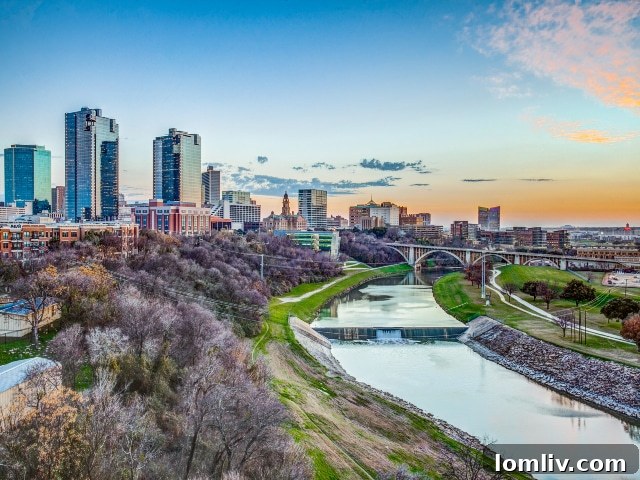
2. The Paradox of Urban Cores: Shrinking Homeownership in the City
If the appeal of the Beyond-Burbs continues its ascent, a natural inverse trend will begin to manifest within the inner city – a phenomenon we term “The Shrinking City.” While we don’t anticipate a dramatic upheaval in 2022, this is a long-term trend worthy of close observation. Cities inherently offer a delightful tapestry of culture, convenience, and community, making them highly desirable places to live, work, and play. The past few decades have undeniably showcased the benefits of urban living, with downtown areas undergoing remarkable revitalization, condominiums flourishing, and once-forgotten neighborhoods being reimagined and revived by investors and renovators.
However, the “shrinking” we foresee is not necessarily a decrease in population, but rather a significant reduction in homeownership opportunities. As apartment complexes proliferate on virtually every street corner, designed to cater to the demands of young professionals and empty-nesters seeking low-maintenance living and immediate access to urban amenities, the availability of condos and other ownership-based housing options will progressively diminish. Areas that were once accessible to buy, renovate, or flip have now transformed into highly desirable, trendy enclaves, placing them beyond the financial reach of many prospective buyers. The apartment rental market, characterized by record-setting lease rates, will continue to thrive, but the pathway to homeownership within the urban core will become increasingly narrow in 2022 and beyond. This shift will redefine the socio-economic landscape of our cities, fostering a rental-centric urban environment where traditional homeownership becomes a luxury rather than an accessible aspiration.
3. The Unavoidable Truth: Taxes, Taxes, Taxes
While we promised to avoid worn-out predictions, the conversation about growth inevitably leads to property taxes – a subject that, while perennial, demands our direct attention due to its undeniable impact. Let’s be unequivocally clear: property taxes are not slated to decrease, nor are they disappearing. In a booming real estate market like Tarrant County, property valuations naturally climb, leading to higher tax bills even if the underlying tax rates are marginally adjusted. You will receive your estimated property tax bill in March 2022, and yes, you absolutely should protest it. However, a crucial question to ask yourself is: “Would I sell my property today for the value the appraisal district has assigned?” If your honest answer is “yes,” then pick up the phone and call me – I’ll have it sold for you in mere moments. If your answer is “no,” then much of the complaint loses its footing.
It’s true that escalating taxes and valuations (despite political rhetoric often focusing solely on “decreasing rates”) present significant challenges. They fuel gentrification, contribute to the homogenization of neighborhoods, and regrettably, can force long-time residents, often on fixed incomes, to sell homes they’ve lived in for decades because their annual tax liability now surpasses their original purchase price. This is a harsh reality, yet the mechanisms to fundamentally reverse this trend are either non-existent or politically unfeasible. In rapidly appreciating markets, the fiscal needs of local governments, coupled with property value increases, create an almost immutable upward trajectory for property taxes. Therefore, the pragmatic reality remains: prepare to pay your taxes. Understanding this reality is key to navigating the financial landscape of homeownership in North Texas.
4. The Inertia of Innovation: Why Real Estate Change is Slow
A frequent query from aspiring homeowners and industry watchers alike is, “What’s the next big thing in home building or sales?” My consistent reply emphasizes a fundamental truth: innovation’s adoption is inherently tethered to public acceptance and governmental willingness to adapt. While the vision of tiny house communities nested within cities, boasting close proximity to public transit, is undeniably appealing and offers potential solutions for affordability and sustainability, municipal regulations often remain rigid and resistant to novel approaches. Politicians frequently champion “affordable housing” in their rhetoric, yet practical, effective strategies for its widespread implementation often elude them, largely due to a focus on re-election rather than transformative policy.
Recently, our esteemed colleague Tommy Cummings illuminated efforts to bring 3D printed homes to the D/FW metroplex. While the concept is captivating, expecting entire neighborhoods of concrete-printed homes to populate North Texas anytime soon is unrealistic. Yes, a handful of forward-thinking communities might tentatively explore such innovations, but the cultural fabric of America, and particularly Texas, resists uniformity. Texans value individuality and the freedom to customize their homes, a sentiment that clashes with the standardized aesthetic often associated with mass-produced or computer-generated structures. Mainstream builders, entrenched in traditional methods and facing significant capital investment in new technologies, tend to regard 3D printing as a niche novelty rather than an immediate paradigm shift, often advising proponents to “go home and get their shine box,” a colloquialism for sticking to established practices, as famously depicted in cinema (referencing Goodfellas).
Undoubtedly, the housing market desperately needs change. The ongoing supply chain crisis continues to cripple new home construction, a situation unlikely to resolve itself dramatically in 2022. Even when shipping backlogs clear and materials eventually reach the Lone Star State, the elevated costs will persist, pushing a significant segment of the home-buying population out of the market entirely. While the imperative for change is profound, the year 2022 is unlikely to usher in a rapid transformation of the residential construction landscape. Patience, adaptability, and a long-term perspective will remain crucial for navigating these enduring challenges.
Remember, our confidence in these predictions is unwavering. If they don’t materialize, your newsletter subscription comes with a complete money-back guarantee! Daltxrealestate.com: delivering precision in an era of vague promises.