For over a century, the fundamental unit of measurement known as a “foot” hasn’t been as straightforward as one might assume, particularly within the specialized world of land surveying in the United States. While the general public understands a foot to be 12 inches, professional land surveyors have long navigated between two distinct definitions: the International Foot and the U.S. Survey Foot. This long-standing duality has introduced complexities and potential for error in critical infrastructure projects and property delineation across the nation. However, a significant change is underway, poised to unify measurement standards and usher in an era of enhanced precision and clarity for the surveying, mapping, and engineering industries.
While many land surveyors already adhere to the widely recognized International Foot for their measurements, the antiquated U.S. Survey Foot has persisted in various states and territories. Remarkably, up until very recently, this included some 40 U.S. states and territories, with Texas being a prominent example among them. The existence of these two subtly different standards has created a challenging landscape for professionals, demanding meticulous attention to which “foot” was being applied to a given project.
The End of an Era: The U.S. Survey Foot Gets the Boot
The dawn of 2023 marked a pivotal moment in the history of U.S. land measurement. The National Institute of Standards and Technology (NIST) has officially mandated that the International Foot will become the sole official unit of measure for all surveying and mapping applications across the United States. This decision, which came into full effect on January 1, 2023, signifies the complete phasing out of the U.S. Survey Foot. Consequently, states like Texas, which have historically relied on the U.S. Survey Foot for their state standards – as outlined in the Texas Natural Resources Code, Subtitle B, Chapter 21 – have now transitioned to the International Foot, aligning their practices with a national and global standard.
At first glance, the difference between these two measurement units appears minuscule, almost negligible. When measuring a single mile, the International Foot is approximately an eighth of an inch shorter than the U.S. Survey Foot. This minute discrepancy is unlikely to impact your average residential property survey, where the scale of measurement is relatively small. However, the cumulative effect of this difference becomes dramatically significant when applied to vast distances. Consider a measurement spanning 1 million feet; in such a scenario, the difference between using the International Foot versus the U.S. Survey Foot accumulates to a substantial 2 feet. This seemingly small divergence can lead to considerable inaccuracies and costly complications in large-scale projects, highlighting the critical need for a unified standard.
A Century of Confusion: How Dual Standards Took Root
The genesis of this dual measurement system dates back nearly 90 years, creating a complex historical narrative for American measurement. In 1893, the U.S. government defined its foot based on the Mendenhall Order, establishing it as 1,200 meters divided by 3,937. This calculation resulted in a foot precisely equal to 0.3048006+ meters. Decades later, in 1933, the International Foot was conceived, simplifying the definition to exactly 0.3048 meters, effectively trimming off the trailing digits of the older definition. By 1959, the U.S. government officially adopted the International Foot for most applications and mandated its use across various industries. However, a critical exception was made: surveying and mapping applications were explicitly allowed to continue using the U.S. Survey Foot. This exemption was primarily to preserve the integrity of countless existing property records, cadastral surveys, and geodetic control networks that had been established using the older standard.
This minor but persistent difference has, over the decades, created substantial challenges for surveyors, engineers, and urban planning officials, particularly in projects that span considerable distances or cross state lines. High-speed rail networks, extensive pipeline systems, and monumental bridge constructions are prime examples where the slight variation between the two definitions could lead to significant miscalculations, boundary disputes, and expensive rework. The prudent decision to discontinue the U.S. Survey Foot is driven by a desire to achieve uniformity and enhanced accuracy. By adopting a single, consistent measuring stick, the U.S. aligns itself with global standards, minimizes errors, reduces confusion, and ultimately curtails additional project costs, thereby bringing much-needed clarity and precision to professionals in the surveying, mapping, and engineering sectors.
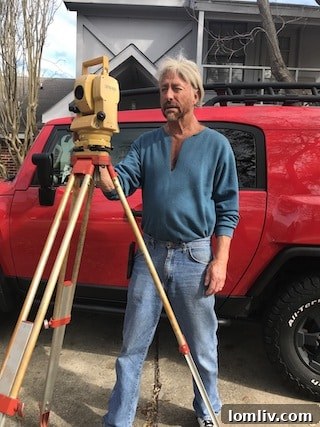
Industry veterans, like Barry Rhodes of Burns Surveying, who boasts over 50 years of experience and is credited with more than 120,000 surveys in North Texas, offer valuable insights into the practical implications of this transition. “For local surveyors, the difference in measurements is so minute,” notes Rhodes. He emphasizes that “the difference isn’t usually a big deal unless you’re dealing with long pipelines or something similar.” Rhodes further points out that when surveying extremely long distances, other factors, such as the curvature of the Earth, introduce far greater complexities than the subtle difference between the two foot definitions, a challenge that surveyors already account for through advanced geodetic calculations.
Toeing The Line: Adapting to the New Standard
Despite the historical adherence to the U.S. Survey Foot, seasoned professionals like Rhodes anticipate a smooth transition for Texas surveyors. “I always use the U.S. Foot. But if the state says to make the change, we’ll do it,” Rhodes affirms, highlighting the adaptability inherent in the profession. He further reassures, “Our software probably has the option to convert.” This sentiment reflects a broader industry preparedness, where modern surveying equipment and software are already equipped with functionalities to switch between measurement systems or perform conversions effortlessly. The shift primarily involves a change in default settings and adherence to the new official mandate, rather than a radical overhaul of existing technology or methodologies.
The unified measurement standard holds immense benefits for the future of infrastructure development and precise mapping. It will foster seamless collaboration on national projects that cross multiple state boundaries, ensuring that all data is interpreted uniformly. For Geographic Information Systems (GIS) and Global Positioning System (GPS) applications, a single definition of the foot eliminates potential data inconsistencies that could arise from combining data sets generated using different standards. This move represents not just a technical update but a strategic step towards a more integrated, efficient, and accurate national geodetic framework.
The implications extend beyond just avoiding errors; they touch upon the economic efficiency and reliability of large-scale engineering feats. Imagine the complexity of designing a new high-speed rail line stretching across several states, each potentially using a different “foot” definition. Such a scenario would necessitate constant conversions, introduce opportunities for human error, and inflate project costs. By standardizing on the International Foot, the U.S. is proactively eliminating these potential hurdles, paving the way for smoother project execution, reduced litigation risks, and more reliable outcomes.
Ultimately, this regulatory change symbolizes a commitment to global best practices and an acknowledgment that in an increasingly interconnected world, precision and uniformity are paramount. It underscores the continuous evolution of professional standards in land surveying and the broader engineering community. So, the next time someone casually mentions that a foot is 12 inches, you now have the definitive, officially recognized addition: the official definition of a foot is precisely 0.3048 meters. This is now the universal truth for measurement in the United States, including in the Lone Star State.
The opinions expressed are of the individual author for informational purposes only and not for legal advice. Contact an attorney for any particular issue or problem.