
By Norman Alston, FAIA
In recent months, the vibrant local community of Dallas, particularly those dedicated to historic preservation, has witnessed a remarkable, if sometimes bittersweet, surge of activity. There have been significant victories in the ongoing battle to recognize and safeguard our city’s rich history. While the distressing loss of cherished historic buildings regrettably persists, fueling the lament that Dallas struggles to protect its remaining architectural treasures, a monumental triumph has recently emerged. The official approval of the Deep Ellum National Register Historic District stands as a testament to perseverance, a feat many considered nearly impossible just a few short years ago. This achievement marks a pivotal moment, offering both hope and a renewed call to action for the future of Dallas’s invaluable heritage.
Deep Ellum’s Historical Context and Architectural Revelations
Deep Ellum, a district pulsating with life and lore, has long been celebrated primarily for its profound significance to the African-American community and its indelible influence on the international music scene. Generations have recognized its powerful cultural history, understanding it as a crucible for blues, jazz, and early rock and roll. However, this deep cultural narrative traditionally overshadowed its architectural history. The prevailing perception was that Deep Ellum’s buildings, while serving as backdrops to legendary events, lacked the compelling architectural distinction typically required to anchor significant historic preservation efforts.
For many years, this perspective led to the belief that the district’s architectural fabric was not robust enough for widespread protection. Consequently, a significant number of these structures were lost to modern redevelopment, leading many to conclude that the opportunity to preserve Deep Ellum’s unique architectural heritage had slipped away. The focus remained largely on its intangible cultural contributions, rather than the physical structures that housed them.
However, this narrative took an unexpected turn with the comprehensive historic resource survey undertaken by HHM & Associates, a highly respected historic preservation consultancy based in Austin. Their meticulous research and detailed findings unveiled a surprising truth: far more architectural significance remained within Deep Ellum than anyone had initially conceived. The survey not only highlighted individual buildings of merit but also underscored the cohesive historical integrity of the district as a whole. This revelation was so profound that a nomination for a National Register Historic District was promptly added to the consultants’ scope of work. Despite the pervasive anxiety that Deep Ellum’s architectural legacy had been irretrievably lost, the National Register triumphantly approved the district this past June. The celebratory atmosphere, I imagine, still echoes in some corners of Dallas, a testament to a hard-won victory for preservation.
The Unexpected and Unwelcome Side of Preservation in Dallas: A Deep Ellum Dilemma
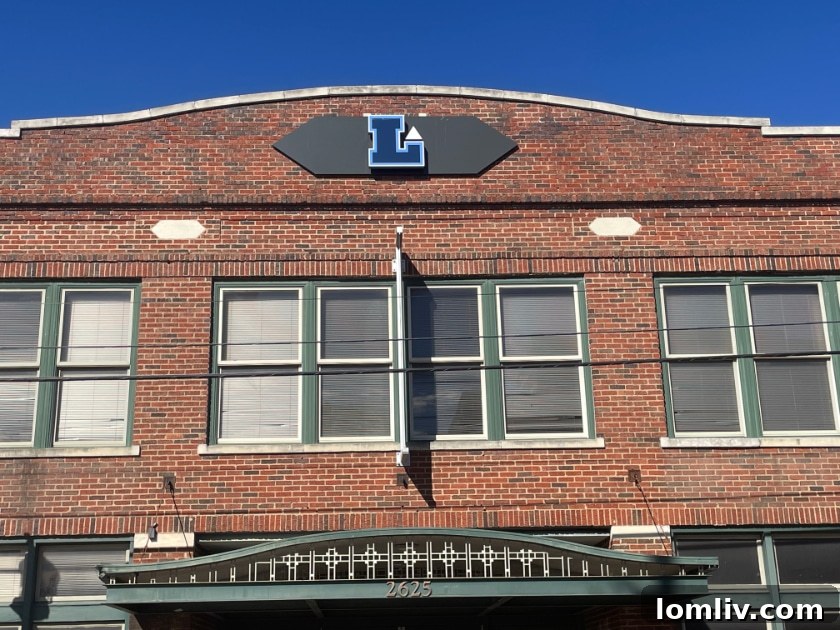
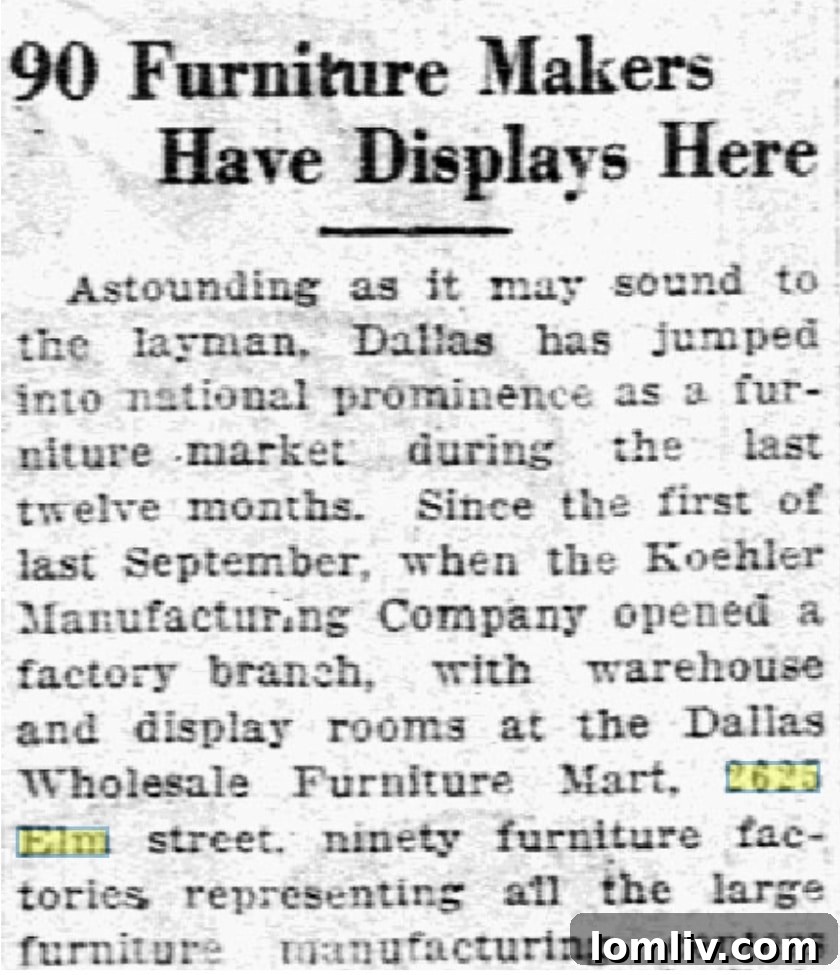
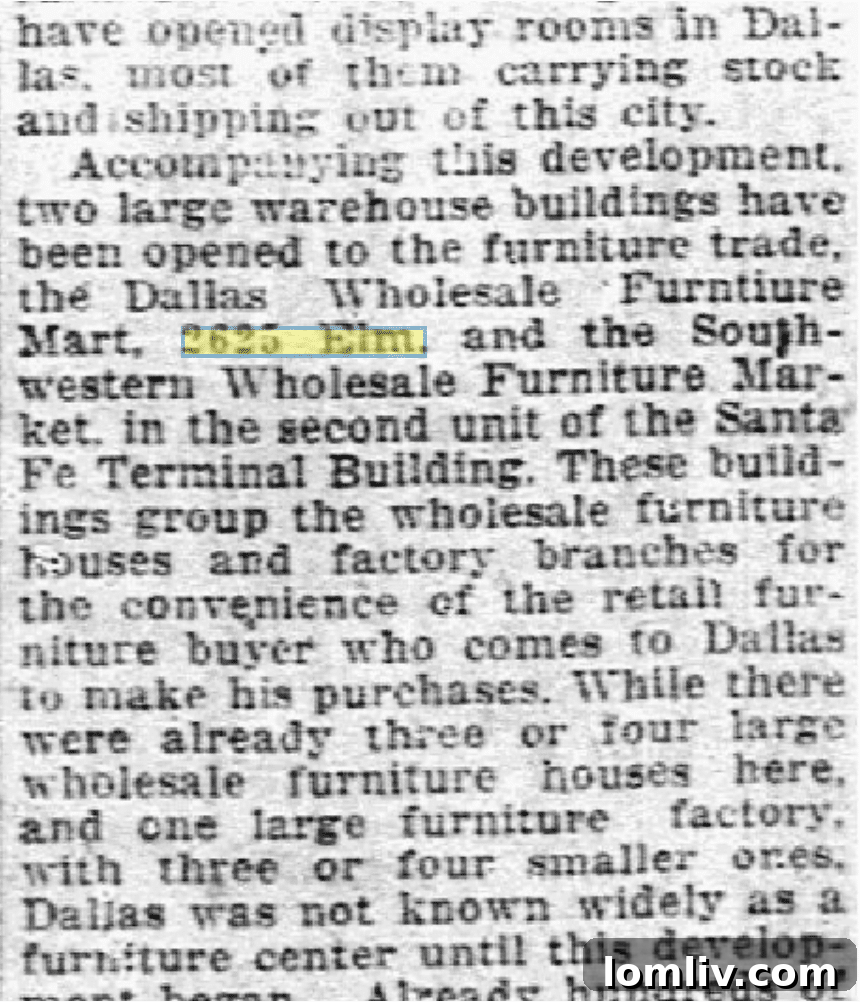
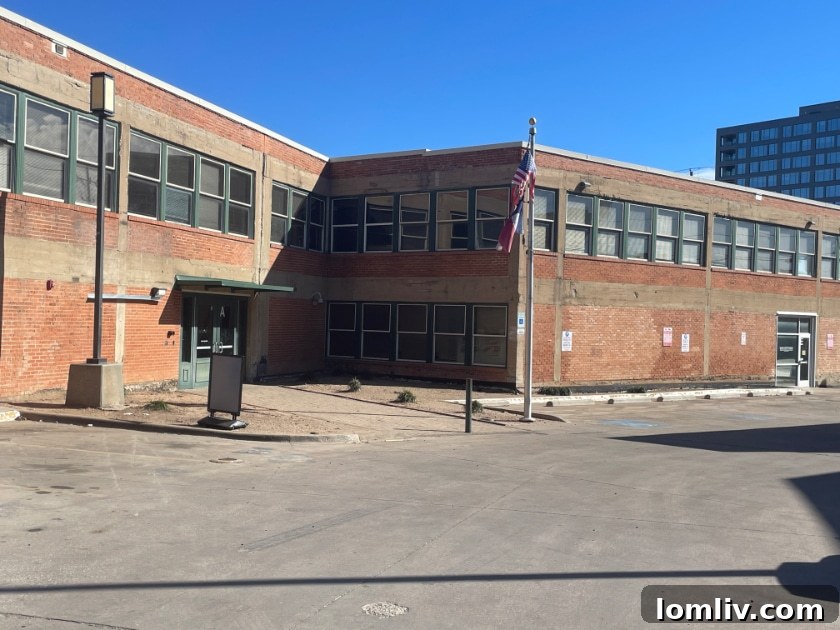
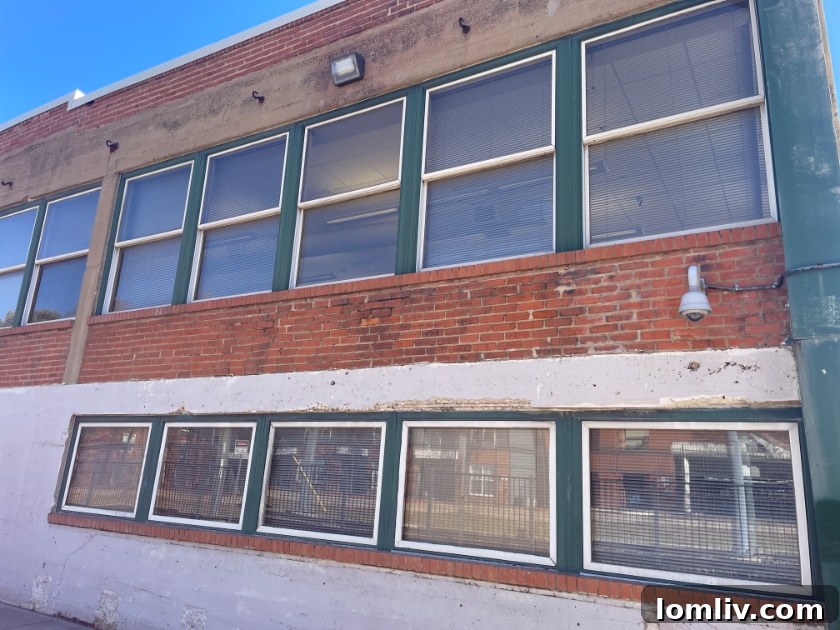
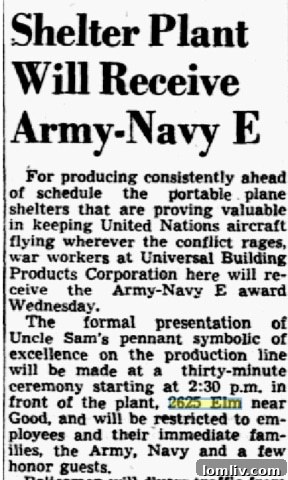
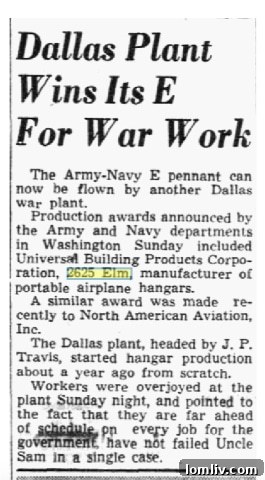
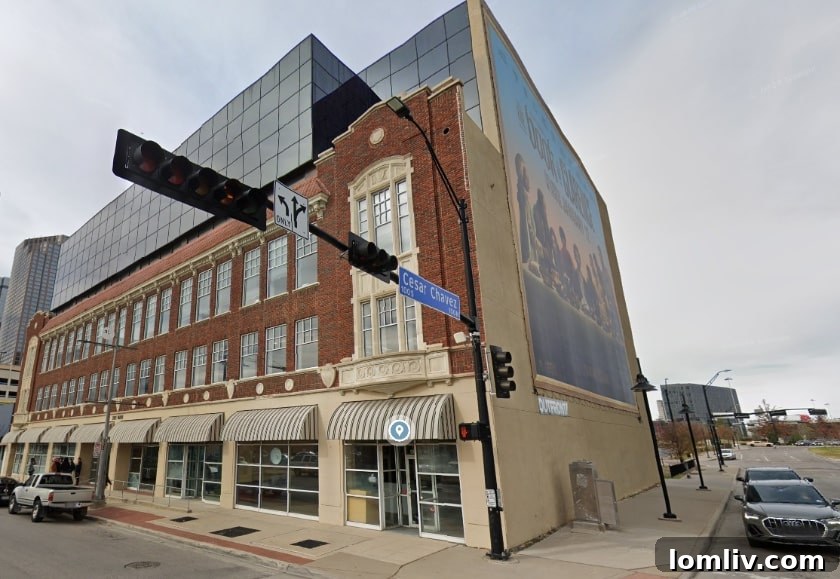
Amidst this atmosphere of celebration and renewed hope, a jarring announcement cast a shadow. On January 12, news broke regarding the historic Dallas Wholesale Furniture Mart Building at 2625 Elm Street. This iconic two-story structure, a cornerstone of Deep Ellum’s industrial and commercial past, had new owners. Their declared intentions were to demolish the historic building and replace it with a new six- or seven-story apartment complex. In their public statement, the new owners expressed admiration for the unique ambiance of the Deep Ellum environment, particularly along Elm Street, and hinted at plans that might involve retaining the original façade. This approach was seemingly an attempt to project an image of seeking the best of both worlds: integrating modern development with a nod to historic preservation. However, this seemingly well-intentioned proposal is fraught with multiple, fundamental issues, problems that starkly reveal the limitations of good intentions when they diverge from genuine preservation principles.
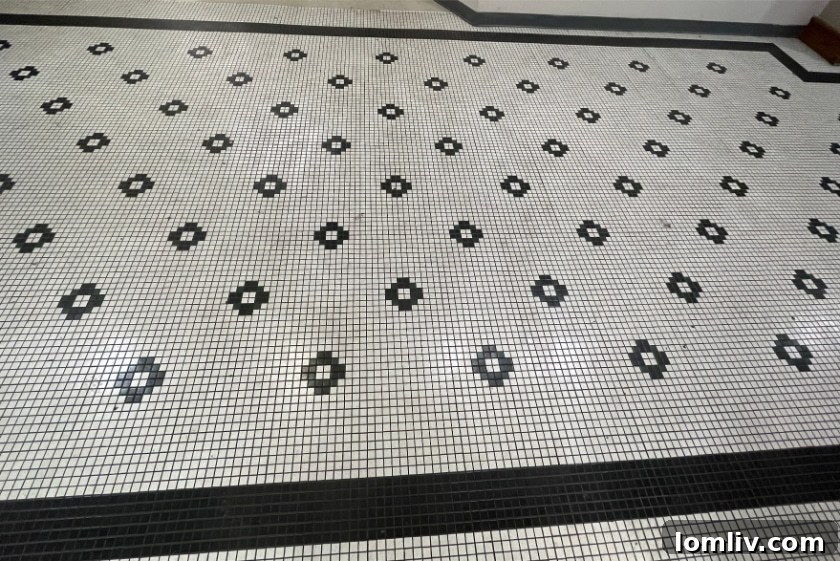
First and foremost, this proposed treatment of a historic building — retaining only the façade — does not align with the core tenets of historic preservation. Authentic preservation is fundamentally rooted in the profound value of authenticity and the diligent retention of as much of the original, genuine building fabric as is reasonably and practically feasible. This principle is universally understood across the preservation community. Just as a meticulously crafted copy of an invaluable piece of art, regardless of its quality, can never command the same value or reverence as the original, a modern reproduction or fragment of a historic structure cannot be truly valued as the historic original. The essence of history resides in its tangible form.
In the case of 2625 Elm Street, the plan suggests that only a minuscule fraction of the building would remain authentic. The practice of demolishing everything but the front facade is often critically and disparagingly termed a “façade-ectomy,” or worse. This approach, while perhaps visually appealing to some, completely misses the fundamental purpose and spirit of historic preservation. It systematically strips a building of its ability to narrate its own story, erasing its historical integrity and contextual significance. What remains is merely a superficial, literally shallow, reminder of what once stood there, devoid of the depth and authenticity that true preservation seeks to protect.
Consider the stark example of 2121 Main Street, which stands as Dallas’s most prominent and unfortunate instance of a façade-ectomy. Here, only the front face of Dallas’s old Central Fire Station remains. While it showcases some admirable architectural details, one struggles to perceive the building’s rich, colorful past, or to grasp the intricate history of the vibrant neighborhood in which it originally stood. The context, the depth, and the very soul of the structure have been irretrievably lost, leaving behind a hollow shell that serves as a monument to what was removed, rather than what was truly preserved. This illustrates the critical flaw in the façade-ectomy approach: it prioritizes superficial aesthetics over the profound historical narratives embedded within the entirety of a structure.
Could 2625 Elm Street Be a City of Dallas Landmark? A Case for Stronger Protection
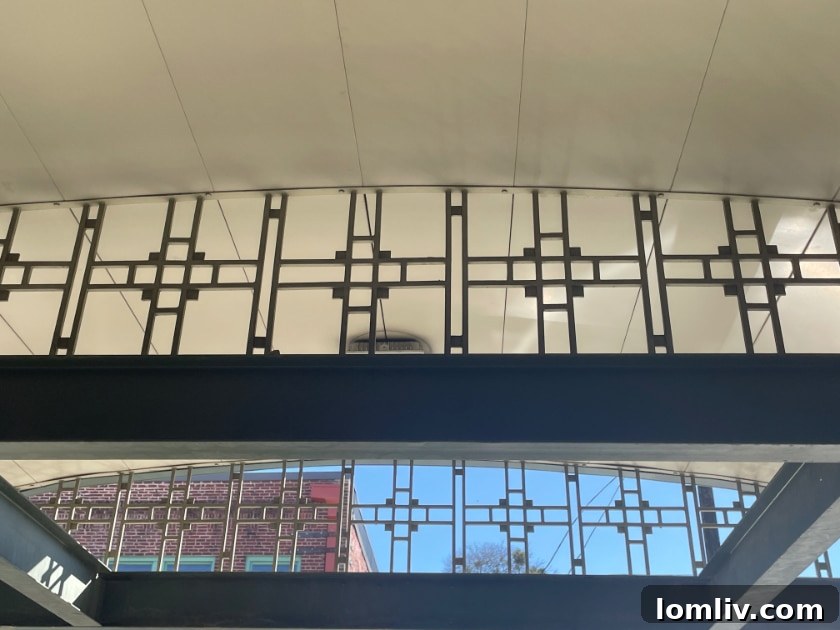
Compounding the frustration surrounding the fate of 2625 Elm Street is the undeniable fact that, contrary to the general perception of Deep Ellum’s architecture, this particular building stands out significantly. While it is true that Deep Ellum’s overall architectural strength might not be its most compelling feature when compared to its cultural contributions, 2625 Elm Street truly holds its own in terms of architectural merit and historical integrity. Its significance far transcends that of a mere backdrop; it is a vital piece of the district’s physical narrative.
The comprehensive HHM report, which proved instrumental in securing the National Register designation for Deep Ellum, meticulously identified only 16 buildings out of approximately 390 within the district that possess sufficient architectural importance to warrant individual listing on the National Register of Historic Places. Crucially, 2625 Elm Street is among this elite group. Furthermore, the report also designates it as a prime candidate for individual designation as a City of Dallas Landmark. This dual recognition underscores its exceptional value. It is, without question, one of the best, most significant, and most architecturally attractive historic buildings within a critical historic area that has already suffered the loss of far too many such structures. To lose this building, especially after its newly recognized significance, would be a profound blow to Deep Ellum’s burgeoning preservation efforts.
Or Will 2625 Elm Street Be Sacrificed? The Broader Implications for Dallas’s Heritage
In a neighborhood that has only just recently garnered national recognition as an immensely important historic and cultural area, the potential loss of 2625 Elm Street to a “façade-ectomy” is more than just an isolated incident; it deeply diminishes the hard-won triumph of the Deep Ellum National Register Historic District. The integrity of the district relies on the preservation of its key contributing elements, and 2625 Elm Street is undoubtedly one of its most prominent. Given the abundance of non-descript, less architecturally significant warehouse-type buildings scattered across nearby blocks, many of which are indeed likely candidates for future redevelopment and demolition, it is tragically ironic that one of Deep Ellum’s most historically and architecturally distinguished buildings is slated for such a destructive fate.
The potential sacrifice of 2625 Elm Street serves as a stark and disheartening reminder of the considerable distance Dallas still needs to travel to effectively integrate its rich historical past into its otherwise ambitious and bright future. True urban progress involves more than just new construction; it demands a respectful and authentic stewardship of the structures that tell the story of our collective heritage. Without genuine preservation, these stories fade, and Dallas risks becoming a city of transient modernity, losing the unique character and soul that its historic buildings provide. This ongoing struggle underscores the urgent need for stronger preservation policies, greater community engagement, and a deeper understanding that the authenticity of our past is not merely a nostalgic sentiment but a vital component of a truly vibrant, culturally rich, and sustainable future for Dallas.