From Staff Reports
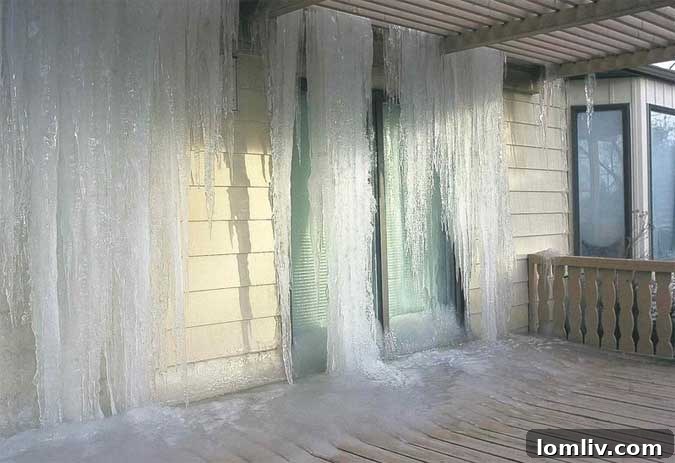
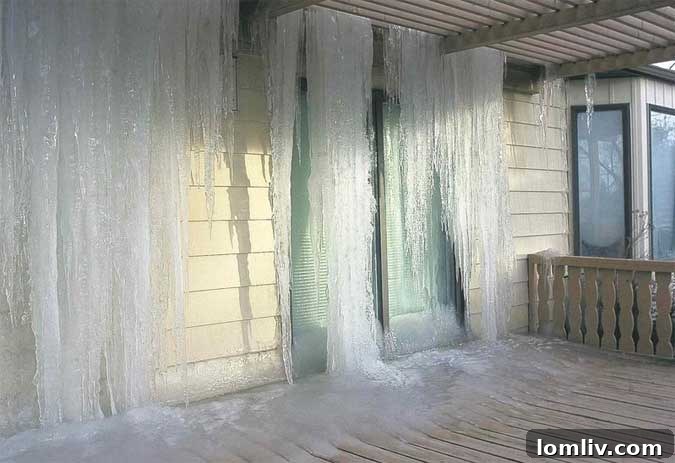
The devastating Winter Storm Uri served as a stark and costly reminder of the indispensable role homeowner’s insurance plays in protecting our most valuable assets. Across Texas, millions of homes suffered catastrophic damage, leading to unprecedented claims and highlighting a critical vulnerability within many communities: a significant portion of homeowners remain uninsured. A comprehensive study conducted by the esteemed Texas Real Estate Research Center at Texas A&M University has shed light on this alarming trend, revealing that certain demographic groups are disproportionately affected. Specifically, households characterized by lower incomes, those residing in non-metropolitan areas, and individuals who own their homes outright without a mortgage are far less likely to possess adequate homeowner’s insurance coverage.
This critical research utilized extensive data from the U.S. Census Bureau to accurately estimate the number of Texas households lacking this essential protection. The findings paint a concerning picture: approximately 26.6 percent of homeowners in non-metro regions reported being uninsured. While metropolitan areas generally fared better, significant disparities still exist. In major metropolitan hubs with a principal city like Austin, Dallas-Fort Worth, Houston, and San Antonio, roughly eleven percent of households are uninsured. Even in metropolitan areas without a designated principal city, a substantial 10.2 percent of homeowners do not carry homeowner’s insurance. These statistics underscore a statewide issue, revealing pockets of extreme vulnerability that could exacerbate recovery efforts following future natural disasters.
“Our analysis clearly indicates that metropolitan areas situated within the Rio Grande Valley and along the vulnerable Texas coast exhibit the highest percentages of uninsured households,” stated Joshua Roberson, a senior data analyst involved in the study. “For instance, in the city of McAllen, an alarming nearly two out of five households are uninsured. Brownsville closely follows this trend, with 34.9 percent of its homeowners lacking insurance. This concentration of uninsured properties in high-risk areas presents a significant long-term challenge for community resilience and economic stability.”
Roberson further highlighted the particularly precarious situation in coastal communities. “Despite their inherent vulnerability to devastating hurricane damages, a staggering one out of every five homeowner households in Beaumont and Corpus Christi remains uninsured,” he noted. This persistent lack of coverage in areas frequently impacted by severe weather events raises serious questions about risk perception, affordability, and the accessibility of insurance solutions for these communities.
Mortgage Requirements: A Crucial Driver for Insurance Coverage
One of the most significant factors influencing whether a homeowner has property insurance is their mortgage status. As Research Economist Luis Torres explained, “Mortgage status plays an undeniably important role in determining the likelihood of having property insurance because mortgage contracts universally require a homeowner’s insurance policy as a condition of the loan.” This requirement is not arbitrary; it’s a fundamental aspect of financial risk management. “The mortgage lender possesses a substantial financial interest in the home, which serves as a powerful motive for mandating insurance to protect their investment against unforeseen damages or losses,” Torres elaborated. Without this collateral protection, lenders face enormous risks, making insurance a non-negotiable term for most home loans.
The data from the study starkly illustrates this dynamic. A remarkably low 4.1 percent of homeowner households with an active mortgage are uninsured. This figure stands in dramatic contrast to the 26 percent of homeowners who own their homes free and clear of any debt but lack insurance coverage. For those who have paid off their mortgage, the direct financial incentive from a lender to maintain coverage disappears, often leading to a lapse in protection. This trend suggests that while achieving debt-free homeownership is a significant milestone, it can inadvertently expose homeowners to substantial financial peril if they do not proactively maintain insurance.
The study also meticulously examined the correlation between income levels and insurance status, revealing a troubling link between lower average incomes and being uninsured. Homeowners who own their homes free and clear of debt and are uninsured reported average incomes around $53,274. In stark comparison, those who own their home and are insured boast significantly higher average incomes of approximately $95,873. This substantial income gap suggests that for many lower-income homeowners, the cost of insurance might be perceived as an unaffordable luxury rather than an essential safeguard, leading them to opt out of coverage even when their property represents their primary asset and often their life savings.
Regional Variations: Dallas-Fort Worth Shows Higher Insurance Rates
While the statewide picture reveals concerning gaps in insurance coverage, some metropolitan areas stand out for their higher rates of insured homeowners. The smallest percentages of uninsured households were observed in Austin and Dallas-Fort Worth, registering at 6.1 percent and 7.4 percent, respectively. These figures suggest that factors such as higher average incomes, more recent housing stock, robust real estate markets, and perhaps greater awareness campaigns contribute to better insurance penetration in these urban centers. However, even within these more insured regions, a small but significant percentage of homeowners remain unprotected, underscoring the universal nature of this challenge.
Digging deeper into the characteristics of uninsured homeowners, Torres pointed out a recurring demographic. “Homeowners who don’t have a mortgage are generally characterized as seniors living in older homes, which, by their very nature, are often more susceptible to damage from extreme weather conditions,” he stated. Older homes typically feature aging infrastructure, less resilient building materials, and may not meet current building codes, making them particularly vulnerable to events like deep freezes, hailstorms, or strong winds. For seniors on fixed incomes, the cost of maintaining, let alone upgrading, these homes, combined with potentially higher insurance premiums for older properties, can create a difficult financial dilemma.
The clear link between household income levels and the likelihood of being uninsured raises profound questions that extend beyond individual financial decisions. “When one considers the crucial link between household income levels and being uninsured, this raises important questions that demand urgent attention. Is homeowner’s insurance simply too expensive and out of reach for households earning a lower income? Is the prohibitive cost of premiums impeding these vulnerable populations from adequately protecting their most significant asset – their homes – from the increasing frequency and intensity of natural disasters?” Torres pondered. These are not merely academic questions but critical policy considerations that impact the economic stability of thousands of Texas families and the resilience of entire communities.
Ultimately, the study’s findings provide a critical roadmap for future interventions. “Identifying the precise location and key characteristics of uninsured homeowners would enable the state of Texas to better allocate precious resources for vital home repairs and recovery efforts following a devastating natural disaster, such as a severe winter freeze or a hurricane,” Torres concluded. Proactive identification and targeted outreach can lead to more effective disaster preparedness strategies, reduce the burden on state and federal aid programs, and accelerate the recovery process for those who are most vulnerable. Addressing the homeowner’s insurance gap is not just about protecting individual properties; it’s about safeguarding the financial well-being of Texas residents and building more resilient communities across the entire state.