
The year 2020 ushered in an era of unprecedented challenges, profoundly impacting lives and livelihoods across the globe. As the novel coronavirus pandemic tightened its grip, economies faltered, businesses closed, and millions faced the grim reality of job loss and overwhelming financial instability. In response to this escalating crisis, governmental bodies at various levels scrambled to implement measures designed to cushion the economic blow and protect vulnerable populations. Among the most critical concerns was housing security, leading to urgent discussions and actions regarding evictions.
Recognizing the immediate threat to housing stability, the Texas Supreme Court stepped in with a significant statewide directive. In an effort to provide a crucial safety net for residents grappling with unexpected financial hardship, the court announced a temporary halt to evictions across the entire state. This initial moratorium was set to remain in effect through April 19, offering a brief but vital reprieve for many Texans fearing homelessness during an already stressful period.
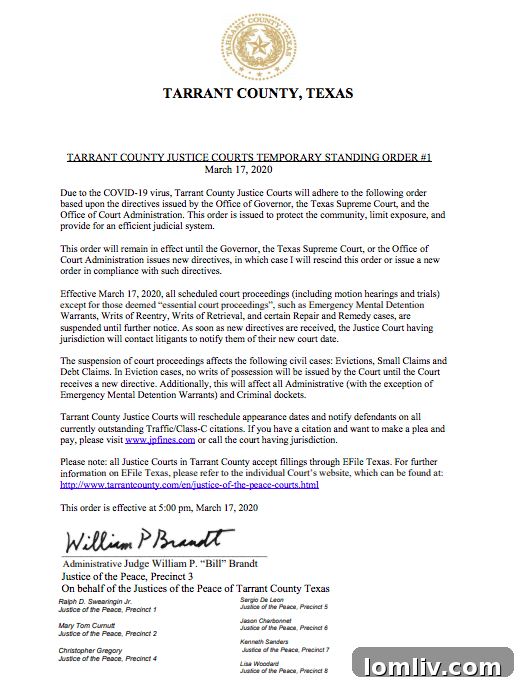
However, some local jurisdictions felt the need to go further, understanding that a temporary pause might not be sufficient to address the deep-seated economic anxieties of their communities. Tarrant County, a expansive region encompassing 41 diverse cities, towns, and census-designated places, quickly emerged as a leader in enhanced tenant protection. Demonstrating a proactive stance, Tarrant County moved to extend its suspension order indefinitely, aiming to safeguard its vast population with a more robust and enduring measure.
Tarrant County’s Indefinite Eviction Suspension: A Deep Dive into Local Protections
The decision by Tarrant County to extend its suspension order indefinitely marked a pivotal moment for its residents. This wasn’t merely a pause but a significant commitment to maintaining housing stability for those most affected by the pandemic’s economic fallout. Justice of the Peace Precinct 3 Administrative Judge William P. “Bill” Brandt articulated the comprehensive scope of this temporary order on March 17, underscoring its broad impact on various civil cases. “The suspension of court proceedings affects the following civil cases: evictions, small claims, and debt claims,” Judge Brandt stated, highlighting the county’s holistic approach to financial distress.
The inclusion of small claims and debt claims alongside evictions is particularly noteworthy. It recognizes that financial hardship often manifests in multiple forms, and addressing only one aspect would leave residents exposed in others. By encompassing these related civil actions, Tarrant County aimed to provide a more complete shield against the legal repercussions of pandemic-induced financial strain. For eviction cases specifically, Judge Brandt’s directive was clear and impactful: “In eviction cases, no writs of possession will be issued by the court until the court receives a new directive.” This provision effectively meant that, regardless of previous court orders, no resident could be physically removed from their home until further notice from the court, offering a profound sense of security.
The indefinite nature of Tarrant County’s order set it apart from the Texas Supreme Court’s fixed-date moratorium. While the statewide measure provided temporary relief, Tarrant County’s open-ended suspension reflected a deeper understanding of the unpredictable and evolving nature of the pandemic’s economic impact. It acknowledged that a clear end date was impossible to foresee and that a more flexible approach was necessary to adapt to changing circumstances. This proactive stance provided a stronger foundation for residents to navigate their financial difficulties without the immediate threat of displacement looming over their heads.
However, it is crucial to note that this widespread protection came with a specific, albeit rare, exception. Residents who posed an immediate threat to the health, safety, or property of other residents or the community were not covered by the suspension. This critical carve-out ensured that public safety remained paramount, balancing the need for tenant protection with the imperative to maintain a secure living environment for all. Such exceptions are standard in legal frameworks and underscore the careful consideration given to both individual rights and collective well-being in the crafting of such emergency measures.
Navigating Local Responses: How Cities Within Tarrant County Adapted
Given that eviction cases typically fall under county jurisdiction, the robust measures implemented by Tarrant County naturally set the precedent for its constituent municipalities. Many local city governments within the county indicated their intention to follow the county’s lead, effectively extending the same protections to their residents without the need for additional, redundant local ordinances. This streamlined approach prevented a patchwork of conflicting rules and ensured a consistent standard of tenant protection across much of the region.
Yet, the specific responses from individual cities varied in their articulation and, in some cases, in their perceived scope. For instance, the cities of Hurst, Keller, and North Richland Hills publicly stated that they would not take any *further* steps to protect residents from eviction beyond what Tarrant County had already mandated. This position, while seemingly passive, largely reflected the reality that the county’s blanket suspension already covered the core issue. Since the county judiciary governs eviction proceedings, these cities saw little need to enact separate, potentially overlapping, or even legally ambiguous local regulations.
The City of Hurst’s communications department elaborated on this stance, noting that the city typically does not involve itself directly in eviction proceedings. Instead, such matters are generally left to the discretion of property managers and the county court system. Hurst officials further clarified their commitment to residents’ welfare, stating, “The City of Hurst will not require anyone to leave their home and put them in a situation where they don’t have access to water during the pandemic.” This statement reassured residents that the city would not actively contribute to displacement or hardship, aligning with the broader protective spirit of the county’s moratorium.
Meanwhile, the City of Fort Worth, as the largest urban center within Tarrant County, faced unique challenges and considerations. At the time of the initial reporting, Fort Worth had not yet provided a definitive response to requests for comment on how it might further assist its citizens beyond the county’s mandate. This delay or non-response could be attributed to various factors, including the complexity of implementing additional measures in a large metropolitan area, ongoing internal discussions, or a strategic decision to rely solely on the county’s comprehensive framework. Regardless, residents of Fort Worth were still beneficiaries of Tarrant County’s indefinite eviction suspension, providing them with critical housing stability during uncertain times.
Beyond the Pause: Why the Eviction Moratorium Isn’t a Cure-All
Despite the significant and commendable steps taken by the Texas Supreme Court and Tarrant County to pause evictions, a crucial caveat was repeatedly emphasized by housing experts and organizations like the Texas Apartment Association (TAA): an eviction moratorium is not a cure-all. While these measures provided immediate relief by preventing physical displacement, they did not, and legally could not, absolve tenants of their fundamental contractual obligation to pay rent. This distinction was vital for both landlords and tenants to understand to avoid future complications and potential financial distress.
Soon after the moratoriums were announced, many residents began receiving messages from their property management companies. These communications, though often perceived as alarming, served a legal purpose: informing tenants that while evictions were paused, the requirement to pay rent on time remained in effect. The warnings made it clear that failure to do so could still result in a notice of eviction, a formal step that signals the landlord’s intent to pursue legal action once court proceedings resumed.
The TAA, representing a significant portion of property owners and managers, explicitly clarified the legal realities under the moratorium. They reiterated that renters were indeed still required to pay their rent on time. Furthermore, tenants could still be charged with late fees for overdue payments, as these fees are often stipulated in lease agreements and are distinct from the eviction process itself. Most critically, the TAA confirmed that property owners could still issue a notice to vacate for non-payment of rent. While the courts might not hear these cases immediately, or issue writs of possession, the notice itself is a critical legal precursor to an eviction filing. It officially informs the tenant that they are in violation of their lease and that the landlord intends to pursue eviction if the default is not remedied.
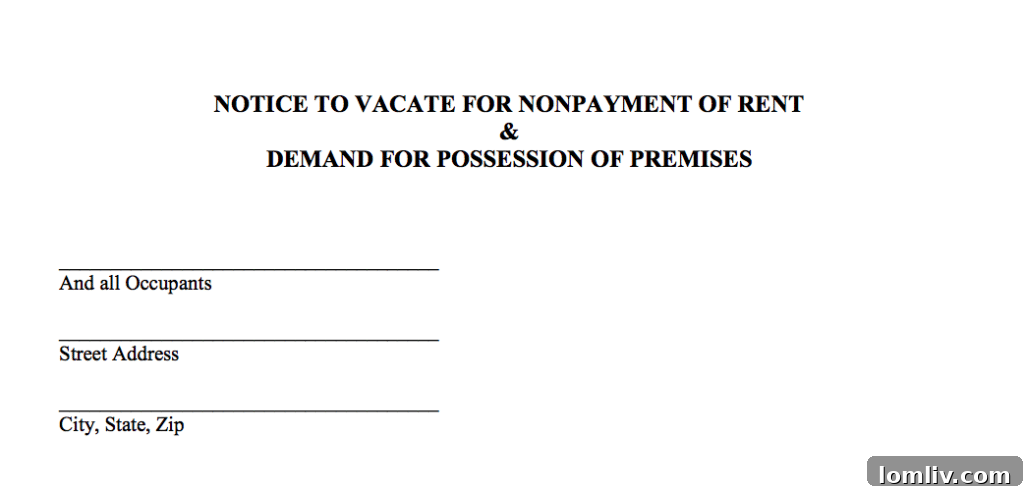
The issuance of a notice to vacate, even during a moratorium, is not a minor detail. As the TAA underscored in a public statement, “This notice is an indication that the rental property owner intends to pursue an eviction if rent is not paid and will usually occur if you fail to respond to notices/requests to contact your property manager.” This highlights the gravity of non-payment and, equally important, the critical role of communication. These notices serve as a formal warning, creating a paper trail that landlords can use when court proceedings inevitably resume.
The sobering reality for many tenants was that the moratorium merely delayed, rather than eliminated, their financial obligations. When the court proceedings eventually resumed—whether the statewide moratorium lifted or Tarrant County issued a new directive—residents would still owe any accumulated amounts due. This backlog of unpaid rent, coupled with potential late fees, could lead to significant financial burdens, making tenants even more susceptible to eviction once the legal avenues reopened. The “eviction cliff,” a term used by housing advocates, described the anticipated surge in eviction filings once protective measures were lifted, threatening to exacerbate homelessness and housing instability.
Empowering Renters: The Power of Communication and Documentation
In light of these pressing realities, the Texas Apartment Association offered vital advice to renters: proactive communication is paramount. The association strongly advised residents facing financial difficulties due to the pandemic to communicate their situation openly and honestly with their property manager or landlord. This is not merely a courtesy but a strategic necessity. Property managers, while obligated to uphold lease terms, are often more willing to work with tenants who are transparent about their struggles rather than those who simply stop paying rent without explanation.
Effective communication, the TAA emphasized, involves more than just stating a problem; it requires providing context and, where possible, documentation. Tenants were advised to gather and present documentation from an employer (such as layoff notices, reduced hours statements, or furlough letters) or any other official documentation that clearly shows the impact of the crisis on their income or ability to pay rent. This could include unemployment benefit application confirmations, medical bills related to COVID-19, or other verifiable evidence of financial hardship. Such documentation lends credibility to a tenant’s claims and provides landlords with a concrete basis for considering alternative arrangements.
The goal of this communication is to explore potential solutions before legal action becomes unavoidable. Many landlords, understanding the extraordinary circumstances, were open to discussing various options, such as temporary payment plans, deferred rent agreements, or even short-term rent reductions. These solutions, while not eliminating the debt, could make it more manageable, helping tenants stay in their homes and preventing the landlord from facing the costly and time-consuming process of eviction. The TAA’s message was unequivocal: “Please remember that they can’t help you if you do not communicate your situation with them.” This simple statement underscores the power of proactive dialogue in mitigating a crisis.
The Road Ahead: Sustaining Housing Stability Post-Moratorium
As the initial phases of the pandemic began to recede and various moratoriums eventually expired, the long-term implications of these emergency measures came into sharper focus. The lifting of eviction bans did not erase the accumulated rent debt, and many communities braced for a potential wave of evictions. This underscored the fact that while moratoriums provided critical immediate relief, they were merely temporary interventions, not structural solutions to housing affordability or economic vulnerability.
The period following the moratoriums necessitated a continued focus on supporting both tenants and landlords. For tenants, accessing rental assistance programs, legal aid, and financial counseling became more crucial than ever. For landlords, understanding the mechanisms for applying for rental assistance on behalf of their tenants and navigating new legal landscapes were essential. The crisis highlighted the intricate interconnectedness of the housing ecosystem and the need for collaborative solutions involving government, non-profits, and private sector stakeholders.
The experience of Tarrant County and the broader Texas landscape during the pandemic offered valuable lessons in crisis management and community resilience. It demonstrated the critical role of local governments in augmenting statewide protections and the unwavering importance of informed communication between all parties in a rental agreement. As communities continue to navigate economic shifts and unforeseen challenges, the principles of clear communication, proactive problem-solving, and a commitment to housing stability will remain fundamental pillars for ensuring a secure future for all residents.