

Dallas, a city renowned for its vibrant culture and dynamic growth, also boasts a rich tapestry of history, meticulously preserved within its numerous historic and conservation districts. With an impressive total of 20 historic districts and 18 conservation districts, Dallas offers a unique blend of urban sophistication and timeless charm. These distinct neighborhoods are more than just geographical areas; they are living testaments to the city’s past, attracting discerning homebuyers who seek properties with unparalleled character, architectural significance, and, of course, a captivating story to tell. The allure of owning a piece of history is a powerful draw, compelling buyers to invest in homes that offer more than just shelter – they offer a legacy.
For real estate professionals specializing in these coveted areas, delving into the unique history of each property isn’t merely a suggestion; it’s an essential part of their service. Understanding a home’s past can be a significant selling factor, transforming a property from a simple structure into a cherished artifact. Imagine the added appeal when potential buyers discover that a sports icon once resided in their prospective historic home, or that a notable political figure graced its halls. Such anecdotes provide an undeniable cachet, enhancing the property’s perceived value and desirability in the competitive Dallas real estate market.
Beyond the glamour of celebrity connections, there’s an even more profound fascination in uncovering the lives of the “average, ordinary folks” who shaped a home’s identity over decades. Every wall, every floorboard, every garden path holds echoes of their everyday joys, challenges, and dreams. These discoveries can be incredibly riveting, offering a personal connection to the past that transcends mere architectural appreciation. As the holiday season approaches and relatives gather to admire your charming new Craftsman cottage or quaint Tudor home, imagine the delight in sharing compelling historical anecdotes about your property. The Dallas Public Library offers an incredible gateway to these stories, allowing you to impress everyone at the holiday dinner with a narrative far more engaging than typical small talk.
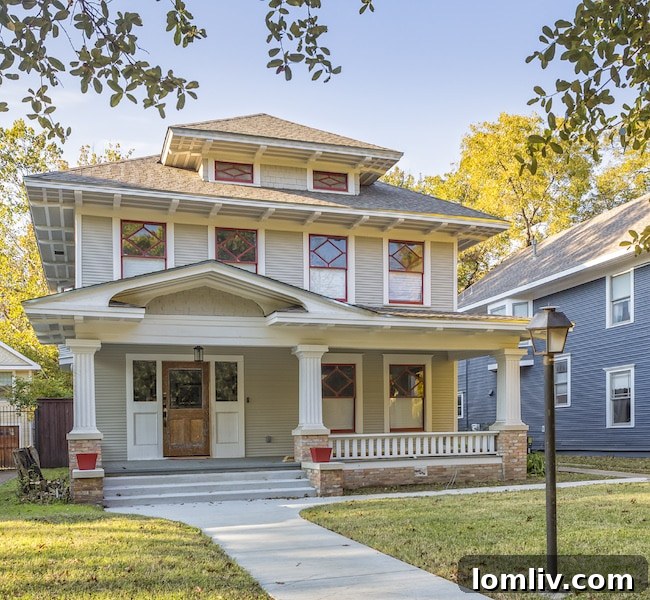
Photographed by Aaron Dougherty www.aarondoughertyphoto.com
Unearthing Fascinating Stories: Your Home’s Hidden Past
My personal expeditions into the Dallas Public Library’s extensive archives, particularly the digitized collection of the Dallas Morning News, have consistently yielded remarkable discoveries. One memorable search unearthed an elaborate 1940s scheme wherein Dallas families adopted children displaced from war-torn Europe. I read heartwarming accounts of tea parties hosted to finalize these adoptions, securing new beginnings for British children in Dallas homes. This speaks volumes about the diverse human stories waiting to be discovered.
Through these archives, I’ve also uncovered connections between former property owners and notorious mobsters, alongside intriguing links to prominent politicians. I’ve learned that the iconic musician Liberace was once a distinguished guest in a local historic home in Casa Linda, adding a touch of old Hollywood glamour to Dallas’s residential history. References even point to rock-and-roll legend Elvis Presley being a guest in Forest Hills. And for those with a taste for the more audacious side of history, I can pinpoint which East Dallas pool the famous stripper Candy Barr famously dove into. All these vibrant, sometimes scandalous, sometimes heartwarming stories are readily accessible, thanks to the invaluable resources of the Dallas Public Library and its comprehensive Dallas Morning News archives collection. This rich database allows anyone to peel back the layers of time and reveal the surprising narratives embedded in local properties.
So, whether you’re a curious homeowner, a realtor seeking a competitive edge, or simply a history enthusiast, obtaining a Dallas Public Library card is your first step. Once you have it, you’ll be equipped to embark on a captivating journey to discover if your charming Dallas home once hosted a scandalous stripper, a sophisticated debutante tea, or was perhaps owned by a figure with unexpected ties to the underworld. The possibilities are endless, and the research is undeniably rewarding.
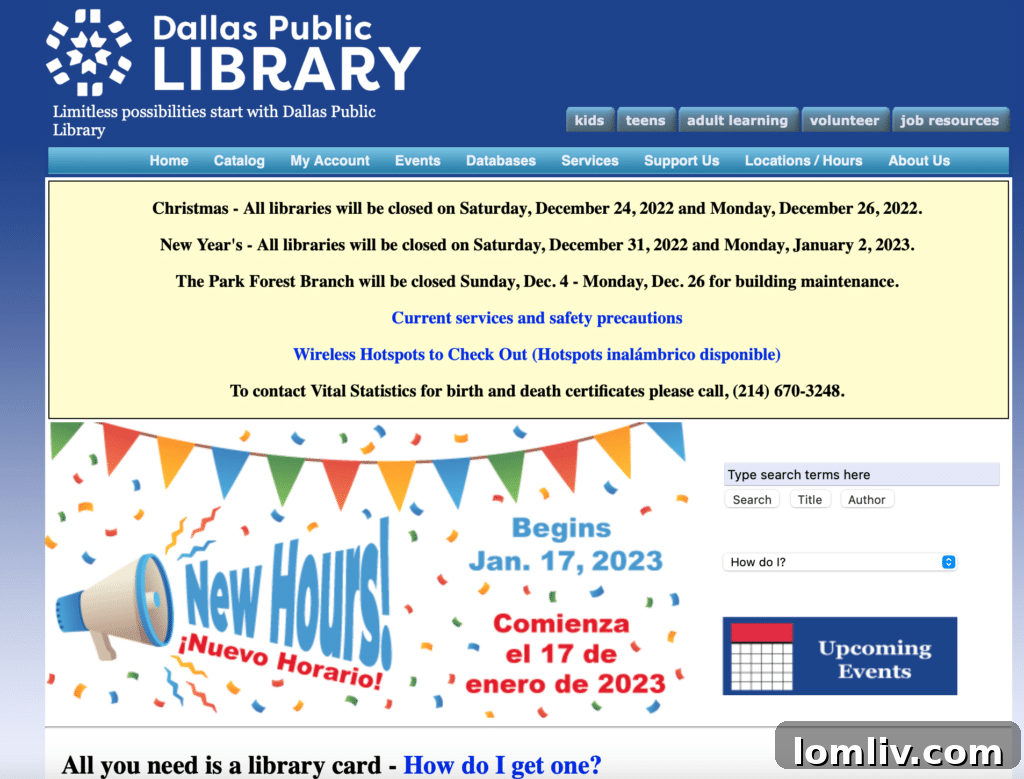
The Dallas Public Library stands out as, hands down, the most efficient and fastest method for uncovering detailed information about your home’s past. If you’re a resident of the City of Dallas and haven’t yet secured a library card, the process couldn’t be simpler or more accessible. This card opens up a treasure trove of digital and physical resources, connecting you directly to the vibrant history of your neighborhood and property.
Just want to use our digital content? You can sign up for a library e-card by emailing [email protected] with a copy of your photo ID as well as proof of Dallas residency if your current address is not on your ID.
Do you have a smartphone? You can download the free Dallas Public Library app for Android or iOS to manage your account, request books, and if you forget your library card, the app has a barcode you can use to check out.
Dallas Public Library
Beyond the archives, a library card grants you access to an array of other invaluable resources. These include extensive genealogical databases, local history collections, digitized city directories, historical maps, and even old yearbooks that can help trace previous residents. The digital content alone, accessible via an e-card, provides a vast repository of knowledge from the comfort of your home. It’s an indispensable tool for anyone undertaking property history research in Dallas, providing rich context and often surprising details about the people and events that shaped your specific address and the surrounding community.
Your Comprehensive Guide to Unearthing Your Home’s Hidden History
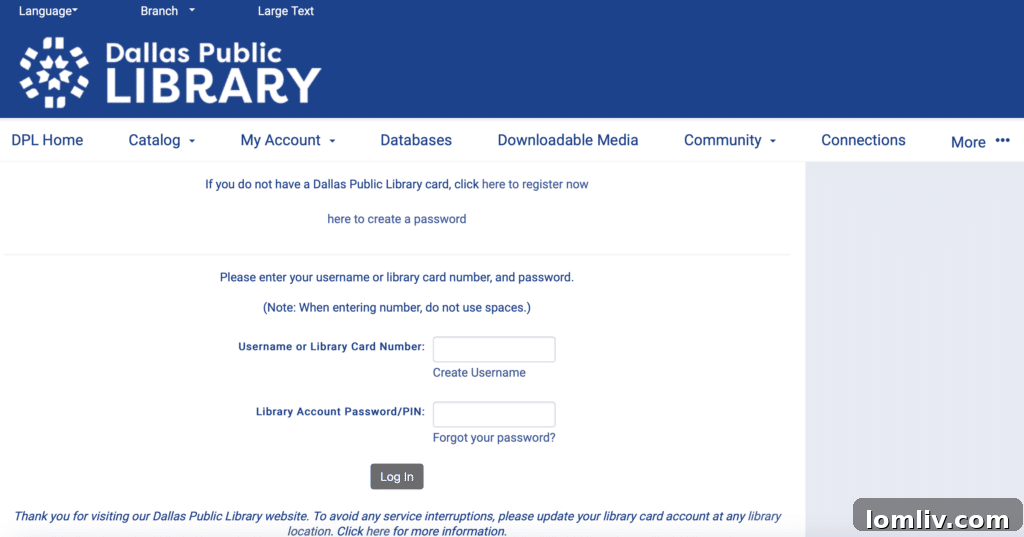
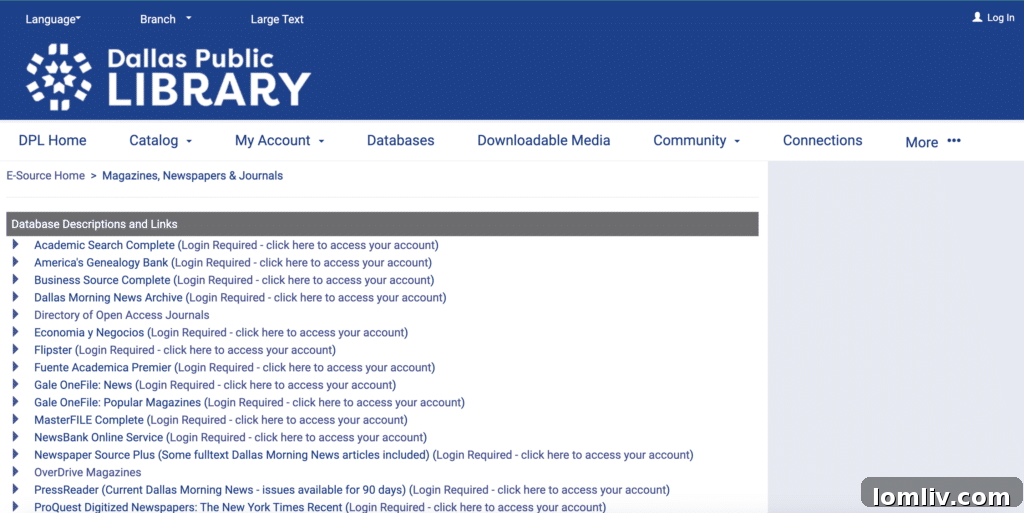
Once you’ve secured your Dallas Public Library card and are ready to dive into the archives, navigating the online portal is straightforward. Begin by visiting the Dallas Public Library’s main website. Locate the “My Account” link, typically positioned at the top of the page. Clicking this will direct you to a login screen where you’ll enter your library access number and your personalized PIN. A helpful feature is that the system will often autofill these credentials on subsequent visits, making future logins quick and hassle-free. This initial step is your gateway to a vast collection of digital resources.
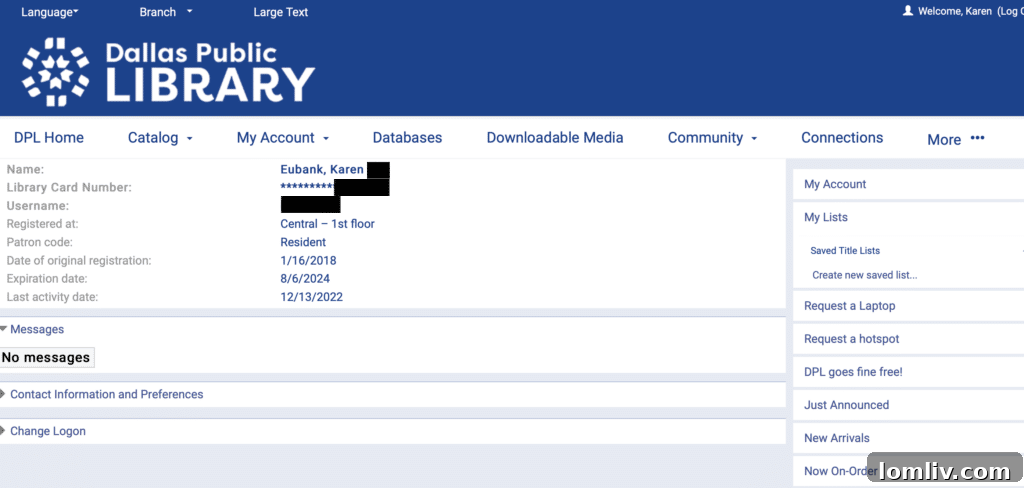
After successfully logging into your account, you will be presented with your personalized library dashboard. This page provides a comprehensive overview of your loans, requests, and access to various library services. To proceed with your historical property research, your next destination is the “Databases” section. This link is crucial as it leads you to the library’s curated collection of specialized digital resources, each offering unique insights into different areas of knowledge.
Within the “Databases” section, you’ll find an extensive list of categorized resources. Scroll through this list until you locate the “Dallas Morning News Archive.” This particular database is the cornerstone for uncovering the local history of properties in Dallas. It provides access to decades of news articles, classifieds, social announcements, and advertisements – a veritable time capsule of daily life in Dallas, including countless mentions of local addresses and the people associated with them.
Upon entering the Dallas Morning News Archive, you’ll be greeted by a search bar. This is where your investigative work truly begins. The most crucial tip for effective searching is to **enclose the full property address in quotation marks**. For instance, if you’re searching for “4757 Main Street,” typing it exactly like that, including the quotation marks, will instruct the search engine to look for that precise phrase. Failing to use quotation marks – for example, entering 4757 Main Street without them – would yield every article mentioning “4757” and every article mentioning “Main Street” separately, resulting in an overwhelming and largely irrelevant list of results. This simple trick dramatically refines your search, focusing on specific mentions of your property.
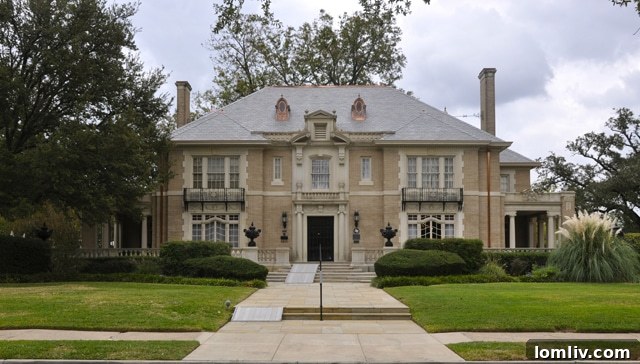
Let’s illustrate this with a well-known example: the Aldredge House, located at 5500 Swiss Avenue. Entering “5500 Swiss Avenue” into the search bar, with the address precisely quoted, will pull up a focused collection of articles directly related to this iconic Dallas landmark. This method is incredibly effective for pinpointing historical events, former residents, and any significant occurrences tied to your property, allowing you to build a comprehensive timeline of its past.
Once your search for a specific address, such as “5500 Swiss Avenue,” is complete, the archive will display a list of relevant articles. The interface offers valuable filtering options that can significantly aid your research. You can sort the results by “best match,” which prioritizes articles most relevant to your search terms, or chronologically by “oldest” or “newest” articles. The ability to filter by a “specific date” or date range is particularly useful if you’re looking for information about a known event or a particular period of ownership. If you choose to filter for the “oldest” articles, you’re likely to uncover a genuine treasure trove of history.
These historical records often reveal a fascinating mosaic of past lives. You might find announcements of weddings hosted at the property, obituaries of former residents, details of elaborate parties, or even mentions of career promotions and social engagements. By piecing together these snippets of information, you can gradually reconstruct the lives of the people who once called your house home. You’ll discover their professions, their families, their community involvement, and the significant events that unfolded within those walls. From my own extensive experience, it’s remarkably easy to fall into the “history rabbit hole” when exploring these archives; the stories are so rich and the connections so intriguing that the research itself becomes a deeply fascinating pursuit.
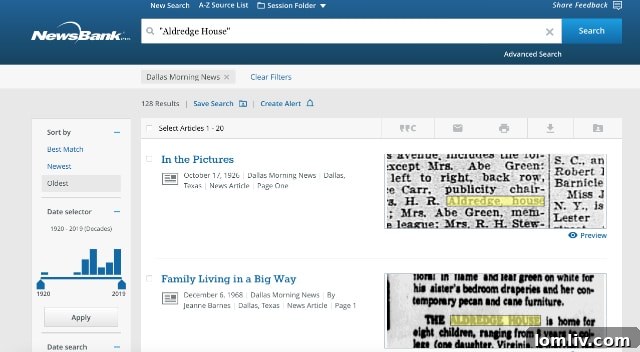
In addition to using the precise address, if your home has a historically recognized name, like the “Aldredge House,” you can also use that name as a search term, again enclosed in quotation marks, to broaden your search results and potentially uncover even more details. Sometimes, prominent homes are referred to by their names rather than just their street numbers in historical publications. This dual approach maximizes your chances of discovering every possible piece of information.
Understanding your home’s history provides tangible benefits for homeowners and realtors alike. For homeowners, it creates a deeper sense of connection and appreciation for their property. It can inspire unique renovation choices that honor the home’s original character or spark conversations with neighbors who share similar historical interests. For real estate professionals, this historical context serves as a powerful marketing tool. Highlighting the unique stories, architectural significance, and notable past residents of a historic Dallas home can significantly increase its market appeal, justifying a higher valuation and attracting buyers who specifically seek out properties with rich narratives.
Researching property history can also connect you to the broader community. You might discover that a former owner was a pivotal figure in local governance, a renowned artist, or a successful entrepreneur whose legacy still influences Dallas today. These connections foster a greater understanding of the city’s evolution and your home’s place within it. It transforms a simple dwelling into a living monument, a repository of collective memory that enriches not only your life but also the cultural fabric of the entire neighborhood.
So, as you gather with loved ones this holiday season, consider skipping the usual political debates. Instead, arm yourself with compelling tales from your home’s past, meticulously unearthed from the Dallas Public Library archives. Imagine the engagement and delight as you share stories of glamorous parties, historic figures, or even a local legend connected to your very own address. This journey into your home’s history is not just an academic exercise; it’s an opportunity to create new traditions and shared memories, making your home truly unique. Happy hunting, and may your discoveries be as fascinating as the history of Dallas itself!