The rise of the “sharing economy” marks a significant shift in how modern society accesses goods and services. While often celebrated for its innovative approach to resource utilization, it also subtly acknowledges a challenging economic reality for many: the growing difficulty for younger generations to afford outright ownership. Unlike their predecessors, today’s individuals frequently find themselves navigating a landscape where wages have stagnated relative to corporate profits and the cost of living. This economic pressure has catalyzed the adoption of shared resources, transforming everything from personal transportation to housing.
What began with ridesharing services like Lyft and home rentals through Airbnb has expanded into diverse sectors, including fashion with platforms like The RealReal. Now, this dynamic model extends to your very own backyard oasis with Swimply. Yes, you read that correctly: homeowners with a private swimming pool can now list their aquatic amenities on Swimply, turning a significant household expense into a potential income stream. This innovative platform allows individuals to rent out their pools by the hour, offering a unique solution for both pool owners seeking to offset costs and eager swimmers looking for private recreational spaces.
The concept has clearly resonated with investors, as evidenced by a recent injection of $10 million in funding for the 2018 startup. Asher Weinberger, Swimply’s COO, attributes the platform’s success to “The shifting mindset from younger generations about ownership…” This statement, when viewed through a broader economic lens, could be interpreted as a pragmatic response to financial constraints. It suggests that contemporary generations either earn too little to acquire the assets their parents did or find themselves without the luxury of time and capital to save traditionally for such large investments.
The Complex History Behind America’s Private Pools
While the sharing economy’s emergence is often framed as a modern phenomenon, the proliferation of private backyard pools in America has roots in a much older, and deeply uncomfortable, chapter of the nation’s history. As we recently marked the 100th anniversary of the burning of Tulsa’s Black Wall Street, it’s worth reflecting on other historical events that shaped the landscape of American recreation and property ownership, particularly regarding public spaces.
The desegregation of public pools in the 1950s ignited widespread resistance across the United States. This resistance eventually culminated in the 1971 Supreme Court ruling in Palmer v. Thompson, a landmark case that allowed Jackson, Mississippi, to close four of its five public pools while leasing the fifth to the YMCA, which then operated it as a whites-only facility. This case was not an isolated incident; prior to the ruling, hundreds of public pools nationwide were shuttered rather than comply with desegregation mandates that would permit Black Americans to swim alongside white patrons.
One particularly stark example was the colossal Fairground Park pool in St. Louis, a facility designed to accommodate up to 10,000 swimmers. On its inaugural day of desegregated swimming in 1950, a hostile mob of 5,000 white individuals surrounded the pool, targeting the approximately 30 Black swimmers present and attacking any Black person in the vicinity. Following this violent incident, annual pool attendance plummeted from a staggering 313,000 to just 10,000, leading to its permanent closure six years later. Much like the Tulsa Race Massacre, many may be hearing about the Fairground Park Riot of 1950 for the first time. This historical amnesia often leads to the mistaken belief that the decline of municipal pools was primarily due to escalating insurance liabilities, rather than a direct consequence of racial discrimination and systemic prejudice.
Therefore, the current market for renting strangers’ backyard pools can be seen as a confluence of factors: the economic reality of stagnant wages, coupled with a legacy of municipalities across the U.S. closing their public swimming facilities to prevent racial integration. This historical context directly fueled the massive growth in private backyard pools and exclusive paid swim clubs, creating the very infrastructure that platforms like Swimply now leverage. It’s a compelling intersection of economic necessity and a complicated social history.
Dive into Dallas: Exploring Swimply’s Offerings
With this crucial historical context in mind, let’s turn our attention to the present-day opportunities offered by Swimply. The platform currently boasts an impressive portfolio of 94 pools available for rent across the Dallas area. These private oases range in price from an accessible $18 per hour to a more luxurious $100 per hour, with the majority falling within the $30-$60 per hour sweet spot. Swimply’s intuitive search tool empowers users to filter pools based on an extensive array of amenities, ensuring a tailored experience for every occasion.
Potential renters can specify their desired features, including pools equipped with diving boards, BBQ grills perfect for poolside cookouts, relaxing hot tubs, and even options that are pet-friendly for those who wish to bring their furry companions. Furthermore, users can select for heated pools, ideal for cooler weather, and critically, pools that offer an official restroom. The inclusion of an “official restroom” amenity highlights a common, unspoken concern among renters, hinting at the potential hygiene issues in pools without dedicated facilities.
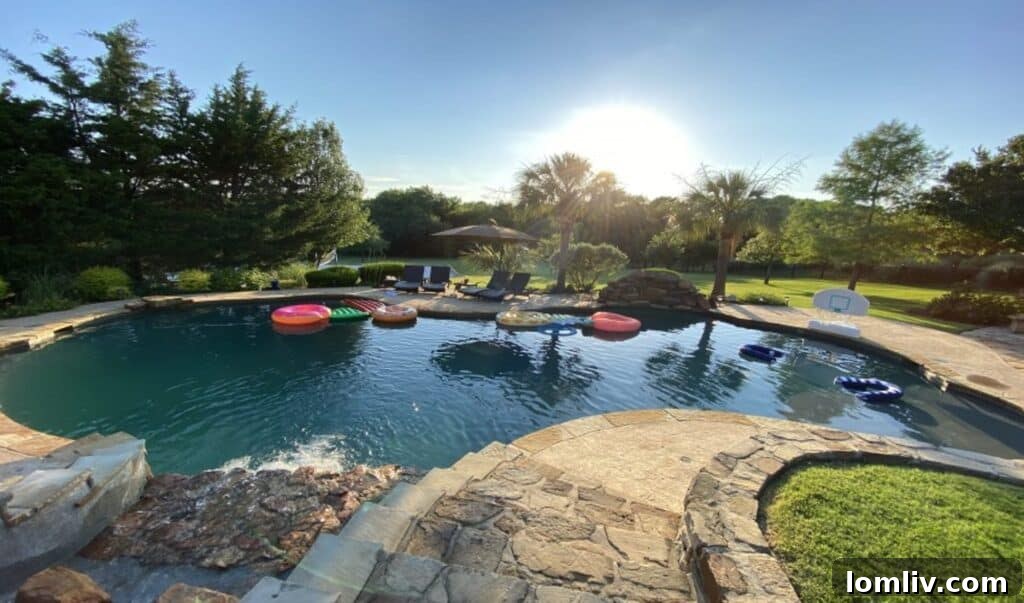
Pools on the platform are meticulously categorized by their geographic location and the maximum number of guests they can comfortably support. The stunning pool featured in our leading image, located in Forney, appears to be an exceptional value at $100 per hour, especially considering its robust list of amenities. This particular listing boasts a full bathroom, a grill, ample tables and chairs, umbrellas for shade, a volleyball court for active guests, an outdoor shower, a cozy fire pit, and convenient Wi-Fi access. The $100 rate generously includes up to 10 guests, with the capacity to accommodate up to 50 individuals for an additional charge of $3 per guest beyond the initial 10-person allowance, making it an ideal venue for larger gatherings or parties.
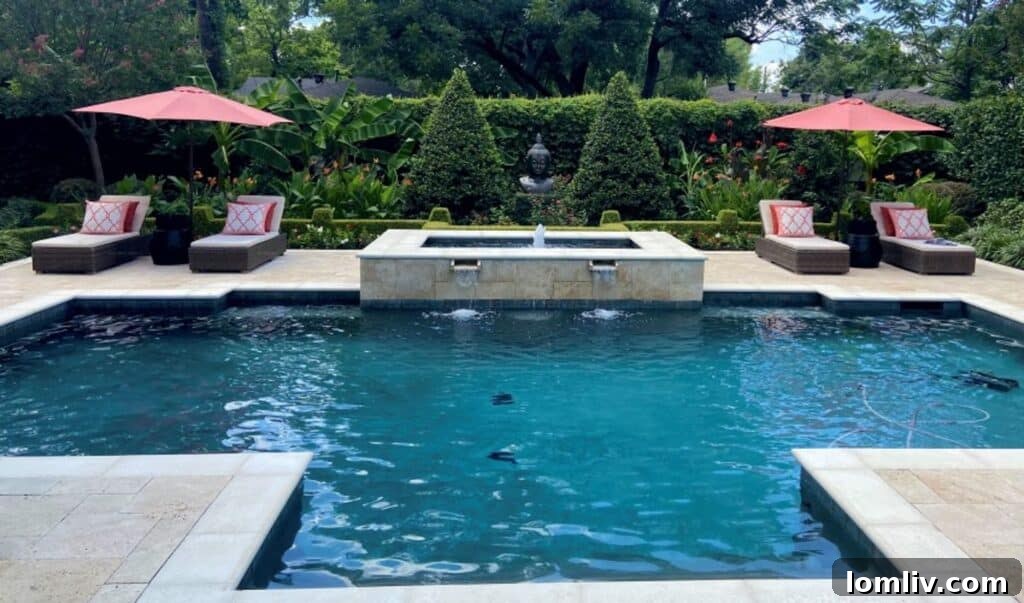
For those seeking a more intimate experience away from the bustling party scene, or perhaps a closer option within the city, an Oak Cliff listing presents an appealing alternative. Priced at a modest $20 per hour and limited to five guests, this urban retreat features an “adult-oriented topiary tree,” creating a uniquely charming and private atmosphere. It’s an ideal setting for a romantic couples’ getaway or even a “thruples” retreat. The hosts transparently mention that they work from home but assure guests they will draw the shades, ensuring complete privacy and an undisturbed experience.
Navigating the Waters: Understanding Pool Rental Liability
Upon learning about Swimply and the concept of renting out private pools, the immediate and paramount concern that springs to mind for many is insurance and liability. Swimming pools, by their very nature, are inherent magnets for accidents, and the addition of a lively pool party significantly amplifies this risk. Recognizing this critical issue, Swimply has taken steps to address liability concerns, offering a layer of protection for its hosts.
To their credit, U.S. pool hosts listing on Swimply are eligible for comprehensive coverage that includes up to $1 million for guest injury and $10,000 for property damage. The platform also implements a reasonable “contribution” or deductible structure: $250 for reservations with fewer than 10 guests and $500 for those with 10 or more. While this insurance coverage provides a valuable safety net, it’s crucial for potential hosts to understand its significant limitations and caveats, as standard homeowner’s insurance policies typically do not cover commercial activities or injuries to paying guests.
The Swimply insurance, for instance, specifically covers only injuries sustained in the pool or while using a grill. This means that other amenities, such as Forney’s volleyball court or fire pit, or any other recreational equipment like swings or trampolines, fall outside the scope of this coverage. Furthermore, the policy explicitly excludes “Losses arising from intentional acts, including but not limited to: (i) assault and battery, (ii) sexual abuse or molestation, (iii) identity theft or fraud.” Perhaps the most significant “get out of jail free card” for the insurer is the exclusion for “Injuries or losses arising from liquor liability,” which is a substantial risk given that many pool gatherings involve alcohol.
The potential for severe accidents, particularly drowning, raises the stakes considerably. Should such a tragedy occur, the $1 million coverage limit, while substantial, may prove woefully inadequate to cover the awards resulting from a wrongful death lawsuit, which can easily escalate into multi-million dollar figures. Hosts must meticulously review their personal homeowner’s insurance policy to understand its limitations regarding commercial rentals and consider additional umbrella liability coverage or specialized business insurance if they intend to regularly rent out their pool.
What is the actual risk associated with pool use? According to alarming statistics from the Centers for Disease Control (CDC), an average of 3,536 people drowned per year between 2004 and 2014, equating to approximately 10 drowning deaths per day. It’s important to note that most pools are used seasonally, suggesting even higher risks during peak usage periods. The data further reveals that 73% of pool-related injuries involved children under 15 years old, and males were twice as likely as females to sustain injuries. A particularly sobering statistic indicates that 75% of child drownings occurred in private backyard pools. For adults, a significant 70% of pool injuries were found to involve alcohol consumption. Given these sobering figures, if I were ever compelled to rent out my pool, I would, in jest, seriously consider limiting access to adult, female-only AA meetings to minimize potential liabilities.
The Selfish Economy: A Personal Stance on Sharing
The burgeoning sharing economy, while undeniably innovative and economically driven, doesn’t resonate with everyone. Personally, I find myself firmly outside the paradigm of sharing my personal assets or patronizing services built upon this model. My philosophy is straightforward: I don’t share, and consequently, I don’t engage with those who do. When traveling, my preference dictates staying in traditional hotels; if one isn’t an option, I simply don’t go. For transportation, I rely on my own vehicle or a conventional taxi service, again opting out if these aren’t available. My purchasing habits also reflect this mindset – I buy clothes that I can afford to own outright, without the intent or necessity of reselling them to recoup costs.
This personal inclination extends directly to the concept of renting a stranger’s backyard pool. The idea evokes a profound sense of discomfort and awkwardness for me. The privacy of one’s home and property feels inherently personal, making the transaction of renting out such a space, or being a guest in one, feel peculiar and intrusive. The intimate nature of a backyard pool, typically a private sanctuary for family and friends, transforms dramatically when monetized and opened to the public. It blurs the lines between personal space and commercial venue, a distinction I prefer to keep clear.
However, it is abundantly clear that my reservations are not universally shared. Millions of people eagerly embrace the sharing economy, finding convenience, affordability, and unique experiences through platforms like Swimply, Airbnb, and Lyft. They navigate these blurred lines with ease, valuing access over ownership and utility over traditional privacy. This divergence in perspective highlights the evolving landscape of consumer behavior and the varying comfort levels individuals have with monetizing or utilizing shared personal assets.
Introducing Flushly: A Bold New Venture in Throne-Sharing
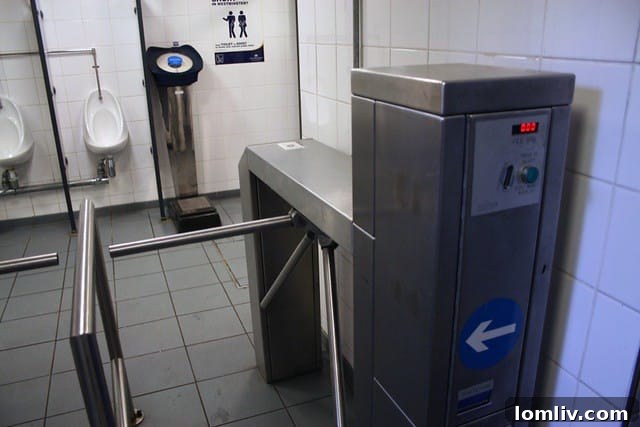
Inspired by the entrepreneurial spirit of the sharing economy and its ever-expanding boundaries, a rather audacious idea recently struck me like a lightning bolt: Flushly. Imagine a revolutionary new application designed to connect individuals in urgent need with private bathrooms available for rent from gracious homeowners. Given the unfortunate trend of many restaurants and stores increasingly restricting public use of their restrooms, coupled with Dallas’s noticeable scarcity of public facilities – the Trust for Public Lands reports that only 16 parks in the city boast public restrooms – my own location adjacent to the bustling Katy Trail seems nothing short of ideal for such an endeavor.
There’s clear market validation for this concept. A 2018 annual hand-washing survey conducted by commercial restroom products maker Bradley Corporation revealed a fascinating statistic: a remarkable 56% of Americans expressed willingness to pay for access to a clean, well-stocked toilet. This figure strongly suggests that a significant demand exists for reliable, hygienic restroom facilities, presenting a substantial opportunity for a platform like Flushly to thrive.
The Katy Trail, a vibrant artery through Dallas, reportedly welcomes 1.5 million walkers annually. If even a conservative one percent of these users experience an urgent need for a restroom during their journey, that translates to a staggering 15,000 potential “urges” I could monetize. By implementing a tiered pricing structure – perhaps $1 for a “number one” and $2 for a “number two” – and assuming a 90/10 split between the two types of transactions, I could realistically generate an estimated $16,500 per year. This calculation merely covers the basic powder room. The revenue potential could skyrocket if I charged a premium for the more spacious guest bath, perhaps even doubling the rate for the luxurious master bathroom. Furthermore, by allowing sweat-soaked trail-goers to book my showers and bathtub, I would truly be “flush from flushes,” capitalizing on every possible personal hygiene need.
But why stop at mere bodily functions? The sharing economy teaches us to maximize underutilized assets. I possess a perfectly functional washer and dryer that certainly aren’t in use 24/7. I can easily envision individuals without laundry facilities finding the chore of washing clothes significantly less daunting and more appealing in a private, serene Turtle Creek high-rise setting, as opposed to a bustling public laundromat. While they await the completion of their spin cycle, additional revenue streams could be generated. I could charge a modest fee for patio access, offer the comfort of my sofa for a quick nap, provide entertainment with TV access, and, of course, nickel and dime them with an assortment of snacks and drinks. And the ultimate “cha-ching” moment? If all that comfort and refreshment then necessitated another trip to the toilet!
Such a multifaceted approach to “throne-sharing” and domestic amenity rentals could effortlessly generate sufficient supplementary income to comfortably cover my property taxes and HOA dues. However, despite the undeniable financial allure of this enterprising idea, I ultimately would not pursue it. My core principle remains steadfast: I don’t acquire possessions I cannot afford to maintain independently, and consequently, I do not engage in the sharing of my private domain.