The $3 Million Skinny House: Toronto’s Vertical Living Experiment Sparks Debate
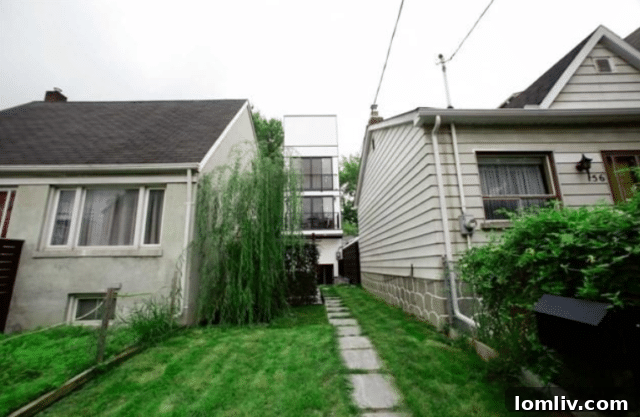
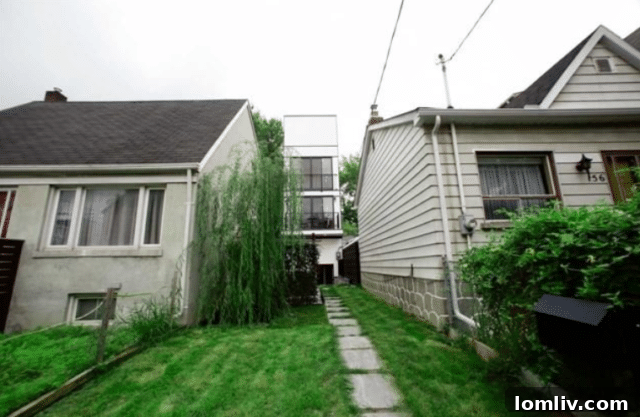
Imagine a property in one of Toronto’s most sought-after neighborhoods. Now, envision a house on a remarkably narrow 15 by 86-foot lot, boasting 1,300 square feet of living space that stretches vertically across four distinct stories. How much would you be willing to pay for such a unique, stair-filled dwelling? Would nearly $3 million strike you as a reasonable price?

Perhaps the initial sticker shock for this compact yet luxurious Toronto property is a lot to process. But as real estate trends in dense urban centers evolve, so does our perception of value and space. This particular residence, situated in a coveted Toronto locale, challenges traditional notions of home design and pricing, igniting considerable discussion among locals and real estate enthusiasts alike.
Unpacking the Vertical Living Experience: A Home Built on Stairs

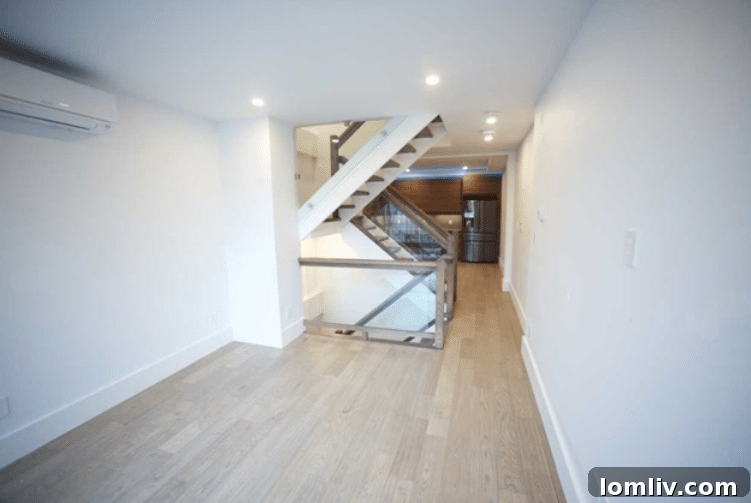
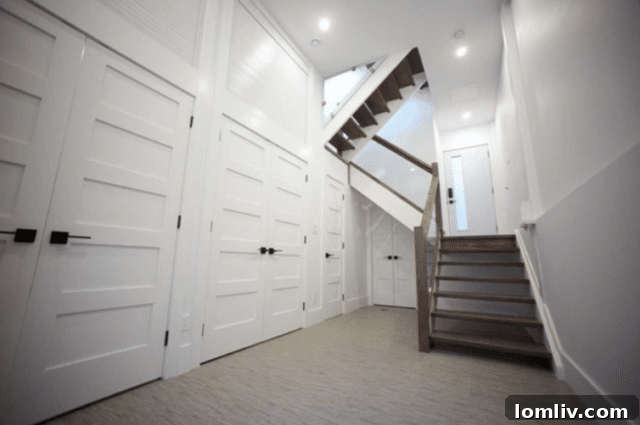
Indeed, the 1,300 square feet of this exceptional home are ingeniously, or perhaps controversially, distributed across four towering stories. This vertical layout means that navigating the house is an exercise in stair-climbing. For those seeking an integrated fitness regimen, this home offers a unique solution; for others, it might present a daunting daily challenge. The design is a bold statement, maximizing the available footprint on a lot that would otherwise seem unbuildable.

The developers, however, considered some practicalities within this multi-level design. For instance, the inclusion of laundry facilities on both the uppermost and ground floors significantly reduces the inconvenience of hauling clothes up and down multiple flights. This thoughtful amenity aims to mitigate one of the primary drawbacks of vertical living, making daily chores a little less arduous.

Adding to its unique features, the property also boasts multiple balconies. These elevated outdoor spaces offer residents views of the surrounding neighborhood, though according to local news reports, these views might occasionally include the apparently “super irritated” expressions of neighbors who have voiced strong opinions about the structure. Such a distinct design inevitably sparks conversation, and in this case, a robust public discourse.
From Garage to ‘Piece of Art’: The Property’s Controversial Transformation
The history of this contentious property is as intriguing as its present form. According to theToronto Star, the lot originally housed nothing more than a tiny garage. Over time, it was transformed into a one-bedroom cottage, a more modest use of the compact space. However, about seven years ago, a significant shift occurred. Toronto city planners approved a variance request from an architect, allowing for a much more ambitious development. This architect subsequently sold the property to another buyer, who then embarked on constructing the four-story vertical home that has since become the focal point of local debate and international curiosity.
A Neighborhood Divided: Reactions to the Skinny House
The introduction of such a distinctive, towering structure into a historically established neighborhood was bound to elicit strong reactions. One neighbor candidly expressed their alarm, stating, “This sets a precedent. The next thing you’re going to see is an eight-storey house.” This sentiment underscores a common fear among residents: that this development could open the floodgates for more out-of-character constructions, forever altering the fabric of their community.
Another resident was less concerned about precedent and more critical of the aesthetics, remarking, “It looks like something that belongs in a trailer park.” This blunt assessment highlights the tension between modern architectural ambitions and the desire for neighborhood harmony and traditional curb appeal.
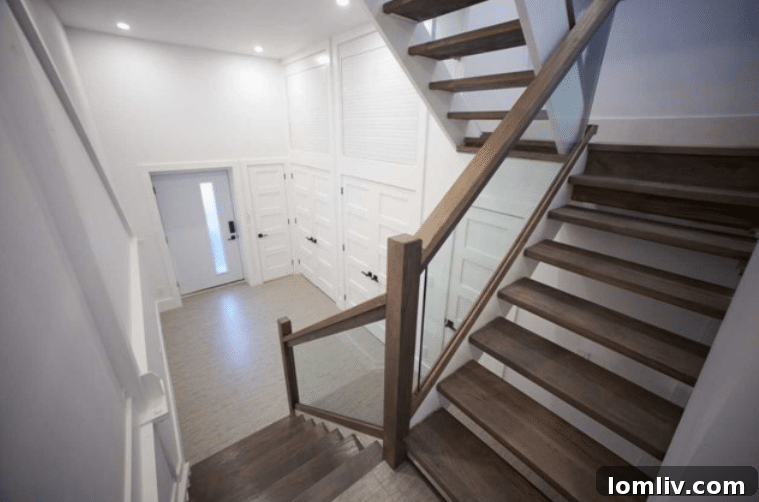
The negative sentiments were not merely retrospective. In a report featured in Canada’sGlobal News, another neighbor recounted their early misgivings, stating they knew from the moment construction began that they would not appreciate the final outcome. “We knew by the height of it that it would just be grotesque,” she declared, indicating that the visual impact was jarring even in its nascent stages.
The Developer’s Vision: A “Piece of Art” and Landmark for the Future
Despite the widespread criticism from the local community, the seller, Cyril Borovsky, maintains a starkly different perspective. He proudly refers to his creation as a “piece of art,” a testament to innovative design and urban living solutions. Borovsky also emphasized the home’s commitment to sustainability and energy efficiency, noting its primary reliance on natural gas and advanced radiant heating systems throughout the structure. This focus on modern, eco-conscious living aims to provide a counter-narrative to the aesthetic concerns of the neighbors.
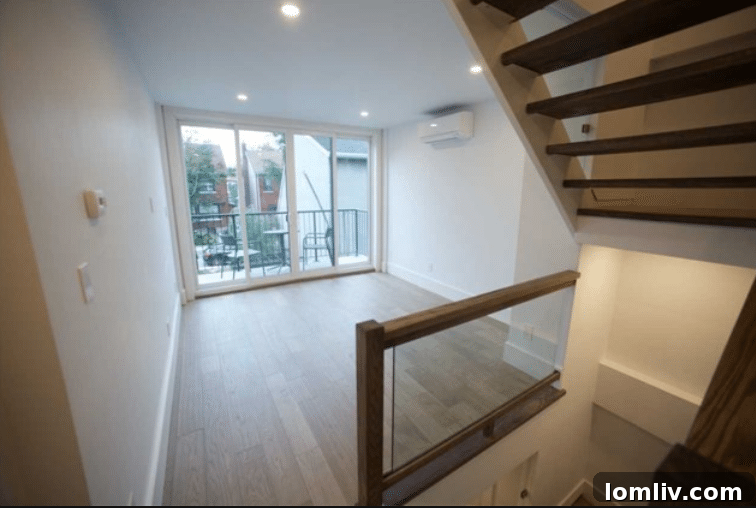
Borovsky harbors grand ambitions for his unique project. “I really hope that this will be a landmark after I’m long and gone,” he expressed. “I hope they treat it like it’s the Eiffel Tower. It’s something that is new and beautiful part of the neighbourhood.” This aspiration positions the skinny house not just as a dwelling but as a potential icon, a symbol of architectural bravery and a forward-thinking approach to urban development. Such a vision, however, clearly clashes with the immediate reception from its surroundings.
The Toronto Housing Market: Is $3 Million Justified?
The home’s listing on the market for over 111 days, as reported by property.ca, indicates that while unique, it hasn’t found an immediate buyer despite the heated Toronto real estate market. This duration suggests that the unconventional design and premium price tag require a specific buyer profile. Toronto’s housing landscape is notorious for its high demand and limited supply, driving up prices across all property types. In this context, even a “skinny house” on a tight lot can command a significant asking price due to its location and novelty.
The debate around this specific property highlights broader questions facing cities like Toronto: How do we maximize limited urban space? What constitutes appropriate infill development? And at what point does architectural innovation become an imposition on existing communities? The $3 million price point for 1,300 square feet, while high, reflects the intense market pressures and the value placed on prime location, even if it comes with a considerable number of stairs.
Ultimately, the question remains: would you, as a potential homeowner, invest in such a distinctive, four-story tiny home with a nearly $3 million price tag? If your New Year’s resolution includes increasing your daily step count, or if you simply yearn for a property that stands out from the crowd, this house in Toronto might just be the perfect fit. It offers a truly unique living experience in an unparalleled urban setting.
Architectural Innovation vs. Neighborhood Harmony: A Balancing Act
This skinny house serves as a prime example of the ongoing tension between a developer’s vision for architectural innovation and a community’s desire to preserve its established character. While Borovsky envisions his creation as a landmark, neighbors view it as an eyesore and a potential threat to their quality of life. This conflict is not uncommon in rapidly developing cities where land is scarce and property values are soaring. Developers look to maximize every square foot, often pushing the boundaries of what is traditionally acceptable in terms of size, height, and design on small, overlooked plots.
The “skinny house” phenomenon isn’t exclusive to Toronto. Cities worldwide are seeing similar vertical residences emerge as solutions to urban density. These homes often feature compact footprints but expand upwards, providing multiple levels of living space. While some celebrate them as clever adaptations to modern urban challenges, others lament the loss of traditional streetscapes and the potential for overlooking or overshadowing existing properties.
The Future of Urban Living: Embracing Compact and Vertical Spaces
Whether this Toronto skinny house sells quickly or becomes a long-term listing, its existence points to a future where urban dwellings are increasingly compact, multi-story, and designed to utilize every available inch of land. As populations grow and urban sprawl becomes unsustainable, cities must find innovative ways to house their residents. Vertical living, even in narrow formats, offers a viable pathway for densification without consuming more undeveloped land. This approach aligns with principles of sustainability, reducing commute times and fostering vibrant, walkable communities.
The debate surrounding 154 Hamilton Street in Toronto is more than just about a single house; it’s a microcosm of the larger challenges and opportunities in contemporary urban planning and architecture. It forces us to confront our definitions of home, value, and community aesthetic in a dynamic urban landscape. For those who appreciate bold design, efficient use of space, and a prime location, this property might indeed represent the future of luxury urban living, stairs and all.
Share Your Thoughts
What do you think of Toronto’s $3 million skinny house? Is it an architectural marvel, a neighborhood nuisance, or a smart solution to urban density? We invite you to share your perspective on this vertical living experiment and its place in the evolving real estate market.