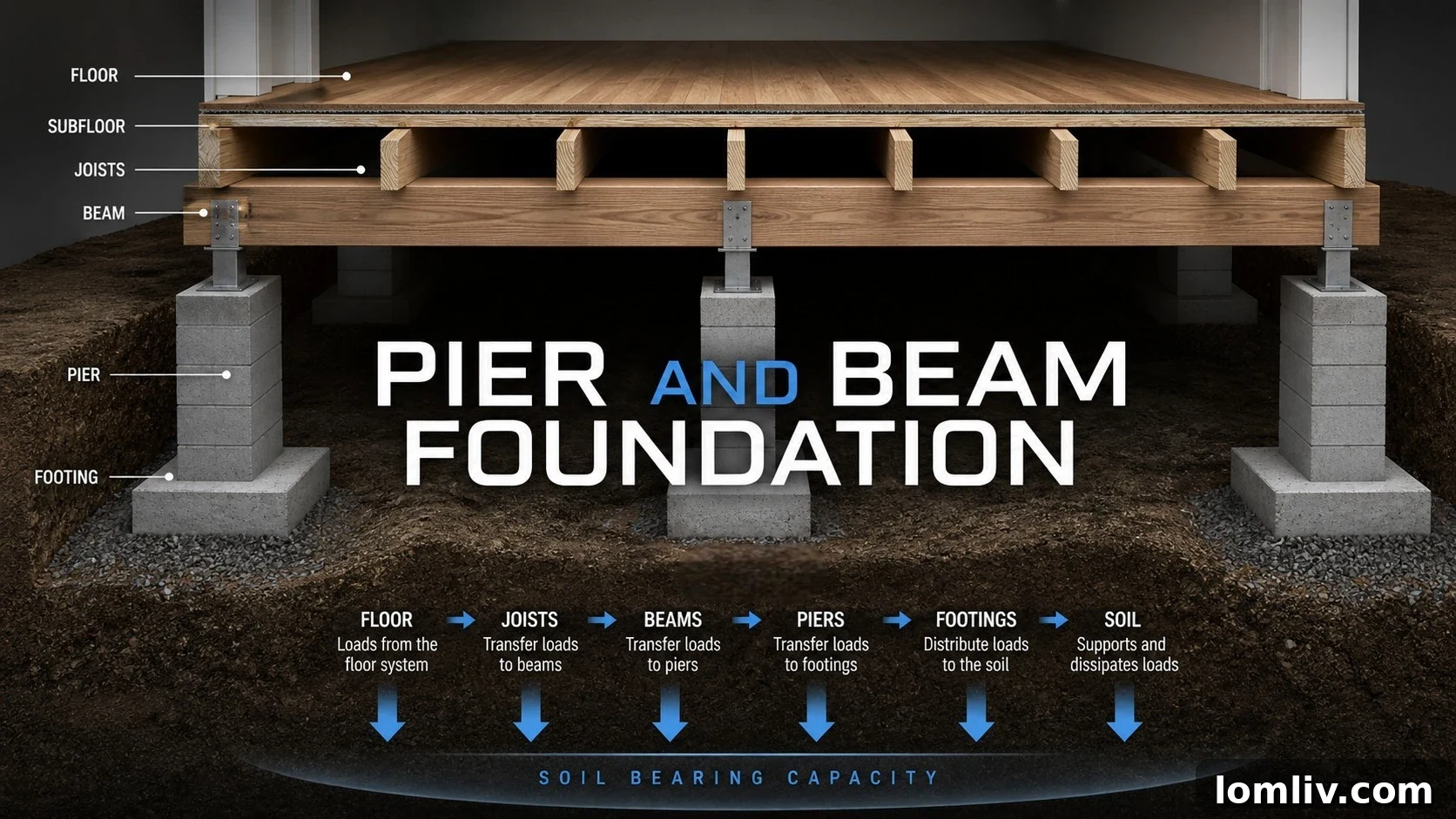
A pier and beam foundation is a time-tested construction method that elevates a home’s structure above the ground. Instead of resting on a single concrete slab, the house is supported by a series of vertical piers and horizontal beams. This design creates a crawlspace—an accessible, open area between the ground and the underside of the house—which is one of its most defining and advantageous features.
This crawlspace serves a critical purpose, providing easy access to plumbing, electrical wiring, and HVAC systems for inspections, repairs, and upgrades. The height of a crawlspace can vary, but it’s typically designed to be just large enough for a person to navigate. While slab-on-grade foundations became more popular after World War II for their speed and lower initial cost, pier and beam systems remain a preferred choice for custom homes, historic restorations, and properties situated in areas with challenging soil conditions.
The fundamental difference between these two foundation types lies in how they distribute the home’s weight. A slab foundation is a single, shallow layer of reinforced concrete poured directly onto the ground, distributing the load across its entire surface. In contrast, a pier and beam foundation channels the building’s load through the floor framing, to the main beams, down through the support piers, and finally into deeper, more stable soil layers. This targeted approach to load distribution makes it uniquely suited for certain environments, particularly in regions like North Texas.
Why Pier and Beam Foundations Are Prevalent in Dallas
The pier and beam system has long been a staple in American residential construction, especially for wood-frame homes. Its straightforward construction, use of readily available materials, and the practical benefits of airflow and utility access have made it a popular choice for generations. In the Dallas-Fort Worth Metroplex, these foundations are commonly found in historic and established neighborhoods such as East Dallas, Oak Cliff, Lakewood, and parts of Highland Park, where many homes date back to the early and mid-20th century.
A primary reason for its continued relevance in North Texas is the region’s infamous expansive clay soil. This type of soil is highly reactive to moisture. During wet seasons, it absorbs water and swells significantly, and during the hot, dry summers, it loses moisture, shrinks, and can even crack. This constant cycle of expansion and contraction exerts immense pressure on a home’s foundation, a phenomenon that can cause slab foundations to crack, heave, or settle unevenly.
Pier and beam foundations are better equipped to handle this soil volatility. The elevated structure allows for more flexibility, and any movement that does occur is often easier and less expensive to correct. However, this resilience comes with the need for diligent maintenance, particularly concerning moisture control and drainage to protect the wooden components within the crawlspace.
How a Pier and Beam Foundation Works: An In-Depth Look
To fully appreciate its functionality, it’s essential to understand the core components of a pier and beam foundation. Each part plays a specific role in creating a stable and durable support system for the entire home.
The Key Components of the System:
- Piers: These are the vertical columns that form the primary load-bearing points. Traditionally made from brick or concrete blocks, modern piers are often constructed from poured concrete, reinforced steel, or advanced helical systems. Piers are set on concrete footings that rest on stable soil, ensuring they can evenly distribute the weight of the structure without sinking.
- Beams: Also known as girders, these are the main horizontal supports that rest directly on top of the piers. Typically made of heavy timber or engineered wood, they are the backbone of the floor structure, carrying the load from the walls and floors and transferring it down to the piers.
- Joists: These are smaller wooden beams that run perpendicular to the main beams. Spaced closely together, they create a grid-like framework that supports the subfloor. The integrity of the joists is crucial; if they become weak, rotten, or damaged, the floor above will feel bouncy, sloped, or uneven.
- Subfloor: This is the flat surface, usually made of plywood or OSB (Oriented Strand Board), that is attached directly to the top of the joists. The subfloor serves as the base for the finished flooring, such as hardwood, tile, or carpet. Its condition is directly tied to the health of the joists and the moisture levels in the crawlspace.
- Crawlspace: The open void beneath the home is a defining feature. While providing invaluable access, it can also be a source of problems if not properly managed. Poor ventilation, water intrusion, and high humidity can lead to mold growth, wood rot, and pest infestations.
The structural load path in this system is clear and methodical, ensuring stability from the top down:
Finished Floor → Subfloor → Joists → Beams → Piers → Footings & Soil
This segmented design is both a strength and a potential weakness. If one pier settles due to soil shrinkage, the section of the floor it supports will drop, causing uneven floors, sticking doors, and cracks in the drywall. Conversely, soil expansion can push a pier upward, creating a hump in the floor. This “differential movement” is the most common issue, but it’s also highly correctable because each support point can be adjusted individually.
Identifying and Repairing Pier and Beam Foundation Issues
Effective foundation repair begins with a thorough diagnosis to pinpoint the root cause of the problem. A sloped floor doesn’t always mean the entire foundation is failing. A professional inspection is essential to determine the most appropriate and lasting solution.
Common Repair Methods for Pier and Beam Foundations:
- Shimming or Reshimming: This is the most common and least invasive repair. When small gaps appear between a pier and a beam due to minor settling, thin steel plates (shims) are inserted to fill the space, re-establishing solid contact and leveling the floor above. It’s an effective solution for minor adjustments.
- House Leveling and Stabilization: For more significant settling, the home must be carefully lifted. Hydraulic jacks are strategically placed to raise sunken sections of the house back to their original level. Once leveled, the structure is secured by shimming, reinforcing beams, or adding new piers to provide permanent support. This process must be done gradually to avoid causing collateral damage to the structure.
- Pier Replacement or Addition: If existing piers are cracked, tilted, or deteriorated, they must be replaced. Modern options like pressed concrete piers or steel piers offer greater durability. In some cases, new piers may be added between existing ones to provide extra support in areas that carry a heavy load or have experienced significant movement.
- Wood Component Repair: Moisture, termites, or simple aging can compromise wooden beams and joists. Damaged sections can be replaced entirely. A common technique called “sistering” involves attaching a new joist or beam alongside a weakened one to bolster its strength without a full replacement.
- Drainage Correction: Since water is the primary enemy of any foundation, addressing drainage issues is paramount. This can involve installing French drains to redirect groundwater, re-grading the yard to ensure water slopes away from the house, extending downspouts, and installing sump pumps in the crawlspace.
- Crawlspace Encapsulation: To combat persistent moisture and humidity from the ground, the crawlspace can be sealed off with a heavy-duty vapor barrier. This process, known as encapsulation, often includes a dehumidifier and helps prevent mold, wood rot, and pest infestations, creating a healthier environment for the entire home.
Estimating the Cost of Pier and Beam Foundation Repair
The cost to repair a pier and beam foundation varies widely based on the extent of the damage, the home’s size, accessibility of the crawlspace, and local labor rates. The following are general estimates for the Dallas-Fort Worth area.
- Minor Adjustments (Shimming): For basic reshimming to correct minor settling, homeowners can expect to pay between $1,500 and $3,000. The final cost depends on the number of piers that need adjustment.
- Extensive House Leveling: More comprehensive leveling projects involving multiple lift points and significant adjustments typically range from $5,000 to $12,000 or more.
- Pier Replacement: The cost per pier varies by type. Concrete piers are the most economical, usually costing $400 to $900 each. Steel piers offer more robust support and range from $1,200 to $2,500 per pier, while helical piers, ideal for deep stability, can cost $1,800 to $3,500 each.
- Wood Replacement: Replacing a main support beam can cost several thousand dollars depending on its length and accessibility. Joist repair is typically less expensive but can add up if multiple joists are damaged.
- Drainage and Encapsulation: A full French drain system can cost $3,000 to $7,000 ($25–$40 per linear foot). Crawlspace encapsulation is priced per square foot, generally ranging from $4 to $8, putting the total for an average-sized home between $5,000 and $15,000.
Given the complexity, it’s crucial to get multiple quotes from reputable, experienced foundation repair contractors. A trustworthy professional will provide a detailed assessment and a transparent plan that addresses both the symptoms and the underlying cause.
Proactive Maintenance for a Long-Lasting Foundation
With a pier and beam foundation, preventative maintenance is key to avoiding costly repairs. Homeowners should regularly inspect the property for signs of trouble. Ensure gutters are clean and downspouts direct water far away from the foundation. The soil grade should always slope away from the home. Periodically check the crawlspace for leaks, standing water, or signs of pests. A dry, well-ventilated crawlspace is essential for preserving the wooden structure.
By understanding how it works and committing to regular upkeep, a pier and beam foundation can provide a flexible, easily repairable, and exceptionally durable base for your home for decades to come.