The urban landscape of Oak Lawn, particularly its esteemed Mansion Park area, stands on the cusp of significant transformation. A recent inquiry from a discerning reader prompted us to delve deeper into the potential for numerous 20-plus-story high-rises in this historically rich and increasingly sought-after neighborhood. For long-time residents and prospective investors alike, understanding the trajectory of development in Mansion Park is crucial. This district, often recognized for its blend of vintage charm and modern sophistication, is experiencing an accelerated pace of change that promises to redefine its skyline and community fabric, establishing its reputation as a premier urban living destination in Dallas.
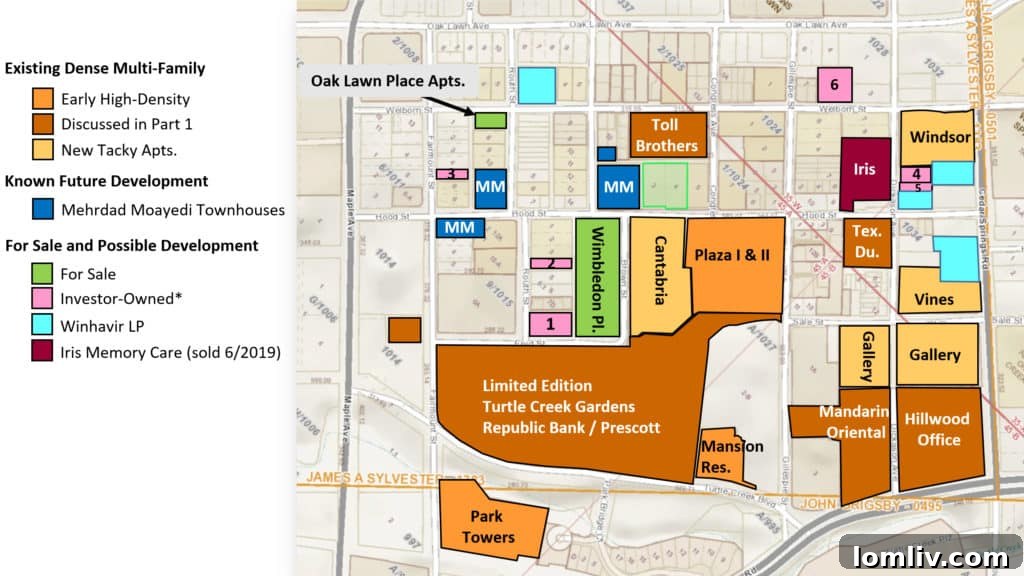
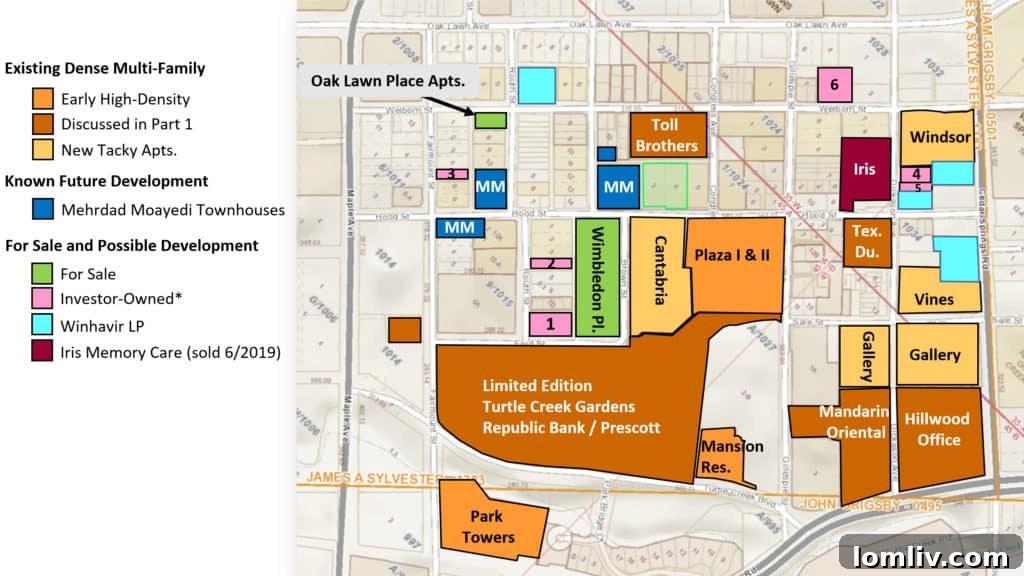
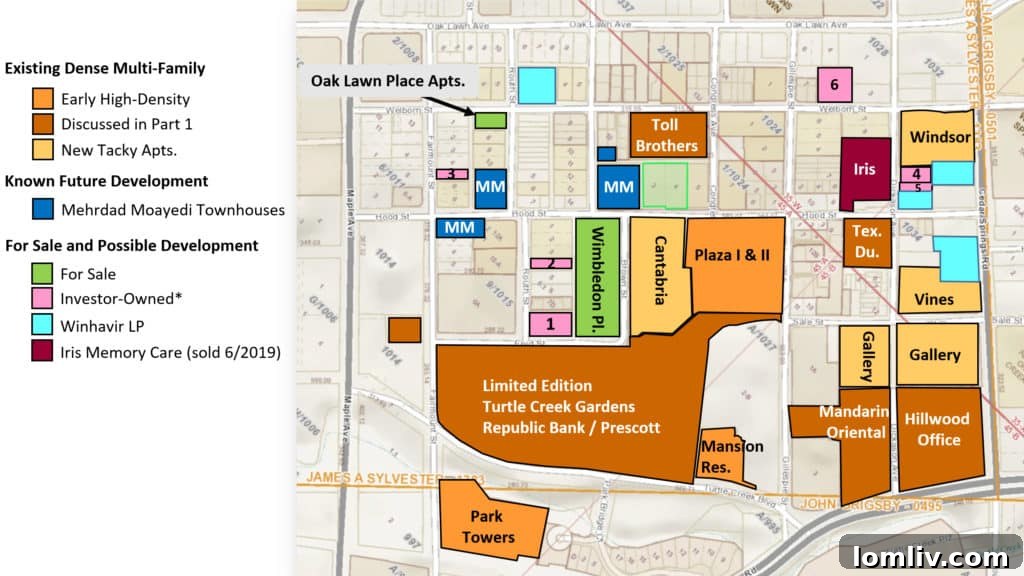
For clarity, we define Mansion Park as the vibrant expanse bordered by Oak Lawn Avenue to the north, Cedar Springs Road to the west, the scenic Turtle Creek Boulevard to the east, and Maple Avenue completing its southern edge. This distinctive quadrant of Dallas has been a frequent subject of our analysis, reflecting its dynamic real estate market. Our December 2019 article provides an excellent historical perspective on the evolving zoning discussions and development pressures that have long shaped this unique locale. As illustrated by the comprehensive map above (and a larger, more detailed version available here), the tranquil pockets of eclectic, older homes that once characterized Mansion Park are becoming increasingly rare. This signifies a clear shift towards higher-density residential and mixed-use projects, driven by burgeoning demand and the area’s prime location, which continues to attract substantial investment and development interest.
Decoding Mansion Park’s Development Map: The “Orange” Zones of High-Rise Potential
A closer examination of the Mansion Park development map reveals a landscape undergoing intense evolution, with various color codes signifying different stages and types of urban growth. The areas highlighted in “orange” are particularly noteworthy, representing a confluence of existing high-density developments and strategically planned projects. These zones encompass both the pioneering high-rises that have stood for decades and a newer generation of contemporary, albeit sometimes critiqued, apartment complexes. More significantly, the orange parcels delineate areas where substantial density increases have already been approved and are poised for future construction. This planned densification, as previously discussed, indicates a clear trend towards vertical expansion along the Turtle Creek corridor and deeper into Mansion Park, promising a dramatic transformation of the skyline.
Many of these ambitious planned developments facing Turtle Creek Boulevard are designed as comprehensive mixed-use environments, aiming to create self-contained communities within the urban fabric. For instance, the Prescott plans envision a sophisticated integration of office spaces, luxury apartments, upscale hotel accommodations, and exclusive condominiums, fostering a vibrant live-work-play environment. Similarly, the highly anticipated Mandarin Oriental project is expected to feature a blend of prestigious hotel offerings and high-end residential units, catering to a discerning clientele seeking unparalleled luxury and amenities right on the iconic Turtle Creek. In contrast, Hillwood’s plans for its designated parcels are predominantly focused on office development, indicating a diversified approach to the area’s commercial and residential growth. This strategic mix of uses underscores Mansion Park’s evolving identity as a vibrant, multifaceted urban hub, attracting both residents and businesses seeking a prime Dallas location with exceptional connectivity and prestige.
Speaking of the prestigious Mandarin Oriental project, its journey has been anything but smooth, illustrating the inherent risks and complexities of high-stakes luxury real estate. The Dallas Morning Newsreported recently on significant financial turmoil surrounding the JMJ Development project, with lenders threatening foreclosure due to an alleged loan default. This development is particularly disheartening given the brand’s elusive history in Dallas; their initial foray into the market famously collapsed with the Victory Park project during the Recession, leaving a void for ultra-luxury accommodations. This latest setback casts a shadow of uncertainty over whether Dallas will ever successfully host a Mandarin Oriental property, a brand synonymous with ultra-luxury and exquisite service globally. The Hong Kong-based hotel group maintains a notoriously private stance regarding their involvement in projects, a secret I personally kept for over a year until zoning approval in November 2019 made it public. This ongoing saga prompts speculation: could the stalled Prescott project, strategically located on the opposite side of The Mansion, potentially become a viable alternative for the Mandarin Oriental should the current venture falter? Such a pivot, though speculative, highlights the fluid nature of high-stakes real estate development in a dynamic and competitive market like Dallas, where fortunes can change rapidly.
Beyond the “Orange”: Unpacking Other Key Developments in Mansion Park
Moving past the high-density “orange” zones, other colors on our map illuminate different facets of Mansion Park’s development narrative, each telling a distinct story of potential and progression. The “dark blue” parcels, for example, collectively represent a series of planned townhome developments spearheaded by Mehrdad Moayedi, a prominent figure in Dallas real estate known for his extensive portfolio and simultaneous management of numerous projects. While signs for these townhomes emerged over a year ago and the lots have been meticulously cleared, tangible construction has yet to commence. This delay is not uncommon for a developer of Moayedi’s caliber, who often has “100 irons in the fire,” suggesting these specific projects may have been temporarily “back-burnered” in favor of other, more immediate priorities or due to market adjustments. The future of these parcels, whether they will proceed as originally envisioned, undergo revisions, or even be sold to another developer, remains a point of keen interest for those observing Mansion Park’s evolving urban fabric, contributing to the broader mosaic of its development.
Wimbledon Place: A Prime Site Poised for High-Rise Redevelopment at 3515 Brown
The “green” parcels on our map introduce another intriguing dimension to Mansion Park’s development story, specifically highlighting properties currently listed for sale that hold significant redevelopment potential. Among these, the Wimbledon Place townhouses at 3515 Brown stand out as a prime candidate for a dramatic transformation. This substantial 1.59-acre site, currently occupied by 1973-era townhomes, is situated in a strategic location that makes its sale and potential redevelopment highly anticipated. Several factors contribute to its attractiveness for developers and its eventual departure from its current form. Firstly, its proximity to the Cantabria apartments, which have, by many accounts, persistently disrupted neighborhood tranquility since their inception, makes the idea of a comprehensive redevelopment appealing to mitigate existing issues and introduce a fresh, upscale presence that could elevate the entire streetscape.
Secondly, Wimbledon Place sits directly behind the perennially “for-sale” Turtle Creek Gardens, a property whose future redevelopment remains uncertain. This adjacency means that the successful transformation of Wimbledon Place could either complement or significantly influence the ultimate vision for Turtle Creek Gardens, creating a ripple effect on the surrounding real estate landscape and potentially driving further investment. Thirdly, the existing 1973 townhomes, while once modern, are showing their age in terms of construction quality and design. My personal experience viewing units here revealed a distinct “bouncy” sensation underfoot—a descriptor rarely used in flattering real estate parlance—underscoring the structural limitations and outdated nature of the existing residences. This combination of factors firmly positions Wimbledon Place as ripe for a complete overhaul, signaling an inevitable shift from its current configuration to something far more substantial and modern, aligning with Mansion Park’s luxury trajectory.
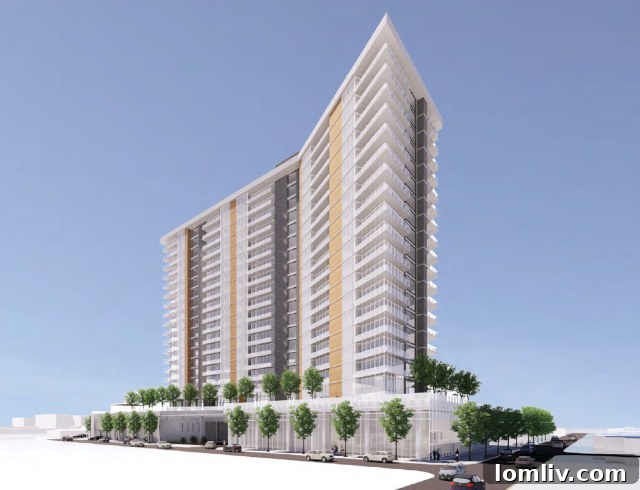
Given its coveted MF-3 zoning designation, which permits high-rise construction, the sales packet for Wimbledon Place naturally includes illustrative proposals for such ambitious projects. One notable option, depicted in the rendering above, envisions an elegant 18-story tower housing 323 units, each averaging a spacious 1,000 square feet. This design incorporates three levels of subterranean parking, complemented by a half-level at ground floor dedicated to visitor parking, loading docks, and waste management facilities, ensuring efficient operations. While this plan presents a compelling vision for a high-density luxury residential building, it’s crucial to acknowledge that it represents an initial concept rather than a definitive blueprint. Practical considerations, such as the potential necessity to revise or eliminate a prominent podium structure for aesthetic or regulatory reasons, are often part of the iterative design process in urban planning. Furthermore, as is common with real estate brochures, these options serve primarily as an imaginative guide to the site’s potential, rather than a final commitment to a specific architectural outcome, offering a glimpse into the possibilities for developers.
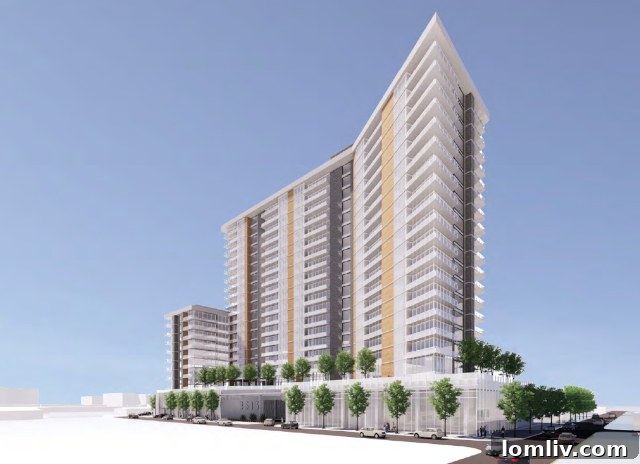
Another intriguing proposal for Wimbledon Place, labeled Option 2, presents a 16-story tower that retains a similar architectural language but introduces a distinctive eight-story “tumor” or appendage on one side. This design choice is a direct response to achieving a comparable unit count of 327 despite being two floors shorter than Option 1, showcasing a common tactic in urban development. These two renderings are invaluable in demonstrating a common architectural phenomenon in dense urban environments: when building heights are constrained or reduced by zoning or other factors, developers often compensate by expanding the building’s footprint or creating more voluminous, “bulbous” outgrowths to maximize the total floor area and unit yield. This strategic trade-off illustrates the delicate balance developers strike between vertical height, overall density, and market demand, showcasing how design adapts to achieve profitability within zoning limitations. It’s a pragmatic illustration of how building massing is manipulated to optimize development potential, even if the aesthetic result may sometimes be perceived as less streamlined, prioritizing efficiency and unit capacity.
Oak Lawn Place: A Smaller Parcel with Limited High-Rise Potential
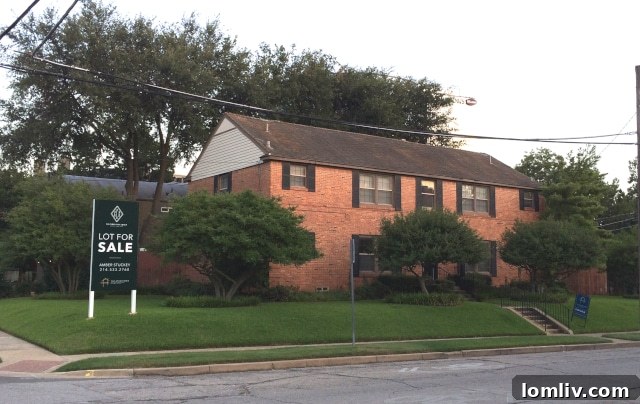
Adjacent to these larger, more ambitious sites, the second “for-sale” parcel identified on our map is the Oak Lawn Place apartments, strategically located at the intersection of Welborn and Routh. This property, which had been under continuous ownership since 2003 before its acquisition by Scope Properties in 2017, presents a distinctly different development profile due to its compact size. Measuring approximately 70-by-127 feet, the lot encompasses a modest 8,820 square feet of land. Such a limited footprint inherently restricts the feasibility of constructing a standalone high-rise building, even in a high-density zoned area like Mansion Park. The economic and logistical challenges of developing a towering structure on such a small plot are substantial, often making it unfeasible without additional land.
For a project of significant vertical scale to materialize on this corner, it would almost certainly necessitate the successful acquisition and consolidation of neighboring condominium units or other adjacent properties, a complex process known as land assembly. Without such a intricate strategy, which often involves protracted negotiations and significant capital, the Oak Lawn Place parcel is far more likely to see redevelopment into a boutique multi-family building, a series of upscale townhomes, or a specialized commercial venture that aligns with its modest scale and the surrounding urban fabric. This scenario highlights the critical role of parcel size in determining development outcomes, demonstrating that not every desirable location can host a high-rise, even within a growth-oriented district like Mansion Park.
Mansion Park’s Hidden Gems: Investor-Owned and Speculative Development Sites
Beyond the actively listed properties, a deeper dive into the Mansion Park map reveals a mosaic of parcels that represent future development opportunities, driven by strategic investor acquisitions and long-term planning. The six “hot pink” parcels, for instance, are currently under the ownership of various investment entities, typically operating as LLCs or LCs, signaling their potential for future redevelopment. Two of these are strategically positioned “behind” the aforementioned Wimbledon Place, suggesting a possible consolidation play or a complementary development strategy in conjunction with that larger site, aiming for a more comprehensive neighborhood transformation. The largest of these investor-owned properties is a condominium complex situated at Routh and Enid, where Welborn Street Partners LLC remarkably controls eight out of eleven units—a clear indication of an assemblage strategy aiming for full site control, a critical step for larger developments. Another significant parcel is owned by UG Bowser LLC, known for developing the 4545 Bowser townhouses, hinting at a potential expansion or a similar residential project, reinforcing the trend of quality housing in the area.
Further illustrating this investor landscape, a property on Fairmount Avenue (number three) was acquired in 2020 by Penn Properties LLC, an entity based out of Owensboro, Kentucky, from the Society to Prevent Blindness. This transaction highlights the diverse geographical interest in Mansion Park’s investment potential, drawing capital from across the nation. Numbers four and five, located at 3606 Dickason and 3636 Dickason respectively, are owned by SALI LP and the aptly named 3636 Dickason LLC, suggesting focused investment along this key thoroughfare, anticipating future appreciation. Finally, a mid-block parcel on Welborn, nestled between Dickason and Gillespie, was purchased in November 2019 by Connatser Realty LLC, whose address corresponds to the reputable Connatser Family Law practice at The Crescent. These “hot pink” parcels collectively represent a significant inventory of land being strategically held and curated by investors, each awaiting the optimal moment or market conditions for their respective redevelopment visions to materialize, further contributing to Mansion Park’s evolving urban fabric and its status as a prime real estate market.
Adding another layer of complexity and potential, the “light blue” parcels on our map denote a series of eight properties, all under the ownership of Winhavir LP. These parcels were systematically acquired over many years by the late Ralph Cutshall, who passed away in October 2019. The future of these properties now lies in the hands of his heirs, and their intentions regarding the parcels remain largely unknown. This scenario often introduces a period of uncertainty in real estate markets, as heirs may choose to retain, develop, or liquidate assets based on family objectives, market conditions, or estate planning considerations. The decisions made regarding these eight parcels could significantly influence the development patterns in their immediate vicinity, representing a substantial block of land with untapped potential in a high-demand area, offering various possibilities from multi-family to mixed-use projects depending on their strategic consolidation.
Finally, the “dark red” parcel identifies the Iris Memory Care facility, situated on Dickason Street between Welborn and Hood, formerly known as Silverado Senior Living. This facility was acquired in June 2019 by IMC Turtle Creek LLC, an entity controlled by David Krukiel, who, alongside his business partner Brandon Meszaros, possesses a decade of experience in operating senior care facilities. While it might seem counterintuitive for a newly reopened business to consider redevelopment, the property’s strategic location, its high-rise zoning classification, and the escalating value of land in Mansion Park present a compelling financial proposition. The potential sale price for this two-story facility, given its valuable surroundings and development permissions, could eventually become an offer “too good to pass up,” highlighting the relentless pressure for higher and better use in prime urban locations like Mansion Park, where every square foot of land is increasingly valuable for vertical expansion.
Mansion Park’s High-Rise Horizon: Answering the Question of Future Development
In response to our reader’s insightful query about the future of high-rise development in Mansion Park, it is clear that the narrative is multifaceted and constantly evolving. While this comprehensive analysis sheds considerable light on current trends and potential trajectories, it is by no means the exhaustive account of every development nuance in the area. Predicting the precise long-term and short-term financial motives of every LLC owner or investor is a complex endeavor, fraught with variables and market fluctuations. Similarly, foreseeing which existing condominium complex will collectively decide to sell out—a decision often requiring unanimous consent from homeowners—remains speculative, though Wimbledon Place provides a pertinent example of an owner-occupied complex reaching such a consensus to capitalize on redevelopment opportunities.
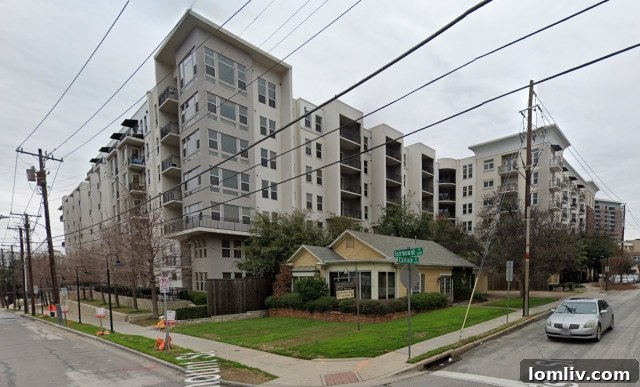
Furthermore, it’s challenging to ascertain how much of the current activity is driven by genuine, shovel-ready projects versus aspirational “wishful thinking” or preliminary speculation. We have already witnessed significant hurdles for several parcels along Turtle Creek, where approved projects have encountered delays and difficulties in commencing construction, underscoring the inherent complexities of large-scale urban development, including financing, permitting, and community engagement. However, what remains undeniable is the sheer volume of high-rise potential in Mansion Park. Along the iconic Turtle Creek corridor alone, there are currently seven approved but as yet unbuilt high-rises. Adding to this, the potential sale and redevelopment of Turtle Creek Gardens could introduce another two to three high-rise structures. Furthermore, the anticipated redevelopment of Wimbledon Place, coupled with the Teixeira Duarte project, would contribute at least two more significant towers to the area, joining the existing under-construction Toll Brothers high-rise. Cumulatively, this brings the total to a dozen or more potential high-rise developments slated for the Mansion Park area, fundamentally altering its skyline and residential density.
However, it’s equally important to recognize that not every parcel within Mansion Park is destined for a towering skyscraper. Smaller, individual lots that lack the critical mass for a high-rise project will likely be redeveloped into more modest townhouse communities or mid-rise apartment buildings, maintaining a varied architectural scale within the neighborhood and catering to different market segments. The key for such smaller parcels often lies in strategic consolidation; unless they can join forces with adjacent properties to form a larger, more viable development site, their potential for high-rise transformation remains limited. For our reader, and indeed for any property owner with a small, undevelopable parcel in Mansion Park, the advice remains consistent: exercise patience and strategic foresight. Holding out until a neighboring developer actively seeks to acquire your land as part of a larger assemblage can yield significantly greater returns. The alternative risks leaving your property as one of those “left-behind orphan houses”—isolated structures surrounded by towering new developments, holding little intrinsic value to anyone but the original owner, effectively missing out on the area’s explosive growth and redevelopment opportunities. Mansion Park’s future is undeniably vertical, and understanding these intricate development dynamics is paramount for navigating its evolving landscape effectively.