
In the pursuit of creating a financial foundation that truly endures, the concept of a “quick flip” often falls short. For families committed to building a legacy that extends beyond a single generation, the focus shifts to assets capable of standing the test of time, weathering economic storms, and providing a stable platform for future prosperity. Among these time-honored instruments, real estate consistently emerges as a cornerstone. Whether it’s a cherished family home, a strategically acquired rental property, or a valuable piece of undeveloped land, real estate possesses an inherent ability to appreciate over decades, simultaneously offering opportunities for consistent income streams. Historical data from the U.S. market repeatedly demonstrates that well-located properties not only retain their value but often recover strongly even after significant economic downturns. This resilience and tangible utility make real estate an indispensable component of any thoughtful family legacy plan.
Parallel to real estate, precious metals have served as a universal store of value for centuries, trusted by civilizations across the globe to secure and transfer wealth. By thoughtfully integrating both real estate and precious metals into a diversified portfolio, families can achieve a powerful synergy: combining the growth potential and utility of property with the unwavering protection and liquidity offered by metals. This robust combination creates a multi-faceted defense against inflation, market volatility, and economic uncertainty, ensuring a financial inheritance that is truly built to last for generations to come. It’s a strategy rooted in history, validated by economics, and deeply aligned with the aspirations of securing a lasting family legacy.
Why Tangible Assets Are Essential for Building a Lasting Legacy Portfolio

Families dedicated to the preservation and growth of wealth across multiple generations instinctively gravitate towards assets they can truly see, touch, and understand. This preference for tangible assets, primarily real estate and precious metals, forms the bedrock of a resilient legacy portfolio. These two asset classes are not merely different investment vehicles; they are complementary pillars that enhance each other’s strengths and mitigate individual weaknesses. Real estate, with its potential for significant appreciation, consistent rental income, and intrinsic utility, provides a dynamic growth engine. Concurrently, precious metals act as a crucial safeguard, preserving purchasing power during periods of economic instability, currency devaluation, and geopolitical unrest. Together, they construct a portfolio designed to navigate diverse market cycles with greater stability and confidence.
To fully grasp why these time-tested assets remain a preferred choice for intergenerational wealth planning, it’s vital to examine the unique qualities that distinguish them. Each asset plays a distinct, yet critical, role. When combined strategically, they create a comprehensive financial architecture that addresses various aspects of wealth accumulation, preservation, and transfer. The following sections delve into the specific advantages that position real estate and precious metals as exceptionally reliable foundations for robust, long-term financial planning, ensuring that a family’s financial security is not just maintained, but actively strengthened for future generations.
Superior Diversification of Risk
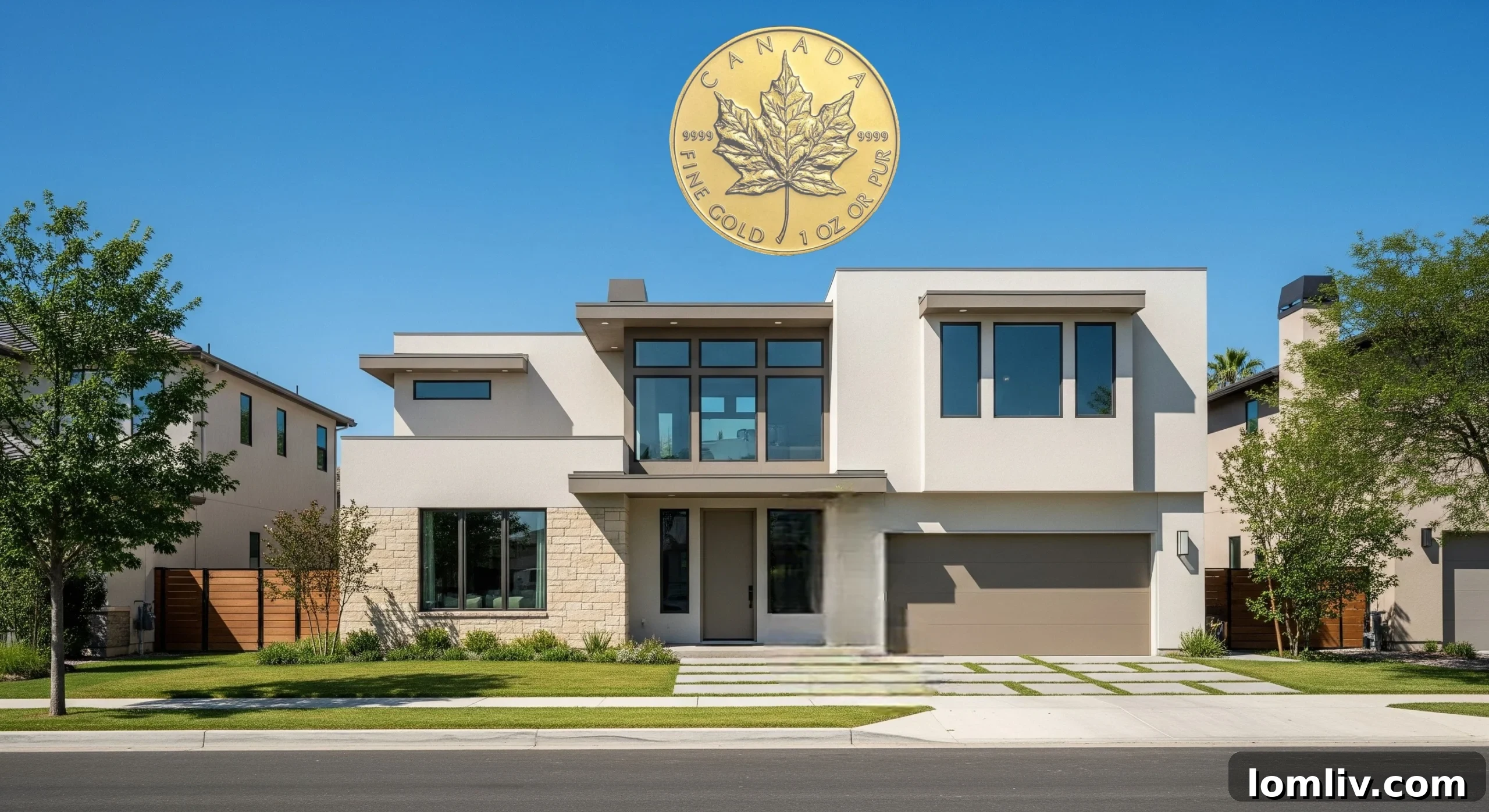
A truly robust legacy portfolio avoids over-reliance on any single asset class, proactively spreading risk across different investment types. While real estate offers compelling advantages like long-term appreciation and a consistent stream of rental income, it is inherently susceptible to localized housing market downturns, fluctuations in interest rates, and demographic shifts. Precious metals, conversely, behave in distinct ways. For instance, the acquisition of a 1 oz Gold Maple Leaf coin provides a highly liquid and universally recognized store of value, offering remarkable stability irrespective of the dynamics in property markets. This non-correlation is key: when real estate values might dip due to localized factors, gold or silver often maintain or even increase their value, particularly during times of broader economic uncertainty or inflation. By holding both asset classes, families effectively insulate their wealth. They gain exposure to the growth potential driven by property development and demographic trends on one side, while enjoying the protective, counter-cyclical stability that precious metals offer on the other, thereby significantly mitigating overall portfolio risk and enhancing resilience.
Consistent Income Generation and Essential Liquidity
Owning the right rental property transcends mere asset holding; it is an active strategy for generating consistent and predictable income that a family can depend on. The regular influx of monthly rent payments can serve multiple vital purposes: covering everyday expenses, bolstering retirement savings, or being strategically reinvested to expand the investment portfolio. Beyond this immediate cash flow, the property itself typically appreciates in value over time, simultaneously building equity for the owner. This powerful combination of ongoing cash flow and long-term capital appreciation solidifies real estate’s position as an indispensable anchor in any long-term investment strategy.
Precious metals, while not offering passive income in the same way, bring a distinct and equally critical benefit to the portfolio: unparalleled liquidity. Selling a substantial real estate asset or navigating a mortgage refinancing process can often be a complex, time-consuming endeavor, potentially taking months to complete. In stark contrast, a handful of gold or silver coins can be rapidly converted into cash almost anywhere in the world, often within hours. A 1 oz coin, for example, is compact enough for secure storage in a safe deposit box yet carries a globally recognized and instant value. This ease of convertibility makes precious metals an ideal emergency fund or a flexible resource for seizing immediate opportunities without disrupting other long-term investments. By strategically holding both real estate and precious metals, families create a financial ecosystem that provides both predictable, stable income streams and immediate access to funds, ensuring financial flexibility and security across all circumstances.
Unyielding Tangible Asset Security
A profound sense of trust and confidence often accompanies wealth that can be physically observed and held. For generations, families have found reassurance in the tangibility of their assets. A property deed, for instance, represents irrefutable ownership of a physical piece of land—an asset that is immovable, finite, and fundamentally real. Similarly, a gold or silver coin embodies inherent value, universally recognized and accepted across international borders. These physical assets stand in stark contrast to intangible forms of wealth, such as shares in a company, digital tokens, or even traditional bank deposits, all of which ultimately depend on complex networks, institutions, and digital systems for their existence and validation. While these modern assets have their place, their value is often derived from perception, trust in intermediaries, or digital infrastructure.
The enduring physical presence of real estate and precious metals is particularly crucial when devising multi-generational wealth strategies. A family home passed down through generations continues to serve not only as a place of shelter and comfort but also as a significant bastion of financial security. A precious coin, handed directly from parent to child, delivers instant, undisputed value and a powerful symbol of continuity. In an increasingly uncertain world, marked by technological shifts, economic volatility, and potential systemic vulnerabilities, the permanence and independent nature of tangible assets provide an invaluable layer of peace of mind. They offer a reassuring guarantee that a family’s core wealth will not simply vanish due to a market crash, a cybersecurity breach, or a broader system failure, ensuring a truly resilient financial legacy.
Streamlined Intergenerational Transfer
Real estate titles provide unequivocally clear and legally recognized proof of ownership, simplifying the process of transferring homes or land through wills, trusts, and other estate planning instruments. This established legal framework minimizes potential confusion or disputes among heirs, ensuring a smooth and orderly transition of assets. Unlike many complex financial products that require intricate legal navigation, real estate not only preserves substantial financial value but also carries profound personal and emotional significance, often representing a family’s history, memories, and aspirations. This dual value makes it a powerful vehicle for conveying a legacy that is both financially sound and deeply meaningful.
Precious metals further enhance the simplicity of wealth transfer by offering an even more direct and private option. Gold or silver coins can be physically handed over from one generation to the next, immediately bestowing upon heirs an asset of universally recognized worth, often with minimal to no accompanying paperwork or bureaucratic hurdles. This exceptional portability and inherent value make precious metals an incredibly efficient and discreet tool for preserving and transferring wealth, not just during meticulously planned transitions but also in response to unexpected life events. This ease of transfer ensures that a family’s financial security can be passed down without unnecessary complexities, reinforcing the continuity of their economic well-being and legacy across generations.
Unlocking Dual Purpose Value
Real estate inherently offers a diverse range of benefits that extend far beyond its market price, embodying a true dual-purpose value. Families can reside in their properties, enjoying shelter and stability, or they can strategically rent them out to generate a consistent stream of passive income. Furthermore, land and buildings offer significant development potential, allowing for expansion, renovation, or repurposing to unlock even greater value. Each of these uses creates economic and social benefits that underpin the property’s demand and utility in daily life, ensuring its relevance. This practical application means real estate is not merely a static investment; it is a dynamic asset that actively contributes to a family’s quality of life and financial growth simultaneously, solidifying its place as a cornerstone of a comprehensive legacy plan.
Precious metals, while different in nature, also exhibit a compelling dual purpose. A gold or silver coin possesses undeniable financial value directly tied to its intrinsic metal content, making it a powerful store of wealth. However, when these coins are passed down through a family, they often accrue profound symbolic value, transforming into treasured heirlooms. An heirloom coin, for instance, can serve not only as a tangible preservation of wealth, safeguarding purchasing power over decades, but also as a poignant reminder of family continuity, heritage, and the enduring connection between generations. This blend of economic stability and sentimental significance elevates precious metals beyond mere commodities, embedding them deeply within the fabric of a family’s enduring legacy.
Low Correlation with Digital and Equity Assets
In today’s interconnected global economy, a substantial portion of investment wealth is tied to volatile stock markets and rapidly evolving digital assets, both of which can experience swift and dramatic shifts influenced by speculation, regulatory changes, or technological disruptions. Tangible assets, however, operate on fundamentally different principles and cycles. The value of a property, for instance, is primarily driven by its specific location, its practical utility, local economic conditions, and demographic trends rather than day-to-day market sentiment. Similarly, gold’s value often responds to global confidence in its enduring worth, acting as a safe haven during times of economic or geopolitical uncertainty, rather than being swayed by the daily fluctuations of tech stocks.
Because real estate and precious metals tend to move independently—or even inversely—to digital and equity markets, they provide a critical shield against sudden shocks in these more volatile asset classes. This distinct lack of correlation means that when one part of the portfolio faces headwinds, the other often remains stable or even appreciates. This separation helps families construct a more balanced and resilient investment portfolio, preventing concentrated risk and maintaining overall financial stability even when newer, more speculative asset classes experience significant fluctuations. It’s a strategic move to safeguard wealth against the unpredictable currents of modern finance.
The Enduring Advantage of Limited Supply
One of the most compelling and fundamental reasons why tangible assets consistently hold and appreciate in value across generations is their inherent scarcity. Unlike various financial instruments that can be created at will, land is a finite resource. As global populations continue to grow, urbanization accelerates, and cities expand, the demand for well-located real estate steadily increases. Properties situated in desirable areas—whether for residential, commercial, or industrial purposes—benefite immensely from this fixed supply. Their value often appreciates significantly over decades precisely because their location and unique utility cannot be duplicated or manufactured, making them irreplaceable assets in a growing world.
Gold and silver share this powerful attribute of rarity, a characteristic that fundamentally underpins their long-term value. In stark contrast to paper currencies, which governments and central banks can print in virtually unlimited quantities, precious metals exist only in finite amounts within the Earth’s crust. While new mining operations do add small quantities to the global supply each year, this incremental increase is rarely sufficient to keep pace with ever-growing investment, industrial, and consumer demand. This persistent imbalance between limited supply and rising demand is a primary driver for why precious metals consistently preserve purchasing power and act as a reliable store of value, especially during periods of monetary expansion and inflationary pressures. The scarcity principle ensures that these tangible assets will remain highly sought after, solidifying their role in a lasting legacy portfolio.
Conclusion: Securing a Legacy with Tangible Foundations
Ultimately, a strategic focus on legacy investments, particularly real estate and precious metals, provides families with an exceptionally robust and enduring financial foundation. Real estate, with its inherent utility, potential for capital appreciation, and steady income streams, offers a dynamic asset that can comfortably support both the immediate needs and the long-term aspirations of current and future generations. It provides a tangible connection to land, a sense of place, and a continuous source of passive income that can fuel further investment or provide financial stability.
Precious metals, in their turn, serve as an unshakeable anchor for wealth, a form of value trusted and recognized across every culture and economy worldwide. They offer vital protection against the erosive effects of inflation, geopolitical instability, and unpredictable currency shifts. By synergistically combining these two powerful tangible assets, families are empowered to preserve financial security with remarkable resilience, foster continuous growth, and forge an unbroken chain of prosperity. This integrated approach ensures that a family’s legacy is not merely a concept, but a living, breathing inheritance—a testament to thoughtful planning that links one generation to the next through tangible, enduring wealth.