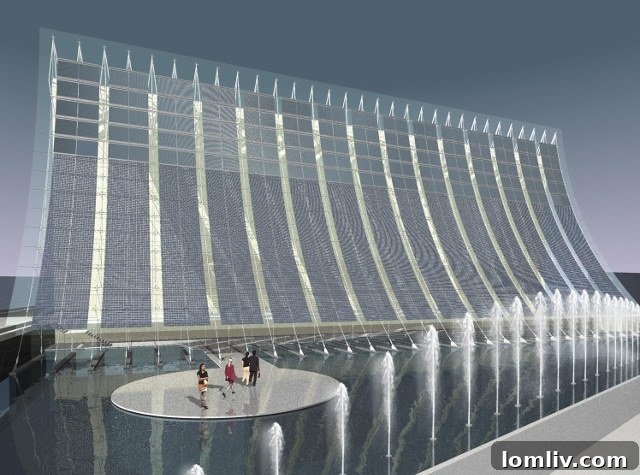
Dallas, a city rapidly evolving, stands at a pivotal moment to redefine its architectural identity. In my ongoing exploration to diversify and elevate our urban landscape, I’ve discovered an architectural firm whose visionary work and proven track record make them an exceptional candidate for Dallas developers aiming to leave a lasting, impactful mark. This firm, known today as SCB, possesses the expertise and innovative spirit to usher in a new era of design excellence for our city. But first, let’s delve into their rich history and remarkable journey.
A Legacy Forged in Chicago: The Evolution of SCB Architects
The story of SCB began in 1931 when Lou, Irving, and Sylvia Solomon established their practice in Chicago. More than a conventional architectural firm, it was a dynamic family enterprise with Lou as the lead designer, Irving as the skilled builder, and Sylvia as the astute project manager. This pioneering trio acquired land along the iconic Lake Shore Drive, embarking on a mission to construct a series of distinguished apartment buildings that would shape Chicago’s early urban fabric. Their innovative approach to design-build set a precedent for future urban development.
The firm gained a significant boost in 1956 with the arrival of Englishman John Cordwell, who joined after serving as Chicago’s Director of Planning. His strategic vision and urban planning expertise complemented the Solomon siblings’ architectural prowess, propelling the firm into larger-scale projects. Just a year later, in 1957, Solomon & Cordwell secured a monumental commission: an urban renewal project situated west of the city’s affluent Gold Coast area. This ambitious undertaking, known as Carl Sandburg Village, transformed nearly four city blocks, encompassing six high-rises and an array of mid- and low-rise apartments, totaling an impressive 2,600 units. This transformative project became a cornerstone of Chicago’s post-war urban development, demonstrating the firm’s capacity for comprehensive community planning. The apartments were later converted to condos in 1979, and a decade thereafter, I personally considered purchasing my first high-rise home within its storied walls, a testament to its enduring appeal.
The firm further strengthened its creative muscle with the addition of John Buenz, a protégé of architectural giants Eero Saarinen, famed for the iconic TWA Flight Center at JFK, and Harry Weese, the visionary behind the first stations of Washington D.C.’s Metro system. Buenz left an indelible mark on Chicago’s skyline with buildings that resonate deeply with locals, such as the 1977 Harbor Point. His contributions helped solidify the firm’s reputation for innovative and impactful design.
In line with modern trends in the architectural industry, the firm’s memorable founding names have since been streamlined to three initials: SCB. With a dedicated staff of 280 professionals and offices strategically located in Chicago and San Francisco, SCB has expanded its influence globally. They boast a portfolio of over 600 completed projects worldwide, including significant endeavors right here in Texas. Let’s explore some of their most compelling works, including one project with a name that might pique the interest of Dallasites: The Laurel.
Loyola University Chicago: Richard J. Klarchek Information Commons – Blending Heritage with Digital Innovation
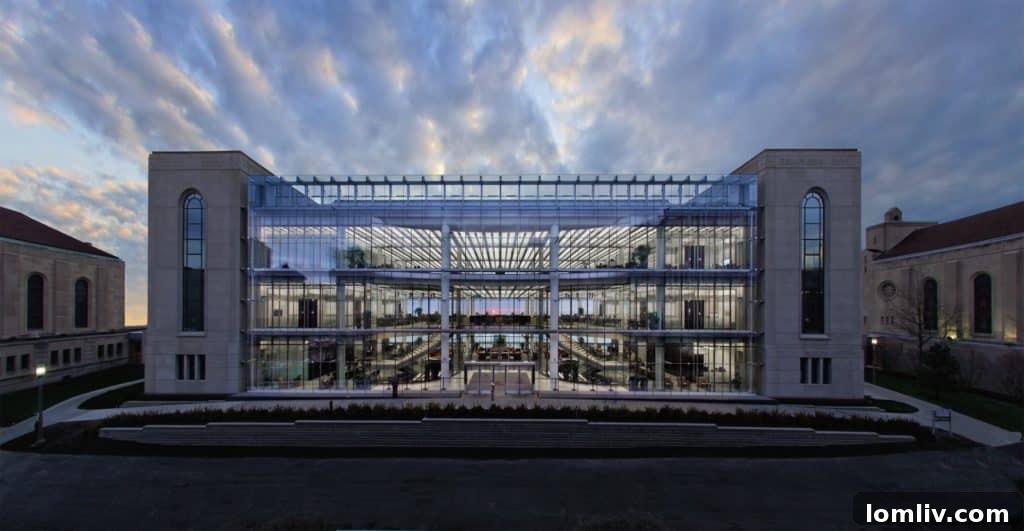
My exploration of SCB’s portfolio doesn’t begin with one of their signature high-rises, but rather with a project that beautifully illustrates their ability to blend tradition with cutting-edge modernity: the Richard J. Klarchek Information Commons at Loyola University Chicago. This digital library is a masterclass in creating a visually stunning space that seamlessly integrates old and new architectural elements. Initially, I perceived the striking stone ends, which SCB aptly describes as “bookends,” to be original remnants of an older structure, perhaps due to the similar stony appearance of neighboring buildings. However, these are not antique structures but rather a deliberate design choice. They serve as a point of “emulsion,” gracefully transitioning between the surrounding historic architecture and the sleek, contemporary glass box that forms the library’s central core. Without these thoughtfully crafted bookends, the building might easily resemble a generic, albeit elegant, Apple store, lacking the profound contextual sensitivity that defines this SCB project.
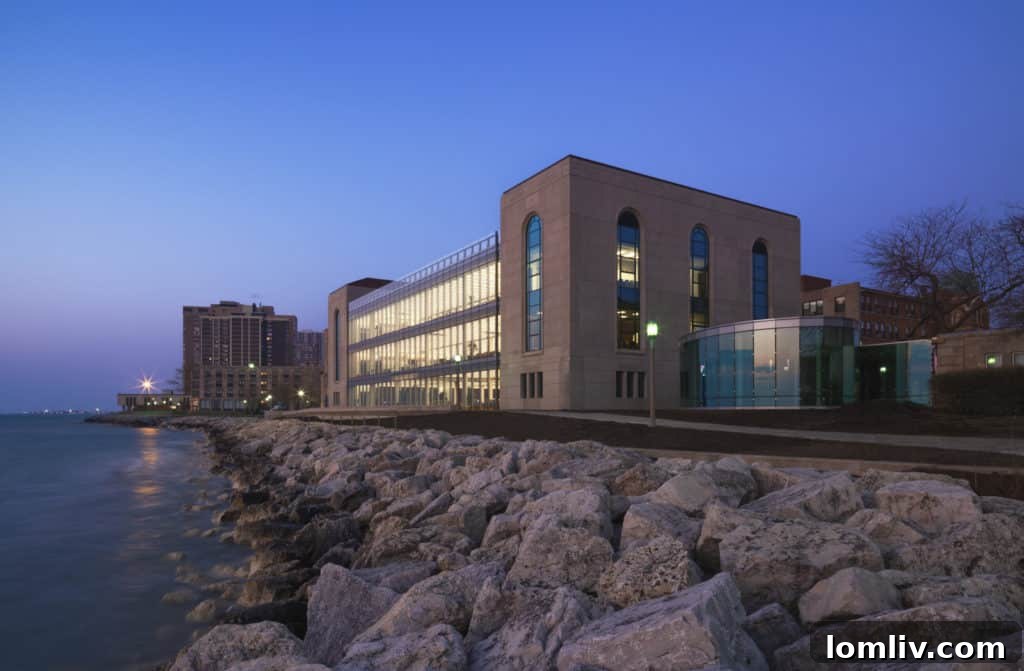
Beyond reflecting the modernity of a digital library, the extensive use of glass in the Information Commons serves another crucial purpose: to capture and celebrate its breathtaking location. Situated on the picturesque shores of Lake Michigan, the building offers unparalleled views—a vista that few would ever want to obstruct. From its front to its back, the structure provides an ever-changing panorama, an infinite depth created by the shifting palette of greens, blues, sky, and ice. One can only imagine the glorious spectacle of a sunrise witnessed from within this magnificent space, underscoring SCB’s commitment to designs that interact dynamically with their natural surroundings.
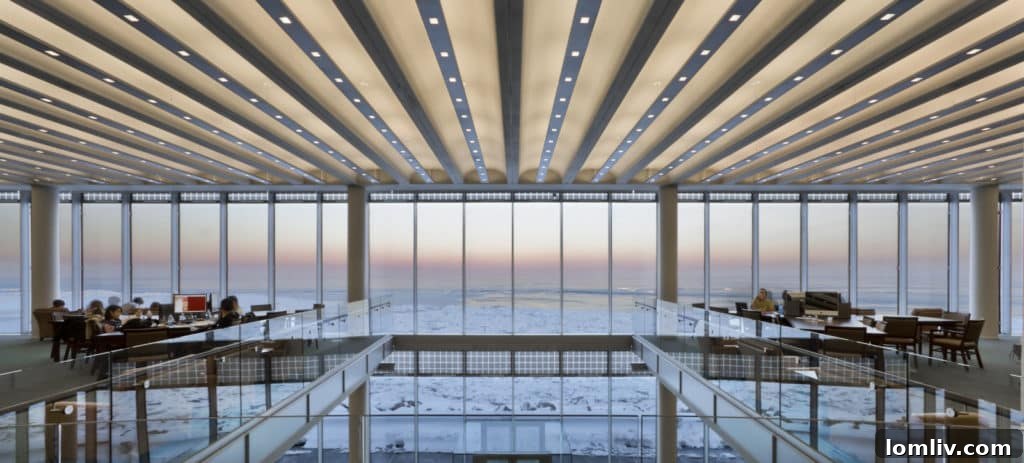
Despite Chicago’s extreme temperature variations, ranging from sub-zero winters to sweltering 100-degree summers, this building is a beacon of sustainable design. It has achieved LEED Silver certification, demonstrating a remarkable 52 percent reduction in energy consumption. This impressive feat ensures that students can comfortably pursue their studies without needing blankets in the winter, proving that sustainable architecture can indeed deliver both environmental responsibility and occupant comfort. This commitment to energy efficiency and user experience is a hallmark of SCB’s forward-thinking approach.
Manzanita Hall: Arizona State University, Tempe, Arizona – A Mid-Century Modern Revival
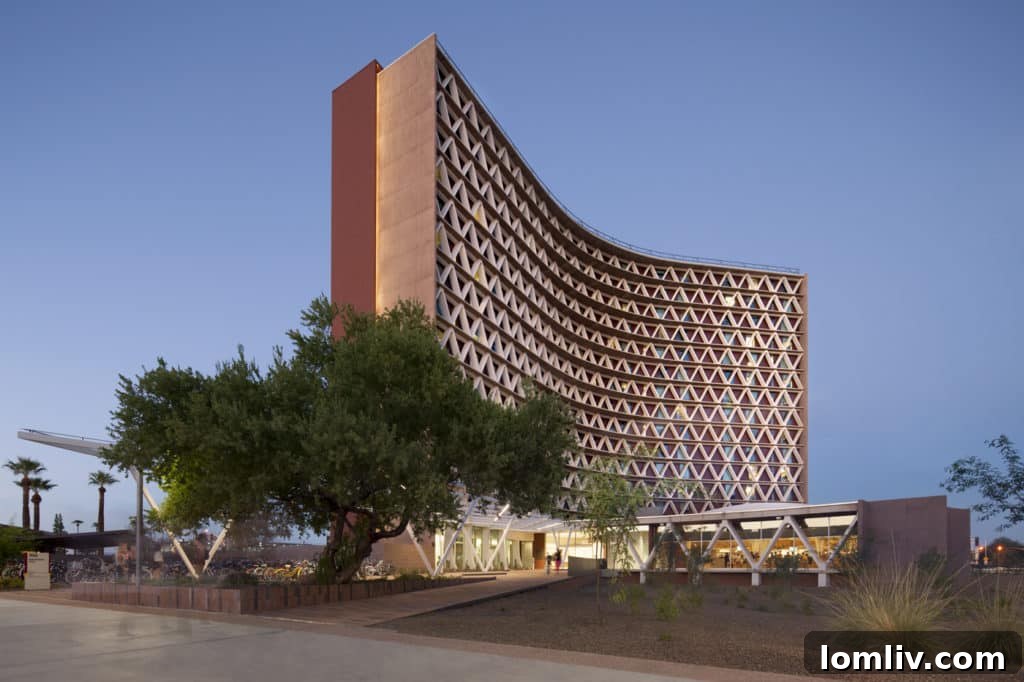
Constructed in 1967, a mere 11 years after Dallas’s iconic Statler Hilton, Manzanita Hall at Arizona State University shares the distinctive butterfly-wing bend popular during that era. However, it’s undeniable that Manzanita Hall’s exterior possesses a more compelling aesthetic, with its captivating zigzag diamond weave evoking a strong sense of mid-century modern “WOW.” While SCB didn’t originally design this 810-bed dormitory, they were brought in when Arizona State University faced the critical decision of whether to revitalize or rebuild the aging, threadbare structure. After 40 years and an estimated 40,000 students, the building was understandably in a state of considerable wear. Beyond the expected interior design updates, the core challenge was to reimagine Manzanita Hall to function effectively for a new century of students.
As Mehrdad Moayedi discovered with the complex revitalization of the Statler Hotel, demolition often appears to be the easier and cheaper path. Yet, in a testament to the building’s emblematic status, university officials ultimately decided that Manzanita Hall needed to stay. This commitment to adaptive reuse presented SCB with two significant opportunities to bring the structure back to life with renewed vigor and contemporary relevance.
Originally, the building’s glass façade was positioned *outside* of its distinctive zigzag support bracing. SCB’s ingenious intervention involved moving the glass *behind* this bracing, transforming the structural element into a far more provocative and integrated part of the exterior skin. This bold design choice not only enhances the building’s aesthetic appeal but also demonstrates a courageous approach to renovating a signature mid-century modern structure, proving that preservation can go hand-in-hand with audacious architectural transformation.
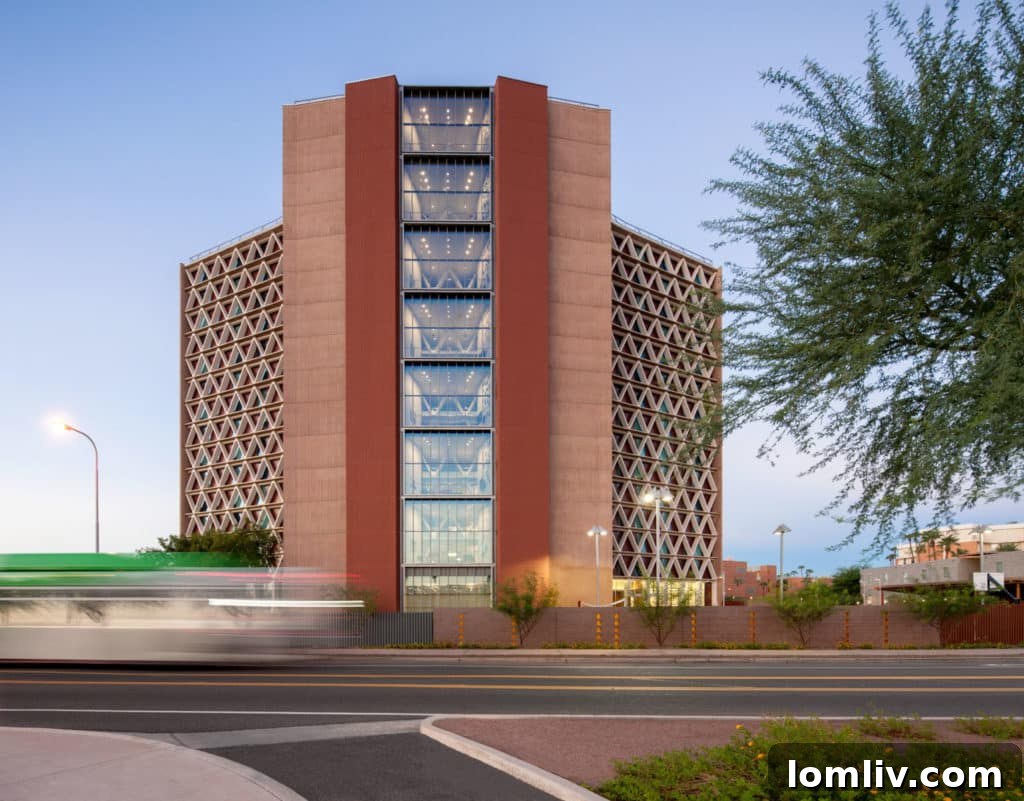
Secondly, a closer look reveals that the building’s layout isn’t quite a butterfly wing, but rather an elegant “Y” shape. The SCB team adeptly extended the ends of this “Y” to create expansive, two-story communal lounges. These new spaces are equipped with modern kitchens and feature floor-to-ceiling glass, ensuring that the extremities of the building are bathed in abundant natural light. The original exterior bracing is now cleverly utilized as a transitional element, elegantly separating the private dormitory rooms from these vibrant, shared communal areas. This thoughtful integration of new and old elements not only revitalizes the building but also significantly enhances the student living experience, offering dynamic spaces for interaction and community building. SCB’s work on Manzanita Hall is a prime example of how intelligent design can breathe new life into existing structures, offering valuable lessons for adaptive reuse projects in Dallas.
Hub50House: Boston, Massachusetts – Integrated Urban Living
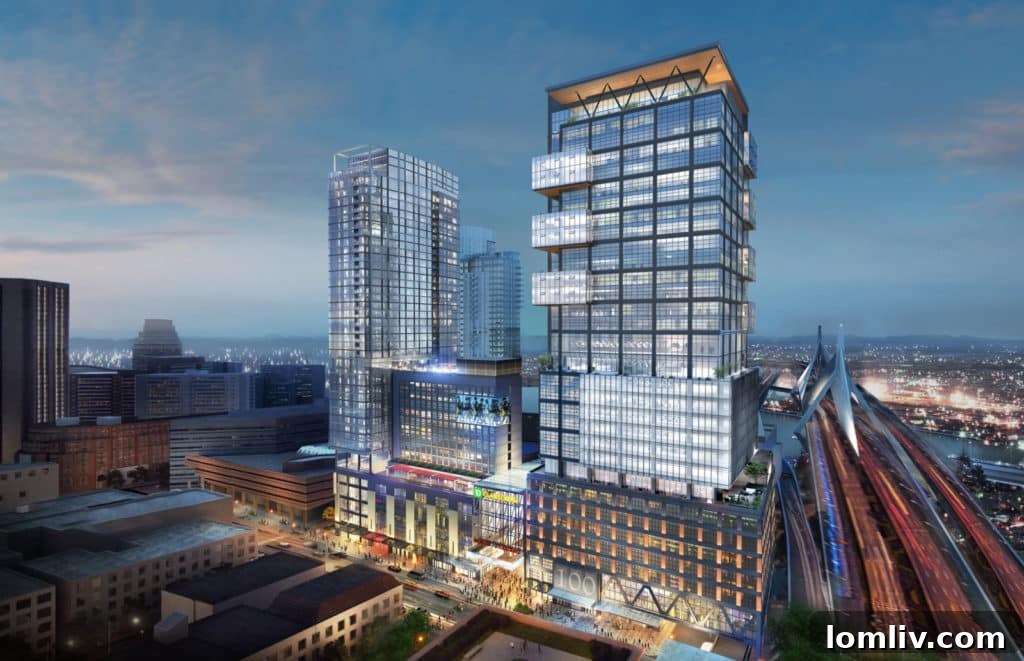
In the vibrant heart of Boston, SCB has made a profound statement with Hub50House, a key component of The Hub on Causeway. This expansive 1.5 million-square-foot, mixed-use development is ingeniously situated directly above the historical Boston Garden sporting arena and a major transportation hub – a nexus of activity (not to be confused with the serene Boston Public Garden). The strategic location, just a block from the scenic Charles River and adjacent to the I-93 highway as it famously dives underground (a legacy of Boston’s monumental Big Dig), presented both immense challenges and unparalleled opportunities for integrated urban design.
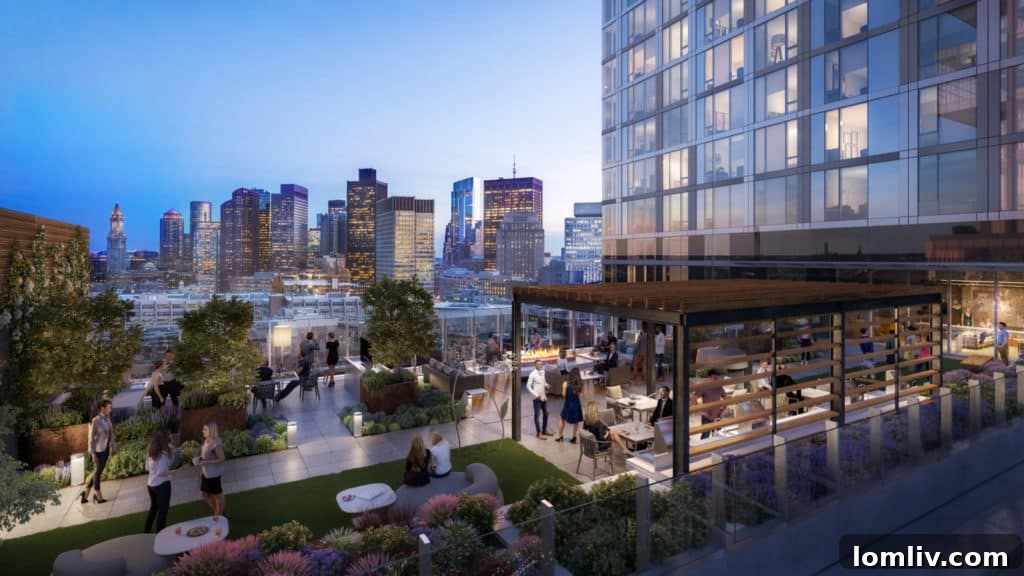
Hub50House, the striking 38-story residential tower visible on the left, accommodates 440 units, ranging from efficient “metro” layouts to spacious three-bedroom accommodations. Designed to maximize both city and river views, the tower features expansive floor-to-ceiling glass, a characteristic element that not only allows for panoramic vistas but also tells a compelling architectural story. Given the project’s colossal size and its diverse functional uses, the residential tower ingeniously employs two slightly different hues of glass, subtly delineating its distinct residential character from the commercial spaces below. To further emphasize the separation and create a sense of lightness, both high-rises within the development appear to “float” gracefully above the lower floors dedicated to retail and restaurant spaces. This perceived floating effect is achieved by strategically placing an amenity deck for residents between the commercial podium and the residential tower, providing an elevated oasis amidst the urban bustle.
While not a direct SCB design, it’s worth noting the captivating glass bump-out rooms on the adjacent right-hand tower. These unique architectural features are reminiscent of those found in the awe-inspiring MahaNakhon tower in Bangkok. Though not precisely outdoor spaces, these cantilevered extensions undoubtedly offer invigorating perspectives of the city, creating intimate yet dramatic living experiences. The Hub on Causeway, with Hub50House at its core, stands as a prime example of SCB’s mastery in complex, mixed-use urban developments, offering valuable insights for Dallas’s own aspirations for dense, vibrant, and architecturally distinguished urban cores.
The Legacy at Millennium Park: Chicago, Illinois – Harmonizing Old and New
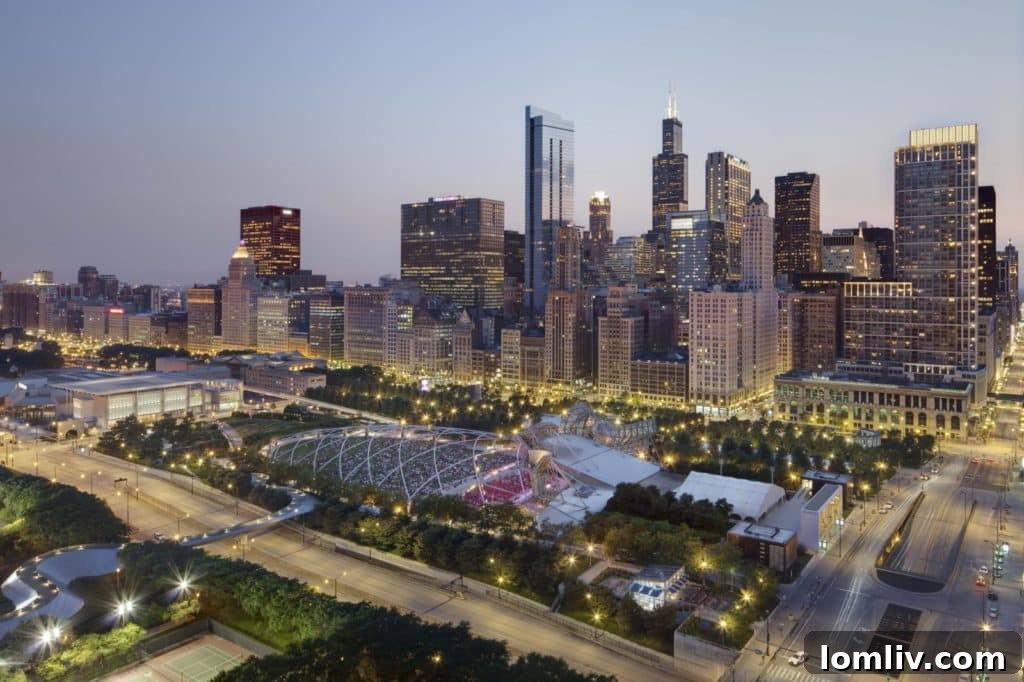
For anyone involved in the revitalization efforts of Fair Park in Dallas, The Legacy at Millennium Park offers a compelling vision of what can be achieved when a city embraces the potential of a magnificent park on its doorstep. This “wafer-thin,” 73-story, 820-foot condo tower stands as a testament to elegant urban integration, delicately balanced above historic structures. Its distinctive wedge shape gracefully ascends within a “skirt” composed of century-old limestone and terracotta mid-rise commercial buildings. This façade-preserving approach is a sophisticated urban planning strategy employed by many cities to maintain a human-scale streetscape while simultaneously accommodating the vertical ambitions of tall modern structures above. It represents a respectful dialogue between past and present, a concept Dallas could greatly benefit from.
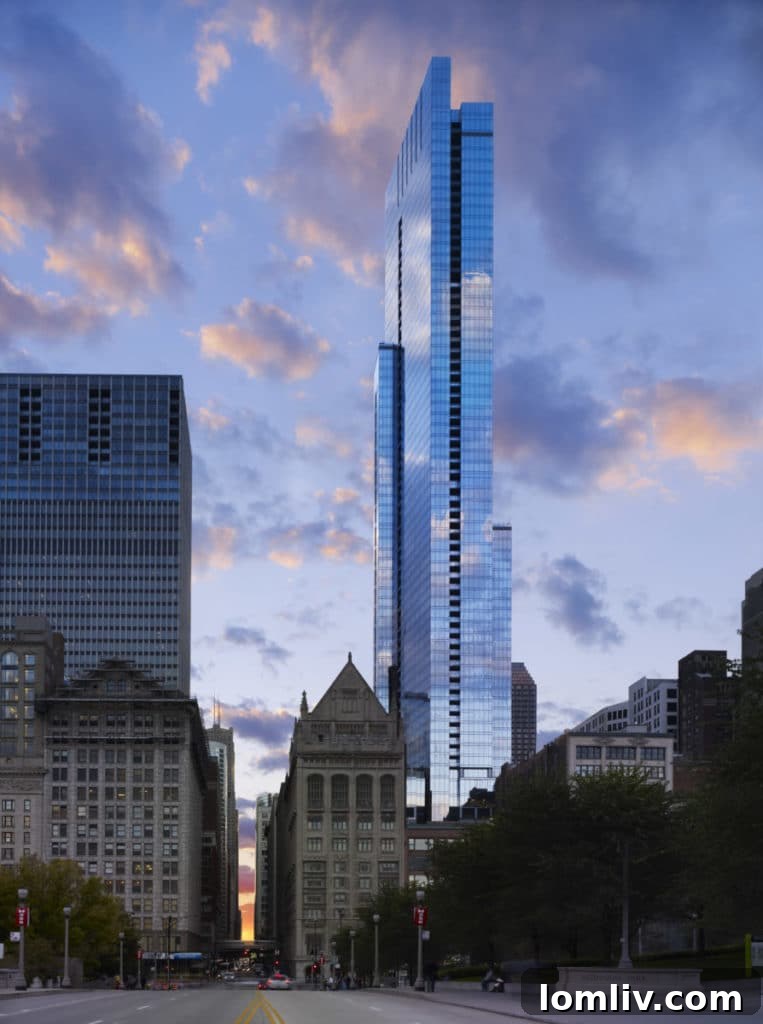
In Chicago, strict regulations exist to prevent the disruption of classic streetscapes, particularly along iconic thoroughfares like Wabash and Michigan Avenues. As a pedestrian, one of the most intriguing aspects of this architectural trick is observing such a striking statement building from a distance, only for it to seemingly vanish as you approach. It evokes the elusive charm of a rainbow, where you can never quite pinpoint its exact point of contact with the ground. This thoughtful concealment and revelation of mass demonstrate SCB’s profound understanding of urban context and the pedestrian experience. And, while it soars 820 feet above the ground, a portion of its roof is dedicated to a vibrant green space, adding another layer of sustainable design to this already impressive structure. The Legacy at Millennium Park exemplifies how high-density development can coexist harmoniously with historical preservation and public green spaces, a model that could profoundly enrich Dallas’s urban core.
The Laurel: Philadelphia, Pennsylvania – Contextual Modernism in a Historic Setting
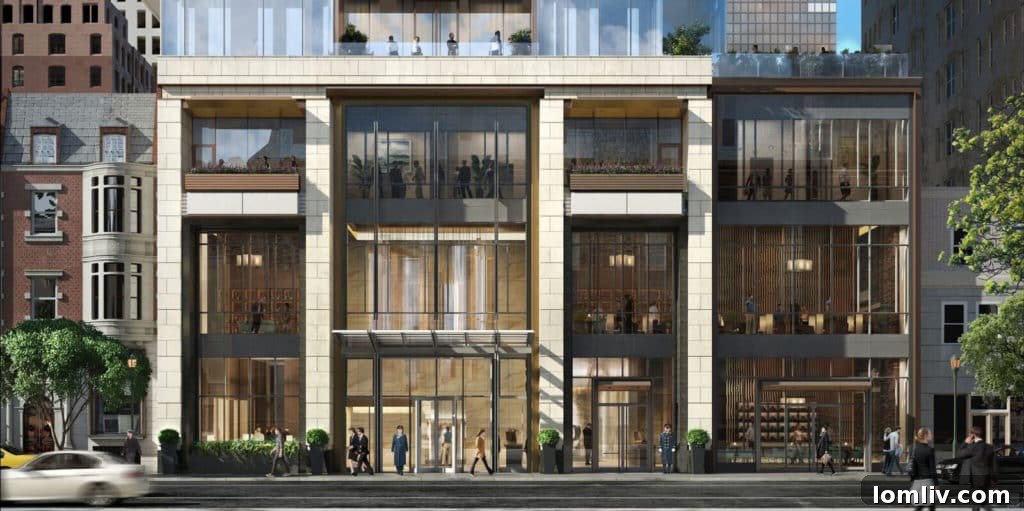
Perched at the edge of Philadelphia’s historic Rittenhouse Square, The Laurel shares a fundamental design brief with Chicago’s The Legacy: it must seamlessly integrate into its surroundings at ground level. However, unlike The Legacy, there were no existing historic buildings to spring from, as the developer secured permission to demolish a historic funeral home on the site. In response, SCB masterfully designed a transitional podium that harmonizes with its environment through careful consideration of scale and construction materials. While undeniably modern in its execution, The Laurel avoids the pitfalls of being a mere glass box or a stark white sugar cube that aggressively shouts for attention. Instead, its design is a respectful nod to its storied neighbors, demonstrating a thoughtful contextual modernism that Dallas desperately needs.
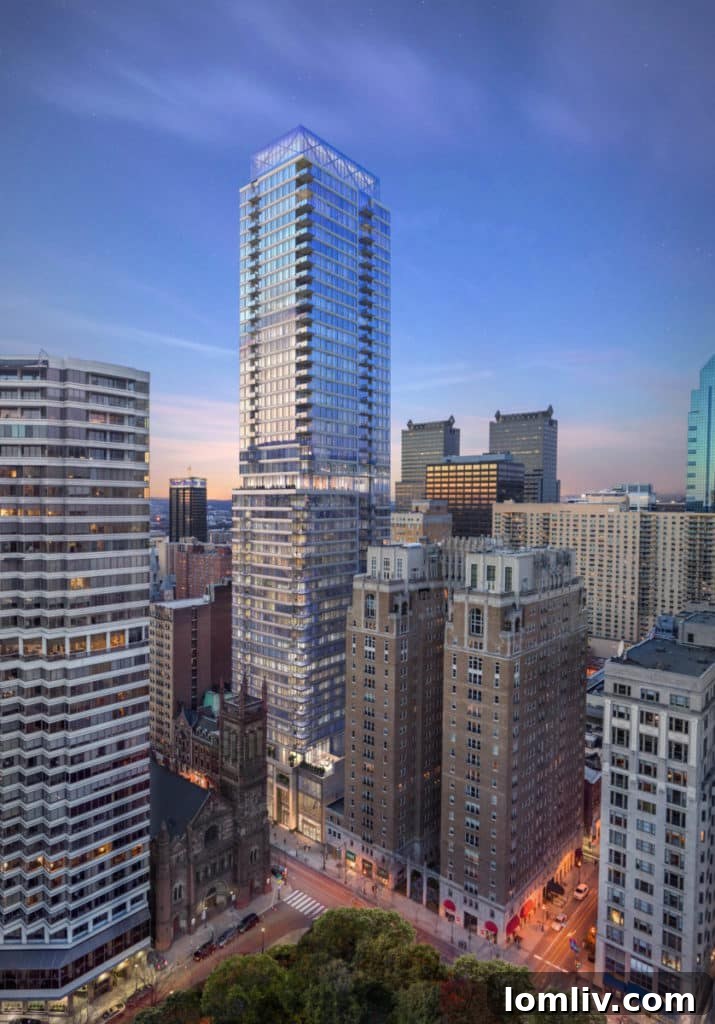
Above its elegant four-story podium, The Laurel soars to an impressive 44 additional stories, housing 66 luxury condominiums (starting at $2 million) and 184 sophisticated apartments. Yet, from the street level, this towering presence is remarkably subtle. What truly distinguishes The Laurel is its ingenious segmentation of amenity decks, reflecting a keen understanding of its diverse resident demographics. Condo owners enjoy their exclusive pool, gym, and other premium facilities on the 26th floor, literally “above it all,” offering unparalleled views and a sense of elevated privacy. In contrast, apartment residents (occupying floors 3-25) have access to their own array of amenities—including a pool, fitness center, cooking facilities, and music spaces—on the third floor. This arrangement is explicitly designed for the resident who “seeks to engage with the spirit and energy of the city.” The clear translation: buyers typically represent an older demographic seeking exclusivity, while renters tend to be younger, valuing connectivity and vibrant urban engagement.
Upon its completion, The Laurel will claim the title of Philadelphia’s tallest residential structure. This reflects a global trend of increasing urbanization and the growing demand for high-rise living, driven by factors such as limited urban space and the desire for panoramic city views. I particularly appreciate The Laurel’s design because of its clever method of breaking up its mass between different uses. The upper condo floors subtly recede from the building’s leading edge, creating a sense of visual lightness. A similar architectural break separates the apartments from the ground-level restaurants and retail below. While not an entirely novel concept, as evidenced by the neighboring building above, it effectively mitigates the potential blandness of what could easily have been a generic, upended shoebox—a common and regrettable architectural form frequently seen in Dallas. The Laurel’s design is a testament to how thoughtful massing and contextual sensitivity can transform a tall building into a distinctive and harmonious urban landmark.
United Airlines, Polaris Lounge – Versatility in Design
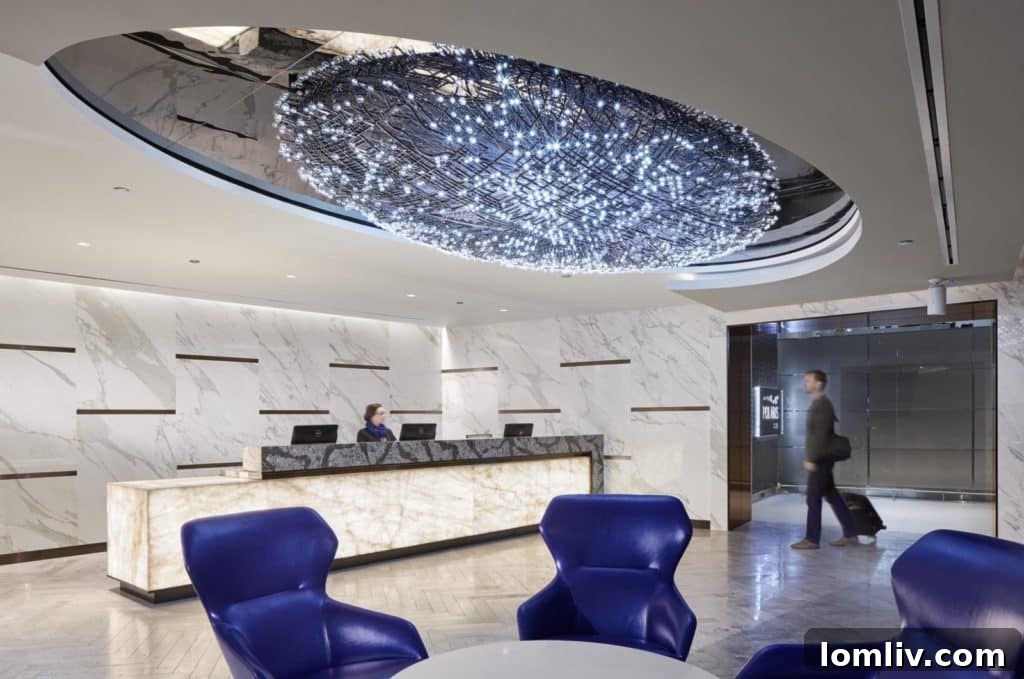
Finally, for the frequent United Airlines flyer, it’s worth noting that SCB is the architectural force behind the airline’s acclaimed Polaris Lounges. Each lounge, while unique in its specific design and tailored to its location and available space, consistently delivers an experience of understated luxury and sophisticated comfort. This level of consistent quality and attention to detail is high praise, especially coming from a long-term American Airlines flyer like myself. SCB’s ability to translate a brand’s vision into distinct yet cohesive architectural spaces across a diverse portfolio further underscores their versatility and mastery of interior architecture.
Why SCB Architects Can Transform Dallas’s Future
Being “introduced” to SCB’s extensive body of work has been a fascinating journey, especially realizing their pervasive, albeit previously unrecognized, role in shaping the backdrop of my hometown. Seeing instantly recognizable buildings re-contextualized through their architectural lens provided a compelling step backward, allowing me to reconnect with the urban fabric of my young-adult life with newfound appreciation. This experience has only reinforced my conviction about their potential impact on Dallas.
SCB Architects brings a wealth of experience in precisely the areas where Dallas needs transformative growth: intelligent urban renewal, high-density residential and mixed-use developments, and adaptive reuse of existing structures. Their projects demonstrate a consistent ability to:
- Harmonize with Context: From the “bookends” of the Klarchek Information Commons to the podium of The Laurel, SCB excels at integrating modern structures into historic or sensitive urban environments. This contextual design approach is crucial for Dallas, a city often criticized for its lack of architectural cohesion.
- Embrace Adaptive Reuse: The revitalization of Manzanita Hall is a blueprint for how Dallas can breathe new life into its mid-century modern heritage, preserving emblematic buildings while updating them for contemporary needs.
- Innovate in High-Rise Design: Projects like Hub50House and The Legacy exemplify how SCB designs high-rises that are not just tall, but also thoughtful, visually dynamic, and rich in amenities, enhancing the urban experience rather than just adding bulk.
- Champion Sustainability: Their LEED-certified projects prove that aesthetic excellence and environmental responsibility can—and should—go hand-in-hand, a vital consideration for Dallas’s long-term growth.
- Create Vibrant Mixed-Use Spaces: The Hub on Causeway shows their expertise in layering residential, retail, and commercial functions above complex infrastructure, creating true urban destinations.
Dallas is at a critical juncture. To move beyond generic, “shoebox” architecture and cultivate a truly distinctive and livable urban environment, our developers need to look to firms with a proven track record of innovation, sensitivity, and quality. SCB Architects offers that precise blend of legacy, expertise, and forward-thinking design that could dramatically elevate Dallas’s architectural landscape and urban character. They are a firm that truly understands how to make a city “have nice things.”
By this point, you might be wondering why I titled this piece “Dallas CAN Have Nice Things.” You’ll just have to wait until next week for the exciting continuation of this discussion, where I’ll delve deeper into specific opportunities for SCB’s expertise in our rapidly growing city.

Remember: High-rises, HOAs, and renovation are my beat. But I also passionately appreciate modern and historical architecture, always balanced against the dynamics of the YIMBY movement. My writing has been recognized by the National Association of Real Estate Editors in 2016, 2017, and 2018, earning three Bronze awards (2016, 2017, 2018) and two Silver awards (2016, 2017). Have a compelling story to share or a unique architectural proposal? Feel free to reach out via email at [email protected]. You’re welcome to look for me on Facebook and Twitter, though you might find me elusive!