The Great Upsizing: How Remote Work is Redefining Apartment Living in Texas and Beyond
The way we live and work has undergone a fundamental transformation in recent years, largely driven by the widespread adoption of remote work models. This monumental shift has had a profound impact on residential real estate, particularly within the apartment sector. What was once a gradual evolution in apartment design has accelerated into a significant trend: a growing demand for more spacious and versatile living environments. This demand is compelling developers across the nation, especially in high-growth areas like Texas, to rethink traditional floor plans and amenities, leading to a notable “great upsizing” phenomenon in new constructions.
McKinney, Texas, a flourishing suburb in the expansive Dallas-Fort Worth metroplex, serves as a prime example of this dramatic change. At the dawn of the last decade, around 2010, the average apartment in McKinney measured approximately 937 square feet. Interestingly, this trend briefly reversed towards the end of that decade, with average apartment sizes decreasing by about 20 square feet. However, the experience of extended periods indoors during recent global events, coupled with the increasing number of Americans choosing to work from home permanently, has irrevocably altered renter preferences. Today, units currently under construction in McKinney are significantly larger, averaging an impressive 1,015 square feet. This substantial growth underscores a clear market response to a new era of home-centric living and working.
McKinney and Texas: Hotbeds for Larger Apartment Developments
This remarkable growth trajectory has propelled McKinney into a prominent national position in the real estate market. According to a detailed analysis by RentCafe, which tracks post-pandemic apartment growth, McKinney ranks seventh nationwide for its increase in apartment square footage. This places it firmly among the leading cities adapting to the changing demands of renters seeking more space.
Texas as a whole is emerging as a critical hub for this trend, with several cities actively developing larger apartment units to accommodate the evolving needs of its residents. Midland, for example, stands out with an astonishing average increase of 182 square feet in new constructions, securing the third spot nationally. Following McKinney’s 98-square-foot expansion, other dynamic Texas cities such as Leander, San Antonio, Irving, Lewisville, and Houston are also witnessing a significant upswing in apartment dimensions. This indicates a widespread, state-level commitment to meeting the demand for more generous living spaces.
The appeal of Texas for teleworkers further fuels this real estate shift. The state has consistently been recognized as one of the best locations for remote work, a reputation supported by various studies highlighting its favorable economic conditions, growing job markets, and relative affordability compared to coastal regions. This environment makes Texas particularly attractive for remote workers seeking not only professional opportunities but also a lifestyle that supports their work-from-home arrangements. However, while the prospect of finding larger apartments is promising, prospective renters must also contend with the challenging reality of skyrocketing rental costs, particularly in high-demand areas like Dallas-Fort Worth and its vibrant suburbs. This creates a delicate balance between securing desired space and managing affordability.
The National Landscape: A Widespread Shift Towards More Spacious Apartments
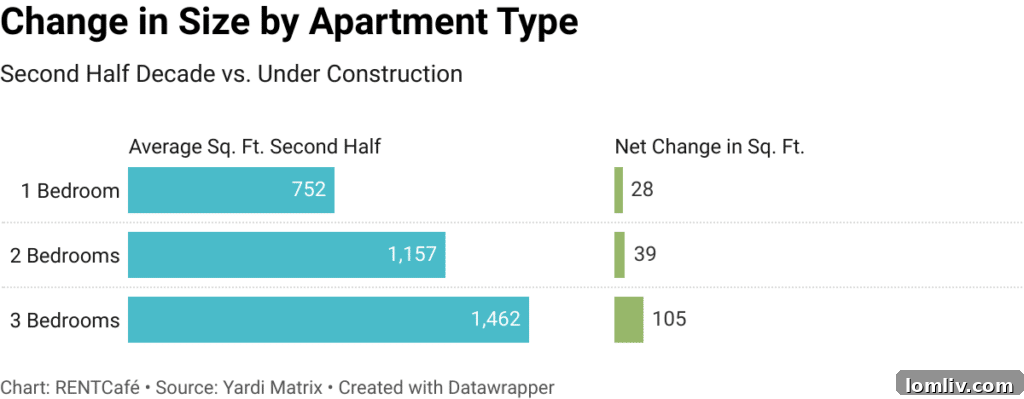
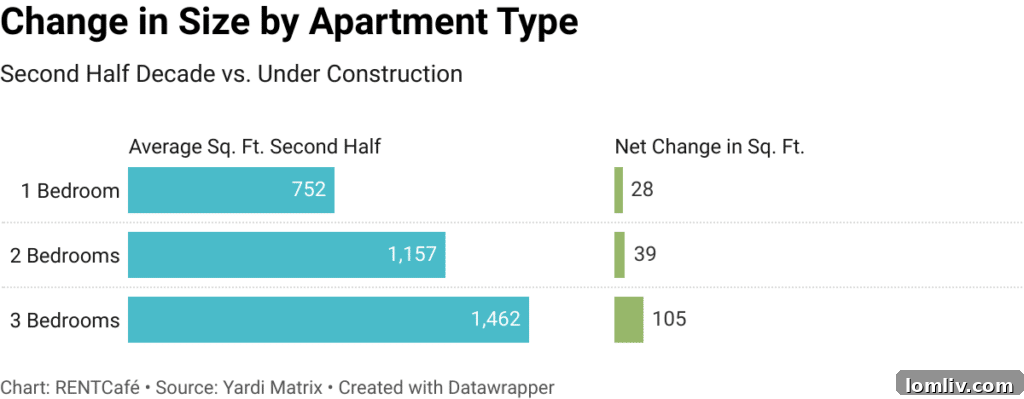
The movement towards larger apartment sizes is not an isolated phenomenon confined to the Lone Star State; it reflects a broader national trend. A comprehensive analysis by RentCafe, drawing on robust Yardi Matrix data, meticulously examined apartment floorplans in buildings under construction across 92 major cities throughout the U.S. The findings unequivocally support the emerging pattern: a significant 36 percent of these cities are now trending towards building larger apartments when compared to units constructed in the preceding five years. On average, these newly developed apartments are nearly 50 square feet larger, a seemingly modest addition that nonetheless provides crucial extra space for residents. This expansion is particularly valuable in an era where more individuals are working, learning, and exercising from the comfort of their own homes.
This widespread recalibration in apartment design signals a fundamental shift in what renters prioritize. The days of solely sacrificing space for prime location or competitive pricing are, for many, being superseded by a desire for multi-functional living areas. Modern renters require homes that can seamlessly transition between professional workspaces, personal sanctuaries, and social hubs, adapting to the dynamic demands of daily life. Developers nationwide are keenly observing this paradigm shift, actively integrating larger footprints and more flexible layouts into their designs to meet the evolving expectations of today’s discerning apartment dwellers.
The True Value of Extra Square Footage: The Dedicated Home Office
What tangible difference does an additional 50 square feet – or the even more substantial 98 square feet observed in McKinney – make for an apartment resident? In the context of our increasingly remote-first world, the answer is often unequivocal: it provides the essential space for a dedicated home office. This isn’t merely about squeezing in a desk; it’s about establishing a clear, physical boundary between professional responsibilities and personal life, all within the confines of one’s apartment. It offers the opportunity to create a proper workstation, equipped with ergonomic furniture, multiple monitors, and adequate lighting, without forcing these elements into shared living rooms, dining areas, or bedrooms.
Beyond a mere office, this valuable extra space can serve a multitude of vital functions tailored to individual lifestyles. It can be transformed into a tranquil reading nook, a compact home gym for daily workouts, a creative studio for hobbies, or simply provide much-needed storage and organization solutions. The flexibility inherent in this additional square footage is immeasurable, empowering residents to personalize their living environment to better support their unique routines, work requirements, and overall well-being. This trend underscores a broader understanding that apartments are no longer just places to sleep, but comprehensive environments designed for holistic living, productive working, and thriving.
Developers Innovate: Crafting Multifamily Communities for Modern Demands
The residential development industry is not simply reacting to these market shifts but actively leading the charge in adapting to them. Alex Valente, Senior Vice President for High Street Residential, provides an illuminating example of this forward-thinking approach. He highlights their recently completed 318-unit multifamily community, Llewellyn, in Los Angeles, which was intentionally designed with larger apartments to directly address the surging demand for more expansive living spaces. This strategic decision was made even three years ago, a time when such an approach diverged significantly from the prevailing trend of smaller, more compact units in Downtown LA.
“At the time of design three years ago, this approach went against the grain of other developments in Downtown LA. The pandemic and resulting work-from-home model has only accelerated this trend and increased demand for more space. In addition to Llewellyn’s units being on average 20% larger than competitors, the unit mix is made up of 65% two bedrooms. This was done to allow renters to share the cost of living with a roommate or utilize a separate and private work-from-home space”, said Valente.
Valente’s insights underscore a critical element of modern apartment development: the strategic curation of the unit mix. By incorporating a substantial percentage of two-bedroom units, developers ingeniously address two key concerns for urban renters. Firstly, it provides options for housemates to share living costs, a significant financial advantage. Secondly, and increasingly important, it offers the invaluable flexibility of a dedicated second bedroom that can effortlessly function as a private home office, a guest room, or a versatile flex space. This dual benefit directly caters to the evolving needs of the contemporary workforce, skillfully blending affordability with unparalleled functionality and adaptability.
Beyond the Pandemic: The Influence of Digital Nomads and Renters by Choice
While the pandemic undeniably served as a powerful catalyst, significantly accelerating the demand for more spacious living environments, it would be an oversimplification to attribute the entirety of this “upsizing” trend solely to that singular event. The evolving demographics within the rental market suggest deeper, more structural shifts are at play, particularly with the rise and expansion of specific consumer segments such as “digital nomads” and “renters by choice.” These groups are actively shaping the demand for modern apartment living.
Daryl Spradley, Senior Vice President of Charles Wayne Consulting, Inc., offers a crucial perspective, emphasizing that while certain regions are indeed experiencing a pronounced upsizing trend, it is still premature to definitively conclude that it is exclusively a direct consequence of the pandemic. He postulates that this expansion in apartment size is largely being triggered by developers who are deliberately targeting “renters by choice” and “digital nomads.” These are typically high-income individuals who, for a variety of lifestyle-linked reasons such as a strong desire for mobility and flexibility, consciously opt for renting over the traditional path of homeownership.
Spradley further elaborates on the economic factors underpinning this shift: “The number of people that earn over $100,000 a year is significantly higher than it was 2 or 3 years ago. Those are renters, but obviously renters by choice because they can go out and buy a house.”
This perspective introduces vital nuances to understanding the contemporary rental market. “Digital nomads” represent a rapidly growing demographic of professionals who leverage technology to work remotely from various locations, often traveling extensively. For this segment, a larger, well-equipped apartment serves as a crucial home base, offering both stability and functionality between their adventures. They prioritize flexible, comfortable living arrangements that support their unique work-life balance, free from the long-term commitments and maintenance responsibilities of homeownership.
Similarly, “renters by choice” are affluent individuals who possess the financial means to purchase homes but consciously opt for renting. Their decision is often motivated by a desire for a low-maintenance lifestyle, access to premium amenities typically found in luxury apartment communities, and the freedom to relocate without the complexities and financial burdens associated with buying and selling property. For these discerning renters, a larger, high-quality rental unit is not merely a temporary stepping stone but a deliberate, long-term lifestyle choice. Developers are increasingly astute in catering to their specific demands for ample space, sophisticated design, and seamlessly integrated smart home technologies, reflecting a maturation of the luxury rental market.
The Future of Apartment Living: Balancing Space, Affordability, and Evolving Lifestyles
The current trends in apartment size and design signal a pivotal and enduring transformation in the residential real estate landscape. The escalating demand for more space, meticulously fueled by the permanence of remote work, evolving lifestyle choices, and the ascendance of affluent rental segments, is fundamentally reshaping how multifamily communities are conceived, planned, and constructed. Cities like McKinney and the broader Texas market stand at the vanguard of this profound shift, unequivocally demonstrating a clear commitment to delivering living environments that are exquisitely aligned with contemporary needs and aspirations.
However, this significant transformation is not without its inherent complexities and challenges. The persistent upward trajectory of rents, a direct consequence of increased demand, escalating construction costs, and limited supply, presents a formidable hurdle for many prospective tenants. Achieving a delicate and equitable balance between the compelling desire for spacious, amenity-rich apartments and the imperative need for affordability will remain a critical and ongoing task for developers, urban planners, and policymakers alike. As we cast our gaze towards the future, the multifamily sector is poised for continued innovation, promising an array of increasingly flexible floor plans, sophisticated integrated smart home technologies, and thoughtfully designed communal co-working spaces, all ensuring that apartment living remains a dynamic, appealing, and sustainable option for a diverse and evolving range of residents.
Ultimately, the “great upsizing” movement signifies more than just a passing trend; it underscores a permanent paradigm shift in how we perceive and utilize our homes. They are no longer merely shelters, but indispensable, versatile hubs that must comprehensively support our professional ambitions, foster our personal well-being, and adapt to our ever-evolving lifestyles. The pronounced emphasis on larger, more functional spaces in new apartment constructions serves as an undeniable testament to this enduring change, promising a more comfortable, productive, and ultimately fulfilling future for renters across the nation.