Dallas ISD Navigates Leadership Shifts: Filling the District 4 Seat and Anticipating Further Changes
The Dallas Independent School District (DISD) is facing a pivotal moment, grappling with significant leadership transitions that demand careful attention and strategic action. Following a week of uncertainty, the DISD Board of Trustees recently convened a crucial meeting to establish the definitive steps for appointing an interim successor to the vacant District 4 seat, previously held by Trustee Jaime Resendez. This development, coupled with another prominent trustee’s announcement not to seek re-election, highlights a period of flux for one of Texas’s largest and most influential school districts. The board’s discussions unveiled not only the immediate challenge of finding a qualified appointee but also deeper debates about representation, fairness, and the operational stability of the district.
Jaime Resendez’s Resignation and the Quest for District 4 Leadership
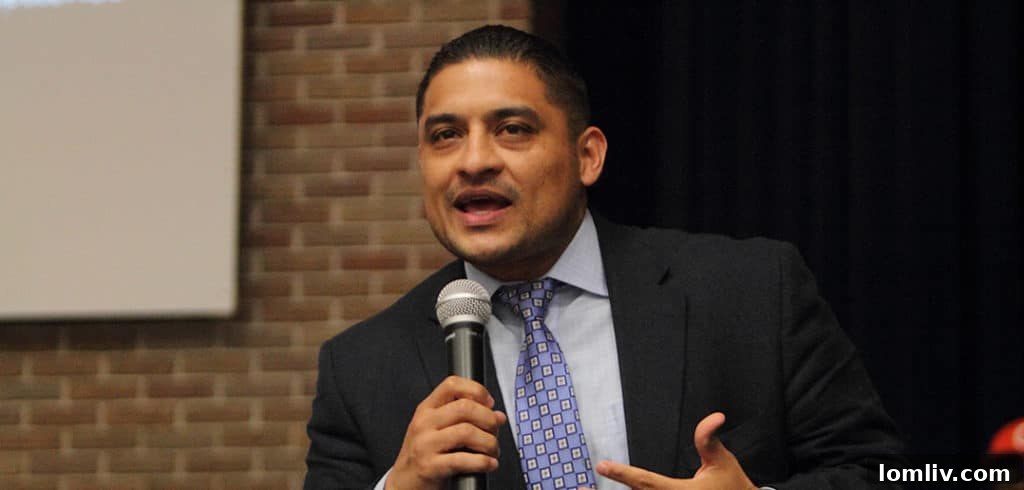
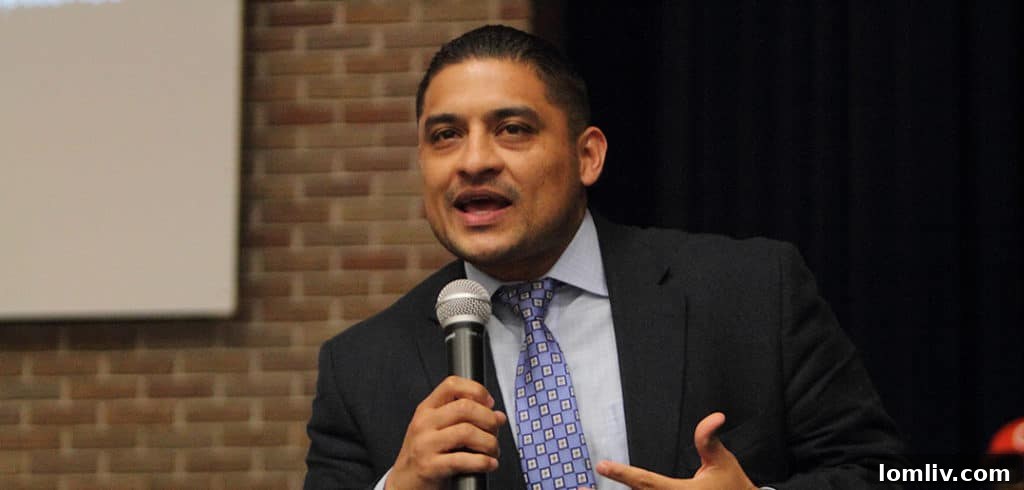
The core of the recent board meeting revolved around formally accepting Jaime Resendez’s resignation from the District 4 seat. This action was a necessary precursor to initiating the process of finding his replacement. Resendez had come under scrutiny last month after it was revealed he was residing outside the geographical boundaries of District 4, raising questions about his eligibility and proper representation of his constituents. This residency issue quickly escalated, leading to his decision to step down.
Adding another layer to his political narrative, Resendez had previously indicated he would not seek re-election for his DISD trustee position. Instead, he had set his sights on municipal politics, announcing an intention to run for Dallas City Council Place 5, a seat being vacated by Council Member Rickey Don Callahan, who had opted not to pursue another term. However, as of the current date, records indicate that Resendez had not yet officially filed to run for the City Council seat, leaving Yolanda Williams as the sole candidate at the time. The filing deadline for this particular race was set for February 15, adding an element of suspense to Resendez’s future political endeavors and underscoring the swift changes unfolding across Dallas’s political landscape.
Establishing a Timeline: Board Dynamics and Procedural Debates
With Resendez’s resignation formally accepted, the board swiftly turned its attention to the complex task of crafting a timeline and outlining the requirements for prospective applicants to fill the unexpired term. This interim appointment is expected to last for approximately three to four months, depending on whether a runoff election is required for the permanent seat. While the board aimed for efficiency, the meeting was far from tranquil, marked by what observers described as “fireworks.”
A central point of contention emerged when Trustee Joyce Foreman vocally expressed her frustration. She questioned why a comprehensive timeline for the appointment process was only now being presented, especially after a previously scheduled meeting on the matter had been canceled without any mention of such a framework. Her direct inquiries were aimed at board attorney Carlos Lopez. “Who did this?” she demanded, seeking clarity on the origin of the proposed timeline.
Board President Edwin Flores responded, clarifying, “Carlos Lopez, the board attorney, did the timeline.” Unappeased, Foreman pressed further, inquiring about who had consulted Lopez. Lopez, in turn, explained his proactive approach: recognizing the urgency and the procedural complexities, he had taken the initiative to develop a template. “I went and crafted a suggested timeline, based on what other districts have done,” he stated, emphasizing its generic nature. He further informed the board that they were operating under significant time constraints, needing to select an appointee concurrently with an ongoing election process for the permanent District 4 seat. Lopez assured the trustees that the draft was merely a suggestion, providing flexibility for them to “tinker with it as much as you want.”
Foreman, however, remained unsatisfied, insisting on knowing the exact timing and participants of the conversation that led to the timeline’s creation, and whether it predated or postdated the canceled meeting. Her persistence led to a heated exchange with President Flores, who attempted to interject, asserting that Foreman’s line of questioning was out of order, given that the motion on the floor concerned the development of the replacement process itself. “You’re not gonna snowball me with that,” Foreman retorted to Flores, declaring her intent to “continue to ask questions,” despite Flores’s repeated declarations that she was “out of order.” Her defiant “I don’t care” underscored the deep-seated tensions and differing views on governance and transparency within the board.
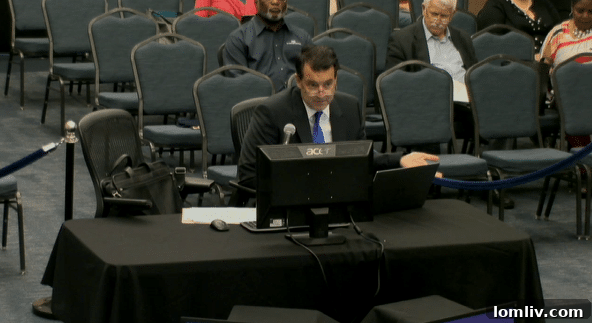
Later in the meeting, Lopez provided the requested details, having reviewed his notes. He explained that he began researching how other school districts handle similar situations the day after the last regularly scheduled board meeting, specifically after the board met in executive session to discuss Resendez’s unique situation. He consulted fellow attorneys at his firm, Thompson & Horton, to gather insights and best practices. Once this research yielded a clear understanding of successful approaches, he drafted the proposed timeline and subsequently sent it to President Flores for review.
Key Deliberations in the Appointment Process: Fairness, Expediency, and Representation
The board’s discussion then shifted to the core principles guiding the appointment process. Trustee Dan Micciche emphasized the dual objectives: “We do want to fill the seat as quickly as possible with a process that is fair and orderly.” He reiterated that the appointed individual would serve for a relatively short term, either three or four months, depending on the outcome of the May election for the permanent seat, including potential runoffs. This temporary nature of the role factored heavily into subsequent debates.
Currently, only one candidate, Karla Garcia, an associate with Dallas County Promise, has filed to run for the Dallas ISD District 4 seat in the upcoming May election. Dallas County Promise is an initiative dedicated to enabling every graduating high school senior to attend college for free at nearly three dozen Dallas County high schools, indicating Garcia’s deep roots in the local education landscape.
Trustee Dustin Marshall raised a pertinent practical question: “It’s possible that no candidate has a majority of us supporting them becoming a trustee. What happens in that scenario?” Lopez advised that such specific guidance regarding applicant selection would likely be provided to the board in a closed executive session, allowing for confidential deliberations.
Marshall also brought up the logistical challenge for any appointee, questioning whether they could realistically get “up to speed” on district affairs by a board meeting scheduled for February 28. He considered this an “unusually high bar,” a sentiment echoed by Trustee Audrey Pinkerton, who acknowledged the steep learning curve a new appointee would face. However, the newest member of the board, Justin Henry, offered a contrasting perspective, drawing from his own experience. He suggested that an extra week or two might not significantly alleviate the learning curve. “As a new trustee, did watch briefings and meetings, but I was intending to run,” Henry explained. “If we frame the date based on what they’re going to know or not, it may not be the best approach. Whether they get sworn in sooner or later, it’s going to be tough to get up to speed.” This highlighted the inherent challenge of quickly integrating a new member into complex district governance.
Lopez further clarified a legal point, stating that there is no precedent or requirement for candidates who previously ran against Resendez in the last election to be given “first dibs” on the interim appointment. This aimed to ensure an open and equitable application process for all qualified individuals.
A significant point of contention arose regarding whether individuals actively running for the District 4 seat in the May election should be considered for the interim appointment. Trustee Marshall advocated for excluding such candidates, proposing that the board require applicants not to be running in May. He articulated his stance, stating that while the board might not formally impose this as a requirement, he personally would not support an appointee who was also seeking the permanent seat. Marshall felt that appointing an electoral candidate so close to the election would be “putting a thumb on the scale,” creating an unfair advantage. Trustee Henry strongly agreed with Marshall’s position. “We’re elected to this seat from our constituency. I think people should elect who sits in this seat,” Henry stated. “If you’re sitting in this seat by appointment, that’s something different. For me, whoever fills Jaime’s seat should be temporary. If you’re also running for that seat, that doesn’t align.” He emphasized that the board’s role should not be to choose who permanently represents a district, but rather to facilitate a temporary solution, urging aspiring permanent trustees to “go earn it from your community.” “I don’t want to undermine that community,” he concluded.
Conversely, Trustee Foreman disagreed with limiting the applicant pool, arguing, “I don’t think we should be limiting people.” Trustee Lew Blackburn adopted a more open-minded approach, suggesting, “I don’t know that it’s bad if someone’s running, but I’d like to keep our options open.” Pinkerton offered a pragmatic view, noting the point might be “moot” if few people apply. She suggested, however, that the application form should include a section for applicants to provide a statement explaining their motivations for seeking the appointment. “If they can’t take the time to fill out the boxes on the form, then they might not be the dedicated person that we need,” she reasoned, emphasizing commitment and thoroughness.
Ultimately, a compromise was reached. Applicants for the interim District 4 seat will be required to meet the minimum legal and residency qualifications for running in District 4. Additionally, they must submit a letter of interest and a comprehensive resume as part of their application. These materials will be made available through an online submission process, ensuring accessibility for all interested candidates.
The Agreed-Upon Timeline for Appointment
The board formalized the following timeline for the appointment process, designed to ensure a swift yet thorough selection:
- February 6: The Dallas ISD will issue an official press release, formally opening the District 4 seat for applications and resumes. This broad announcement aims to reach a wide pool of potential candidates within the community.
- February 19: All applications and resumes must be submitted by 5 p.m. This deadline applies to both electronic and paper submissions, with paper documents required to be physically present in the board office by the specified time.
- February 28: The Board of Trustees will hold a specially called meeting prior to its regular school board meeting. During this session, trustees will review the submitted applications in a closed executive session, allowing for confidential and detailed evaluation of candidates’ qualifications.
- March 4: The board will conduct interviews with selected applicants during another closed executive session. Following these interviews, the board will transition into an open session where they will publicly cast their votes to officially appoint their chosen selection for the interim District 4 trustee.
Another Significant Departure: Audrey Pinkerton’s Decision Not to Seek Re-election for District 7

Adding to the wave of changes impacting the DISD board, shortly after the meeting regarding District 4, Trustee Audrey Pinkerton made a significant announcement on Facebook: she will not be seeking re-election for her District 7 seat. Pinkerton cited a career change that would preclude her from fulfilling the demanding duties of a trustee, describing her decision as “difficult.” Her departure marks another considerable shift in the board’s composition, underscoring a period of notable transition for the district.
In her announcement, Pinkerton reflected on her three-year tenure, expressing immense pride in her contributions to the district. Her accomplishments are noteworthy and include tangible improvements in educational outcomes and operational efficiency:
“As I look back over the past three years, I am proud of what I’ve helped accomplish. When I joined the board, 37 DISD schools were failing; today there are only 4.
DISD administrators made a number of positive changes at my urging. The Teacher Excellence Initiative was adjusted from a system where 40% of teachers did not get a raise, to one where 97% of teachers receive a merit-based increase. For the first time ever, DISD developed a 5-year financial plan, which revealed a potential financial crisis that the district was able to take action to avoid. And after hosting a series of public meetings that invited parents into the discussion, we convinced the District to seek other alternatives rather than close 22 neighborhood schools.”
I am proud to have stood for transparency and accountability, for the needs of the students, families, staff and community, and for using our scarce resources in the areas that have the highest impact on students.
I want to thank my family for their patience and support, and the people of District 7 and education champions all around Dallas for their words of appreciation and encouragement during the past three years.
While I brought a business perspective to school district governance, my service did not begin with elected office, but rather as a parent and civic-minded neighbor engaging our community in support of our schools. If the next Trustee for District 7 continues to engage the many talents of our community and upholds the principles of transparency and accountability, then I’m confident the spirit of THINK PINK will continue to serve our children in the future.”
Pinkerton’s reflection highlights her instrumental role in addressing critical issues, from improving failing schools to advocating for teacher compensation and prudent financial planning. Her emphasis on transparency, accountability, and community engagement defines her legacy. The “Think Pink” spirit she references symbolizes a commitment to student-centric policies and a collaborative approach to educational governance.
The announcement of Pinkerton’s departure creates another significant void on the DISD board, further intensifying the current period of transition. As of now, there are no recorded filers for the District 7 seat, signaling that the search for new leadership will extend beyond District 4. This dual challenge underscores the critical need for robust community engagement and a thorough selection process to ensure that both districts continue to receive dedicated and effective representation on the Dallas ISD Board of Trustees.
Conclusion: Navigating a Period of Significant Change for Dallas ISD
The Dallas ISD stands at a critical juncture, facing the immediate task of appointing an interim trustee for District 4 while simultaneously preparing for the election of a new representative for District 7. The intense discussions surrounding the District 4 appointment underscore the board’s commitment to a fair, transparent, and orderly process, even amidst heated debates on electoral ethics and community representation. The departures of both Jaime Resendez and Audrey Pinkerton signal a substantial shift in the board’s composition, presenting both challenges and opportunities for the district. Ensuring seamless leadership transitions and maintaining focus on student success, teacher well-being, and financial stability will be paramount for DISD as it navigates these significant changes in local governance. The upcoming months will be crucial as the community watches closely to see who steps forward to lead these vital educational districts.