By CJ Gresh
Special Contributor
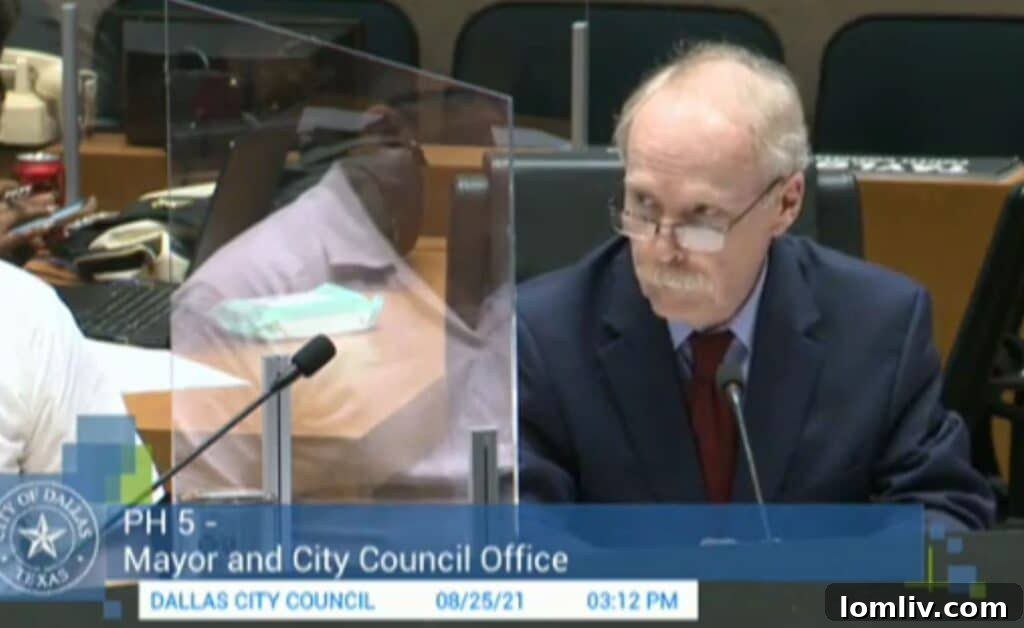
In the intricate world of city governance, few issues ignite public debate as fiercely as the redrawing of political boundaries. When such a crucial process is underway, and allegations of conflicting facts emerge from public servants, the integrity of the system comes under intense scrutiny. This is precisely the scenario unfolding in Dallas, Texas, where an ethics complaint has been lodged against newly elected District 14 Dallas City Council member, Paul Ridley, stemming from his controversial move to oust a commission appointee.
The controversy centers on statements made by Council Member Ridley during a public meeting concerning the removal of Kristin Scholer from the city’s vital Redistricting Commission. This matter has escalated to the point where the Ethics Advisory Commission has scheduled a preliminary hearing for Friday, October 8, to address the complaint, highlighting the seriousness with which these allegations are being treated within Dallas City Hall.
The Unfolding Controversy: Scholer’s Ousting
The ethics complaint specifically targets statements and claims made by Council Member Ridley during the public hearing held to remove Kristin Scholer from the Redistricting Commission. While it is generally accepted that a newly elected council member has the prerogative to appoint their own representatives to various city bodies, the method by which Ridley sought to remove Scholer has drawn considerable criticism and raised questions about due process and professional conduct.
Kristin Scholer is not merely a political appointee; she is a highly qualified civic volunteer with a robust academic background, holding both undergraduate and graduate degrees from Texas State University. Her professional expertise is particularly relevant to the Redistricting Commission’s work, as she navigates complex Census data and utilizes mapping software daily in her role as the Associate Vice President of Data Science and Insights for the marketing technology firm Ansira. Scholer was initially appointed by Ridley’s predecessor and political opponent, David Blewett, whom she had supported, which some observers believe laid the groundwork for the subsequent conflict.
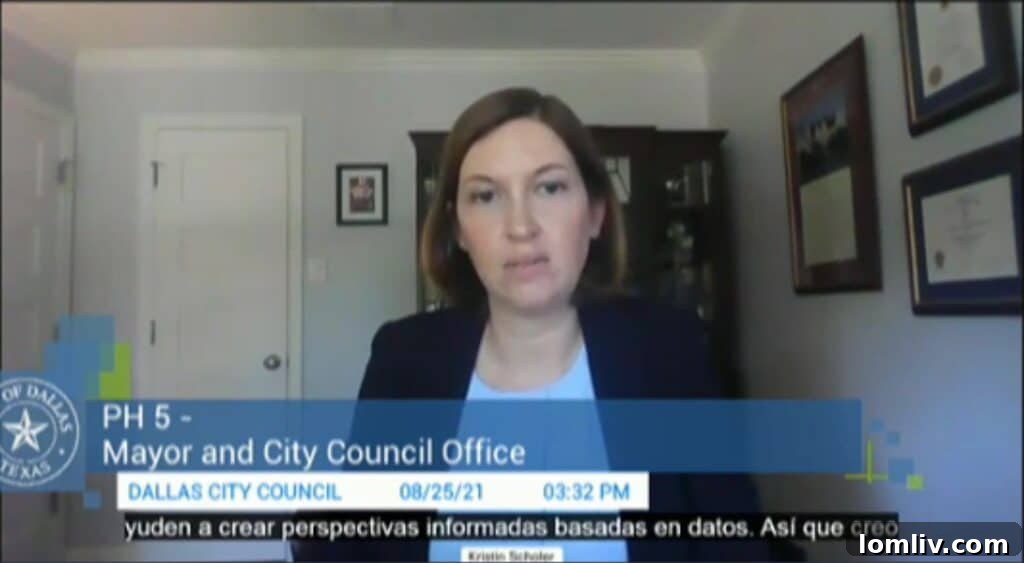
The initial attempt to remove Scholer came via email, with Ridley requesting her resignation. Instead of complying silently, Scholer chose to exercise her right to a public hearing, transforming a private request into a significant public debate. This decision brought the internal workings of the city council and the highly sensitive redistricting process into the public spotlight.
The Public Hearing: Charges and Disputes
The public hearing, held on August 25, evolved into a nearly ninety-minute discussion, during which three primary “charges” were brought against Scholer. These charges formed the basis of Council Member Ridley’s justification for her removal:
- Scholer was deemed not representative of District 14, a claim asserted to be a “mandate” arising from the most recent city council election, in which David Blewett lost and Paul Ridley won.
- A “failure to respond to multiple attempts to communicate with her” was alleged on Scholer’s part.
- Scholer was accused of having an inadequate history of leadership and experience, questioning her suitability for the commission.
Of these three points, the second charge—regarding communication attempts—became the most contentious and forms the very core of the ethics complaint. It pitted the word of a city council member against that of a highly respected civic volunteer, creating a dramatic and concerning clash of narratives.
The Critical Role of the Redistricting Commission
To understand the gravity of this situation, it’s essential to appreciate the unique and vital nature of the Redistricting Commission. Unlike many other city boards and commissions, this body plays a pivotal role in shaping Dallas’s political landscape for the next decade. Every ten years, following the decennial U.S. Census, the City of Dallas is mandated to review and potentially revise existing council district boundary lines to reflect population shifts and ensure equitable representation.
The work of the Redistricting Commission is carried out by a group of fifteen members, with one appointed by each council member and the mayor. Crucially, the commission’s term of service does not adhere to typical political cycles; it continues until their exhaustive work is completed and formally reported to the Mayor. This extended and independent tenure is designed to insulate the commission from immediate political pressures, allowing it to focus impartially on creating fair and balanced districts.
The specifics governing this independence are enshrined in Section 5 of the City Charter, which outlines strict protocols to maintain the commission’s autonomy:
Sec5(b)(5) “City council members may not have contact, directly or indirectly, with a redistricting commission member, or with redistricting commission staff, with respect to redistricting, except by testimony in an open meeting. Redistricting commission members may not engage in any discussions, directly or indirectly, regarding redistricting or the work of the redistricting commission with city council members, except during an open meeting or by written communication given to the entire redistricting commission. If a redistricting commission member engages in a prohibited discussion or violates the Texas Open Meetings Act, the redistricting commission may, by majority vote, remove the commissioner from the redistricting commission.”
This section underscores the paramount importance of insulating the redistricting process from undue political influence, emphasizing transparency and limiting interactions between council members and commissioners to formal, public settings.
Conflicting Testimonies: A Matter of Truthfulness
The central point of contention, and indeed the heart of the ethics complaint, lies in the conflicting accounts regarding communication attempts. During the public hearing, the veracity of statements made by both Council Member Ridley and Kristin Scholer came under direct scrutiny, raising serious questions: who was being truthful about the nature and extent of their communications?
The questioning began with District 13 Dallas City Council member Gay Donnell Willis, who directly asked Scholer about the communications she received from Ridley. Scholer’s response was unequivocal: “I never received a phone call,” she stated, adding, “it was a single email requesting my resignation.” This direct assertion created a stark contradiction with Council Member Ridley’s earlier claim of “multiple communication attempts both email and telephonically.”
Council Member Willis pressed for further clarification, giving Scholer another opportunity to elaborate. Scholer reiterated her position, stating, “Had I received additional communication from Mr. Ridley, I then would have reached out to somebody.” Willis, seeking to resolve the clear disparity, specifically asked, “Mr. Ridley said he had made a phone call to you, and so you are saying you did not receive a message?” Scholer’s response remained firm: “I absolutely never received a message from him.”
The dialogue then shifted to District 6 Dallas City Council member Omar Narvaez, who directly questioned Ridley on the matter. “Mr. Ridley, how many times did you try to communicate with the commissioner?” Narvaez asked. Ridley claimed he had contacted her twice. Narvaez followed up, asking for details: “What were those two different times?”
Ridley then explained his attempts: “I phoned her to ask her, since I didn’t know her, hadn’t met her, knew nothing about her, about her qualifications, and her experience in the community as a suitability measure of her service on this commission.” When Narvaez logically assumed she didn’t answer the phone, Ridley confirmed, “that’s correct, I left a voicemail.”
This exchange highlighted a direct contradiction: Scholer denied receiving any phone call or message, while Ridley maintained he left a voicemail. The discrepancy between these two accounts forms the crucial pivot of the ethics complaint, suggesting that one party’s statements may not align with the facts.
An Ethics Code for Dallas: A Test Case?
Despite the conflicting testimonies, Kristin Scholer was ultimately removed from the Redistricting Commission by a council vote of 10-5. However, the controversy did not end there. The ethics complaint now squarely focuses on the disputed number of communication attempts—Ridley’s claim versus Scholer’s denial—and whether this amounts to a potential violation of the “essential values and ethical behaviors” as outlined in the nascent Dallas City Code of Ethics. One would imagine that readily available telephone records from both parties could provide definitive clarity on this “he said, she said” dispute.
The timing of this incident is particularly significant because the City of Dallas has been actively working towards instituting a robust new ethics code. This move is spearheaded by Mayor Eric Johnson, who unveiled a comprehensive ethics reform proposal from a dedicated task force. Such an ethics code is designed to promote transparency, accountability, and integrity within city governance, ensuring that public officials adhere to the highest standards of conduct. The Ridley-Scholer dispute could serve as an early, high-profile test case for how seriously Dallas is prepared to enforce its ethical guidelines.
Echoes of Past Political Influence
This particular encounter also evokes memories of a previous, equally contentious issue: the failed appointment of political consultant Anna Casey to a critical commission. Casey, who managed the campaigns of several council members—including Chad West, Adam Bazadula, Adam Medrano, Jaime Resendez, and even Paul Ridley himself, alongside numerous former council members—faced significant opposition due to concerns about political cronyism influencing ostensibly independent bodies.
At the time of the Anna Casey controversy, District 7 Dallas City Council member Adam Bazaldua was quoted, setting a tone that now resonates with the Scholer case:
“This is definitely setting the tone for having more of an opinion who it is our colleagues put forward, and I plan on utilizing this as a precedent if this is the way it’s going to go.”
Bazaldua’s statement suggested a potential shift in how council members would scrutinize each other’s appointments, hinting at a future where political alignment, rather than solely merit, might become a more explicit factor in commission selections. The removal of Kristin Scholer, a technically proficient and non-political appointee of a former opponent, appears to align with this precedent, intensifying concerns about the creeping influence of politics into the operations of independent city commissions.
The Path Forward for Dallas Governance
The ethics complaint against Council Member Paul Ridley, the disputed communications, and the broader context of political appointments to the Redistricting Commission underscore a critical period for Dallas governance. As the city endeavors to establish and uphold a robust ethics code, incidents like these serve as stark reminders of the importance of transparency, integrity, and accountability from all public servants.
The outcome of the Ethics Advisory Commission’s preliminary hearing for Paul Ridley will undoubtedly be closely watched. It could set a significant precedent for how Dallas handles allegations of misconduct and clarifies expectations for communication and truthfulness among its elected officials and appointed volunteers. The future integrity of Dallas’s critical commissions, especially those tasked with fundamental democratic processes like redistricting, hinges on upholding these ethical standards. Stay tuned, as the intersection of politics and public service continues to unfold in Dallas City Hall.

CJ Gresh is a longtime observer of Dallas City Hall. An honorably discharged United States Marine photographer and videographer, Gresh was deployed to Asia, North and West Africa, Europe, and the Caribbean. Post-service endeavors include stints in technology, management, and consulting.