The Lingering Shadow of Recession: How Minorities and Young Americans Were Sidelined from Homeownership
The economic recession that gripped the United States from 2007 to 2009, often referred to as the Great Recession, left an indelible mark on the financial landscape and the lives of millions of Americans. While its impact was widespread and devastating, certain demographic groups bore a disproportionately heavy burden, the effects of which continue to resonate more than a decade later. Among these, minority communities and younger generations, particularly those poised for family formation and wealth building, have found themselves facing a challenging uphill battle, especially when it comes to the crucial realm of homeownership.
A comprehensive new study conducted by Apartment List sheds critical light on these enduring disparities. The research reveals that the economic downturn, rooted in a collapsing housing market, had its most profound and lasting impact on homeownership rates among minorities and young Americans aged 18-45. Alarmingly, the age bracket of 35-44, typically a prime period for first-time home purchases and establishing long-term financial stability, experienced some of the steepest declines.
A National Trend: Homeownership at Historic Lows
Analysts at Apartment List, leveraging extensive Census data, highlighted a troubling national trend: U.S. homeownership rates have been on a steady decline. This downward trajectory recently pushed homeownership levels to their lowest point since 1965, underscoring a systemic challenge that transcends mere economic cycles. This statistic is not just a numerical data point; it represents a significant shift in the American dream, where owning a home has long been considered a fundamental pillar of financial security and upward mobility. The decline suggests that this dream is becoming increasingly elusive for a growing segment of the population, with profound long-term societal and economic implications.
The Dallas Story: A Microcosm of Disparity
To illustrate the national trends with concrete local data, the Apartment List study zeroed in on key urban centers. In Dallas, for instance, the homeownership rate saw a noticeable dip from 60.9 percent to 58.7 percent between 2007 and 2016. While this decline might appear modest at first glance, a deeper dive into demographic specifics reveals a far more acute crisis. The drops were most pronounced among African Americans, where homeownership rates plummeted by a staggering 6.1 percent during the same period.
Andrew Woo, Director of Data Science and Growth at Apartment List, underscored the severity of this impact, stating, “African Americans were highly affected [by the recession]. In Dallas, it is a large drop [in homeownership], larger than the nation average, which is 5.3 percent. What we notice is that it’s very much tied to employment and socioeconomic trends.” This observation is crucial; it links the decline in homeownership directly to broader issues of employment stability, wage growth, and systemic socioeconomic challenges faced by these communities. The recession didn’t just cause a temporary setback; it exacerbated existing inequalities, making it significantly harder for African Americans to recover and rebuild wealth through homeownership.
Further compounding the issue in Dallas was a problematic divergence in housing costs. During the 2007-2016 period, rents in the city surged by 4.2 percent. Simultaneously, owner costs—encompassing mortgage payments, property taxes, insurance, and maintenance—actually fell by 11.8 percent. This creates a stark and unfair paradox: those who were least able to afford homeownership were forced to pay increasingly higher rents, draining their ability to save for a down payment. This vicious cycle effectively locked many out of the housing market, perpetuating a renter status with limited opportunities for wealth accumulation, while homeowners potentially benefited from lower carrying costs, illustrating a widening financial chasm.
Racial and Ethnic Disparities: A National Challenge
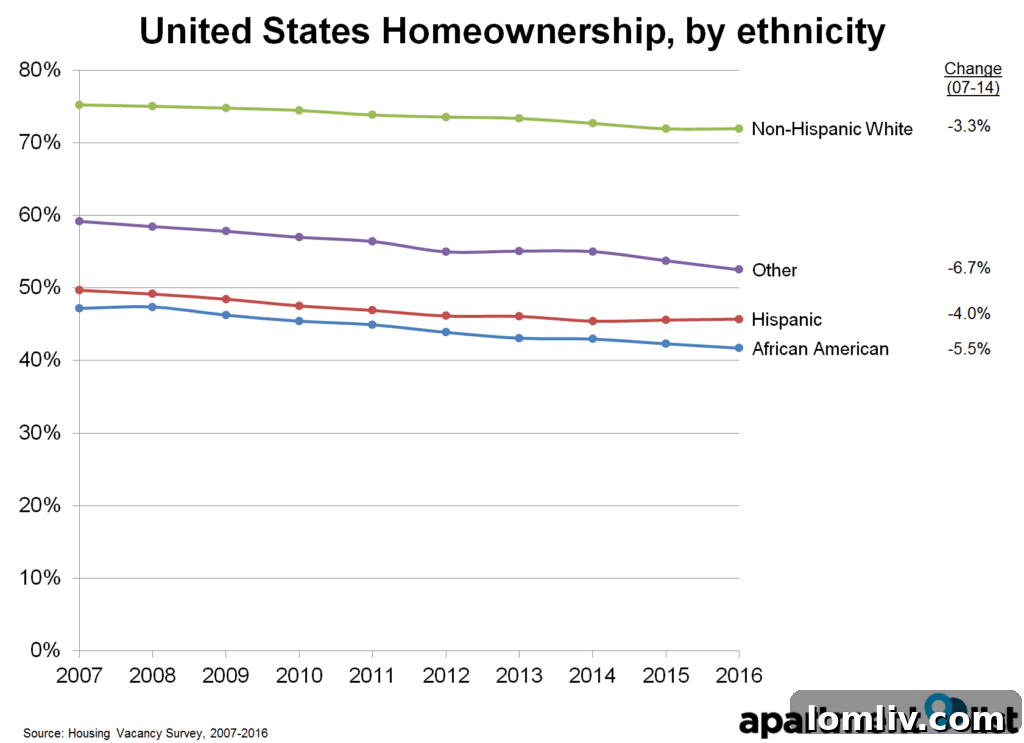
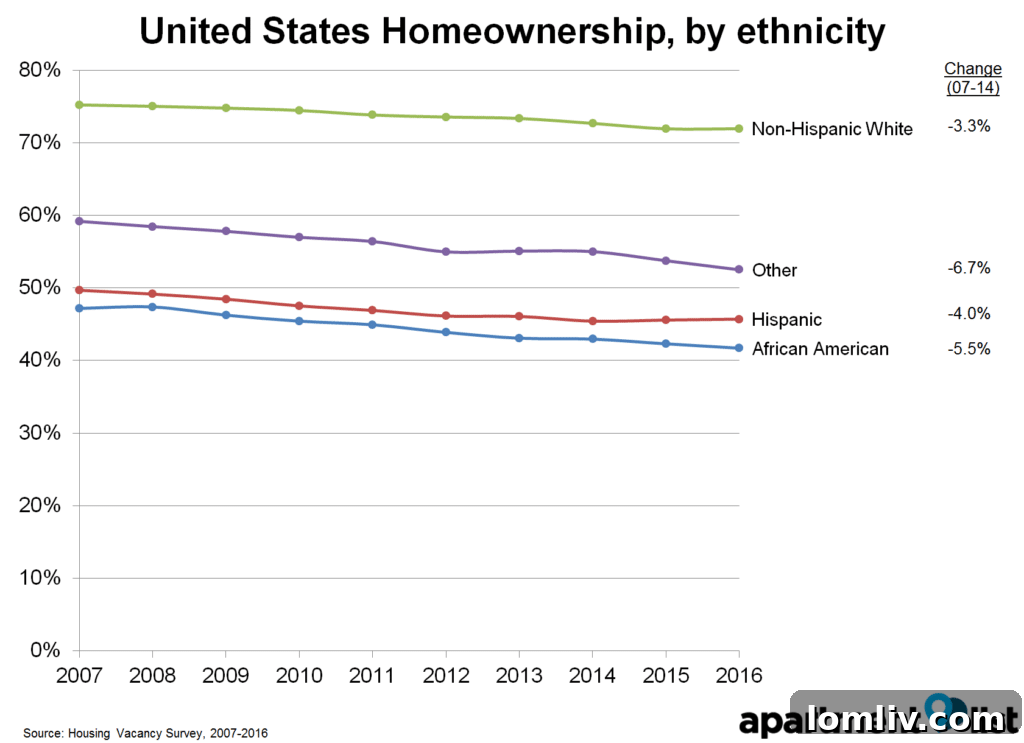
The patterns observed in Dallas are not isolated; they mirror broader national trends. Across the United States, the largest declines in homeownership rates during the post-recession era were concentrated within minority groups. Hispanics experienced a 4.0 percent drop, African Americans saw a 5.5 percent decline, and other minority groups faced an even steeper fall of 6.7 percent. In stark contrast, non-Hispanic whites were relatively less affected, with a comparatively smaller homeownership decline of 3.3 percent. This differential impact highlights how the recession disproportionately eroded the wealth and housing stability of minority communities, widening an already significant racial wealth gap.
The implications of this reality are far-reaching and potentially catastrophic for societal equity, as the Apartment List report soberly notes. Homeownership is not merely a place to live; it is a primary vehicle for building intergenerational wealth, providing stability, and offering a tangible asset that can be leveraged for education, entrepreneurship, or retirement. When access to this fundamental wealth-building tool is diminished for specific groups, it has profound consequences for economic mobility and social cohesion.
“Our research indicates that not owning a home has a sizable financial cost, as renters miss out on low mortgage rates and are hit by higher rents. This phenomenon may exacerbate inequality in our society, as those wealthy enough to invest in real estate benefit from lower interest rates, whereas minorities and younger Americans, hit by rising rents and student debt, risk being locked out of homeownership.”
This powerful statement from the study encapsulates the core issue: a widening chasm between those who can leverage advantageous real estate markets and those who are increasingly marginalized. For many, particularly minorities and younger generations, the double burden of surging rental costs and crippling student loan debt creates an insurmountable barrier to saving for a down payment, trapping them in a cycle of renting that offers no equity accumulation.
Generational Setbacks: Young Americans and the Millennial Dilemma
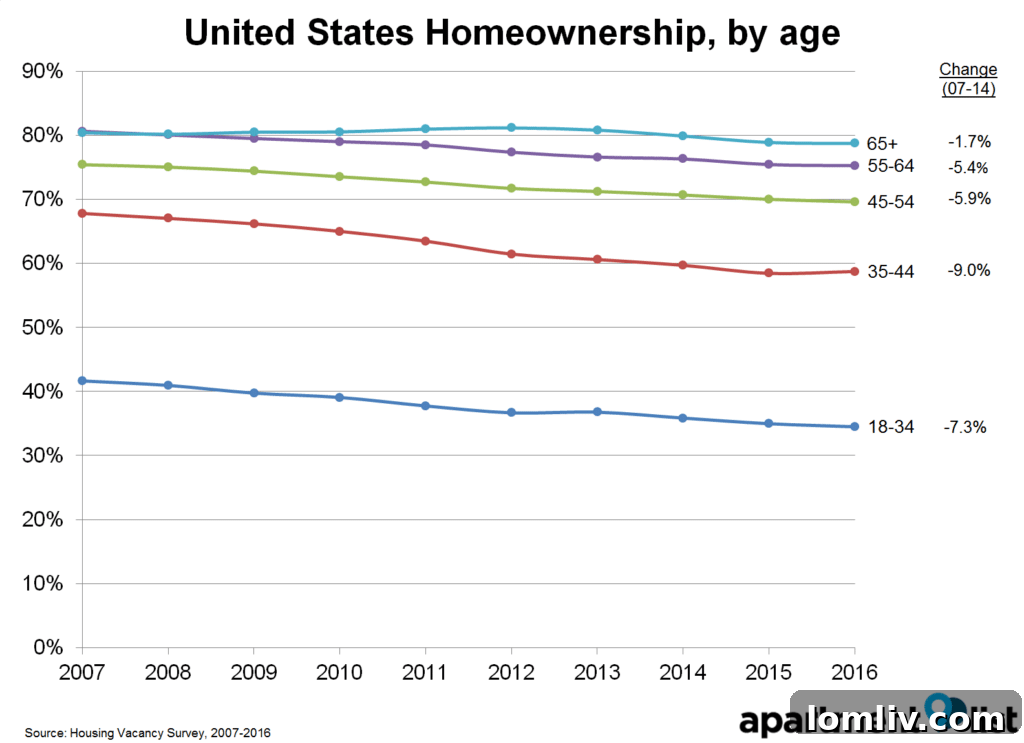
Beyond racial and ethnic lines, the recession also dealt a particularly harsh blow to specific age groups, fundamentally reshaping their trajectory toward adulthood and financial independence. Americans aged 35-44, often at a crucial juncture for starting families and buying their first home, were the hardest-hit age demographic. Their homeownership rate plummeted from 68 percent to a mere 59 percent. This group represents individuals who were likely in their late 20s or early 30s when the recession hit, directly impacting their ability to enter the housing market at a pivotal time.
Following closely behind, the Millennial generation (those under 35 years old) also experienced significant setbacks. Many Millennials, fresh out of college or just beginning their careers during or immediately after the recession, have been forced to delay homeownership. Factors such as a precarious job market, stagnant wages, the crushing weight of student loan debt, and the difficulty of saving for a substantial down payment in an era of rising rents have combined to push the dream of homeownership further out of reach for this generation. This delay is not merely a postponed purchase; it represents deferred wealth accumulation, potentially impacting their financial standing for decades to come.
Andrew Woo further emphasized the gravity of these generational trends: “It is concerning that among 35-to-44-year-olds, the group that is most likely to want to buy a house and start a family, the homeownership rate is falling so much. For the Millennials, the trend we’re seeing nationwide is a delay in homeownership [because of the recession].” His words highlight a fundamental challenge to traditional markers of adult independence and financial stability. When the very generations typically forming families and investing in their future are locked out of homeownership, it signals deeper structural issues within the economy and society.
Conclusion: Addressing the Lasting Legacy of Disparity
The Apartment List study serves as a stark reminder that the economic recession of 2007-2009 was not a uniform experience across the American population. Its legacy continues to manifest in profound disparities in homeownership, disproportionately affecting minority communities and younger generations. These groups face a compounding set of challenges, from the erosion of existing wealth to increased rental burdens and overwhelming student debt, all conspiring to make the American dream of homeownership increasingly unattainable. The widening gap between homeowners and renters, and between different demographic groups, carries significant long-term implications for economic equality, social mobility, and the overall stability of the nation. Addressing these entrenched disparities will require concerted efforts, policy interventions aimed at promoting housing affordability, and a renewed commitment to fostering equitable opportunities for wealth building for all Americans.