“And that’s my fear. A city that is more lenient than the neighborhood, resulting in even more being built. Many think of the towers as being an aberration in the neighborhood. They’re not — they’re a harbinger.”
These prophetic words were penned in December 2017, following my resignation from the inaugural PD-15 task force. They encapsulated my deepest concerns regarding the future of urban development in Dallas, particularly within the sensitive Pink Wall neighborhood. The statement concluded two extensive columns where I meticulously detailed what I believed to be the optimal solution for the contentious PD-15 zoning ordinance. Now, with the Dallas City Council having unanimously passed the resolution last week, bringing a 30-month saga to a close with a 240-foot height limit, it is imperative to revisit those initial analyses. This retrospective offers valuable insights into the foresight – or perhaps, the unfortunate accuracy – of my original predictions regarding Dallas’s approach to complex urban planning issues.
Revisiting PD-15: Unpacking Dallas’s Urban Development Strategy
The protracted debate surrounding PD-15 has been more than just a local zoning dispute; it has been a microcosm of broader challenges in urban development, community engagement, and strategic planning within rapidly growing metropolitan areas like Dallas. The decisions made here set precedents, influencing how residential areas adjacent to commercial corridors will evolve. Understanding the historical context, the inherent limitations of the surrounding areas, and the various proposed solutions is crucial for appreciating the outcome and its long-term implications for property values and neighborhood character.
The Immutable Barriers: Residential Proximity Slope and Deed Restrictions
My initial analysis, “PD-15: The Envelope Please, Part 1,” meticulously outlined the foundational rationale underpinning my perspective on the zoning challenges. Upon rereading it today, its core tenets remain undeniably valid. A significant portion of my argument hinged on the premise that the wider Pink Wall area, lying beyond the immediate confines of PD-15, was inherently resistant to large-scale redevelopment. This resistance stemmed from two powerful, intertwined forces: antiquated deed restrictions and the restrictive height limitations imposed by the Residential Proximity Slope (RPS).
The Residential Proximity Slope is a critical urban planning tool designed to protect lower-density residential areas from the immediate visual and physical impact of taller structures. It dictates that building heights must decrease as they get closer to adjacent, lower-density residential zones, creating a “slope” or setback envelope. For the Pink Wall, this meant that even if deed restrictions were overcome, the sheer physical constraints of the RPS would severely limit the potential for significant vertical development. Any new construction would be forced to conform to these sloping planes, effectively preventing the kind of high-rise, high-density projects seen elsewhere in Dallas. This dramatically curtails the economic viability of redevelopment for many parcels, as the cost of land and construction often cannot be recouped with the limited buildable area.
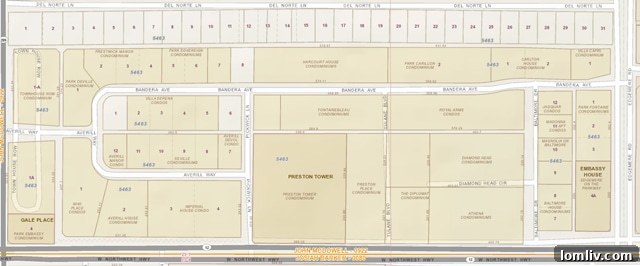
Compounding the RPS challenge are the archaic yet potent deed restrictions. These historical covenants, embedded in property titles, impose specific rules on land use, building types, and density. In the Pink Wall, there are three distinct tracts with identical restrictions, extending north-to-south from northern Bandera to Northwest Highway, essentially encompassing the rear boundary of PD-15. Overturning these restrictions is an arduous process, requiring the consent of a substantial majority – specifically, 51 percent of the street frontage parcels – within the restricted area. The practical reality of this requirement is daunting. Why would property owners, whose parcels have severely limited redevelopment potential due to the RPS, vote in favor of extinguishing restrictions that would primarily benefit their southern neighbors? Human nature, often driven by self-interest and a desire to maintain the status quo, dictates a resounding “No.” This makes the prospect of lifting these deed restrictions highly improbable, a conviction that nothing has altered since my initial assessment.
Market Stagnation and the Need for Catalyst Investment
My 2017 analysis also highlighted a concerning trend: the Pink Wall neighborhood had demonstrably failed to keep pace with the broader Dallas real estate market. Drawing data from sales at the Athena condominium complex over the preceding 15 years, I observed that most pre-Recession buyers had barely returned to their initial investment values, especially when factoring in inflation. This suggested a stagnant market where real estate investment had yielded minimal dividends. Only those astute enough to purchase during pronounced market dips, such as the 2008 recession, experienced any significant appreciation.
The critical implication of this market stagnation was clear: without a substantial influx of new, high-quality investment and redevelopment, the area was destined to continue its gradual decline. Many of the existing residential complexes were showing signs of deferred maintenance, indicative of a lack of reinvestment. Coupled with the intractable deed restrictions limiting growth elsewhere, PD-15 emerged as the sole viable zone capable of catalyzing meaningful uplift for the entire Pink Wall area. Redevelopment within PD-15 held the potential to attract a new demographic of younger, wealthier residents, injecting vitality, increasing the tax base, and potentially stimulating indirect improvements in the broader neighborhood. Without such a catalyst, the cycle of deterioration would only accelerate. Every point I articulated in that “part one” remains unequivocally true today, underscoring the enduring challenges faced by Dallas in balancing preservation with progress.
Beyond the Blunt Instrument: A Call for Nuanced Solutions in PD-15 Dallas Zoning
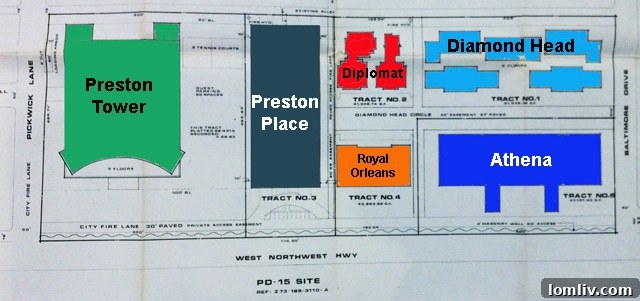
My second column, “Unpacking a Solution for PD-15: The Envelope Please, Part 2,” meticulously laid out a series of nuanced proposals designed to benefit all stakeholders: the existing low-rise and high-rise residents, future developers, and the broader Pink Wall neighborhood. Regrettably, the outcome approved by Dallas City Hall last week tragically validated the fear I articulated in this very column’s opening quote. The city, in its approach to PD-15, acted as a blunt instrument, largely devoid of the subtlety and tailored considerations that could have yielded a far more equitable and optimized result.
This is not to say that I fundamentally disagree with the city’s ultimate approval, but rather that a more sophisticated methodology was available and, in my view, superior. My primary suggestion was to subdivide the six parcels comprising PD-15 into six distinct sub-tracts within the overarching PD-15 ordinance. This structural refinement would have empowered the city to fine-tune the regulations for each individual parcel, allowing for bespoke solutions rather than a one-size-fits-all approach. For instance, parcels facing existing, established residential buildings could have been subjected to more stringent structural setbacks – not merely ground setbacks, but specific parameters for the upper floors – compared to parcels facing new developments or commercial corridors. This level of granular control would have mitigated negative impacts on existing residents while still fostering intelligent development.
A far more impactful lever, which the city overlooked, was the concept of setting uniform density across PD-15 (where much of the intrinsic value lies for developers) but varying the building envelope for each of the four low-rise parcels. This would have allowed for greater flexibility in design and reduced the visual and physical impact on surrounding structures, particularly for those sensitive areas adjacent to existing residential properties. By manipulating the envelope – the three-dimensional space a building can occupy – rather than just overall height, the city could have guided development towards less intrusive forms without sacrificing the economic viability essential for attracting quality investment.
The Power of Transferable Development Rights (TDRs) for Equitable Dallas Development
The most innovative and equitable suggestion put forth was the implementation of Transferable Development Rights (TDRs). This sophisticated urban planning tool allows property owners to sell the right to develop their property beyond certain limits (like height or density) to another developer in a different designated area. In essence, a TDR program creates a market for development potential, allowing density or height to be shifted from areas where it is undesirable or impactful to areas where it can be absorbed more readily.
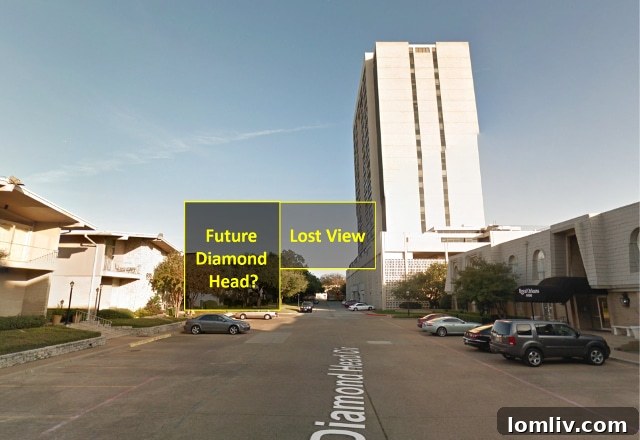
Under a TDR framework for PD-15, one specific building, say the Diamond Head Condos – which are literally situated directly behind the Athena high-rise – could have been financially incentivized by developers of other low-rise parcels to relinquish a portion of its potential height. In return, Diamond Head would have received substantial monetary compensation, effectively being “paid” as if they had built to their maximum allowable height, without actually constructing a taller structure. This arrangement would have been a multifaceted win: Diamond Head residents would reap millions in payments for doing nothing, developers would acquire additional height or density in less sensitive areas, and the residents of the Athena (and other adjacent properties) would benefit from a more palatable, lower-profile Diamond Head building.
The TDR concept also offered crucial flexibility. In exchange for ceding height, Diamond Head could have received other “givebacks” such as increased density (if compatible), above-ground (but properly screened) parking, or added height in sections of their parcel less impactful to neighbors, such as along Northwest Highway. Properly executed, a TDR program could have transformed a contentious development into a model of community-centric urban planning, where economic incentives align with neighborhood preservation. This nuanced approach, sadly, was absent from the city’s final resolution for Dallas zoning.
The Outcome: Nothing Today, Panic Tomorrow – Lessons from the “Party of No”
The unfortunate reality is that the opposition, frequently dubbed the “party of no,” chose to cling to an uncompromising, all-or-nothing strategy from the outset of the PD-15 debate. This rigid stance proved to be their undoing. Each time their demands were unmet, they resorted to complaints of exclusion, much like a flat-Earther feeling ostracized at a global convention. Instead of introspectively questioning the validity of their approach, they insulated themselves with a chorus of paid and unpaid advisors – individuals with no personal stake (“no skin in the game”) – who relentlessly urged them to double down on their maximalist positions. The irony, of course, is that with sufficient financial incentive, anyone can be persuaded to advocate for any position, regardless of its merit or long-term feasibility.
Crucially, the representatives for the Athena condominium complex, ostensibly acting on behalf of their residents, fundamentally lost sight of their most critical objective: ensuring the Diamond Head Condos remained as low as possible. Under the new PD-15 ordinance, a build height of 96 feet for Diamond Head is now permissible. A rough but realistic estimate suggests that the top floors of an enlarged Diamond Head would reach the ninth or tenth floor of the north face of the Athena, virtually obliterating the views for a significant number of Athena residents. This outcome represents a profound failure to protect the very interests they claimed to represent.
As of now, Diamond Head is not publicly listed for sale, but it is an inevitable eventuality. The pertinent question then becomes: will any of the Athena’s “party of no” representatives still be active or even residing in the neighborhood to face the repercussions and shoulder the blame when that development eventually occurs? Residents living below the ninth floor of the Athena, whose views and property values stand to be most significantly impacted, should rightly be incensed, assuming they are even fully aware of the long-term implications of the recently approved Dallas zoning changes.
Yet, instead of engaging in constructive strategizing or offering genuine assistance to their neighbors, the “party of no” persists in circulating incendiary emails and taping up flyers replete with CAPITALIZED, bold, and BOLD CAPITALIZED accusations. They propagate baseless conspiracy theories – alleging elaborate developer plots and political quid pro quo voting – rather than confronting the complex realities of urban development. These self-appointed neighborhood representatives claim to be “regrouping,” but their actions suggest a continued detachment from pragmatic solutions. While they celebrate minor victories, such as the opening of Tulane Blvd (a sensible traffic mitigation measure), their overall approach has arguably done more harm than good to the broader goals of intelligent and community-sensitive development in the Pink Wall.
Reflecting upon those columns from 2017 has been an illuminating exercise. Perhaps I was naive to believe that individuals and groups would consistently act in their collective best interest, especially when faced with complex decisions and differing priorities. However, upon rereading my articulated hopes and proposed frameworks for PD-15, I remain convinced that my original plan offered a significantly fairer, more nuanced, and ultimately more beneficial pathway for all stakeholders. It was a vision that would have generated a greater number of genuine winners, balancing growth with preservation. I invite readers to revisit those columns and offer alternative perspectives in the comments section, fostering a continued dialogue on the intricate art of urban planning in Dallas.

Remember: My expertise spans high-rises, homeowners’ associations (HOAs), and property renovation. I also maintain a keen appreciation for the delicate balance between modern and historical architecture, especially within the context of the YIMBY (Yes In My Backyard) movement. My writing has garnered recognition from the National Association of Real Estate Editors, with three Bronze awards in 2016, 2017, and 2018, alongside two Silver awards in 2016 and 2017. Should you have a compelling story to share, an insightful observation about Dallas real estate, or even a marriage proposal, please feel free to reach out via email at [email protected]. While you’re welcome to search for me on Facebook and Twitter, you likely won’t find me there, but the digital quest is always yours to undertake.