Preston Center West: Navigating the Future of Dallas’s Central Garage
The future of Preston Center West, a vital hub within Dallas, recently took center stage as Council Member Jennifer Gates initiated the first public dialogue regarding the potential redevelopment of its aging and dilapidated central garage. This crucial meeting served as an important informational update, providing area residents and stakeholders an opportunity to engage with ongoing research and discussions aimed at transforming this long-standing urban blight into a vibrant community asset. The discussions highlighted not only the structural challenges of the existing infrastructure but also the complex interplay of visions, interests, and potential for significant urban revitalization.
A striking insight from this inaugural meeting underscored a perceived disconnect: the apparent limited exposure of some key area landowners to successful models of urban transformation. Their perspectives on the redevelopment options, particularly regarding public amenities, suggested a lack of appreciation for the profound benefits that thoughtfully designed public spaces can bring to a commercial district.
The Preston Center West Dilemma: A Clash of Visions
At the heart of the redevelopment challenge lies a unique dynamic: while the City of Dallas holds ownership of the Preston Center West central garage, the surrounding business owners, organized under the Preston Center West Corp., wield substantial influence over the city’s capacity to enact changes. Their ultimate say-so is a critical factor, shaping the feasibility and direction of any proposed development. This intricate relationship creates a tension between broader public interest, guided by city planners and community input, and the immediate commercial interests represented by the business coalition.
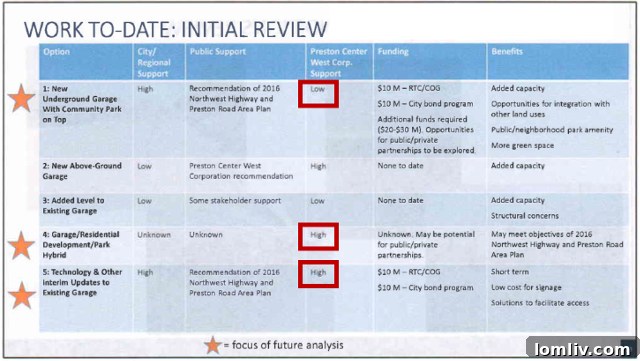
A recent presentation outlined five potential outcomes for the garage, visually mapping the alignment—or misalignment—between the City’s preferences and those of the Preston Center West Corp. A quick glance at the “big stars” or high ratings reveals the most favored options, but it’s the “Preston Center West Corp.” column that tells the most revealing story. Their “no” effectively means “no,” and in this context, even a “low” rating from them often translates into a significant hurdle for any proposal. This power dynamic necessitates a careful examination of their priorities and an understanding of how their decisions will ultimately dictate the revitalization efforts for this critical Dallas location.
Analyzing the Redevelopment Options: Short-Term Gains vs. Long-Term Vibrancy
Among the proposed solutions, Option One, consistent with the 2016 Preston Center Plan, advocates for a new below-ground parking garage topped by a dynamic park and community amenity. This vision includes space for public fairs, concerts, and casual gathering spots, transforming a concrete eyesore into a green oasis. The City of Dallas rates this option “high,” recognizing its potential for significant public benefit and enhanced urban quality of life. Conversely, the Preston Center West Corp. has assigned it a “low” rating. One might initially assume their reluctance stems from concerns about construction disruption, but their strong support for Option Two (building a new above-ground garage) and Option Four (rebuilding the garage with apartments on top) suggests otherwise. Their preference leans towards immediate commercial utility and direct customer generation, raising questions about their grasp of modern urban planning principles and the catalytic power of public spaces.
The apparent reluctance to embrace a significant park amenity suggests a missed opportunity, echoing concerns about a lack of familiarity with transformative urban projects. The parallel with Klyde Warren Park in downtown Dallas is stark and highly relevant. For those who have experienced Klyde Warren Park, the argument against a park at Preston Center West loses its grounding. Klyde Warren Park, built over the Woodall Rodgers Freeway, has demonstrably reshaped its surrounding area. It has not merely attracted “throngs of customers” but has become a magnet for residents, tourists, and businesses alike, fostering a vibrant urban core. This dynamic hub has catalyzed unprecedented appreciation in surrounding property values and rents, drawing new businesses and attracting talent to the area, proving that high-quality public spaces are powerful economic engines, not just aesthetic enhancements.
The business owners’ enthusiasm for a garage/apartment hybrid structure (Option Four) seems primarily driven by the prospect of “built-in customers.” While adding residential units can contribute to a lively urban environment, relying solely on this model overlooks the broader, more sustainable economic and social benefits a Klyde Warren-style park would bring. A few hundred apartment dwellers, while contributing to local commerce, represent a comparatively small fraction of the continuous foot traffic, community engagement, and long-term economic stimulus that a well-designed, amenity-rich park would generate. The full-bore park option, therefore, stands out as the most promising pathway to achieving the kind of premium rents and vibrant atmosphere seen in successful mixed-use developments, including those just across the street at Preston Center East.
Landowner Accountability: Why Not Build It Themselves?
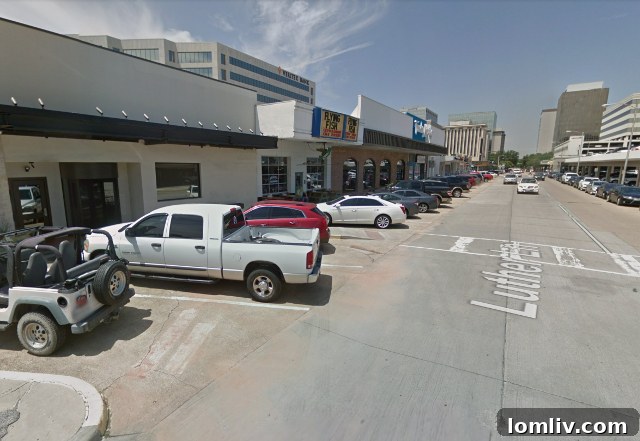
The discussion around bringing residential components to Preston Center raises a poignant question for the existing landowners: if “captive customers” are such a priority, why are they not proactively redeveloping their own single-story retail buildings into attractive, multi-story residential and mixed-use structures? This highlights a perceived desire for the city to shoulder the burden of transformation, effectively “spoon-feeding” development that could, and perhaps should, originate from private investment. A truly forward-thinking Preston Center West would see its landowners collaborating to modernize the entire district, moving beyond its 1950s aesthetic with cohesive, functional, and aesthetically pleasing designs. Such a comprehensive vision would, however, necessitate significant private investment—a commitment that seems to be a point of contention in the current discussions.
Community Voice: Insights from the Neighborhood Survey
Guiding this complex process are Houston-based Walker Consultants, renowned experts in parking garage design and urban mobility solutions. Their involvement ensures a professional, data-driven approach to the redevelopment. This initial public meeting is merely the first step; further closed-door work and additional public consultations are planned, culminating in a comprehensive final report. This phased approach allows for detailed analysis and iterative feedback loops, ensuring that community concerns and expert recommendations are thoroughly integrated.
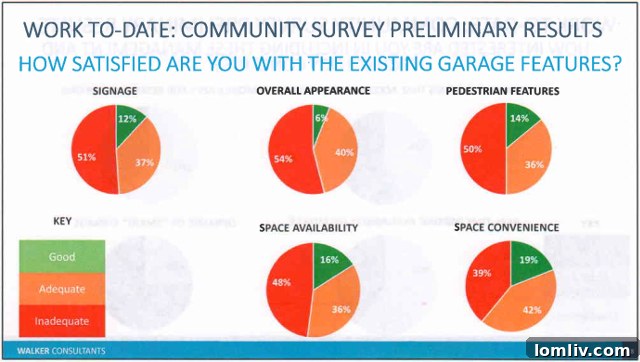
As part of their initial efforts, Walker Consultants disseminated an online survey to solicit public opinion on the existing garage and preferences for a future structure. The survey results confirm long-standing frustrations: over half of respondents deemed the existing garage’s signage, overall appearance, and pedestrian features “inadequate.” This finding underscores the current structure’s failure to provide a welcoming or even functional experience for users and pedestrians alike. It’s truly baffling that 6 percent found the appearance “good,” a statistic that speaks volumes about varied perspectives or perhaps an unusually high tolerance for urban blight.
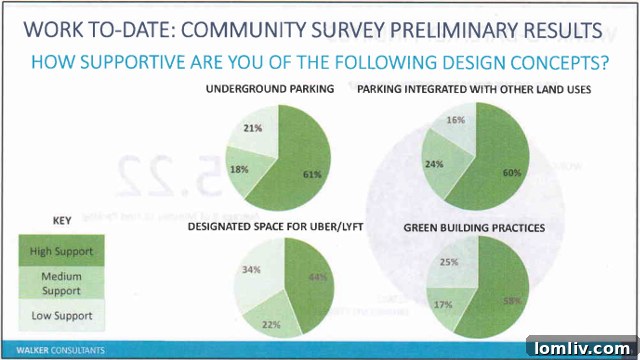
Encouragingly, the survey also highlighted clear community preferences for the future. A significant 61 percent expressed a desire for underground parking, a sentiment that directly contradicts the business owners’ inclination towards above-ground options. Furthermore, 60 percent advocated for integrating the parking facility with other uses, strongly suggesting a preference for public amenities like a park, rather than solely residential or commercial additions. The emphasis on sustainability was also clear, with 58 percent desiring the implementation of green building practices. This could encompass anything from energy-efficient lighting and rainwater harvesting to the incorporation of solar panels to power the underground facilities, reducing operational costs and environmental impact, and creating a truly modern, responsible development.
Regarding operational aspects, respondents were evenly split on whether the garage should accept credit card payments. This practical detail points to a larger financial challenge. With a combined $20 million earmarked by the City and NCTCOG, but an estimated project cost of $40-50 million, a substantial funding gap of $20-30 million remains. Innovative funding solutions will be critical. One intriguing proposal involves a partnership with the NTTA (North Texas Tollway Authority) to implement a nominal parking fee (e.g., $1) via a seamless toll tag scan. This “invisible” payment method could generate significant revenue without the friction of cash or credit card transactions, offering a modern, efficient solution. Additionally, the substantial funding gap will likely necessitate seeking corporate sponsors willing to pay significant sums to secure naming rights for the new structure, a common strategy in large-scale urban development projects.
Envisioning a Transformed Preston Center West: Beyond Parking
Imagine the potential for the new park at Preston Center West. While the existing area already boasts a variety of dining establishments, outdoor eating options are conspicuously limited. The park could introduce a designated area with numbered tables and chairs, fostering a vibrant outdoor dining experience. Local business owners could collaborate to develop a user-friendly restaurant menu and ordering app, allowing patrons to order from any nearby establishment and have their food delivered directly to their numbered table in the park. Such an innovative system would not only enhance the park experience but also significantly boost sales for local businesses, potentially becoming so popular that it would require reservation capabilities. Beyond dining, this green space could host a myriad of community-focused activities: farmers’ markets, outdoor fitness classes, children’s play areas, public art installations, and even small performance venues. This holistic vision transforms a utilitarian parking garage into the vibrant heart of the community, drawing diverse visitors and significantly elevating the quality of life and commercial appeal of Preston Center West.
Your Voice Matters: Shape the Future of Preston Center
The opportunity to influence the transformation of Preston Center West is still open. Your thoughts and ideas are crucial in shaping how the existing “ugly duck” parking garage evolves into a “swan”—a beautiful, functional, and economically vibrant asset for the neighborhood. This is a pivotal moment for urban planning in Dallas, and community input can make a significant difference in ensuring the redevelopment truly serves the long-term interests of residents and businesses alike.
https://www.surveymonkey.com/r/prestoncenterparking

Note from the Author: My focus areas include high-rises, HOAs, and property renovations, alongside an keen appreciation for modern and historical architecture, always considering the dynamic YIMBY (Yes In My Backyard) movement. My writing has been recognized by the National Association of Real Estate Editors, earning three Bronze awards (2016, 2017, 2018) and two Silver awards (2016, 2017) in 2016, 2017, and 2018 respectively. Should you have a story to share or a proposal to make, please connect with me via email at [email protected]. Feel free to search for me on Facebook and Twitter—though you might find I maintain a subtle online presence.