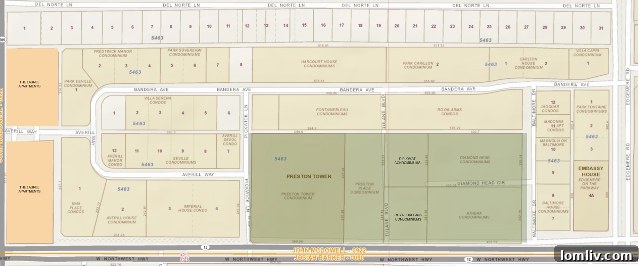
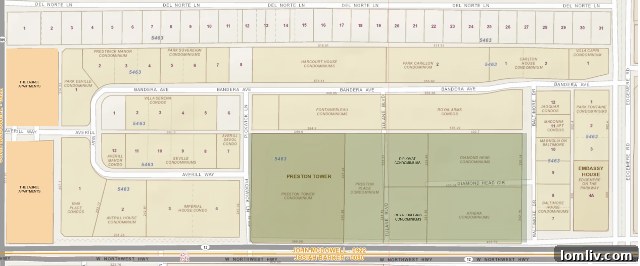
For months, concerns have mounted regarding the economic viability of the Northwest Highway and Preston Road Area Plan (NHPRAP). Last October, I first highlighted the critical flaws within this plan, noting how it failed to account for crucial economic realities in Dallas’s vibrant Preston Center area. Specifically, my analysis pointed out that if Zone 4 of the NHPRAP were to adhere to the recommendations from its task force, the existing condominiums within this area would consistently hold greater value than the underlying land itself to potential developers. This crucial distinction, particularly within PD-15 (Planned Development District) located in the larger “Pink Wall” area, underscored a fundamental disconnect between the plan’s vision and market dynamics.
This inherent lack of economic incentive has dire consequences. It effectively ensures that the ambitious goals of redevelopment and neighborhood renewal, so proudly touted by the NHPRAP, are unlikely to materialize. Without a financially viable framework, the plan risks falling short of its own objectives, leaving a critical part of Dallas’s urban landscape in limbo. The promise of revitalized living spaces and increased density remains an aspiration rather than a tangible outcome.
Now, my initial concerns have received significant independent validation. A.G. Spanos, a prominent developer holding an option on the Diplomat property, has released a comprehensive report compiled by the esteemed architecture firm LRK. This independent analysis corroborates the economic challenges I previously identified, adding substantial weight to the argument that the NHPRAP’s framework is fundamentally flawed.
LRK’s report systematically debunks the feasibility of significant redevelopment within PD-15, especially when constrained by both the existing PD-15 limitations and the restrictive guidelines proposed by the NHPRAP. While A.G. Spanos undeniably has a vested interest in the outcome of this discussion, the LRK report fills a critical void in the research, providing an objective economic perspective that was notably absent from the analyses conducted by the city or the NHPRAP task force itself. This vital report is now circulating through City Hall, emerging at a pivotal moment as opponents of viable development attempt to solidify support for what many consider to be an unworkable NHPRAP plan.
The Flaws in the Foundation: Re-evaluating the NHPRAP’s Vision for the Pink Wall
To recap, the NHPRAP outlines a recommendation for a maximum of four-story construction within the designated “Pink Wall” area. This zone is strategically bounded by Edgemere, Preston, and Bandera Roads, and Northwest Highway. The plan controversially positions the area’s existing 21- and 29-story high-rise towers, such as Preston Tower and The Athena, as historical anomalies—structures not to be replicated in future development endeavors. This restrictive stance represents a significant departure from the area’s established character and potential for vertical growth.
Questioning Community Consensus: Who Truly Represents “Most Residents”?
“Most of the residents in this multi-family neighborhood and in the adjoining single-family neighborhoods to the north want to limit additional redevelopment projects to a maximum of four stories, with smaller building footprints and more green space.”
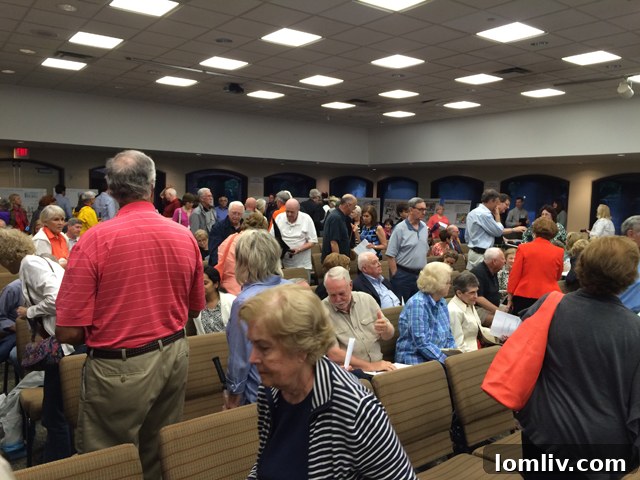
This excerpt from the NHPRAP report is a cornerstone of its justification for restrictive development, yet it warrants closer examination. The term “most” in this context refers primarily to individuals who actively participated in town hall-style meetings, where their thoughts were captured on flip charts. Crucially, there was no comprehensive, area-wide polling conducted to gauge the sentiment of the entire residential population. One must question whether the 100-150 residents who attended these town hall sessions, or the mere 20-40 participants at the average task force meeting, genuinely represent the majority of the thousands of residents within the study area. It is particularly concerning that Zone 4 alone accounts for 2,250 residents, none of whom had owner-occupants serving on the task force, leading to a significant potential for underrepresentation.
This raises another fundamental question: Would area residents have expressed different opinions if they had been presented with a more complete picture, one that thoroughly integrated the economic realities and financial implications of the proposed plan? A lack of transparency regarding economic feasibility can easily sway public opinion, especially when only one side of the argument is presented.
Even now, anti-development factions, conspicuously lacking a supporting economic narrative, continue to assert to city officials and the press that “no one wants development.” This claim, in the absence of any official or broad-based poll, is largely hyperbolic, serving more as a reflection of personal desires rather than a true representation of community sentiment. In stark contrast, a meeting convened by Council member Gates last July 12th saw over 100 attendees raise their hands in favor of reevaluating PD-15 to enable new development. This clear expression of interest was, in fact, the catalyst for the formation of the PD-15 working group, indicating a significant desire for change and progress.
The Unrealistic Promise of Renewal: A Vision Without Economic Backbone
“…renewal and replacement of housing stock is visualized to continue, with increased density but with building heights not exceeding four stories.”
While the aspiration for renewal and increased density is commendable, the NHPRAP study critically failed to include any economic analysis demonstrating that the four-story height goal is realistically achievable. This oversight is profound, especially when considering current home values, escalating land acquisition costs, and the rising expenses of construction. My earlier assessments, and more importantly, the rigorous analysis presented below, unequivocally conclude that comprehensive renewal under the plan’s stringent guidelines is exceedingly improbable without a substantial and arguably unrealistic devaluation of land within the area. This effectively places the plan’s core objective out of reach for developers.
Zoning Realities vs. NHPRAP’s Assumptions: The Truth About High-Rise Development
“Two high-rise buildings (Preston Tower and the Athena) were constructed in 1966, but current zoning prohibits the development of more high-rise buildings in the Zone.”
This statement within the NHPRAP report presents a significant factual inaccuracy. Current zoning regulations within PD-15, specifically under its MF-3 designation, do not prohibit additional high-rise construction. In theory, under MF-3 zoning, building height is largely unlimited. The actual constraint that has historically impacted development density is not height itself, but rather the PD rule limiting the total number of units that can be built on a given parcel—a different regulatory mechanism entirely. Historical records and plans reveal intentions for additional high-rise developments in the area, including a second Preston Tower, a 40-story Athena, and a 125-unit Preston Place, all of which would contradict the NHPRAP’s claim of prohibition.
Perhaps the most fortunate aspect for the neighborhood, and a critical detail often overlooked, is explicitly stated in the report’s concluding paragraph:
“Although the Northwest Highway and Preston Road Area Plan does not bind the City of Dallas to implement any of its recommendations…”
This crucial caveat underscores that the NHPRAP is advisory, not prescriptive. It offers the City of Dallas the flexibility to consider its recommendations without being legally compelled to adopt proposals that may prove economically unfeasible or detrimental to the area’s growth potential.
Independent Economic Validation: LRK’s Report Exposes Redevelopment Hurdles
As I noted in October, my preliminary calculations indicated that a four-story construction model was not financially viable for the Pink Wall area. Individual condominium units, under current market conditions, would consistently command higher values on the open market than the land itself would be worth to a developer. This economic disparity is further exacerbated by the NHPRAP report’s insistence that a four-story limit be coupled with significantly low lot coverage, further reducing development potential and profitability.
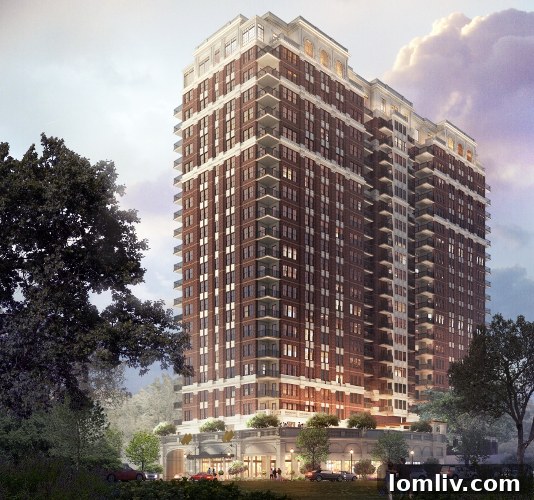
The new report commissioned by A.G. Spanos was meticulously prepared by the Dallas office of Looney Ricks Kiss (LRK), a Memphis-based architecture firm renowned for its expertise in urban planning, design, and developing comprehensive guidelines. In Dallas, LRK is widely recognized for its recent work as the architects behind The McKenzie, a prominent high-rise development situated north of Knox Street, showcasing their capability in designing successful large-scale projects.
LRK’s analysis commences by pinpointing two primary barriers to redevelopment: the existing 52.4 dwelling unit limit per buildable acre, and the NHPRAP’s recommendation to cap construction at four stories. These combined restrictions, the report asserts, represent “significant obstacles to the redevelopment” of crucial low-rise properties within PD-15, which include the Diplomat, Royal Orleans, Preston Place, and Diamond Head. Essentially, the report highlights a stark conflict between the NHPRAP’s aspirational vision and the undeniable realities of economic feasibility. Despite the NHPRAP investing a substantial $350,000 in independent consultants, it remarkably failed to include any robust economic assessment that could bridge its vision with practical market realities, a glaring omission that the LRK report now addresses.
The Math Behind the Malfunction: Dissecting Redevelopment Economics
Units Per Acre: An Unattainable Density
The LRK report delves into the specifics, articulating that the existing zoned Floor Area Ratio (FAR) of 4:1 for MF-3 zoning is practically unachievable under the current constraints. Under MF-3 zoning, a one-acre site theoretically permits the construction of 174,240 square feet of building space, irrespective of height (calculated as 4 times the square footage of one acre). However, if we assume the maximum allowable density of 52.4 units per acre, this would necessitate each unit to average an immense 2,848 square feet. To put this into perspective, even the highly regarded Laurel apartments, known for their spacious layouts, average only about 1,400 square feet per unit—roughly half the size proposed by this calculation.
Furthermore, historical context reveals a stark contrast: The Athena’s average unit size is 1,721 square feet, while Preston Tower’s units are even smaller on average. Both of these established high-rises exceed the 52.4 units per acre limit, with the Athena at 64 units per acre and Preston Tower at 85 units per acre. When examining the interplay between the “number of units per acre” and the currently zoned FAR, the problem becomes unequivocally clear: no developer is realistically going to construct 2,800 square foot apartments in this market, rendering the existing unit per acre limit financially unfeasible.
The Restrictive Four-Story Height Limitation
Although PD-15 is zoned MF-3, making height legally irrelevant in many regards, the NHPRAP introduces a highly restrictive recommended limit of four stories. Let’s revisit the concept of FAR: an acre site, theoretically, could support 174,240 square feet of development. However, a property is not permitted to build from lot line to lot line; MF-3 zoning allows for a maximum of 60 percent lot coverage. When applying this 60% coverage to a one-acre site with a 4:1 FAR, the actual developable square footage for a building is reduced to 104,544 square feet, or an effective 2.4 FAR—a substantial 40 percent reduction from the theoretical maximum.
When these factors are combined—if a parcel within PD-15 were hypothetically allowed 52.4 units per acre (which is not currently the case) and then further restricted to a maximum of four stories—each unit would average approximately 1,708 square feet. This size is comparable to The Athena’s units but significantly larger, by about 300 square feet, than those in The Laurel, and considerably larger than units in Preston Tower. This might not immediately seem problematic, but the critical question arises: who would undertake the construction of a 52-unit apartment building under these conditions, especially if the land acquisition costs are not substantially cheaper than the existing condominium values? And, crucially, which current property owner would agree to sell their land given such unfavorable economic projections?
The High Cost of Parking: A Hidden Financial Burden
A significant financial burden imposed by the NHPRAP report is its recommendation that most, if not all, parking be constructed underground. According to LRK’s detailed estimates, the cost for a single level of underground parking is approximately $22,000 per parking space. This cost escalates dramatically with each additional underground level, jumping to an estimated $32,000 per space. In stark contrast, above-ground parking is estimated at a more manageable $15,000 per space.
Consider the implications: even for a development adhering to the 52 units per acre guideline and requiring two parking spaces per unit, constructing a two-story underground garage would incur parking costs exceeding $2.8 million. This figure is roughly double the cost of providing equivalent above-ground parking. This substantial expense is not absorbed by developers but must be recouped. This leaves two primary avenues: either the land must become significantly cheaper for acquisition, or the developer must be permitted to build a greater density to offset these substantial infrastructural costs. The only other alternative, cheaper construction, would directly contradict the overarching goal of enhancing the “Pink Wall” area, potentially resulting in lower quality development. This financial pressure highlights another critical imbalance in the NHPRAP’s recommendations.
The Unyielding Reality: Land Value and Construction Dynamics
The Math Confirms: Land Devaluation is Inevitable
When the various restrictions—low units-per-acre, a strict four-story height limit, and the high costs associated with mandated underground parking—are combined, the economic outcome is clear: the land becomes worth less to a developer than the value of the existing condos. In fact, utilizing these precise assumptions, LRK’s comprehensive report concludes that a four-story development project would lead to a significant 36 percent diminution in land prices when compared to a more economically viable seven-story project. While A.G. Spanos, as a developer, naturally has a preference for a seven-story project (a factor to consider, but one backed by sound economics), it is noteworthy that a seven-story building represents the optimal maximum for a “hybrid structure.” These structures efficiently combine a multi-story concrete base (typically for parking) topped with up to five stories of more cost-effective wood construction. Exceeding approximately 85 feet in height necessitates a transition to full concrete and steel construction, which dramatically increases costs, thereby requiring an even taller and denser building to achieve profitability.
The LRK report also illuminates a critical “no man’s land” in construction economics. Due to the considerably increased costs associated with concrete and steel construction, structures falling within the 8-to-16 story range often do not make economic sense. The additional 30-plus percent increase in construction costs cannot be effectively absorbed or justified by buildings of this mid-range height, given the prevailing sales and rental prices achievable in the Dallas market. This economic reality underscores the need for flexible planning that acknowledges construction cost dynamics, rather than imposing arbitrary height limits.
It is important to emphasize that my argument is not necessarily a push for seven-story buildings specifically. Rather, it is a fervent call for urban development plans that are rigorously supported by sound mathematical and economic principles, instead of being based on what appear to be speculative aspirations or “hallucinations.” While this particular report focuses on the PD-15 area with its existing MF-3 building rights, the remainder of the “Pink Wall” faces even more severe challenges due to restrictive deed restrictions and entrenched three-story height limitations. For these areas, the NHPRAP plan’s meager allowance for merely one additional floor above existing zoning provisions offers negligible hope for genuine renewal or meaningful economic improvement, further illustrating the plan’s widespread impracticality.
A Plea for Prudent Planning: Accountability and Economic Realism
Regardless of A.G. Spanos’s specific development desires, the most astounding revelations here are two-fold: first, how swiftly I was able to identify these fundamental economic flaws with simple “napkin calculations,” and second, how a more robust and comprehensive analysis was commissioned by A.G. Spanos relatively inexpensively, providing irrefutable evidence. This begs a critical question: why couldn’t the NHPRAP task force, with its substantial $350,000 budget and two years dedicated to developing its vision, conduct this fundamental economic viability study? Furthermore, how could the Plan Commission and the City Council possibly vote to adopt a plan so conspicuously lacking in the easily obtainable, foundational proof required for its validity and feasibility?
This situation highlights a profound need for greater accountability and economic realism in urban planning within Dallas.

Remember: High-rises, Homeowners Associations (HOAs), and property renovation remain my core areas of focus. However, I also possess a deep appreciation for the delicate balance between modern and historical architecture, especially within the context of the YIMBY (Yes In My Backyard) movement advocating for denser, more sustainable urban development. If your organization or community group is interested in hosting a Candysdirt.com Staff Meeting event to discuss these vital real estate and urban planning topics, I am available to speak. My writing has been consistently recognized by the National Association of Real Estate Editors, earning two Bronze awards (2016, 2017) and two Silver awards (2016, 2017) in both 2016 and 2017. If you have a compelling story to share, a perspective to offer, or even a marriage proposal to make, please don’t hesitate to reach out via email: [email protected].