Navigating Dallas’ PD-15 Zoning: Updates, Challenges, and the Call for Community Engagement
The landscape of urban development in Dallas is constantly evolving, and few topics generate as much local interest and debate as zoning regulations. Specifically, the ongoing discussions surrounding PD-15 zoning continue to be a focal point for residents, property owners, and city officials alike. These regulations are critical, as they dictate the permissible uses and density of development within a defined area, directly impacting property values, community character, and future growth.
Recently, Council Member Jennifer Gates’ office provided significant updates regarding the PD-15 Authorized Hearing Steering Committee, a crucial body tasked with guiding this complex process. These updates are vital for anyone invested in the future of the PD-15 district, highlighting both procedural changes and lingering ambiguities in the official guidance provided to stakeholders.
Key Changes to the PD-15 Authorized Hearing Steering Committee: Ensuring Authentic Representation
The Authorized Hearing Steering Committee plays an instrumental role in shaping the future of PD-15 zoning. Its members are expected to represent the diverse interests of the community, ensuring that all voices are heard and considered during the deliberation process. Therefore, any changes to its composition are noteworthy and warrant close attention.
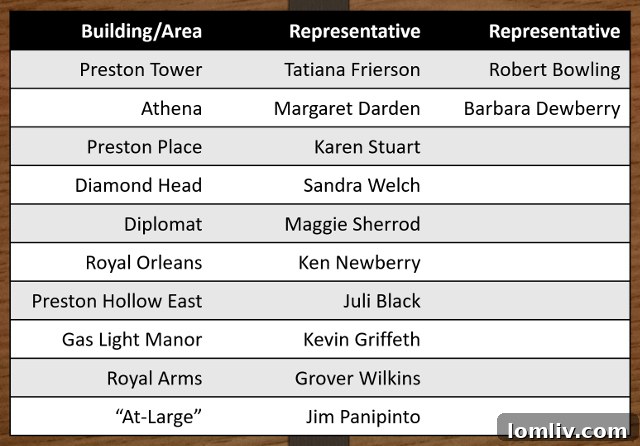
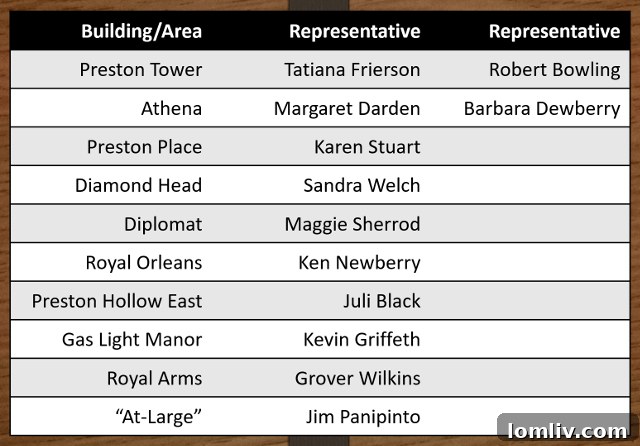
The latest announcement reveals shifts in the committee’s membership, underscoring the dynamic nature of community representation. Robert Bowling has stepped forward as the second representative for Preston Tower, bringing another voice to the table from a prominent residential complex within the district. More significantly, Karen Stuart has assumed the role of representative for Diamond Head Condos, replacing Jim Panipinto.
This particular change underscores a critical aspect of effective community governance: the imperative for genuine representation. Stuart’s appointment followed residents voicing strong opposition to Panipinto’s continued involvement as their representative. The core of this concern stemmed from the fact that Panipinto, while owning a rental unit within Diamond Head Condos, was not a resident of the building. This distinction is crucial; residents often argue that only those who live within a community can truly understand and advocate for its day-to-day needs, concerns, and long-term vision. Property ownership, while important, does not always equate to the same level of vested interest or direct experience as residency.
The update also lists Jim Panipinto as now serving “at large,” a designation that, while common in committee structures, often lacks clear definition in terms of the specific constituency or interests he is now tasked with representing. This ambiguity can sometimes complicate the public’s understanding of how individual committee members contribute to the overall decision-making process, further emphasizing the need for transparent operational guidelines and clear mandates for all committee roles.
Decoding the Updated FAQ: Unpacking Zoning Changes and the Complexities of Authorization
To provide clarity on the authorized hearing process and potential zoning modifications, an updated FAQ document has been released. While intended to answer common questions, some sections still present significant challenges in interpretation and practical application, potentially leading to confusion among property owners and condominium associations.
One particular section, under “Other,” addresses critical questions concerning property owner applications for zoning changes:
Q: Can a property owner submit an application for a zoning change while the authorized hearing process is in progress?
Yes, a property owner may submit an application for a zoning change at any time provided proper authorization is submitted.
Q: What is proper authorization for a condominium complex?
The applicant must prove the authority to submit a zoning change application. It is presumed that 100% of the owners must give authorization. If the condominium by-laws specify a percentage less than 100%, verified letters of authorization and condominium association by-laws must be submitted with the application.
The Nuances of Condominium Zoning Applications and “Surplus Units”
The FAQ’s guidance, while seemingly straightforward, masks a complex reality, especially within a specialized zoning district like PD-15. Let’s consider a practical scenario, for instance, involving the Diplomat building. The question arises whether a complex like Diplomat could initiate a zoning change to tap into any “surplus units” currently available within the PD-15 district. Imagine Diplomat, with its own allocation, seeking to utilize an additional 60 or so surplus units from the district’s overall capacity to propose a larger 75-unit development.
In such a context, the definition of “proper authorization” becomes critically important and often misunderstood. The FAQ implies an internal authorization from the applying building’s owners, but for a proposal involving surplus units from the broader PD-15, “proper authorization” extends far beyond the confines of a single condominium complex. It would necessitate the unanimous, 100% permission from all *remaining parcel owners* within the PD-15 district to utilize those unallocated units. This requirement is not merely for the approval of the applying building’s residents, but for the collective consent of an entire designated zoning area.
Furthermore, the same demanding requirement for unanimous authorization from all building owners within the district would be necessary for any voluntary alteration to the PD-15’s existing zoning specifications. This stringent condition highlights a significant hurdle that proved insurmountable during the initial PD-15 task force discussions – a lack of unanimous agreement which ultimately necessitated the current authorized hearing process. Consequently, while theoretically a building within PD-15 could apply for a zoning change to access surplus units or modify specifications, the practical reality of securing unanimous approval from all other independent property owners makes such an endeavor virtually impossible. From a realistic standpoint, the point becomes moot, as achieving such widespread consensus is exceptionally rare in complex urban planning scenarios involving multiple stakeholders.
Distinguishing Property Sales from Zoning Amendments
A fundamental point of confusion that the current FAQ document appears to perpetuate is the blurring of lines between an internal property sale decision and a formal city-level zoning change application. The two processes, while often related in development projects, are distinctly separate and governed by different sets of rules and authorities.
When a building’s owners decide to sell their property, typically to a developer, the authorization required for this transaction is an internal matter, governed by the condominium’s or homeowners’ association (HOA) documents. These bylaws stipulate the percentage of owner consent needed for such a sale, which commonly ranges from 80 percent to 100 percent, varying by association. Crucially, approving the sale of one’s own property is a contractual agreement, not a zoning change, and therefore does not require direct city authorization for the sale itself.
However, the process becomes intertwined once a building has decided to sell and the prospective buyer, usually a developer, aims to make alterations to the property that necessitate zoning changes (e.g., increasing density, changing use, expanding height). In this scenario, the owners/sellers of the property must then support these proposed zoning changes as contingencies of the sale. Their continued support is required until the zoning amendments are officially granted by the city and the parcel successfully changes hands. The city’s role begins when a formal application for a zoning change is submitted, evaluating it based on comprehensive plan guidelines, neighborhood impact, and public input, entirely separate from the internal transaction details of the property sale.
Note to Gates’ Staff: Enhancing Transparency Through Documentation
For any process as intricate and impactful as PD-15 zoning, transparency and clear communication are paramount. To facilitate public understanding and accountability, it is strongly recommended that all official documents, particularly FAQs, committee lists, and policy updates, be meticulously versioned and dated. Implementing a clear system for tracking changes ensures that residents, committee members, and all stakeholders can easily identify the most current information, trace the evolution of policies, and understand the context of any revisions. This practice significantly enhances public trust and streamlines engagement with the city’s governance processes.
Upcoming PD-15 Public Meetings: Your Voice Matters in Shaping the Future
The opportunity for direct community input is fast approaching, with the first five public meetings of the Authorized Hearing Steering Committee officially announced. These sessions are critical for residents to understand the proposals, voice their concerns, and contribute to the decision-making process for PD-15 zoning.
All meetings are scheduled from 6:00 p.m. to 7:30 p.m. at the Walnut Hill Recreation Center, conveniently located at 1011 Midway Road and Walnut Hill.
- Thursday, June 28
- Wednesday, July 11
- Thursday, July 26
- Wednesday, August 15
- Thursday, August 30
These meetings represent a vital platform for dialogue between the community and city officials. Residents are strongly encouraged to mark their calendars and attend. Participation is not merely about observing; it’s about actively shaping the future of their neighborhood. These hearings allow for public questions, comments, and the articulation of collective preferences, which are indispensable for achieving zoning solutions that genuinely reflect community needs and aspirations. Engaging with the process, even if only to listen and learn, is a powerful form of civic participation.

Engaging with Dallas Urban Planning: A Broader Perspective on Growth and Community
The discussions surrounding PD-15 zoning are a microcosm of broader urban planning debates happening across Dallas and other growing cities. These conversations inherently involve high-rise developments, the complexities of Homeowners Associations (HOAs), and the continuous need for renovation and modernization. It’s a delicate balance between appreciating modern and historical architecture and responding to movements like YIMBY (Yes In My Backyard), which advocate for increased housing density and more accessible urban living. Finding common ground between fostering growth and preserving the unique character and quality of life in existing communities is an ongoing challenge that requires thoughtful deliberation and active community involvement.
Understanding these dynamics is key to effective urban development. The author of this analysis has extensive experience covering these topics, with a focus on real estate, urban development, and the impact of policy on communities. Recognition from the National Association of Real Estate Editors, including multiple Bronze (for 2016 and 2017) and Silver (2016 and 2017) awards, reflects a commitment to shedding light on the intricate relationships between property, people, and policy.
The PD-15 zoning process is a critical opportunity for residents to engage directly with the future development of their community. Your insights and questions are invaluable. For those with stories to share, observations to offer, or simply a desire to connect on these vital urban issues, please reach out via email at [email protected]. Stay connected for further updates and perspectives on Dallas’ evolving urban landscape.