The Demise of an Icon: The Penson House and Dallas’s Shifting Architectural Landscape
The fate of the O’Neil Ford-designed Penson house at 3756 Armstrong Parkway in Dallas has become a poignant symbol of the ongoing struggle between architectural preservation and real estate development in affluent urban centers. When this significant property went up for auction on September 27, it marked the beginning of a story that would send ripples through the Dallas preservation community and beyond. The iconic residence, once embodying a “Camelot” presence in the city, found a new owner in Lute Riley, a prominent figure known for his successful Honda car dealerships. Accompanied by his agent, Allie Beth Allman, Riley departed the auction beaming, a smile that would soon become shrouded in controversy.
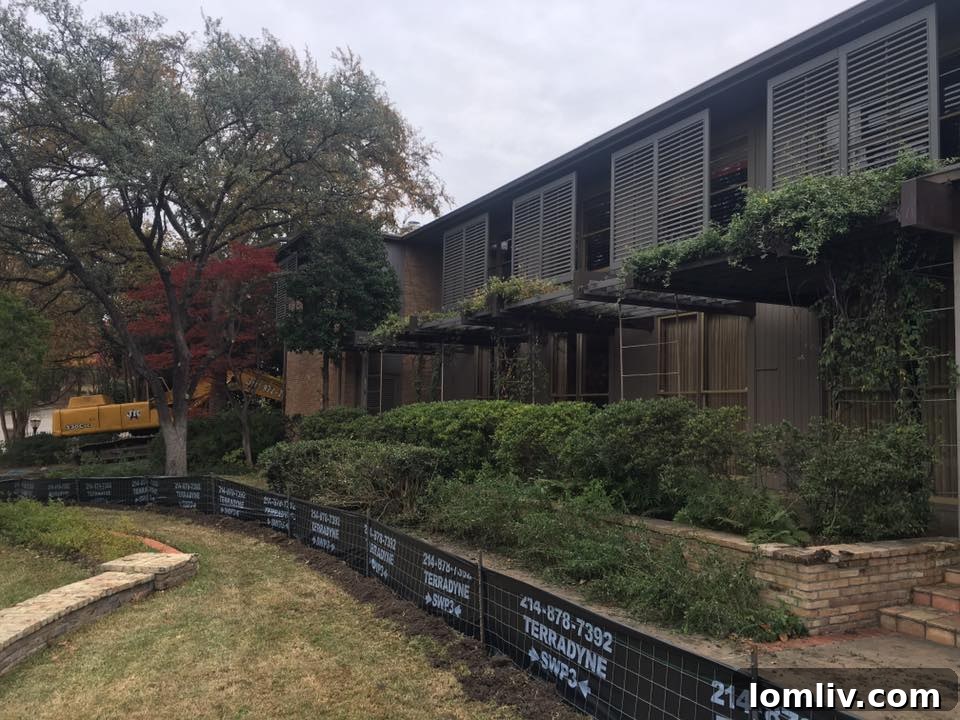
Riley’s acquisition of the Penson house came at a price of $4.95 million, a sum that included the buyer’s 10 percent premium. For this considerable investment, he secured not just a piece of land, but a significant architectural masterpiece. Built in 1954 for Jack and Nancy Penson, the home was one of acclaimed architect O’Neil Ford’s most ambitious residential projects. Ford, a seminal figure in Texas architecture, designed the Penson house in his beloved Texas Regionalism style—an approach characterized by its adaptation to the local climate, use of indigenous materials, and an emphasis on craftsmanship and connection to the landscape. The 9,800-square-foot residence retained much of its original grandeur, its exterior and interior remarkably preserved, save for a discreet second-story addition, a lavish master bath expansion, and the enclosure of a rear porch. These modifications, though alterations, did not fundamentally detract from the home’s original design integrity.
The Penson house was more than just a large, elegant home; it was a cornerstone of Dallas’s architectural heritage. Recognized by Preservation Dallas as one of the city’s major buildings at risk of destruction, its status underscored its importance and vulnerability. The organization had sounded the alarm years prior, identifying the Penson house as a prime example of historically significant architecture facing an uncertain future in a rapidly developing city. Despite its recognized status and the hopes of many, the worst fears of preservationists were soon confirmed: a permit had been pulled for the home’s demolition.
A Confrontation with the Buyer: Unraveling Intentions
In the wake of the sale and the unsettling news of the demolition permit, curiosity and concern compelled me to reach out to Mr. Lute Riley directly. My initial call was met with surprise, even a hint of indignation. Riley wanted to understand the reason behind my inquiry, seemingly unaware or unwilling to acknowledge the public interest surrounding his recent acquisition. I patiently explained the historical and architectural significance of the Penson house, its revered status among preservationists, and the palpable anxiety within the community regarding its future.
Prior to our conversation, rumors had circulated, fueled by whispers from those close to the transaction. It was suggested that after the sale, as Mr. Riley escorted his wife through the sprawling residence, the couple had genuinely considered embracing the challenge of its restoration. Their children were grown, and the project—to meticulously renovate and inhabit a masterpiece by O’Neil Ford—could have presented an engaging and fulfilling endeavor for the successful former auto dealer. The idea offered a glimmer of hope that the architectural gem might be saved, repurposed, and cherished.
However, during our exchange, Riley offered no such assurances. His reaction was one of outright shock at my audacity to call, a refusal to elaborate on his plans. When I dared to ask the burning question—if he intended to demolish the house and construct a new residence on the coveted lot—his response was curt and definitive. “No,” he stated unequivocally, “no, we live in a lovely home already.” This dismissal, while direct, only deepened the mystery surrounding his intentions. If not to live in it, and not to build anew for personal residence, what then was the purpose behind acquiring such a distinctive property?
Lute Riley’s Shifting Residences: A Real Estate Pattern
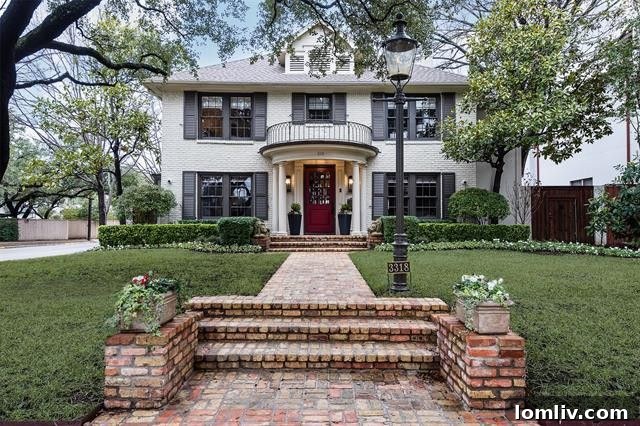
Riley’s assertion about his “lovely home already” prompted a closer look into his residential history, adding layers to the unfolding narrative. Was he referring to the elegant property at 3318 St. John’s Drive, a residence he had purchased in September 2014 for $1.55 million? This charming home, situated on a picturesque corner lot, was built in 1920 and had undergone a tasteful renovation in 2005. Its history of preservation and modernization offered a momentary flicker of hope, suggesting a potential inclination towards maintaining existing structures. The Rileys inhabited this home for approximately a year before selling it in December 2015, indicating a pattern of relatively short-term ownership in the high-stakes Dallas real estate market.
At the time of my inquiry, the Rileys resided at 4201 Edmondson Avenue, a location not far from the Penson home, nestled within the prestigious Highland Park neighborhood. This contemporary residence, a substantial 9,516-square-foot dwelling, was a relatively new construction, completed in 2012. It was only four years old when the Penson house was purchased, further emphasizing the conundrum: why acquire another grand property if one already possessed a newly built, expansive home in an equally desirable locale? The apparent lack of a personal need for the Penson house intensified speculation regarding its true destiny.
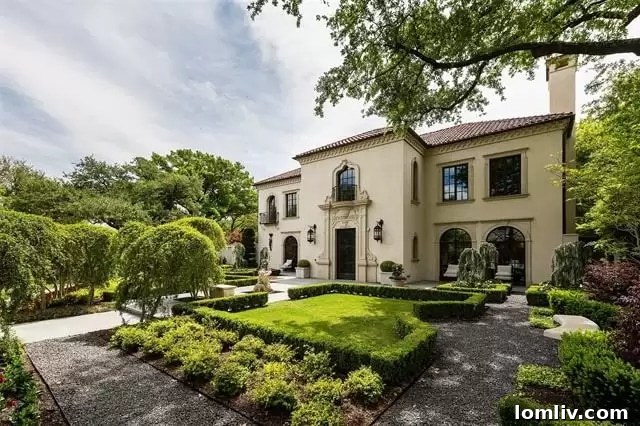
An update from July 2021 further illuminated this pattern: the residence at 4201 Edmondson was pending sale after being on the market for two months, listed at an impressive $10.65 million. This confirmed a clear strategy of high-value real estate transactions, suggesting a discerning eye for market opportunities and potentially, a strategic approach to property investment rather than long-term residency.
The Inevitable Demolition: A Lost Legacy
In a final attempt to uncover the true motive, I offered another possibility during our conversation: perhaps, I suggested, Mr. Riley intended to undertake renovations on the Penson house, capitalize on the fantastic deal he had secured, and then re-list it for resale. This scenario, while still not involving preservation for personal use, at least offered a pathway where the O’Neil Ford masterpiece might be refurbished and continue its existence, albeit under different ownership. But once again, Riley remained tight-lipped, offering no confirmation, no denial, just a resolute silence that spoke volumes.
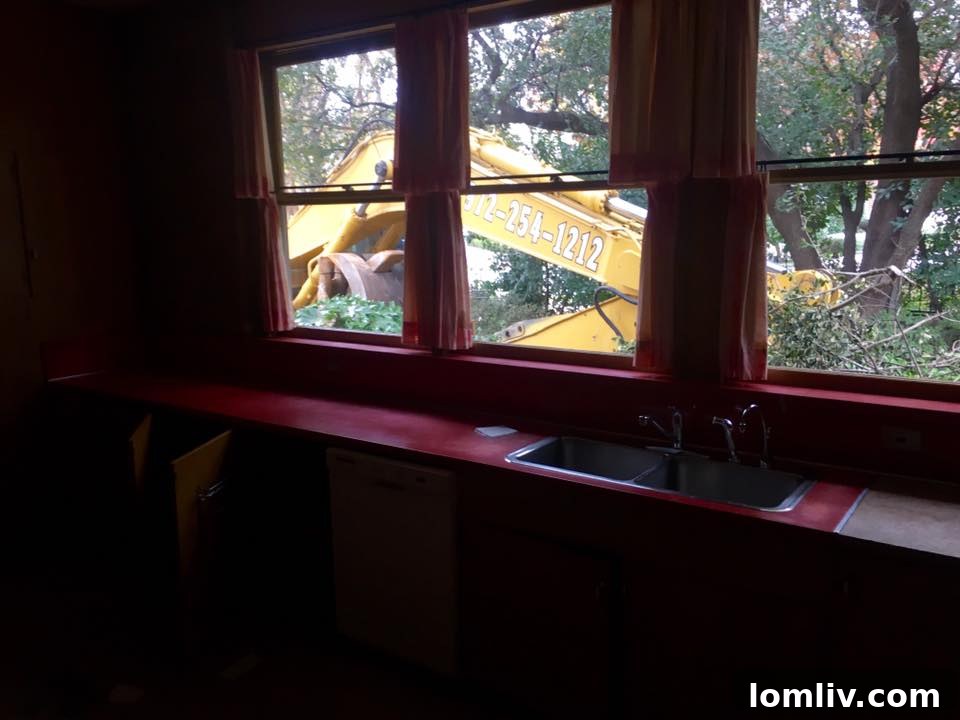
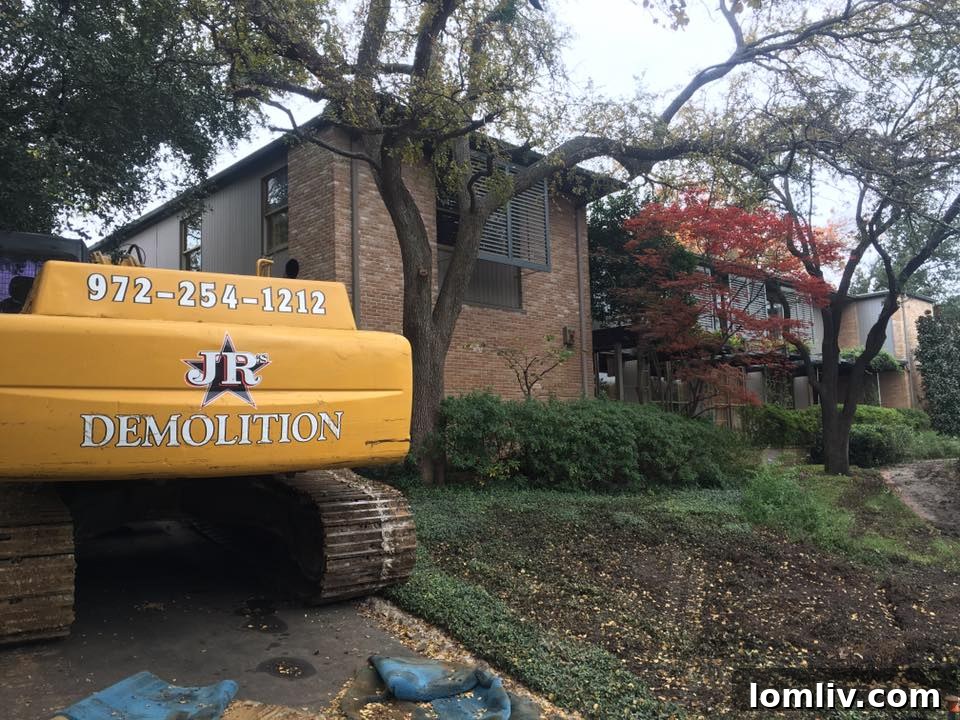
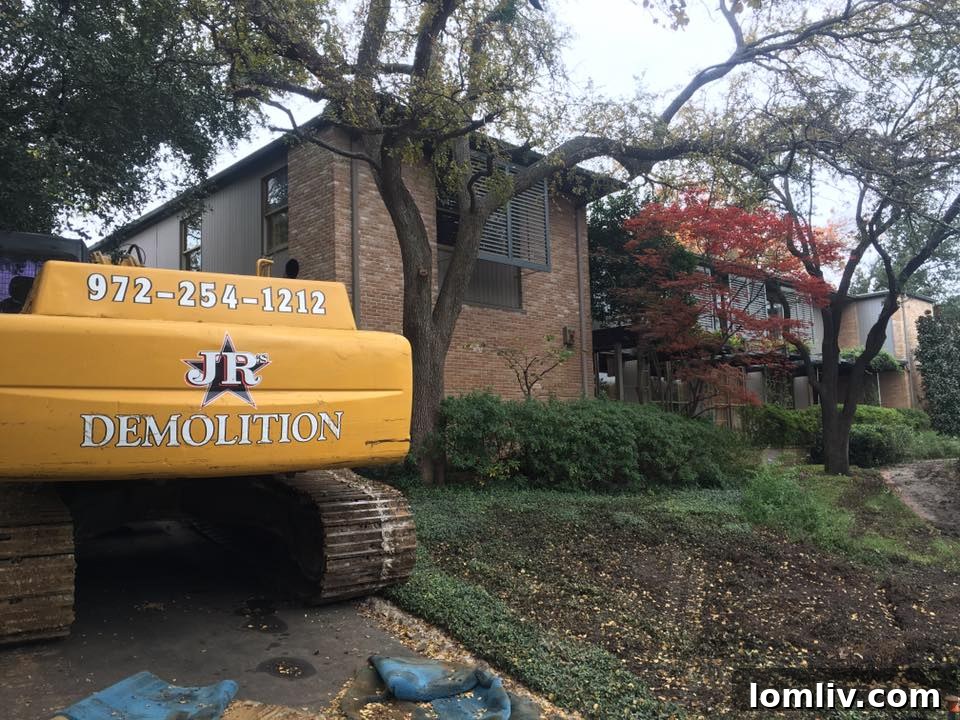
The silence was soon broken by the stark reality on the ground. A colossal JR Demolition excavator materialized on the former Penson property, its imposing presence a grim harbinger of what was to come. The sight of the machinery, ready to tear down a piece of Dallas history, was a punch to the gut for many. The countdown began: once the utilities were disconnected, O’Neil Ford’s Dallas masterpiece was slated for demolition within ten business days. The speed and finality of the process left little room for intervention or further discussion.
My “best guess,” which had been circulating among sources in the real estate community, solidified into a grim certainty: 3756 Armstrong was unequivocally an investment project for Lute Riley and his son. The initial hope, shared by myself and many involved in the auction, was that this “investment” would translate into a commitment to preserving and restoring the original home. The dream was that Riley, a successful businessman, might become a steward of this architectural gem, perhaps even setting a precedent for how significant properties could be integrated into modern investment strategies. This, however, was not to be.
Nate Schar, representing Heritage Auctions Luxury Real Estate, the firm that managed the highly anticipated auction, articulated the company’s position and the inherent challenges of such sales. “As far as we knew the home was going to be restored,” Schar stated, reflecting the initial optimism, “but we obviously cannot force everyone to love architecture.” He highlighted the competitive nature of the auction, noting that twelve bidders vied for the property, with the reserve price set at $3 million. This intense competition underscored the desirability of the lot, irrespective of the structure upon it.
Schar further elaborated on the legal and ethical boundaries, drawing an analogy: “It’s like buying a house and insisting that the artwork and furniture stay exactly the way it is, everything in the same place.” He acknowledged the profound sadness felt by many: “It’s very sad because it’s a beautiful home, but when you spend money on a house, particularly a lot of money, that is simply the buyer’s prerogative.” This statement encapsulated the prevailing legal reality: private property rights, especially when backed by substantial financial outlay, often supersede public sentiment or architectural preservation aspirations in the absence of explicit protective covenants or historic designations.
A Family’s Farewell and a City’s Loss
The impending demolition weighed heavily on those who had a personal connection to the Penson house. I had reached out to Read Penson Gendler, a daughter of Jack and Nancy Penson, who had grown up within its distinguished walls. Her perspective offered a poignant glimpse into the emotional toll of witnessing a family legacy erased. When asked about her feelings should the unthinkable occur, her response was both resolute and heartbreaking.
“In a way, this is our house and always will be, the way our parents built it, and how our family lived there,” she conveyed, her words echoing a deep sense of ownership beyond legal title. “If someone else tears it down, then we will have been the only ones — no one else gets to live there.” Her sentiment underscored the unique and irreplaceable bond between a family and their generational home, especially one imbued with such architectural and personal history. It painted a picture of a “Camelot” not just in terms of grand design, but as a cherished haven where memories were forged, now destined to exist only in memory.
True to the investment strategy, shortly after the architecturally significant home was razed, Lute Riley listed the now-vacant lot for an impressive $5.95 million. The swift pivot from purchase to demolition to re-listing the cleared land confirmed the purely transactional nature of the acquisition, leaving no doubt about the primary motive. This sequence of events, from the initial auction to the final listing of the empty parcel, encapsulated a broader narrative of Dallas’s luxury real estate market—a market where prime land, regardless of existing historical structures, often takes precedence. The Penson house, once a proud testament to O’Neil Ford’s vision and Texas Regionalism, now stands as a stark, empty space, a silent memorial to a lost “Camelot” and a significant loss for the city’s irreplaceable architectural heritage.