Navigating Urban Evolution: A Deep Dive into the PD-15 Zoning Debate at the City Plan Commission
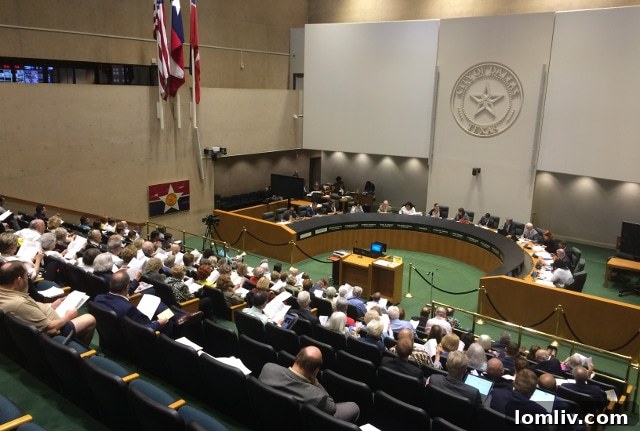
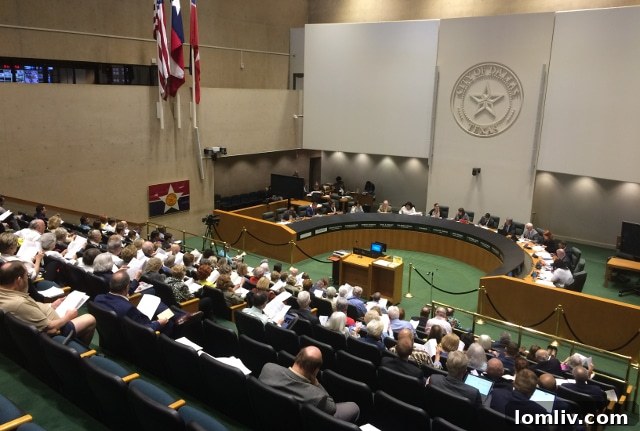
The recent City Plan Commission (CPC) hearing on the proposed PD-15 zoning changes stirred significant discussion within the community, offering a fascinating glimpse into the complexities of urban development and neighborhood planning. Far from the heated confrontation some expected, the session instead highlighted the intricate dance between progress and preservation, underscored by moments of sharp contrast between stated intentions and underlying motivations. What unfolded was a multi-faceted conversation about the future of a vital Dallas district, revealing both genuine concerns and strategically presented arguments.
The journey to this pivotal hearing was itself a testament to the contentious nature of the PD-15 proposal. An initial meeting, slated for March 21, was postponed after a fee was paid by opponents of the city’s draft. This deferral, however, set in motion a ticking clock, necessitating the April 18 hearing. A key challenge facing the commission was the unavailability of the highly anticipated traffic study, a crucial piece of evidence for assessing the proposed changes’ impact. Consequently, the CPC hearing was strategically divided into two parts, with a dedicated session scheduled for June 6 to address the critical traffic issues and allow for further comprehensive discussion. This structured approach, while delaying a full resolution, aimed to ensure all facets of the plan received due consideration.
From the outset, CPC chair Gloria Tarpley meticulously outlined the day’s agenda, ensuring clarity for all attendees. Unlike typical zoning cases that involve a specific applicant presenting a proposal, this authorized hearing was unique. It focused on the city’s comprehensive draft, meaning the usual spectacle of dazzling graphs and ambitious architectural renderings was absent. Instead, Tarpley pivoted the session to direct public commentary, inviting both proponents and opponents of the city’s recommendations to articulate their perspectives. This format provided a raw, unfiltered platform for residents and stakeholders to voice their concerns and support, directly shaping the narrative of the ongoing debate.
The Imperative for Modernization: Voices in Support of PD-15
During the public comment period, a diverse group of individuals, including myself as a PD-15 resident, stepped forward to express their support for updating the existing zoning ordinance. Approximately ten speakers articulated a compelling case for change, their arguments broadly categorizing into several key themes:
- Outdated Zoning and Modern Needs: A primary concern was the recognition that PD-15, established decades ago, no longer adequately reflects the contemporary realities of urban living, property values, or community expectations. The district’s current framework, designed for a bygone era, has become an impediment to sensible growth and modernization, hindering the area’s ability to adapt to current demographic shifts and development standards.
- Addressing the Preston Place Limbo: The tragic fire at Preston Place left many residents in an agonizing two-plus year limbo. The current PD-15 restrictions have prevented them from moving forward with their physical rebuilding and financial recovery, underscoring the urgent need for a zoning update that facilitates resilience and redevelopment in the face of unforeseen circumstances. The human cost of restrictive, outdated ordinances was a palpable theme.
- Refining the Draft: While largely supportive, many recognized that the city’s proposed draft wasn’t flawless. Suggestions for “tweaks” were common, with most centering on adjustments to setbacks. These architectural and planning details, concerning the distance a building must be from a property line, are critical for maintaining aesthetic coherence, preserving light and air, and ensuring neighborhood character. (I, too, have shared my personal thoughts on setbacks, highlighting their importance in balancing development with community desires).
- The Deterioration of Existing Low-Rises: Many of the district’s low-rise buildings are showing significant signs of age and neglect. This deterioration is not solely attributable to their vintage but also to years, and even decades, of deferred maintenance by owners. Updating PD-15 is seen as an opportunity to encourage redevelopment that elevates the overall quality and safety of housing stock in the area, replacing aging infrastructure with modern, resilient structures.
- Attracting Quality Development: A recurring point was the necessity for PD-15 to enable sufficient development rights. The argument posited that without adequate density and flexibility, the district would struggle to attract the high-caliber developers capable of delivering the build quality that the neighborhood demands and deserves. Higher density often translates to greater financial viability for complex projects, making it possible to invest in superior materials and design.
A Deeper Look at Development Realities: Learning from History
In a rare departure from my usual role, I presented my own testimony to the commissioners, a moment I’ve experienced only once before at the horseshoe. My central message was a plea for historical understanding, urging them to consider the area’s past development patterns when charting its future. I specifically referenced the Park Hollow development, which initially launched as high-end condominiums but, due to sluggish sales, saw all but two buildings convert to rentals. This case exemplifies the disconnect that can occur between aspirational development and market realities.
Furthermore, I highlighted persistent issues with build quality in several prominent local developments. The Sorrento, Bandera Apartments, and the Edgemere on the Parkway have all faced significant challenges. The Bandera, for instance, experienced such extensive water intrusion just two years after its completion that tenants were granted lease breaks by management. The Edgemere on the Parkway necessitated a staggering $150,000 per unit special assessment, partially to fund a complete reskinning of the building. These examples serve as cautionary tales, demonstrating that even new construction can falter without robust market demand and careful planning.
My presentation also focused on The Laurel, the newest addition to the “Pink Wall” development landscape. Neighbors have reported repair crews working on the building weeks ago, raising concerns about initial build quality. More critically, in the roughly ten months since it began leasing, only about 30 percent of the building has been occupied. While location plays a role, this slow uptake is also heavily influenced by the extreme concessions the developer made to the neighborhood to get the project approved – concessions that many now view as aesthetically compromising. I contrasted this with the McKenzie apartments in the Knox district, which, after just four months on the market, boasts nearly 80 percent occupancy. My overarching point was clear: the neighborhood’s historical shortsightedness and inexperience in development decision-making often lead to outcomes that fail to deliver the very quality it purports to desire.
Predictably, later in the proceedings, my comparison between The Laurel and The McKenzie was dismissed as not being “apples-to-apples.” Let’s examine the data. At this moment, The Laurel advertises a two-bedroom unit with two full and one-half bathrooms, spanning 1,468 square feet, with monthly rents ranging from $3,675 to $3,850. Meanwhile, The McKenzie offers a 1,471-square-foot unit with the same bedroom and bathroom configuration, but with rents starting at $4,450. While it’s true no two properties are identical, the market’s verdict is evident: people are eagerly signing leases on Harvard Avenue. The McKenzie is successfully leasing similarly sized units in an equally new building for approximately $700 more per month, indicating strong market acceptance and a perceived higher value.

The discrepancy in value becomes even starker when considering the incentives. The Laurel’s $700 lower rent doesn’t even account for potential offers of two months of free rent, waived application fees, or the exorbitant 200 percent commissions reportedly paid to agents to fill the building. Conversely, with an impressive 80 percent leased rate in just four months, it’s highly improbable that The McKenzie has had to resort to such significant financial sweeteners to attract tenants. This difference speaks volumes about market demand, perceived quality, and the long-term sustainability of development projects.
Unpacking the Opposition’s Stance: Contradictions and Evasions
While I could spend hours meticulously deconstructing the almost comical misrepresentations presented by those opposed to the PD-15 update, I will focus on the most salient points. This includes bypassing the dismissive remarks of a snobbish penthouse owner who derisively referred to apartment tenants as “those people,” a comment that unfortunately reveals a classist undercurrent in some of the opposition’s rhetoric.
The same Preston Hollow resident who challenged my Laurel/McKenzie comparison contributed to an unending stream of misinformed comments. Among these was a curious inquiry about why townhouses were not being enabled by the proposed ordinance. The simple truth, which seems to escape some opponents, is that townhouses *are* permitted; the lack of their construction is a reflection of market demand and developer interest, not a legislative oversight in the draft plan. Developers, driven by economic realities and consumer preferences, are currently more inclined towards other housing forms.
The most prominent voice of opposition belonged to Carla Percival-Young, an architect affiliated with Alabama-based GMC and a resident of Athena, who delivered a heavily scripted and seemingly coached address. While her lengthy speech cannot be fully recounted here, a key moment arrived when District 1 Commissioner Enrique MacGregor posed a crucial question: would the opposition temper their stance if the upcoming traffic study demonstrated only a negligible impact on the area? MacGregor’s query was a direct attempt to ascertain whether new, data-driven information could sway their opinions. Young’s initial response was telling. Instead of addressing the hypothetical impact, her first instinct as an architect was to question the accuracy and general interpretation of traffic studies. She then asserted that a low-traffic impact would not alter their thinking because, fundamentally, they are against “everything” in the proposed draft. This pre-emptive dismissal of data, particularly when traffic and density are frequently cited as primary concerns, highlights a concerning resistance to evidence-based decision-making. It also raises questions about the consistency of their arguments, given that much of the opposition to new development typically hinges on concerns about increased density and the resultant traffic.
It seems paradoxical that a group so vocal about traffic and density has not commissioned its own independent traffic study. If these issues are truly the “smoking gun” that opponents believe them to be, one would expect them to invest in verifiable data. Instead, resources appear to have been directed towards protest stickers, chartered buses, and legal fees aimed primarily at obstructing the process. If a fact-based argument truly existed, it seems logical they would expose it rather than merely lamenting the findings of others’ work or questioning their credibility based on who funded them. Such a proactive approach would lend significant weight to their claims and demonstrate a commitment to objective analysis rather than just opposition for opposition’s sake.
Commissioner MacGregor also pressed Young for what she considered an appropriate density level. The city’s proposal suggests 90 units per acre. After a noticeable hesitation and stalling, Young finally offered a figure of 60 units per acre. This moment was particularly revealing. If one is an architect and a leading voice of opposition, especially with an alternative plan in development, shouldn’t such fundamental figures be readily at hand? Her answer felt arbitrary, as if “pulled out of the air,” lacking the precise, data-backed rationale expected from a professional proposing a viable alternative.
This “air-pulling” of figures is even more inexplicable given that the opposition’s self-proclaimed “compromise” plan, famously dubbed “10-6-4,” has been under development for months. Despite this extended period, and even after repeated inquiries about its most basic measurements and implications, the group still lacks concrete answers. Surely, an architect like Young should have been able to formulate these foundational details by now, providing a clear, articulated vision for their proposed alternative rather than vague, unsubstantiated numbers. This lack of detail undermines the credibility of their “compromise” and their ability to present a truly actionable plan for urban development.
The “We’re Not Against Development But…” Facade
As I mentioned earlier, I could systematically dismantle virtually every argument put forth by the opposition. However, the most telling and universally applicable line from their narrative is the ubiquitous tagline: “We’re not against development but…” This seemingly reasonable preface invariably leads to an argument that, upon closer inspection, reveals a stark contradiction. The truth, as explicitly stated by Young and others, is that they are fundamentally against the authorized hearing process itself. Period.
The city attorney has repeatedly clarified that due to a density cap placed on PD-15 over 50 years ago, making any density changes—including those that would result from the opposition’s own “10-6-4” plan—is legally impossible through individual zoning cases. The authorized hearing process is, in fact, the *only* legal method available to update PD-15’s density cap and facilitate any meaningful change. Therefore, the opposition’s relentless campaign to dismantle this specific process would, by de facto, result in a complete halt to all development and modernization within the district. Their claims of not being against development are thus rendered hollow by their actions to block the only viable path forward.
Adding to the list of inconsistencies, the opposition also voiced, at various points, a desire to limit their time making multiple trips to City Hall for zoning discussions. Yet, mere minutes later, they advocated for developers to file individual zoning cases directly with the city – a process the city attorney had just stated was precluded by the existing density cap. This fundamental contradiction highlights a profound misunderstanding or deliberate misrepresentation of the zoning process. If the draft PD becomes the “new” PD, developers for any property within PD-15 would be free to operate within its defined constraints, requiring no further city or neighborhood involvement. This streamlined “one and done” approach would significantly reduce City Hall time for all parties involved, in stark contrast to the potential for four or more separate, contentious zoning cases that their preferred fragmented approach would necessitate. The authorized hearing is, in fact, the more efficient and less burdensome path.
The Road Ahead: Data, Options, and Unwavering Stances
As part two of this crucial discussion commences on June 6, all eyes will be on the revelations of the much-anticipated traffic study. It has been indicated that the study will not only present factual data on traffic flow but also explore various mitigation options, offering strategies to manage potential impacts from future development. I appreciate reports that go beyond mere facts to provide actionable solutions and alternatives, thereby shaping the best possible outcomes for the community. Such a comprehensive approach is vital for informed decision-making.
However, based on statements made during the recent meeting, it’s clear that regardless of the study’s findings, at least one side of this debate is unlikely to budge from its entrenched position. Despite their resistance to evidence-based solutions, this faction remains eager to put forth their own “compromise” that, by their own admission and demonstration, alarmingly lacks any specific details, density figures, economic analyses, or traffic facts to substantiate it. The upcoming meeting will undoubtedly be a test of whether reasoned discussion, backed by empirical data, can prevail over deeply held, and perhaps unsubstantiated, opposition in the ongoing evolution of PD-15 and the vital urban fabric it represents.

Remember: High-rises, HOAs, and renovation remain my dedicated beat, exploring the intricate dynamics of urban living and property management. However, I also possess a profound appreciation for the interplay of modern and historical architecture, always balancing these aesthetic considerations against the imperative of responsible urban growth championed by the YIMBY movement. My commitment to insightful real estate journalism has been recognized by the National Association of Real Estate Editors, which honored my writing with three Bronze awards in 2016, 2017, and 2018, alongside two Silver awards in 2016 and 2017. If you have a compelling story to share, an important perspective to offer, or even a marriage proposal to make, please don’t hesitate to reach out via email at [email protected]. While I encourage you to look for me on Facebook and Twitter, a word of caution: you won’t find me there, but your effort is certainly appreciated.