Dallas-Fort Worth Rental Market Surges: A Deep Dive into Rising Rent Trends
The Dallas-Fort Worth (DFW) metropolitan area is experiencing a robust resurgence in its rental market, signaling a strong economic recovery post-pandemic. After a period of relative stagnation and even declines in some areas during the height of the global health crisis, rent prices across DFW are now on a significant upward trajectory. This surge is not merely a localized phenomenon but reflects broader economic trends, including renewed consumer confidence, a thriving job market, and a persistent demand for housing that currently outstrips supply.
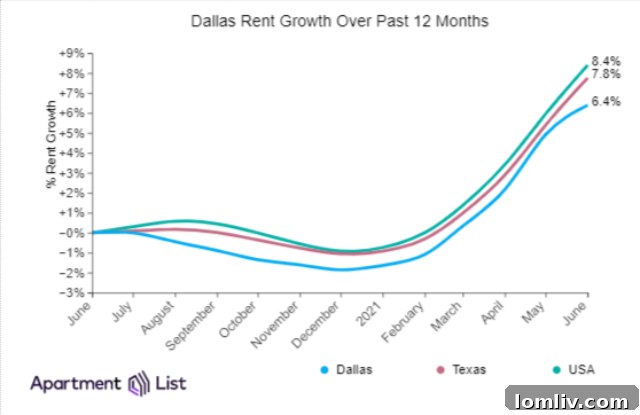
Recent reports paint a clear picture of this escalating market. According to Apartment List’s July 2021 Dallas Rent Report, rent in Dallas witnessed a notable 1.4 percent increase in June compared to the preceding month. More strikingly, looking back a full year, rents were up by an impressive 6.4 percent from the same period last year. This data aligns with findings from other prominent real estate analytics firms, such as Zumper’s June rent report, which similarly indicated a significant uptick in rental costs, signaling that tenants are paying, or should anticipate paying, higher prices.
The upward trend in rental costs is not exclusive to Dallas but is a characteristic of the entire state of Texas. Apartment List’s comprehensive analysis revealed that Texas boasted a remarkable rent growth rate of 7.8 percent over the past year. Nationally, the rental market has also seen considerable acceleration, with rents increasing by 2.3 percent in June alone. This continues a pattern of rapid price growth observed since the beginning of the year, culminating in an 8.4 percent rise in national rents year-to-date, according to Apartment List’s broader market insights.
This rapid appreciation has pushed rental prices past pre-pandemic levels in many areas. The report specifically notes, “Nationally, and in many individual cities across the country, rents have now surpassed the level where they would have been if rent growth had not been disrupted by the pandemic.” This statement underscores the market’s recovery and the impact of delayed housing decisions and increased demand finally coming to fruition.
Understanding Dallas’s Unique Position in the National Rental Landscape
Despite the recent increases, Dallas rents still offer a competitive edge when compared to many similar-sized and larger metropolitan areas across the United States. While the pace of growth in Dallas has been significant, other major metro areas have experienced even more modest growth, or in some isolated cases, even slight declines, before the recent nationwide surge. This relative affordability, coupled with a booming economy and a vibrant urban core, continues to make Dallas an attractive destination for new residents and businesses alike, driving sustained demand in its rental sector.
The data underpinning these insights is robust, drawing from a combination of authoritative sources including the U.S. Census Bureau and Housing and Urban Development (HUD) data, supplemented by Apartment List’s proprietary listing data. This comprehensive approach ensures a nuanced and accurate representation of rental market dynamics, providing valuable context for both renters and investors.
The Dallas Rental Market: A Closer Look at City-Specific Trends
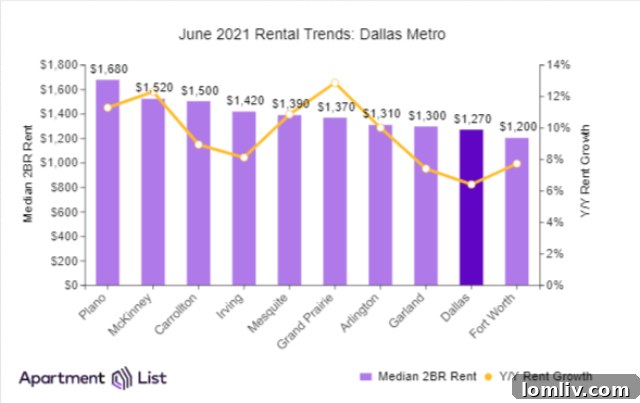
Dallas has demonstrated remarkable resilience and growth, recording six consecutive months of rent increases following a brief decline in December 2020. This sustained recovery highlights the underlying strength of the Dallas economy and its appeal as a prime living destination. As of the latest figures, the median rent for a one-bedroom apartment in Dallas stands at $1,058, while a two-bedroom unit commands a median of $1,270. It’s important to note that these figures are slightly above the national average of $1,194 for a two-bedroom apartment, reflecting Dallas’s status as a major economic hub.
To put Dallas’s rental costs into perspective, a two-bedroom apartment in San Francisco, a city often cited for its exorbitant housing costs, typically runs around $2,695. While Dallas’s rents are rising, they remain significantly more accessible, providing a compelling reason for individuals and families to choose the DFW area, especially those relocating from more expensive coastal markets. This relative affordability, combined with Texas’s lack of state income tax and a lower cost of living compared to many coastal states, contributes to the continuous influx of new residents.
The Dynamic Landscape of the Dallas/Fort Worth Metroplex Rental Market
The upward trend in rental prices is not confined to the city of Dallas itself but is a widespread phenomenon across the entire Dallas/Fort Worth metropolitan area. Apartment List’s analysis, which encompasses data from the ten largest cities within the Dallas metro, confirms that every single one of these major urban centers has experienced significant price increases over the past year. This widespread growth underscores the health and interconnectedness of the DFW regional economy.
Grand Prairie: Leading the Pack in Rental Growth
Among the cities in the DFW metroplex, Grand Prairie has distinguished itself by exhibiting the most rapid rent growth. The city has seen an impressive year-over-year increase of 12.8 percent in rental prices. This robust growth can be attributed to several factors, including its strategic location between Dallas and Fort Worth, ongoing community development, and a growing appeal to families and individuals seeking more affordable options while maintaining access to major urban amenities. Currently, the median rent for a two-bedroom apartment in Grand Prairie is $1,368, with one-bedroom units averaging $1,154.
Plano: The Most Expensive Rental Market in DFW
At the other end of the spectrum, Plano continues to hold its position as the city with the most expensive rents among the largest urban centers in DFW. A two-bedroom apartment in Plano carries a median rental cost of $1,677. This premium pricing reflects Plano’s reputation for excellent schools, a high quality of life, a strong job market fueled by numerous corporate headquarters, and upscale amenities. The city’s rents saw a 2.7 percent increase over the past month and an 11.3 percent rise over the past year, indicating sustained demand for its desirable living environment.
Fort Worth: The More Affordable Option in the Metroplex
In contrast to Plano, Fort Worth offers the most budget-friendly rental options within the DFW area’s largest cities. The median rent for a two-bedroom apartment in “Cowtown” is $1,202, making it an attractive choice for those seeking relative affordability without sacrificing access to a thriving metropolitan lifestyle. Fort Worth’s rental market has also experienced significant growth, with rents increasing by 2.0 percent over the past month and 7.7 percent over the past year. Its burgeoning downtown, cultural attractions, and expanding job opportunities continue to draw residents.
Texas Rental Market Overview: Beyond DFW
The strong performance of the rental market is not limited to the DFW metroplex but is a statewide trend across Texas’s major urban centers. Austin, renowned for its tech boom and vibrant culture, saw an impressive 11.9 percent increase in rent. San Antonio, a city rich in history and experiencing steady economic growth, recorded an 8 percent rise. Even Houston, the state’s largest city and a global energy hub, posted a respectable 4.3 percent increase in rental prices. These figures collectively highlight Texas’s status as a top destination for migration and economic expansion.
Driving Forces Behind the Rental Market Surge
These widespread increases across Dallas, the DFW metroplex, and the state of Texas signify a significant recalibration of the rental market. Analysts at Apartment List provide key insights into the underlying causes. They observe that “rental inventory across the nation remains tight,” indicating a persistent imbalance between the number of available units and the robust demand from renters. Furthermore, the accelerating pace of vaccine distribution has played a crucial role, fostering greater confidence and leading to “the release of pent-up demand from renters who had been delaying moves due to the pandemic.”
Essentially, the rental market is making up for lost time. Last year’s peak moving season was severely disrupted by the pandemic, as many individuals opted to delay relocations, extend leases, or move back in with family. This year, with improved health conditions and a stronger economic outlook, the seasonal spike in moving activity is much more pronounced, effectively compensating for the subdued activity of the previous year. This confluence of tight supply, economic recovery, and deferred demand is creating a highly competitive environment for renters.
The Future Outlook for the DFW Rental Market
Looking ahead, the DFW rental market is expected to remain dynamic. Continued job growth, particularly in sectors like technology, finance, and logistics, will likely sustain demand. However, developers are actively working to bring new inventory online, which could eventually help temper price increases, though construction timelines mean this relief won’t be immediate. The ongoing challenge will be balancing this growth with affordability, ensuring that Dallas remains an accessible city for a diverse population.
For renters, this means being prepared for a competitive market. Acting quickly when a desirable unit becomes available, having all necessary documentation ready, and potentially considering a wider range of neighborhoods or unit sizes might be beneficial. For investors and landlords, the current market presents opportunities for strong returns, but also calls for a keen understanding of local submarket nuances and tenant needs.
In conclusion, the Dallas-Fort Worth rental market is in a period of significant expansion, driven by strong economic fundamentals and a post-pandemic surge in demand. While rising rents present challenges for some, they also underscore the region’s economic vitality and its enduring appeal as a vibrant place to live and work. Monitoring these trends will be crucial for anyone involved in the DFW real estate landscape.