Reviving Dallas’s Iconic Starck Club: A Deep Dive into 703 McKinney’s Transformation and Oak Lawn’s Future
Dallas’s urban landscape is on the cusp of a remarkable transformation, particularly at the storied address of 703 McKinney. This location, deeply etched in the city’s cultural memory, is currently the focal point of an exciting redevelopment project that promises to breathe new life into an iconic site. The recent Oak Lawn Committee (OLC) meeting highlighted an application for a landscape special exception by the 703 McKinney Athletic Club, signaling the initial steps of what is poised to be a significant urban revitalization.
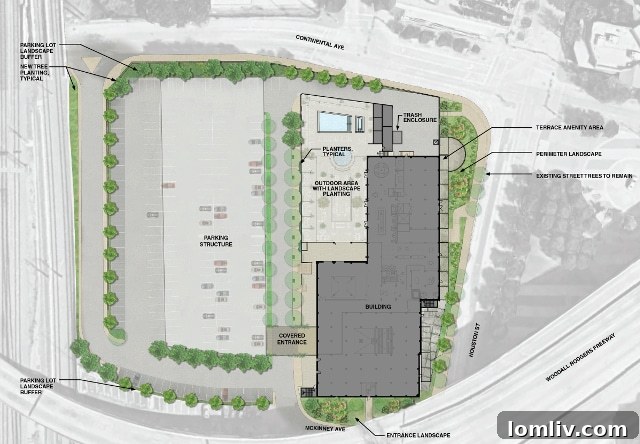
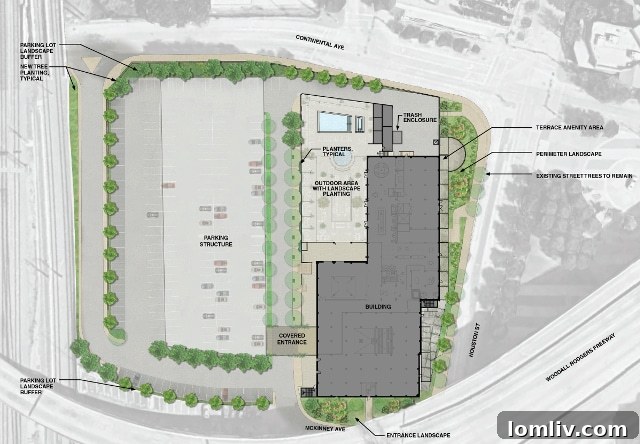
For those navigating the sprawling addresses of McKinney Avenue, understanding 703 McKinney’s precise location is key. Situated just north of Woodall Rodgers Freeway, at the Interstate 35 connector on the southern edge of the vibrant Victory Park district, this site is more than just another development. It’s historically significant, positioned diagonally from the site of Hooters, south of the prestigious high-rise known as The House, and for a generation of Dallasites, it will forever be remembered as the legendary Starck Club.
The Enduring Legacy of The Starck Club and Its Imminent Revival
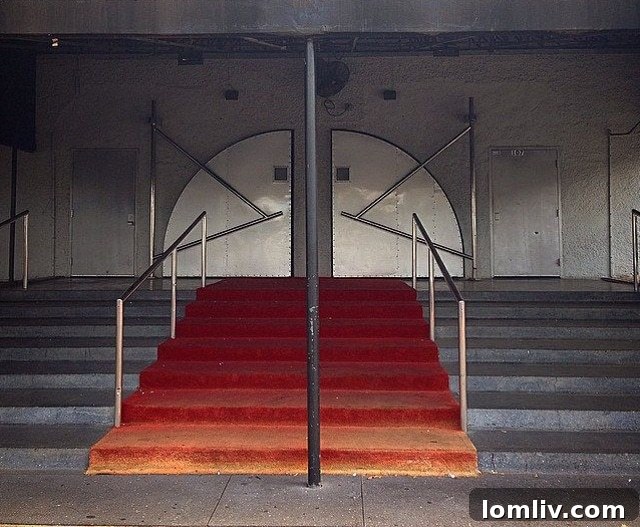
The mid-1980s were a golden era for signature dance clubs, with cities globally birthing iconic venues that defined an era. New York boasted Studio 54 and Danceteria, London reveled in Heaven and the Hippodrome. In Dallas, The Starck Club reigned supreme – an unparalleled nightly spectacle that drew an eclectic mix of revelers to its pulsating dance floor. It was a place where fashion, music, and energy converged, creating an unforgettable experience that deeply influenced Dallas’s nightlife and social scene.
The club’s revolutionary design was the brainchild of a then-young and visionary Philippe Starck, who, decades later, would also lend his design genius to the neighboring luxury high-rise, The House. Starck’s original concept for the club was groundbreaking, establishing a benchmark for avant-garde interior architecture in entertainment venues. His philosophy was to create an immersive, almost theatrical environment, where every detail contributed to an overall sensory experience. This included innovative lighting, sound systems, and spatial arrangements that encouraged interaction and celebration. The Starck Club wasn’t just a place to dance; it was a cultural phenomenon that mirrored the city’s dynamic spirit.
While the immediate focus of the Oak Lawn Committee discussion involved detailed landscaping plans, there’s a much grander vision unfolding for 703 McKinney. Beyond the aesthetic overhaul of the athletic club, the most exciting revelation is the direct involvement of Philippe Starck himself. He is collaborating with the building’s new lease-holder to orchestrate a spectacular revival of The Starck Club. The structural ‘bones’ of the original club remain intact, having most recently housed Zouk, a subsequent nightlife venue. This return of the Starck Club promises to recapture a bygone era of glamour and excitement, suggesting that perhaps, after all these years, Dallas is ready for a good dance once again.
Gruen Associates: Architects of Urban Innovation and the “Third Space”
Adding another layer of intrigue and prestige to this ambitious project is the involvement of Gruen Associates, an acclaimed architectural firm based in Los Angeles. Founded in 1951 by the Austrian-born visionary Victor Gruen, the firm has a celebrated history rooted in pioneering urban design principles. Gruen was a fervent proponent of creating “third spaces” – vibrant social environments distinct from home or work, designed to foster community engagement and urban vitality. His philosophy was revolutionary for its time, advocating for urban spaces that were not just functional but also aesthetically engaging and socially enriching.
Victor Gruen’s early work focused on designing captivating urban storefronts, understanding that compelling window displays and inviting facades could draw shoppers into retail spaces. In an era often characterized by drab and utilitarian streetscapes, Gruen recognized the psychological impact of design on consumer behavior. His belief that attractive commercial fronts would entice visitors to enter and spend proved profoundly correct, transforming the retail experience and setting new standards for urban commercial architecture.
As American car culture began to dominate the urban planning conversation, Gruen adapted his vision to address the evolving needs of the consumer landscape. He famously designed the first enclosed, climate-controlled shopping mall, the Southdale Center in Edina, Minnesota, for Dayton Department Stores, which opened its doors in 1956. This concept, while widely emulated, was initially conceived as part of a much broader utopian plan for a new town center. Gruen envisioned a thriving community complete with schools, healthcare clinics, expansive parkland, and residential areas surrounding the mall. However, once the mall proved an immediate financial success, the developers largely abandoned the holistic community plan, focusing solely on the lucrative retail component – a decision Gruen later lamented deeply.
Both his storefront and shopping mall designs fundamentally reshaped how commercial spaces were arranged and experienced. Have you ever wondered why essential items like milk are often located at the furthest point from a supermarket’s cashier? Or why shopping malls are designed with a circuitous layout, promoting a sense of familiarity, safety, and endless exploration? These are all manifestations of what became known as the “Gruen Effect.” This psychological phenomenon encourages shoppers to linger longer, explore more, and ultimately engage in greater impulse buying. Despite being widely recognized as the “father of the American shopping mall” within merchandising circles, Victor Gruen became increasingly critical of his own creation’s role in promoting suburban sprawl and the dissolution of traditional urban centers. His later reflections offer a poignant commentary on the unintended consequences of even the most innovative urban planning.
This rich architectural heritage from Gruen Associates brings a profound understanding of creating dynamic public and commercial spaces to the 703 McKinney project, perfectly aligning with the vision of revitalizing a historically significant location.
Innovative Landscape and Architectural Vision for 703 McKinney
The transformation of 703 McKinney extends far beyond merely reviving a name; it encompasses a comprehensive architectural and landscape redesign aimed at enhancing its aesthetic appeal and functionality within the urban fabric of Victory Park. The detailed plans presented to the Oak Lawn Committee reveal a thoughtful approach to modernizing the property while respecting its historical context.
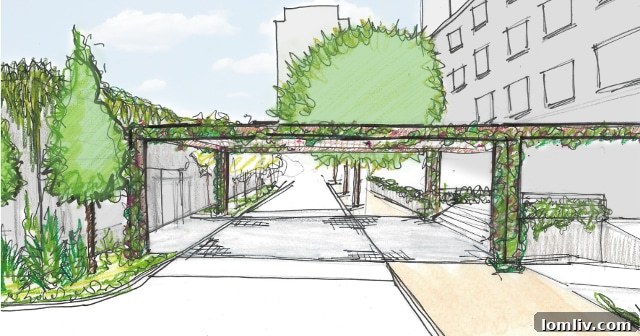
One of the key design elements is the re-imagining of the main entrance. The image above illustrates a proposed overhead trellis connecting the building directly to the adjacent parking lot, creating a more integrated and welcoming arrival experience. The wall to the left in the rendering suggests a potential second-story addition above the existing surface parking area. While the parcel already boasts ample parking, the developers are keenly aware of the potential for the Starck Club’s rebirth to reignite significant interest and demand, necessitating foresight in accommodating future growth and popularity.
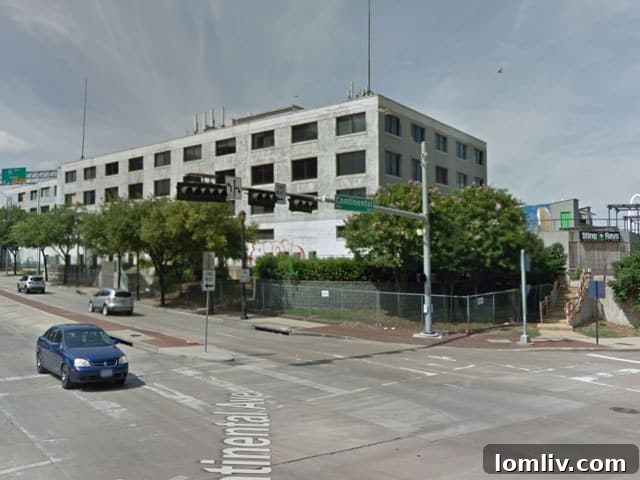
Beyond the entrance, the entire building exterior is slated for a significant upgrade. Although renderings often depict structures as simplified “gray boxes,” the reality of the project involves a meticulous “spiffing up” of the existing facade. The current exterior, showing signs of wear and neglect, will be transformed into a sleek, modern, yet timeless design. Beneath its present condition lies a robust commercial building characterized by large windows, offering excellent potential for an updated, sophisticated look that aligns with the contemporary urban aesthetic of Victory Park.
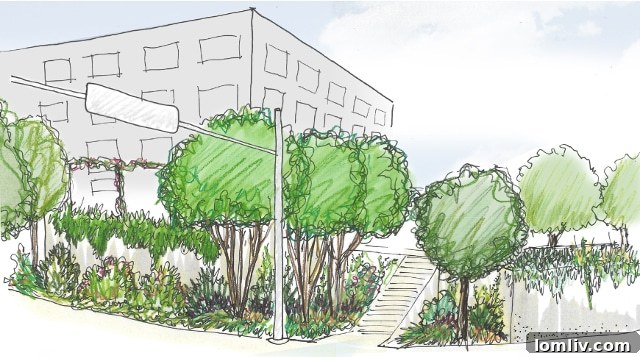
The emphasis on landscaping is paramount, especially at the Continental and Houston corner. The re-imagined corner, as seen in the visual above, incorporates a substantial increase in trees and lush greenery. This strategic greening effort is a response to the inherent challenges of urban planting, particularly along the Woodall Rodgers Freeway where limited space beneath the highway prohibits traditional tree planting (leaving only the possibility of artificial alternatives, which are not considered). The development team is actively exploring creative solutions to maximize green spaces where possible, enhancing the natural appeal and environmental benefits of the site.
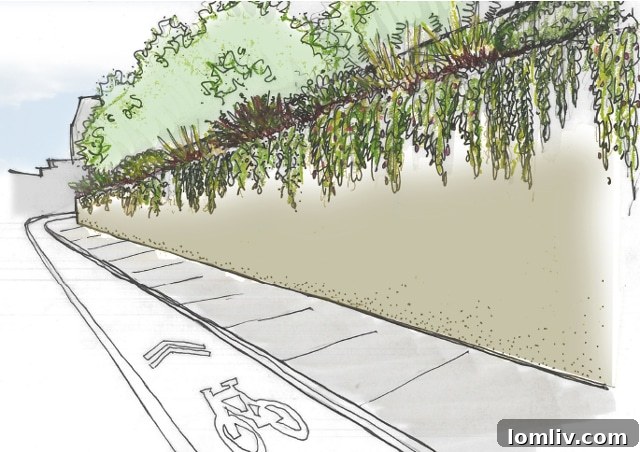
Similar challenges exist along Continental Avenue, where the urban configuration of road, sidewalk, and retaining wall leaves minimal room for conventional planting. To address this, the developers have devised an innovative compromise: planting at the top of the retaining wall and utilizing creeper vines to drape aesthetically down its face. While not a perfect substitute for ground-level planting, this solution represents a significant improvement over the current stained concrete wall, transforming an otherwise barren surface into a living, green facade. This approach highlights the project’s commitment to integrating natural elements into challenging urban environments, contributing to a greener, more inviting cityscape. The anticipation builds for the progression of this project, particularly to witness how the revived Starck Club will redefine itself in a culturally evolved Dallas.
Oak Lawn Committee: A Look Back at the Presidential Election
Beyond the exciting development at 703 McKinney, the Oak Lawn Committee (OLC) meeting also addressed a crucial internal matter: the resolution of its presidential election. As an influential community group, the OLC plays a vital role in reviewing and shaping development projects within the Oak Lawn area, making its leadership critical to the district’s future. Each October, the OLC holds elections for its officers, a process typically straightforward. However, this past October witnessed an unprecedented event: a tie for the presidency, a situation unheard of in the committee’s recent memory.
This deadlock prompted a period of deliberation, as the OLC’s existing rules did not explicitly outline a procedure for resolving a tied election. Consequently, in November, the members convened to vote on how to proceed. Two main options were considered: conducting a re-vote for the presidential position or defaulting to the incumbent, Hilda Rodriguez, by interpreting a tie as a retention of the current leadership. After careful consideration and a democratic vote, the members decided in favor of holding a re-vote, emphasizing fairness and clarity in their governance.
Tuesday’s meeting served as the stage for this decisive re-vote. The outcome saw current president Hilda Rodriguez triumphantly retain her seat, reportedly by an unambiguous margin. This result concluded Leland Burk’s tenure as vice-president on the executive committee, marking a clear direction for the OLC’s leadership moving forward. The stability provided by a clear electoral outcome allows the committee to focus its efforts on its primary mission of community oversight and development guidance.
The remaining three officer positions had been secured in the initial October elections. Sue Krider was reelected to her vital role as City Hall Liaison, a position crucial for fostering effective communication and collaboration between the OLC and municipal authorities. Cricket Griffin was elected as Secretary/Treasurer, stepping into a role previously held by Michael Milliken, who sadly passed away before the election. Kyle Lyon assumed the position of vice-president, completing the executive committee lineup. With the significant business of the month concluded, the Oak Lawn Committee transitioned from rigorous discussion to a celebratory holiday party, marking the end of a busy and impactful year.

Exploring Dallas’s Urban Evolution: This article delves into high-rises, homeowners’ associations (HOAs), and renovation projects that define urban growth. We also critically examine modern and historical architectural preservation, balancing it against the pragmatic demands of the YIMBY (Yes In My Backyard) movement, which advocates for increased housing density and development. The author’s commitment to insightful urban commentary has been recognized by the National Association of Real Estate Editors (NAREE), receiving three Bronze awards in 2016, 2017, and 2018 for pieces like “Housing Styles: Interiors Leapt to Future, Exteriors Wallow in Past” (2016), “Property Taxes: Garbage, Garbage” (2017), and “Friday Night Blaze Engulfs Pink Wall Preston Place Condos” (2018). Additionally, two Silver awards were earned in 2016 and 2017 for captivating narratives such as “Flock to the Casbah: A Home in Marrakech” (2016) and “Second Homeownership in Bermuda Serves the Rich While Protecting Local Interests” (2017). For questions, story ideas, or comments, please reach out via email at [email protected]. Connect on Facebook and Twitter for more urban development discussions.