North Texas Earthquakes: Ensuring Your Home’s Safety and Understanding Local Building Codes
The recent surge in seismic activity across North Texas, particularly centered around a newly identified two-mile fault line near the Trinity River, has understandably raised concerns among homeowners. With tremors becoming a more frequent occurrence in areas previously considered seismically stable, many residents are asking a crucial question: how safe is my house?
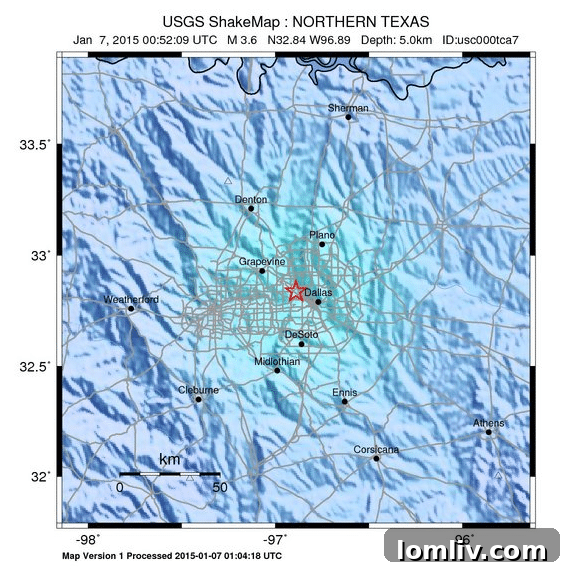
While the largest quakes recorded in January hovered around magnitudes of 3.6 or 3.7—generally considered minor—the reactivation of this ancient subsurface fault, stretching from Irving to West Dallas, has introduced an element of uncertainty. The question isn’t just about the tremors experienced so far, but whether these signify the potential for stronger events in the future. To address these pressing concerns, we’ve gathered insights from leading area experts on what Dallas-Fort Worth homeowners need to know about the structural integrity of their homes and their capacity to withstand seismic events.
Understanding Seismic Activity in North Texas
For decades, North Texas was not typically associated with significant earthquake activity. However, since 2008, the region has experienced a notable uptick in tremors, with over 120 recorded earthquakes and a particular concentration of nearly 40 in recent months. This shift has prompted increased scientific scrutiny, leading to the identification of previously dormant fault lines, such as the one near the Trinity River. While the exact causes of this reactivation are subjects of ongoing research, seismic events in other parts of Texas have sometimes been linked to factors like wastewater injection, prompting broader discussions about the interaction between human activity and geological stability.
It’s important to put the magnitude of these quakes into perspective. Earthquakes measuring in the 3.0 to 3.9 range are generally felt by many people but rarely cause significant damage. They are often described as moderate shaking or rattling. However, even minor, repeated tremors can cause anxiety and lead to superficial damage, prompting homeowners to seek assurance about the fundamental safety of their dwellings. Understanding the difference between minor cosmetic damage and structural compromise is key to navigating these events with confidence.
How DFW Homes are Built: Engineered for Resilience
To shed light on the structural resilience of North Texas homes, we spoke with Alex Childress, the residential division manager of Childress Engineering Services, a reputable Richardson-based engineering company. Childress emphasizes a crucial point that many homeowners might overlook: local homes are already designed to endure much greater stresses than the relatively minor quakes experienced recently.
“Primarily, what we have been addressing that most homeowners are not even aware of is that [their homes] are already engineered for much greater distress than what a 3.5 can do,” Childress explains. “In Dallas-Fort Worth, we’ve already designed foundations to withstand 90 mile-per-hour winds, which far exceed the requirements of what they would withstand from these earthquakes.”
This insight is key. Homes in regions prone to severe weather, such as tornadoes and high winds, are constructed with robust foundations and framing designed to resist intense lateral (sideways) and uplift forces. These design considerations, primarily aimed at wind resistance, inadvertently provide a significant degree of resilience against the lateral forces exerted by moderate earthquakes. The structural components, including the foundation, wall systems, and roof connections, are engineered to work together to distribute and absorb these forces, preventing catastrophic failure. This inherent over-engineering for wind loads means that DFW homes possess a structural robustness that can naturally dissipate the energy from smaller seismic events, protecting the main framework of the building.
Building Codes and Seismic Zones: A Historical Context
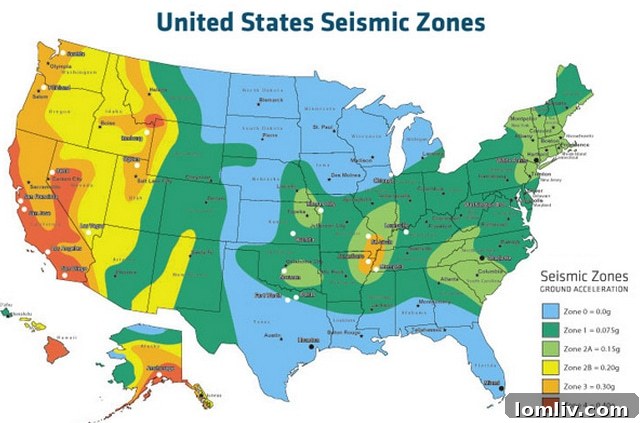
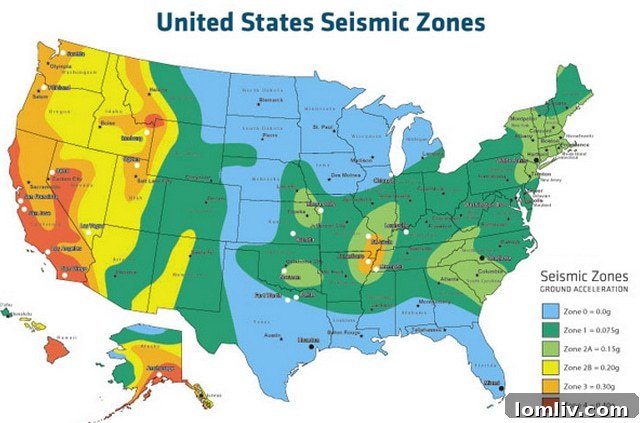
The concept of seismic zone maps was first introduced in 1949 as a way to visually represent the potential levels of earthquake activity and the corresponding risk of building damage. These early maps provided broad categorizations, making it easy for builders and engineers to understand the general seismic risk of a given area. As seen in the map at the beginning of this article, much of the Dallas-Fort Worth metroplex falls within Zone Zero—the lowest risk category—or borders on Zone One, indicating minimal expected seismic activity.
Today, engineering practices have evolved significantly. While the older, generalized seismic maps are still useful for illustrating overall risk, modern engineers utilize far more sophisticated methods. Detailed contour maps and probabilistic seismic hazard analyses (PSHA) now provide highly refined representations of potential ground shaking at specific locations over defined periods. These advanced models incorporate local geology, historical seismic data, and fault characteristics to deliver a much more precise risk assessment, which in turn informs contemporary building codes. For instance, the International Building Code (IBC), which most local codes are based on, continuously updates its seismic design provisions based on the latest scientific understanding.
However, the increased seismic activity in North Texas prompts an essential question: should the current risk assessment for the DFW area be revised? And if so, should local building codes be updated accordingly to reflect these new geological realities?
The Call for Re-evaluation: Adapting to New Realities
The evolving seismic landscape has led experts to consider the implications for future construction and existing properties. James Fontaine, president of SlabTek, a Richardson-based company specializing in foundation systems, highlights this critical juncture. “The homes in this area are designed to handle wind load and seismic load for Texas, not California,” Fontaine states, underscoring the regional specificity of current codes.
Fontaine further elaborates on the importance of seismic zoning: “With some of the new findings, we wonder, does that zone one [seen just north of DFW] extend here or become zone two? These zones determine our building codes and requirements.” This sentiment reflects a growing recognition that geological realities can shift, necessitating a re-evaluation of established risk parameters. Such re-evaluations are typically driven by new scientific data and consensus within the engineering and geological communities, often leading to updates in state and local building regulations.
Indeed, the possibility of reevaluating building codes in light of the earthquakes has already been raised at the municipal level. At a February City Hall press conference, Dallas Mayor Mike Rawlings indicated that the city would explore updating these codes. Such changes, however, typically have the most significant impact on new construction, ensuring that homes built in the future are designed to meet potentially elevated seismic standards. For existing homes, the focus remains on their inherent resilience based on current codes, which, as experts confirm, are proving adequate for the current level of seismic activity.
Is My House Safe Now? Expert Consensus on Existing Homes
The most immediate concern for many North Texas homeowners is the safety of their current residences. The unequivocal answer from both Childress and Fontaine is reassuring: for the seismic activity experienced thus far, most homes are indeed safe.
“We are meeting or exceeding the residential codes to withstand these tremors or shakes we’ve had,” confirms Childress. “If you’ve got something that can withstand what the zone requirement is here in Texas, you should be okay.” This affirms that the existing design standards, particularly those for wind resistance, provide a robust buffer against minor seismic events. The combination of sturdy construction for diverse weather conditions and the relatively low magnitude of recent earthquakes means that the structural integrity of homes is largely uncompromised.
Fontaine echoes this assessment, stating, “All the homes [in DFW] are designed to withstand zone zero or one levels.” This consistent expert opinion should provide peace of mind to residents grappling with the unfamiliar sensation of their homes shaking. The core structural integrity of most DFW homes is not at risk from the magnitudes observed, even with the increase in frequency. This reassurance is vital for homeowners seeking clarity amidst geological uncertainty.
Minor Impacts and What to Expect
While the structural integrity of homes remains largely intact, the rattling and shaking caused by North Texas earthquakes can still lead to minor, non-structural damage. Homeowners might observe:
- Hairline cracks in walls or ceilings: These are often superficial and can be repaired with standard patching and painting. They typically indicate minor shifting rather than foundational distress.
- Items falling off shelves: Pictures, decorations, and unsecured objects can be dislodged, posing a nuisance and potential hazard.
- Broken windows: In some cases, the jarring motion can cause glass to crack or break, especially if windows are older or have existing stress points.
- Doors and windows sticking: Minor shifts might temporarily affect the alignment of doors and windows, making them harder to open or close.
These types of damage are usually cosmetic and localized, not indicative of a compromised foundation or structural collapse. However, they underscore the importance of securing heavy items and being aware of potential hazards within the home, even in low-risk zones. For any significant or unusual cracking, particularly those extending into the foundation or showing severe displacement, consulting a structural engineer is always recommended.
Proactive Steps for Homeowners in Low-Risk Seismic Zones
Even in areas designated as low-risk seismic zones, a proactive approach to home safety can provide an extra layer of peace of mind. While major structural retrofits are generally not necessary for DFW homes given the current seismic profile, there are several simple and effective measures homeowners can take to enhance safety and mitigate minor damage:
- Secure heavy furniture: Use earthquake straps, anchors, or L-brackets to fasten tall bookcases, china cabinets, entertainment centers, and other heavy furniture to wall studs. This prevents them from tipping over and causing injury or damage during a shake.
- Store heavy items on lower shelves: Keep fragile or heavy objects, especially those in kitchens and pantries, in lower cabinets and shelves to minimize the risk of them falling and breaking during a tremor.
- Install safety latches: Secure cabinet doors and drawers with childproof or earthquake-resistant latches to prevent contents from spilling out.
- Be aware of overhead hazards: Check light fixtures, ceiling fans, and hanging plants for secure mounting. Consider replacing heavy, ornate fixtures with lighter alternatives if concerns persist.
- Prepare an emergency kit: Have a basic emergency kit readily accessible, including water (one gallon per person per day for at least three days), non-perishable food, a flashlight with extra batteries, a first-aid kit, a whistle, a battery-powered or hand-crank radio, and essential medications.
- Know your home’s foundation: Understand the type of foundation your home has (slab, pier and beam, etc.) and be aware of any pre-existing issues. While current tremors aren’t threatening foundations, regular maintenance and monitoring for settlement or cracking is always advisable for any homeowner.
- Inspect for new cracks: After an earthquake, conduct a visual inspection of your home, both inside and out. Pay particular attention to new or widening cracks in walls, ceilings, and the foundation. While hairline cracks are common and often superficial, any large or spreading cracks, particularly those with a zig-zag pattern or indications of structural movement, warrant further investigation by a qualified structural engineer.
The Future of Seismic Activity in North Texas
As Alex Childress aptly puts it, regarding the future, “nature will have its way.” The recent increase in earthquake activity serves as a powerful reminder that geological processes are dynamic and can sometimes present unexpected challenges. The scientific community continues to monitor the situation closely, gathering data to better understand the underlying mechanisms and potential future trends. This ongoing research is crucial for refining seismic hazard assessments and informing future policy decisions.
Childress reflects on the unprecedented nature of the current activity: “I’ve been in Texas for over 20 years and I can’t remember when there’s been this much activity—there’s not a lot more that we can do now. You can only control so much and at some point, nature will have its way.” This highlights the limitations of human intervention in natural phenomena but also reinforces the importance of robust building practices and ongoing vigilance. The dialogue initiated by local officials regarding potential code revisions for new construction is a positive step towards long-term adaptation.
For North Texas homeowners, the key takeaway is assurance combined with awareness. While current homes are well-equipped to handle the tremors experienced thus far, staying informed about seismic developments, understanding your home’s inherent resilience, and taking simple, proactive preparedness steps are prudent measures for navigating an evolving geological landscape with confidence.