Record-Breaking Early Voting Signals Unprecedented Civic Engagement Across Texas
The spirit of democracy ignited across Texas as the first day of early voting for the November elections witnessed an extraordinary surge in participation. Voters, fueled by enthusiasm and a palpable sense of civic duty, descended upon polling stations statewide, shattering previous records and setting a new benchmark for electoral engagement in a midterm cycle. This remarkable turnout underscores a profound shift in the political landscape, reflecting a highly mobilized electorate eager to make its voice heard.
The sheer scale of this early voting phenomenon is undeniable. A staggering 15,793,257 individuals are registered to vote in this election, marking an all-time high. To put this into perspective, the 2014 midterm elections saw only 4.7 percent of the then 14 million registered voters casting their ballots early on the first day. The current figures paint a dramatically different picture, indicating a widespread commitment that rivals, and in some areas even surpasses, presidential election engagement levels. This strong opening day performance is a critical indicator of heightened public interest and participation in the democratic process, far exceeding expectations for a typical midterm.
Long Lines and Sustained Enthusiasm: A Glimpse from the Polling Stations
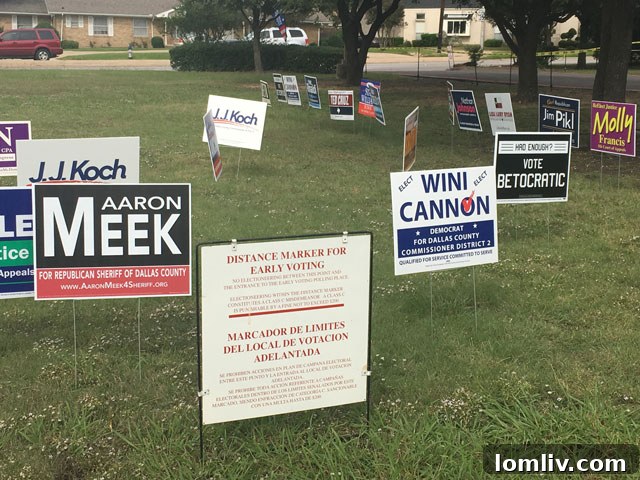
From the moment polls opened, lines began forming, stretching throughout the day and into the evening. Across the state’s largest counties, including Dallas, the first-day turnout dwarfed that of the 2014 midterms. In many locations, the energy and volume of voters mirrored or even exceeded what is typically observed during a presidential election year, which is particularly notable for a non-presidential election cycle.
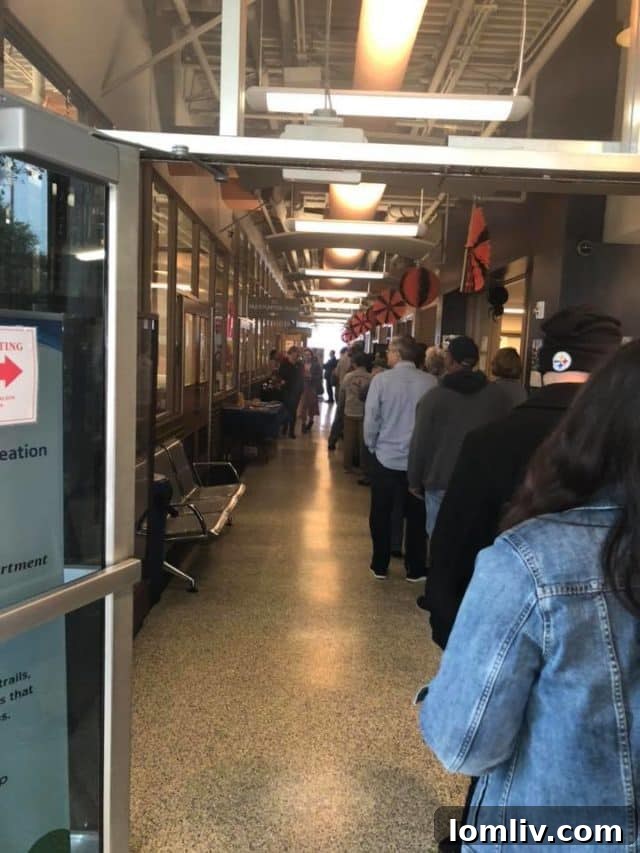
“It’s been like this all day,” remarked a dedicated poll worker at Marsh Lane Baptist Church, describing a scene where the line for voters snaked down a hallway, into a reception area, around the perimeter of the room, and back up the hallway again. “But it’s gotten worse as the day has gone on,” she added, emphasizing the relentless flow of citizens determined to cast their ballots. Despite a robust presence of poll workers, the sheer volume meant that voters at this location were waiting approximately 45 minutes to complete the process, a testament to both the high turnout and the patience of the electorate.
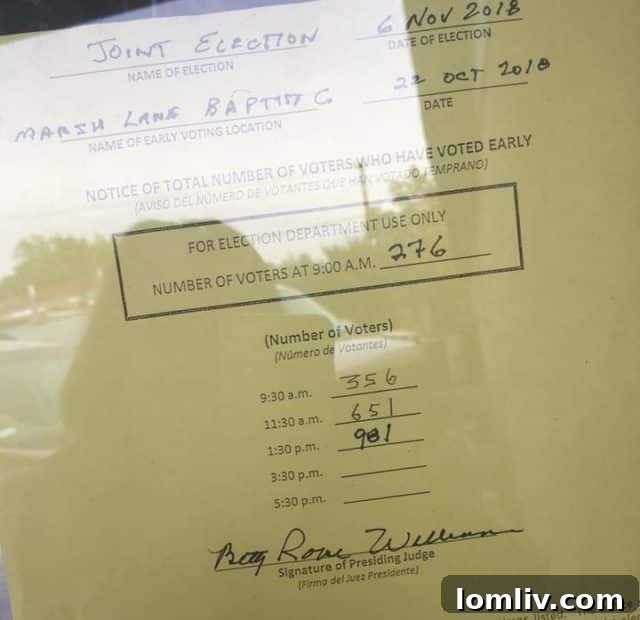
Similar stories of extended waits and enthusiastic crowds echoed from various parts of the region. Citizens reported comparable queues in other towns and neighborhoods. One woman, patiently waiting in line at Marsh Lane, shared that her daughter had endured an hour-long wait to vote in Arlington, further illustrating the widespread dedication among voters. Shari North reported a particularly striking scene at Our Redeemer Lutheran on Park Lane: “Our Redeemer Lutheran on Park Lane had a huge line out the door, down the steps, and trailing to the north parking lot at noon. Huge turnout.” These firsthand accounts painted a vivid picture of a populace deeply invested in the electoral outcome, willing to commit their time and effort to participate.
Shelley Broyles Stenoien noted that the Samuell Grand Recreation Center had about a 25-minute wait at 11 a.m., although earlier reports indicated that the line had stretched well out the door. The pattern of significant wait times continued elsewhere; Joanna England, Executive Editor of Daltxrealestate.com, reported a 45-minute wait at Lochwood Library. Bernadine Daniell, who voted at University Park United Methodist Church at 10:30 a.m., experienced a 20-minute wait, observing that “the line is getting a bit longer” even then. In Rockwall, Nathalie Chenault exclaimed, “The Rockwall Library is packed!” These anecdotal reports, collected from various corners of the community, consistently highlighted a remarkable increase in voter engagement, challenging the historical trends of lower turnout during midterm elections.
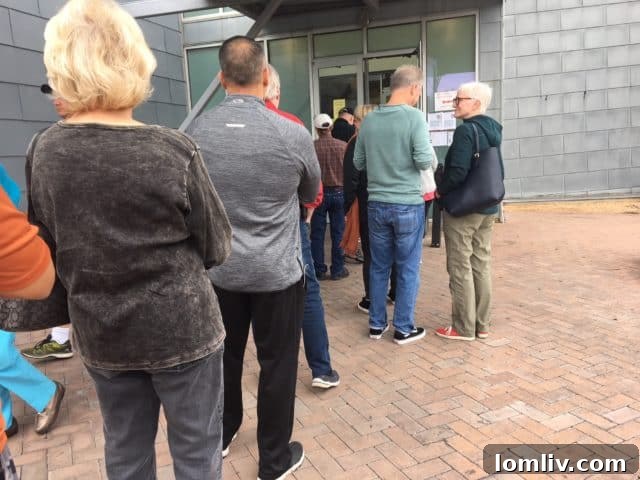
While many locations faced substantial queues, wait times varied. Some voters at Fretz Park Library reported waits of 40 minutes, indicating consistent high demand. Conversely, some areas experienced slightly shorter lines, with voters in Valley Ranch and certain parts of Plano reporting waits of just 15 to 20 minutes. This geographical variation suggests that while overall enthusiasm was high, local factors and polling station capacities played a role in the voter experience.
The Numbers Tell the Story: County-Specific Turnout Data
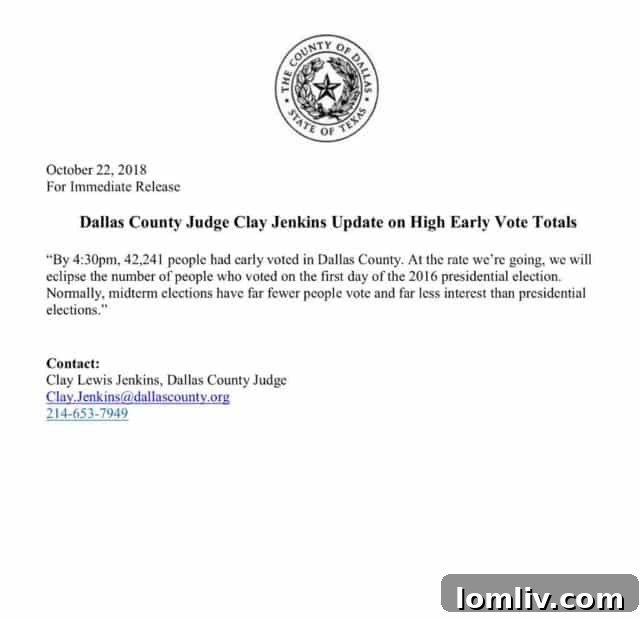
The statistical data from the first day of early voting definitively confirmed the anecdotal observations of widespread enthusiasm. In Dallas County, an impressive 57,080 people cast their ballots early on Monday. To truly grasp the significance of this figure, it is crucial to compare it with previous election cycles. During the last midterm elections in 2014, only 13,036 individuals participated on the first day of early voting. Even in 2010, the figure stood at a modest 14,820. What is truly astounding is that the recent Dallas County early voting total nearly matched the 58,775 voters who turned out on the first day of early voting for the highly contested 2016 presidential election. This comparison highlights a mobilization level typically reserved for presidential contests, signaling a profoundly engaged electorate for this midterm.
The trend of heightened participation extended beyond Dallas County. Tarrant County also witnessed an exceptional first day of early voting, easily surpassing the 13,466 voters recorded on the first day of early voting in the 2014 midterms. By the time polls closed on Monday, 40,422 voters had cast their ballots in Tarrant County. While this figure was slightly shy of the 43,149 voters who participated on the first day of early voting in the 2016 presidential race, it still represents a significantly elevated level of engagement for a midterm election, demonstrating a broad-based desire among citizens to participate in shaping the political future.
Further north, Collin County reported over 30,000 people casting votes on the first day, showcasing a robust turnout in a rapidly growing region. Denton County similarly saw a substantial increase, with 19,045 votes compared to just 9,582 in 2014. These figures from across major Texas counties paint a consistent picture of a state-wide electorate that is more active and determined than in previous midterm cycles. The combined data indicates that Texans are actively leveraging the convenience of early voting, translating their interest into tangible participation at the ballot box.
Understanding the Impact: Why This Turnout Matters
This unprecedented early voter turnout carries significant implications for the broader election. High early voting numbers can often be an indicator of overall high turnout on Election Day, suggesting that more citizens are invested in the outcomes of local, state, and national races. Such engagement can dramatically shift the dynamics of an election, empowering a wider array of voices and potentially leading to outcomes that reflect a broader spectrum of public opinion.
The commitment shown by voters, waiting in lines for extended periods, underscores a powerful sense of ownership over the democratic process. It signals that key issues and candidates have resonated deeply with the populace, motivating them to overcome potential inconveniences. This level of enthusiasm also impacts campaign strategies, encouraging continued mobilization efforts and direct voter engagement throughout the early voting period and leading up to Election Day. Campaigns that effectively harness this early energy can build significant momentum, potentially influencing undecided voters and solidifying support among their base.
Insights from social media further illuminated the sentiment on the ground. For instance, observations shared on Twitter noted that even in historically Republican strongholds, the early voter composition seemed diverse, with some reporting a significant lean towards one party. Other analyses highlighted that Dallas County’s Day 1 in-person early vote reached “presidential levels” since 2008, a testament to the magnitude of current participation. One commentator noted that Dallas County’s first-day turnout represented “around 14% of [2014’s] total turnout,” an impressive start given the overall low turnout of that earlier midterm. Personal stories of voting, like one individual’s first vote in 46 years, emphasized the profound impact of current events on civic awakening. While some urged caution not to get “too ahead of ourselves” given past primary trends, the overarching sentiment was one of amazement and pride at the level of engagement. As one voter eloquently put it after a 30-minute wait, “I’m not complaining at all. For Texas, early voting and during a non-presidential election, I was so amazed. Those were the best 30 minutes I ever spent in a line.”
On @MarkDavis’ show, @MattRinaldiTX says he’s campaigning at a voting site in Coppell, the most Republican part of #hd115, “and it’s been 3 to 1 Democrats so far.” –#txlege
— Bud Kennedy / #ReadLocal (@BudKennedy) October 22, 2018
The Day 1 in-person early vote in Dallas County, Texas since 2008. Turnout this year at presidential levels. #2018Midterms #txlege pic.twitter.com/GsVKuPIDiA
— Michael Li (@mcpli) October 23, 2018
For reference, Dallas County’s total turnout in 2014 was a hair over 400,000 voters, so this is around 14% of that. Not bad for a first day of early voting.
— Sir Humphrey (@bdquinn) October 23, 2018
Unplugged with @dalehansen: For the first time in 46 years, I voted. Here’s why. https://t.co/rNXTX8erbE pic.twitter.com/5r9Lqi12La
— WFAA (@wfaa) October 23, 2018
Important not to get too ahead of ourselves on early voting turnout in Texas. Exciting to be sure, but keep working. Remembering the primary (Democrats cast more early votes, but Republicans ultimately topped Ds by 500k off Election Day votes). pic.twitter.com/70tfxpWTn7
— Will Jordan (@williamjordann) October 23, 2018
I voted today and I had to wait 30 minutes in line and I’m not complaining at all. For texas, early voting and during a non presidential election, I was so amazed. Those were the best 30 minutes I ever spent in a line
— marWITCHa 🦇 (@marissadolivas) October 23, 2018
Looking Ahead: The Path to Election Day
Early voting will continue through November 2nd, offering ample opportunity for more Texans to cast their ballots. Polls open and close at varying times depending on the specific county, so voters are encouraged to check their local election resources for precise schedules. The robust start to this early voting period establishes a potent narrative for the upcoming election: a deeply engaged electorate, eager to shape the future of their communities and their state. This initial surge suggests that the 2026 November election could be one of the most highly attended midterm elections in recent history, driven by a confluence of critical issues and passionate citizens.
Have you already participated in this historic early voting period? Or are you planning to vote in the coming days? We invite you to share your experiences in the comments section below. Your stories contribute to the broader understanding of this pivotal election. If you’re out casting your ballot, consider tagging us on Facebook, Instagram, or Twitter using the hashtag #DaltxrealestateVotes to help us track and celebrate this incredible display of civic engagement.