Nextdoor Unveils Community Real Estate Ad Section: A Game Changer for Hyperlocal Marketing?
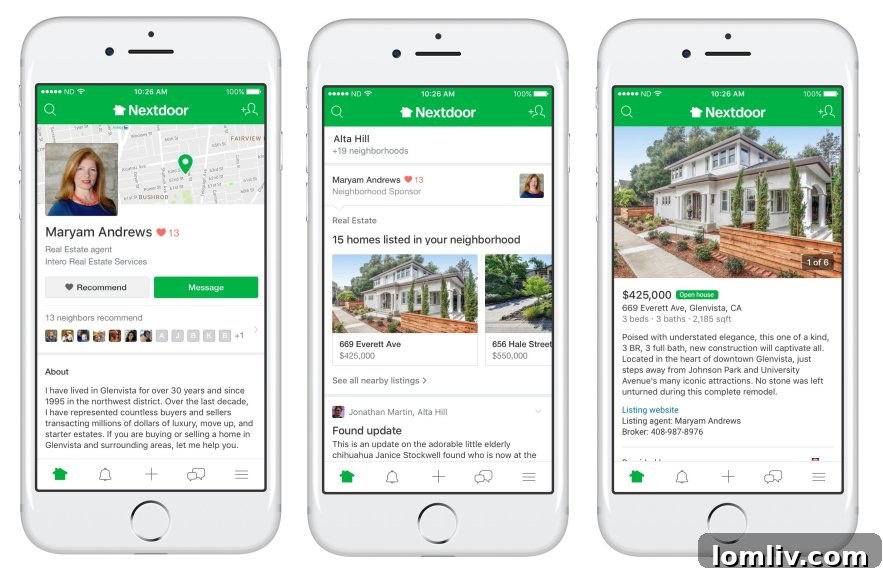
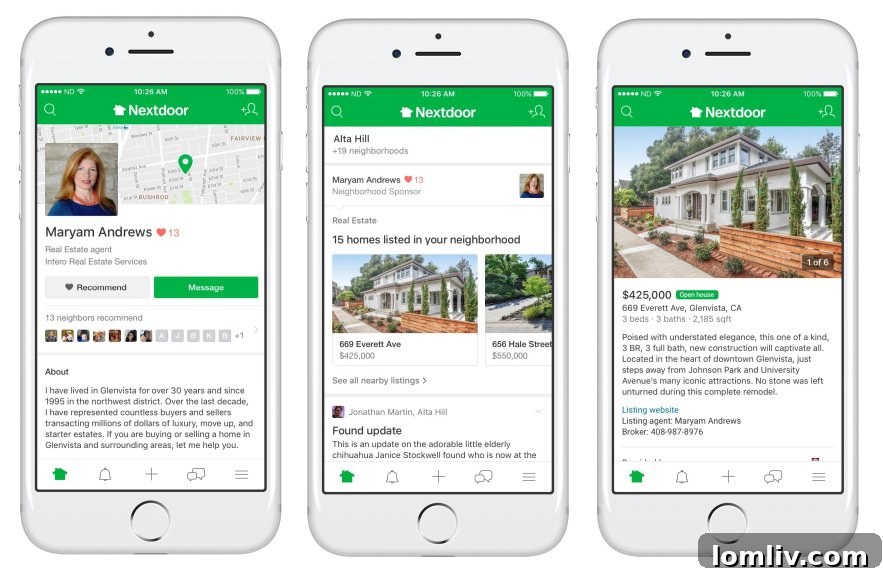
Nextdoor, the widely-used neighborhood-based social network, has officially launched a dedicated community real estate advertising section, marking a significant step into the lucrative digital marketing landscape for real estate professionals. This new feature allows users to not only explore property listings but also to discover highly recommended real estate agents within their local community, complete with visible endorsements from their neighbors. The move underscores real estate’s remarkable popularity on the platform, with nearly 25,000 agents already having established local pages on Nextdoor – a figure surpassing any other profession on the network.
The Digital Shift in Real Estate Advertising
In an era where digital presence dictates market relevance, the real estate industry has undergone a seismic shift, with advertising dollars rapidly migrating from traditional print media to diverse online platforms. For real estate professionals still tethered to outdated marketing strategies, Nextdoor’s latest offering presents a compelling new avenue to connect with potential clients. Beyond established platforms like daltxrealestate.com and other localized digital presences, Nextdoor provides a unique, neighborhood-centric environment ripe for engagement.
The new community real estate ad section rolled out in key markets, including Dallas-Fort Worth, Atlanta, Austin, Houston, Los Angeles, Phoenix, Portland, Sacramento, and San Diego. This strategic geographic launch targets some of the most dynamic real estate markets in the United States, highlighting Nextdoor’s ambition to become an indispensable tool for agents seeking hyper-local reach. The timing of this launch, coinciding with industry events like Inman Real Estate Connect, further suggests a deliberate strategy to capture maximum industry attention and adoption.
Cultivating Authentic Connections: Nextdoor’s Vision for Agents
Ali Jafari, Nextdoor’s vice president of business development and a native of Odessa, Texas, articulates the platform’s vision for this new section. He emphasizes that it serves as an additional channel for residents to access locally pertinent content, fostering more “authentic” interactions between real estate agents and their neighbors. This authenticity stems from agents providing valuable advice on a myriad of home-related topics, from crucial home improvement projects to nuanced home valuations, particularly during periods like DCAD home appraisal season.
By engaging on these levels, agents can effectively position themselves as accessible, resourceful hyperlocal experts. They become trusted advisors, readily available to assist when residents consider selling their homes or need insights into market trends. This approach aligns perfectly with the real estate industry’s substantial investment in advertising, which, according to Borrell Associates, amounted to $26.8 billion in the U.S. in 2016. This figure solidifies real estate as one of the largest local categories for advertising sales, especially in competitive and fast-moving markets, making Nextdoor’s move strategically sound for capturing a share of this significant spend.
The Power of Local Referrals and Community Engagement
Referrals are the undisputed lifeblood of any successful real estate agent’s business. Jafari highlights that referrals, particularly those originating from trusted neighbors, are instrumental in driving new business. In an increasingly digital world, a growing number of homebuyers are turning to social media platforms to discover agents and property listings. Nextdoor’s strength lies in its ability to facilitate these deep, neighborhood-specific connections, enabling agents to tap into a highly localized network of potential clients who value community recommendations above all else.
The platform’s structure naturally encourages a form of digital word-of-mouth marketing, where neighbors can vouch for agents based on their actual experiences. This not only builds an agent’s reputation organically but also provides a layer of trust that traditional advertising often struggles to achieve. By being an active, helpful presence within a specific neighborhood, agents can cultivate a strong base of advocates who are more likely to refer them to friends, family, and other community members.
Navigating the Dual Nature of Hyperlocal Platforms: Opportunities and Challenges
While Nextdoor presents immense opportunities, it has also faced scrutiny, much like many hyperlocal blogs, concerning its potential to create “silos” and even foster division within neighborhoods. Critics argue that the semi-private nature of these groups can sometimes lead to insular communities, limiting broader engagement.
However, it’s equally important to acknowledge Nextdoor’s positive contributions. The platform has undeniably served as a powerful tool for community safety, assisting neighbors in reporting crimes and break-ins, which has frequently led to successful arrests and enhanced local security. It’s a testament to the platform’s ability to mobilize communities for collective good.
Despite these benefits, Nextdoor has grappled with significant accusations, particularly regarding the promotion of fear-mongering and racial profiling. Anecdotal evidence, such as posts like, “OMG, has anyone seen the Asian girl walking, texting on her phone? It was 9:30 at night, and she seemed suspicious,” or “Alert! Two black guys walked past my house, and they didn’t seem nice at all. I think they’re up to no good!” illustrate the challenges the platform has faced in moderating content and curbing unconscious biases. These instances led to a critical examination of the platform’s moderation policies and community guidelines.
In response, Nextdoor has implemented proactive measures. Last year, the company released a suite of tools specifically designed to curb racial profiling within its groups, demonstrating a commitment to addressing these serious issues. Furthermore, Nextdoor explicitly discourages political discussions, a wise policy given the intense political polarization prevalent in many nations. This stance aims to maintain a focus on local, community-centric topics rather than divisive national debates, a lesson learned firsthand by individuals engaging in local politics on the platform.
Nextdoor’s Growth, Monetization Strategy, and Global Footprint
Despite its impressive growth and a robust user base, Nextdoor has faced challenges in consistently generating substantial revenue. The social network boasts an impressive reach, claiming to have saturated 80% of homeowners in the U.S., with even higher penetration rates in tech-savvy, hot real estate markets like San Francisco and Silicon Valley. The company, headquartered in San Francisco, has also strategically expanded its global footprint, establishing a presence in the U.K., the Netherlands, and Germany. According to the company, more than 160,000 neighborhoods across these countries are actively utilizing Nextdoor to foster stronger and safer communities.
Founded in 2010 and officially launched in October 2011, Nextdoor was initially conceived as a Facebook-like, area-specific clone, creating private online communities where neighbors could connect, exchange advice, ask questions, and share recommendations. The company has garnered significant investment, raising over $200 million and achieving a valuation of $1 billion more than two years ago. Supported by prominent investors such as Benchmark, Greylock Partners, and Kleiner Perkins Caufield & Byers, Nextdoor has, until recently, primarily relied on investor funding to fuel its operations.
To diversify its revenue streams, Nextdoor has been actively exploring various monetization strategies. The recent introduction of native advertising, or “sponsored content,” from select businesses, has proven to be a promising avenue for sparking a growing revenue stream. This approach allows businesses to seamlessly integrate promotional content into the user’s feed, making it feel less intrusive and more relevant to their local interests. This blog, for full disclosure, also leverages sponsored content as a revenue stream, underscoring the widespread adoption of this digital marketing model.
Investment for Agents: Understanding the Costs and Benefits
For real estate professionals considering this new advertising channel, understanding the investment is crucial. Nextdoor’s communications team indicates that the cost of real estate ads is flexible, ranging from an accessible $50 to several hundred dollars, primarily depending on the size and engagement level of the targeted community. This tiered pricing model ensures that agents in smaller, nascent communities can participate without prohibitive costs, while those in larger, more active markets can invest more for broader reach.
Opportunities for Real Estate Professionals on Nextdoor:
Claiming a Free Local Page: Agents can establish an official presence to connect with residents, collect valuable recommendations, and directly respond to community comments and questions. This serves as a foundational step for building an online reputation within the neighborhood.
Purchasing Branded Listings: This feature allows agents to showcase neighborhood recommendations directly alongside their property listings. This integration of social proof helps homeowners identify trusted agents and instills confidence in potential buyers.
Becoming a Neighborhood Sponsor: Agents can elevate their visibility by sponsoring dedicated sections of the platform. This not only promotes their market expertise but also facilitates deeper relationship building with residents in their chosen neighborhoods, positioning them as go-to local resources.
Nextdoor CEO Nirav Tolia aptly summarizes the core value proposition: “It’s an opportunity for real estate agents to sponsor a dedicated section where they can connect and build relationships with neighbors.” This emphasizes the platform’s focus on fostering genuine connections rather than merely pushing advertisements.
Competing in a Crowded Digital Real Estate Market
Nextdoor’s foray into real estate advertising places it squarely in competition with established giants in the digital real estate space, including Zillow, Trulia, Redfin, and Realtor.com. These platforms have long dominated online property search and agent marketing. Furthermore, Facebook, with its colossal user base of 2 billion, also offers sophisticated ad products designed for real estate brokers and agents to promote highly targeted home listings.
However, Nextdoor’s founders believe their “neighborhood-first” approach provides a distinct competitive advantage. By focusing on the local community, Nextdoor caters to a specific user need: understanding the hyper-local context of a property. Users can leverage the real estate section to gain insights into neighborhood home values, discover open house availability, and directly seek advice from local real estate agents who understand the intricacies of their specific area. This granular focus differentiates Nextdoor from broader platforms that often prioritize wider geographic searches.
A significant feature that sets Nextdoor apart is the transparency of agent recommendations. Users will be able to easily see the number of people who have recommended a particular real estate agent, providing an immediate trust signal. This emphasis on community endorsement directly addresses the increasing demand for reliable, peer-driven information in major financial decisions like home buying and selling.
The Future of Hyperlocal Real Estate
The overwhelming popularity of real estate as a topic on Nextdoor, evidenced by the nearly 25,000 agents who have already established local pages – more than any other profession – clearly indicates an existing appetite for localized real estate content and professional interaction. With Nextdoor now available in over 150,000 neighborhoods nationwide and expanding globally, its potential as a hyperlocal real estate marketing powerhouse is undeniable.
The question remains: will real estate agents effectively leverage this platform to close deals, and will homeowners embrace it as their primary resource for selling and buying property? Nextdoor’s unique blend of community engagement, local expertise, and transparent recommendations certainly positions it as a compelling contender in the evolving landscape of digital real estate advertising.