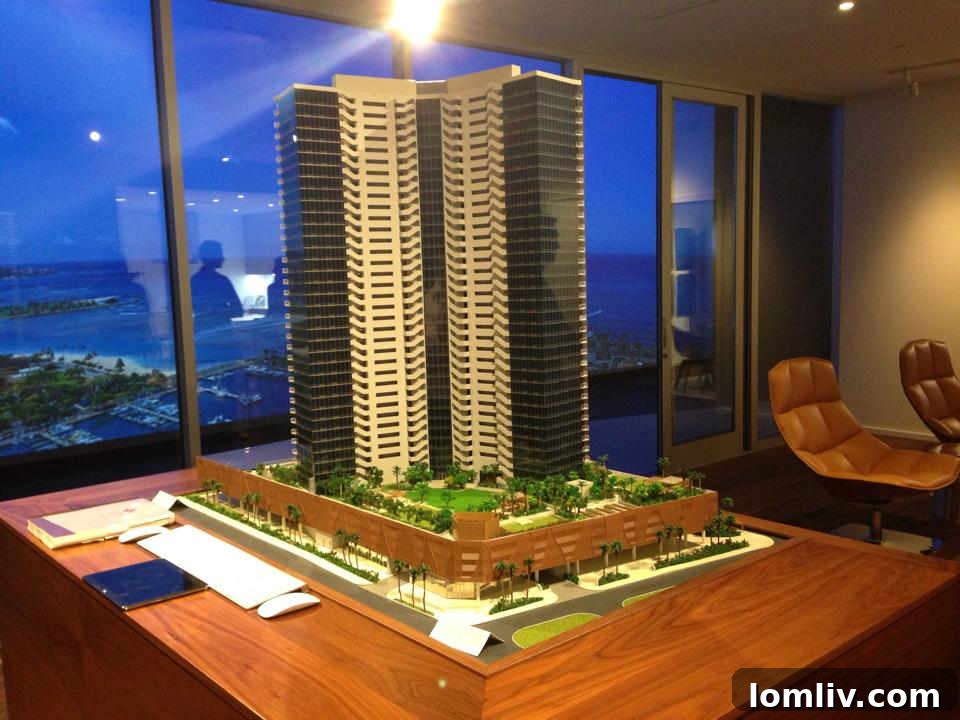
For an extended period, the Hawaiian real estate market, particularly the burgeoning Kaka’ako district of Honolulu, has been a focal point of national and international interest. Previous articles extensively covered a dynamic landscape characterized by new, impressive high-rise developments. These projects, often boasting lavish amenities and prime locations, appeared to exclusively target a specific clientele: affluent foreign investors seeking a secure haven for their capital, and wealthy local buyers aspiring to transition from traditional homes to modern, vertical residences. The prevailing narrative consistently highlighted a market where new units were quickly absorbed, often selling out within days, underscoring an intense demand for high-end island living. This momentum fueled an ambitious construction boom, dramatically reshaping Kaka’ako’s skyline with a multitude of opulent residential towers.
Central to this urban transformation is Howard Hughes’ monumental 60-acre Ward Village master plan, a colossal development endeavor spanning over a decade. However, even amidst such grand visions and booming sales figures, the underlying vulnerabilities of the market can sometimes surface. One such prominent project, initially named Vida, perfectly embodied the aspirations of luxury living in Kaka’ako. Regrettably, as of last Friday, the term “was” became more appropriate for Vida. After an 18-month sales period, during which developers struggled to move even half of its 262 units—each priced from a substantial $1 million upwards—the project was officially canceled. Selling only approximately 40 percent of units over such a prolonged period in a fiercely competitive, fast-moving market often signals significant deep-seated issues. In the high-stakes world of Hawaiian real estate, especially for luxury condominiums, an 18-month struggle for sales without substantial progress is a clear indication that something fundamental has gone awry, prompting a necessary re-evaluation of market expectations and strategic approaches.
It’s crucial to contextualize this situation within broader real estate dynamics. In alternative markets, such as Dallas, securing a 40 percent pre-sale before the groundbreaking ceremony would be met with immense jubilation and a definitive green light for construction. This stark divergence underscores a fundamental truth about the real estate industry: markets are inherently distinct, influenced by unique economic drivers, cultural preferences, and investment climates. What signifies a triumph in one region can paradoxically spell trouble in another, particularly when navigating the intricate demands of ultra-luxury properties in highly desirable, yet potentially saturated, locations.
Unpacking Vida’s Downfall: The Complexities of the Kaka’ako Luxury Condo Market
The unexpected cancellation of the Vida condo project, despite its initially promising outlook, stands as a critical case study in the inherent complexities of the luxury real estate market. Several significant factors undoubtedly contributed to its demise, offering invaluable insights for developers, investors, and urban planners alike. One of the most glaring issues was the palpable oversaturation of high-end, exceptionally expensive high-rises concentrated within an incredibly tight geographic area. Kaka’ako, an ambitious urban district undergoing rapid transformation, witnessed the planned construction of over 1,000 luxury condominium units crammed into an approximate six-block radius. This intense density inevitably led to fierce competition for a finite pool of buyers, even within a globally attractive destination like Honolulu.
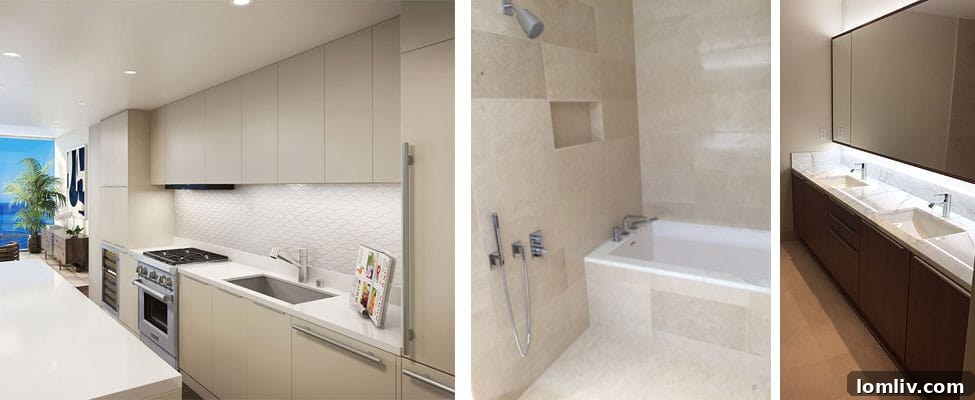
While many of these competing luxury developments strategically targeted wealthy foreign buyers—seeking not merely a residence, but a secure and prestigious asset for capital preservation and investment—Vida pursued a subtly different, and ultimately perhaps riskier, strategy. Its primary objective was to attract affluent local Hawaiian buyers. This distinction proved to be profoundly significant. Vida’s units were thoughtfully designed to be remarkably larger, starting at a generous 1,418 square feet, offering more expansive living spaces than many of its immediate competitors. Coupled with an attractive opening price point of approximately $705 per square foot, it initially positioned itself as a relatively compelling value proposition within the otherwise hyper-inflated Kaka’ako market, where prices often soared well past $1,000 per square foot. The project also meticulously emphasized its commitment to high-end finishes and a comprehensive array of premium features, including state-of-the-art Sub-Zero/Wolf appliances, sophisticated Asko dishwashers, exquisite walnut flooring, and even dedicated guest suites—all meticulously curated to appeal to a discerning local clientele seeking ultimate comfort, convenience, and luxury.
However, despite these undeniably appealing attributes, Vida encountered substantial challenges rooted in its specific location. Situated in what some observers described as a “no-man’s land,” its immediate surroundings lacked the established vibrancy and desirable amenities found in more central Kaka’ako areas. More critically, the long-term desirability and potential views of its units were significantly undermined by the very growth it sought to capitalize on. Many units were highly susceptible to being “walled in” by future high-rise developments spearheaded by the omnipresent Howard Hughes Corporation, which controls vast, contiguous swathes of the Ward Village master plan. This tangible threat of obstructed views and a diminished sense of exclusivity would naturally deter discerning luxury buyers who prioritize open vistas, privacy, and an unencumbered living experience.
Furthermore, the historical memory of Kaka’ako’s past may have lingered in the minds of astute local buyers. Historically, Kaka’ako functioned as an industrial zone, characterized by a proliferation of tumbledown warehouses and a less-than-glamorous reputation. While rapid and aggressive development has undeniably been transforming the area, this transition is far from complete. For the foreseeable future, these luxury complexes would exist amidst a patchwork of older, undeveloped, or still-industrial properties. Previous development attempts in the 1980s, when the area was first deemed “ripe” for revitalization, eventually lost momentum, fizzled out, and negatively impacted existing property values. This historical precedent might have instilled a degree of caution and skepticism among local, discerning buyers who understand the market’s nuances beyond a superficial glance at glossy marketing brochures. While Vida appeared to offer a “decent deal on paper” given the prevailing exorbitant prices in Kaka’ako, its strategic positioning and the market’s complex historical context presented formidable hurdles that even its luxurious offerings ultimately could not overcome.
Is Hawaii’s Luxury Real Estate Market Running Out of Ultra-Wealthy Buyers? A Critical Inquiry
The cancellation of the Vida project provokes a profound and unsettling question that resonates far beyond the shores of Honolulu and extends to other booming luxury markets globally: are developers, in their relentless and singular pursuit of the ultra-rich, beginning to exhaust the available pool of qualified buyers? In Oahu, much like in rapidly expanding metropolitan centers such as Dallas, the predominant development strategy has been almost exclusively concentrated on tapping into the deep pockets of the super-wealthy high-rise shopper. This strategy, while demonstrably lucrative in its initial phases, inherently carries significant risks of market saturation and limitations in buyer depth.
The expansive and long-running Ward Village project, with its continuous unveiling of new luxury towers and residential offerings, may have inadvertently contributed to Vida’s ultimate downfall by drawing from the same finite pool of local affluent individuals. The sheer financial commitment required to purchase a multi-million-dollar condominium, coupled with significant ongoing expenses such as Homeowners Association (HOA) dues—which in Vida’s case were projected to start at a substantial 93 cents per square foot—represents a considerable and continuous financial burden. Even for the genuinely wealthy, there exists a discernible limit to how many individuals can or will choose to invest in such high-value, high-maintenance properties within such a geographically concentrated area. This phenomenon strongly suggests that while the enduring allure of Hawaii as a second home destination or a primary residence for the affluent remains robust, the specific market for these particular ultra-luxury high-rises might have reached a temporary peak in terms of local demand.
The Dallas Parallel: A Cautionary Tale for Future Urban Development
The complex challenges encountered by Kaka’ako’s luxury market find compelling parallels with ongoing real estate trends in Dallas, Texas. As previously observed, even within a bustling and hot real estate market like Dallas, the number of buyers both willing and able to purchase high-end high-rise condominiums is intrinsically finite. Furthermore, while Dallas stands as a significant economic powerhouse, it does not possess the same inherent allure as a “Hawaiian-grade” second-home destination, which typically attracts global capital seeking exotic and unique locales. This fundamental distinction is absolutely crucial for developers when rigorously assessing market depth, long-term viability, and diversification strategies.
The current real estate landscape in Dallas points towards a similar, perhaps even problematic, overemphasis on the ultra-luxury segment, potentially neglecting a significant and growing portion of the city’s population. A decade ago, Dallas witnessed the emergence of what could be termed “middle-class” high-rises—innovative projects like The Beat in the Cedars, and downtown’s 1505 Elm and Metropolitan, which offered more accessible urban living options through either new construction or thoughtful conversions of existing structures. These projects successfully catered to a broader demographic, providing the benefits of urban density without the exorbitant price tags typically associated with elite luxury. However, in recent years, the development focus has shifted almost entirely upwards, towards increasingly exclusive and expensive offerings.
Within a stone’s throw of Dallas’s most prestigious areas, a fierce and often cutthroat battle for the same pool of multi-millionaire buyers is relentlessly unfolding. Projects like the highly anticipated Ltd. Edition at Fairmount and Turtle Creek, the opulent, yet-to-be-named luxury rental high-rise across Fairmount, the architecturally stunning Bleu Ciel, and of course, the iconic Museum Tower, are all intensely vying for the attention and investment of a very specific, and ultimately limited, clientele. Many of these prospective buyers are already comfortably established in other esteemed addresses such as The Stoneleigh, or currently reside in prestigious properties like The Ritz, One Arts Plaza, Vendome, Azure, and the W Residences. The competition for these elite buyers is so extraordinarily intense that market rumors widely suggest a prominent development like Bleu Ciel recently “poached” a buyer directly from the Ltd. Edition, vividly illustrating the cutthroat nature of this saturated luxury segment.
Optimistic proponents might highlight the considerable influx of corporate headquarters relocating to the sprawling Dallas-Fort Worth metroplex, bringing with them a roster of highly compensated executives—VPs, SVPs, EVPs, CEOs, CTOs, CMOs, CIOs, and COOs. While this undeniably injects significant wealth into the region, it’s a critical mistake to assume all these professionals will automatically gravitate towards urban luxury high-rises. Many are highly likely to prioritize practical factors such as proximity to their new offices and preferred school districts for their families, often leading them towards upscale suburban communities that offer larger homes, expansive yards, and a different lifestyle—areas perhaps closer to “Santa’s North Pole digs” than the dense urban core of Dallas. This prevalent preference for suburban luxury among a significant portion of the executive class further constrains and segments the already limited pool of urban high-rise buyers.
While some of these luxury high-rise projects, such as the initial phases of the Ltd. Edition, have admittedly taken their time to fully materialize, the lingering and crucial question remains: how long will it be before another opulent project in Dallas faces a similar, disheartening fate to Vida in an increasingly oversaturated market? The Hawaiian experience serves as a potent and invaluable reminder that even in seemingly robust luxury markets, there are inherent limits to demand and specific, intricate challenges related to location, pricing strategies, and the demographics of target buyers. This leads to a crucial and timely question for Dallas developers: Isn’t it time to broaden their vision and earnestly consider constructing high-rises designed for buyers who don’t necessarily feel the need to validate their success with top-tier Sub-Zero appliances and private elevators? There exists a substantial, currently underserved market of professionals and families who genuinely desire vibrant urban living but at a more attainable and sensible price point, without compromising on essential quality, desirable amenities, or a strong sense of community. Diversifying the high-rise offering in Dallas could very well be the key to achieving truly sustainable urban growth, rather than engaging in a relentless race to the absolute top that ultimately leaves some ambitious projects struggling or completely abandoned.
Share Your Story, Engage with Our Community
Do you possess a compelling Homeowners Association (HOA) story that deserves to be told? Perhaps you have a fascinating piece of high-rise history from your city or a unique, insightful perspective on contemporary urban development trends? Realtors, we warmly invite you to feature a listing—whether it’s a property brimming with untapped renovation potential or a beautifully completed project that shines with distinction. And for those seeking a more personal and engaging interaction, how about hosting a Candy’s Dirt Staff Meeting? We are also thrilled to announce that we are accepting marriage proposals (they’re legal now, after all!). Please feel free to shoot Jon an email with your thoughts, captivating stories, or any inquiries you might have at [email protected]. We genuinely look forward to hearing from you and fostering a vibrant, insightful discussion around the exciting and ever-evolving world of real estate and urban living.