Navigating Contrast: Local Incidents Amidst National Turmoil
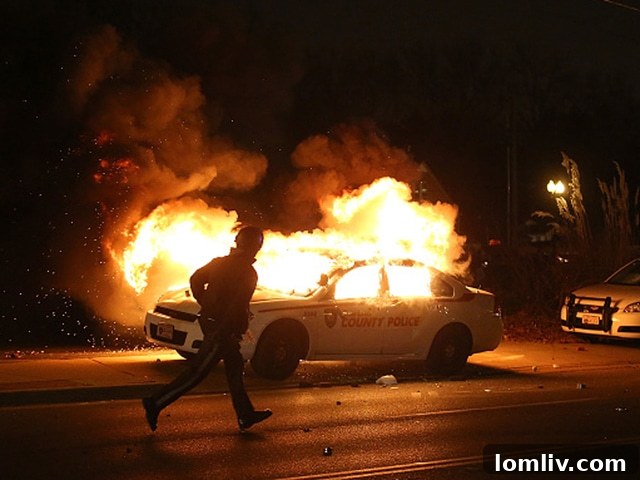
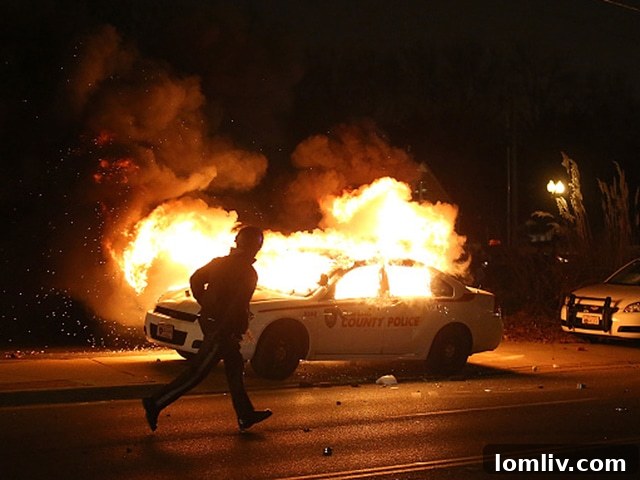
Last week presented a stark dichotomy in the landscape of American public safety. While cities like Ferguson, Missouri, grappled with the profound aftermath of a grand jury’s decision—manifesting in widespread civil unrest, protests, and significant property damage, as vividly depicted in the image above—the affluent communities of Park Cities, Dallas, experienced an entirely different kind of police activity. For residents of University Park and Highland Park, the week’s police reports were characterized by a relatively quiet cadence, even by their typically peaceful standards. This striking contrast serves as a powerful reminder of the varied challenges communities face across the nation, from deeply rooted societal issues to more localized concerns of property crime and community order.
The unrest in Ferguson brought into sharp focus the complex dynamics between communities and law enforcement, sparking national conversations about justice, accountability, and the role of policing. Meanwhile, in the tranquil, tree-lined streets of the Park Cities, local authorities focused on routine matters, underscoring the localized nature of crime and policing in distinct urban and suburban environments. This article aims to delve into the seemingly minor incidents reported in the Park Cities during this period, examining them not in isolation, but through the lens of community safety and vigilance, especially when juxtaposed against the backdrop of broader national events. Understanding these local occurrences can offer insights into the everyday realities and priorities of a community accustomed to relative calm.
Understanding Local Dynamics: Property Crime in Park Cities
The Park Cities, encompassing University Park and Highland Park, are renowned for their picturesque neighborhoods, top-tier schools, and a strong sense of community. This environment often fosters an expectation of safety and security, making even minor infractions notable. While major violent crimes are infrequent, property crimes, often opportunistic in nature, remain a constant focus for local law enforcement and residents alike. The incidents detailed below, though small in scale compared to national headlines, are critical reminders for residents to maintain vigilance and practice fundamental security measures to protect their belongings and homes.
These reports from a specific week in November highlight common challenges faced by even the most secure neighborhoods. They reveal that criminals often target easily accessible valuables and vehicles left unsecured, emphasizing the importance of proactive prevention. From vehicle thefts to burglaries of unlocked cars, these incidents underscore a persistent vulnerability that, while not indicative of widespread chaos, still impacts individual residents and the collective sense of security within the community.
Recent Property Crime Reports: November 2020
Vehicle Theft: A Wake-Up Call on Bryn Mawr Drive
Between the evening of November 18th at 6 p.m. and the early morning hours of November 19th at 6 a.m., a green 1999 Ford Explorer vanished from the 3400 block of Bryn Mawr Drive. Valued at approximately $2,000, the vehicle had been left parked on the street. This incident serves as a crucial reminder for all vehicle owners, regardless of their car’s age or value, that any vehicle left unattended can become a target. Older models, while perhaps less technologically advanced in security features, can still be attractive to thieves for their parts or for quick resale. Law enforcement consistently advises parking vehicles in well-lit areas, preferably in a garage, and ensuring all doors are locked and windows are closed, even for short periods. This seemingly minor theft underscores the importance of basic security protocols to deter opportunistic criminals.
Deterring Break-ins: Vigilance on St. Johns Drive
On the afternoon of November 20th, at approximately 2:30 p.m., a resident in the 4400 block of St. Johns Drive displayed remarkable presence of mind when he observed a burglar actively attempting to break into his brown 1999 Ford F250. Rather than allowing the crime to proceed silently, the victim’s immediate action—yelling at the perpetrator—proved effective. Startled, the would-be burglar quickly abandoned his attempt, jumping into a blue Chevrolet Impala driven by an accomplice, which then sped away from the scene. This incident highlights the significant role community vigilance and individual responsiveness can play in crime prevention. While direct confrontation is not always advisable, alerting a burglar can often be enough to deter them, emphasizing that an engaged community is a safer community. Police encourage reporting suspicious activity immediately, even if it doesn’t result in a completed crime.
The Cost of Convenience: Unlocked Vehicles on Gillon Avenue
The evening of November 20th, between 9 p.m. and 11:40 p.m., saw two separate instances of opportunistic burglary in the 3800 block of Gillon Avenue. A burglar gained entry into two white SUVs—a 2005 Ford Excursion and a 2012 Land Rover Range Rover—both of which had been left unlocked outside a residential property. From these vehicles, a Snob purse and a pair of Sparco racing shoes were stolen. These incidents are unfortunately common and underscore one of the most frequently cited pieces of advice from law enforcement: “Lock it or lose it.” Leaving vehicles unsecured, even within seemingly safe, affluent neighborhoods, presents an open invitation to thieves. Valuables left in plain sight or easily accessible within unlocked cars are prime targets, often leading to quick, low-risk gains for criminals. This serves as a critical reminder that a moment of oversight can lead to an unexpected loss.
Another Instance: Securing Valuables on Gillon Avenue
Continuing the pattern of opportunistic crime on Gillon Avenue, another incident occurred between 11 p.m. on November 20th and 2:30 a.m. on November 21st. A thief targeted a tan 2012 GMC Yukon, also left unlocked in the 3800 block of Gillon Avenue, making off with a Garmin GPS device and a Wilson phone-signal booster. This follows the pattern of the previously mentioned incidents, where unsecured vehicles become easy targets for criminals seeking electronic devices and other portable valuables. GPS units and signal boosters, while perhaps not as high-value as other electronics, are readily marketable items that can be quickly removed from an unlocked vehicle. The repeated nature of such crimes in a specific area within a short timeframe often suggests a pattern of behavior by criminals who may be testing the security habits of residents. This reinforces the need for consistent security practices, including removing all tempting items from view and ensuring vehicles are locked at all times, even when parked in a driveway or just outside the home.
Unraveling the Case: Macbook Recovery and Suspect Apprehension on Miramar Avenue
Between the afternoon of November 20th at 2:30 p.m. and the morning of November 21st at 8:40 a.m., a black Land Rover parked unlocked in a driveway in the 3900 block of Miramar Avenue was burglarized. The thief absconded with a Macbook computer and a pair of sunglasses. What sets this incident apart is the victim’s proactive measures that aided law enforcement: he informed police that he could easily identify his computer because he had previously removed its hard drive, intending to donate the device to Goodwill. This unique identifier proved crucial. Police investigations led to the recovery of the stolen computer in the possession of Vernon Lawler, 57, who was subsequently arrested. Lawler was also listed as a suspect in the earlier incident on Gillon Avenue, demonstrating how diligent police work and unique victim information can connect disparate crimes and lead to arrests. This case highlights the importance of recording serial numbers, using unique identifiers, and maintaining vigilance, as these details can significantly aid in the recovery of stolen property and the apprehension of suspects.
Unusual Targets: The Stolen Third-Row Seat on Stanford Avenue
From the evening of November 20th at 5:45 p.m. to the morning of November 21st at 11:45 a.m., a black 2011 Chevrolet Suburban in the 3100 block of Stanford Avenue was targeted. In an unusual turn of events, a burglar broke into the vehicle and specifically stole its third-row seat, valued at approximately $500. This incident points to a different motivation behind vehicle break-ins, where the target isn’t just easily portable electronics or cash, but larger, more specialized vehicle components. Third-row seats from popular SUVs can be sought after in the secondary market, either for replacement parts or for modification purposes. This type of theft suggests a more organized or deliberate approach than simple opportunistic grabs. It reminds vehicle owners that even seemingly less obvious parts of their cars can be valuable to thieves, urging them to consider the security of all components of their vehicles, particularly those that are removable or easily detached.
Beyond Property: The Persistent Saga of Marx Dale Billingsley
Amidst the reports of property crime, the story of Marx Dale Billingsley adds a unique dimension to local police activity. On November 22nd, at 12:49 p.m., Billingsley was arrested in the 3500 block of Hanover Street and charged with disorderly conduct. This was not an isolated incident; he had also been arrested just days prior, on November 19th, in the 6300 block of Westchester Drive. For years, Billingsley, now 65, has been a recognizable figure in University Park, wandering the streets with a bucket and a squeegee. His routine involves knocking on doors and offering his services as a window washer. However, these interactions often go awry, leading to his repeated arrests for disorderly conduct. His situation represents a complex challenge for law enforcement and the community: balancing public order with compassion for individuals who may be struggling with homelessness, mental health issues, or simply an unconventional lifestyle.
The repeated nature of Billingsley’s arrests highlights the intricacies of policing in a community that values order and privacy. While his actions are not malicious, they often disrupt residents’ peace, leading to calls to the police. What makes Billingsley’s long-standing saga particularly poignant in the context of the Ferguson riots is a specific, sobering detail: “To our knowledge, no officer has ever shot him.” This statement, seemingly simple, carries immense weight, drawing a direct and intentional contrast to the tragic events unfolding nationally. It serves as a subtle yet powerful affirmation of the different realities of policing and community interaction in a place like Park Cities, where the use of lethal force is profoundly rare, especially in non-violent situations. It underscores the community’s relative peace and the nature of its police force’s engagement, standing in stark opposition to the highly charged and often violent encounters that dominate national headlines, prompting reflection on the diverse experiences of justice and policing across America.
Community Vigilance and Prevention: Safeguarding Park Cities
The incidents reported in the Park Cities, though minor compared to national crises, serve as important reminders for residents about the ongoing need for vigilance and proactive crime prevention. While the police department works diligently to respond to and investigate crimes, community members play a crucial role in maintaining the safety and security of their neighborhoods. Simple steps can significantly reduce the risk of becoming a victim of opportunistic crime:
- Locking Vehicles and Homes: The most prevalent type of property crime reported involves unlocked vehicles. Always ensure car doors are locked, windows are closed, and homes are secured, even if you are just stepping out for a short period. This small action removes an easy target for criminals.
- Securing Valuables: Avoid leaving valuable items such as laptops, phones, wallets, or purses in plain sight inside your car. If items must be left in a vehicle, store them in the trunk or out of view to minimize temptation.
- Reporting Suspicious Activity: If you see something that looks out of place or makes you uncomfortable, do not hesitate to contact local law enforcement. Early reporting can prevent a crime from occurring or help police apprehend suspects more quickly.
- Utilizing Technology: Home security systems, alarm systems for vehicles, and even doorbell cameras can act as significant deterrents and provide crucial evidence for investigators. Consider investing in and maintaining such technologies to enhance your property’s security.
- Neighborhood Watch Programs: Participating in or forming a neighborhood watch group can foster a stronger sense of community and collective responsibility for safety, creating a unified front against crime.
By collectively adopting these practices, the Park Cities can reinforce its reputation as a safe and secure place to live, complementing the dedicated efforts of its police force.
Conclusion: Reflecting on Local Safety and Broader Realities
The narrative of Park Cities’ week in November—marked by minor property crimes and the recurring arrests of a local character—stands in stark relief against the turbulent backdrop of Ferguson, Missouri. This contrast highlights the diverse realities of safety, order, and justice in communities across the United States. While national events often dominate headlines with stories of profound social unrest and systemic challenges, local police blotters quietly reflect the everyday work of maintaining peace and addressing community-specific issues. The incidents in the Park Cities, though seemingly inconsequential when viewed from a national perspective, are vital in their local context. They underscore the importance of community vigilance, fundamental security practices, and the intricate dynamics of local law enforcement’s role. Ultimately, ensuring safety and fostering a sense of security is a multifaceted endeavor, requiring both dedicated policing and an engaged, proactive citizenry, irrespective of the broader national conversations that may be unfolding.