Drive Like Your Kids Live Here: A Grassroots Movement for Safer Streets
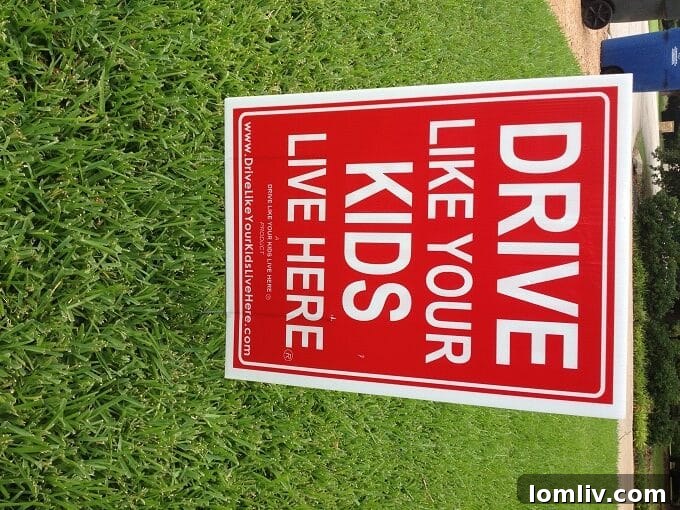
In an increasingly fast-paced world, the simple act of driving has become fraught with dangers, particularly within our residential communities. Speeding, distracted driving, and general recklessness transform quiet neighborhood streets into potential hazards for pedestrians, cyclists, children playing, and even cherished pets. It’s a pervasive problem that often feels insurmountable, yet sometimes, the most effective solutions emerge from the simplest, most heartfelt appeals. This is precisely the case with a powerful, empathy-driven campaign sweeping across the nation, championed by bright red lawn signs bearing the profound message: “Drive Like Your Kids Live Here.”
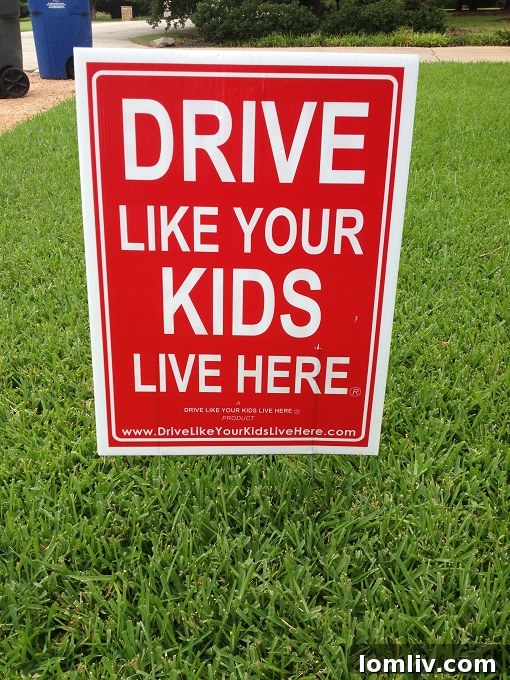
These impactful signs, featuring bold white lettering, are not just catching eyes; they are sparking conversations and, more importantly, encouraging a much-needed change in driver behavior. From the tree-lined streets of Wethersfield, Connecticut, to the bustling avenues of Dallas, Texas, these beacons of caution are reminding us of a fundamental truth: our shared responsibility to protect those most vulnerable in our communities.
The Genesis of a Movement: Petulia Pugliares’ Vision
The inception of this powerful campaign traces back to Petulia Pugliares, a resident of Wethersfield, Connecticut. Living uniquely positioned between two elementary schools and a high school, Petulia was an unfortunate, frequent witness to the harrowing reality of excessive speed on residential roads. She observed countless vehicles disregard speed limits, creating a constant threat to the safety of students, parents, and neighbors alike. Her concerns escalated beyond mere observation; Petulia herself experienced the terrifying ordeal of being struck by a car while walking in her own neighborhood. This deeply personal incident, coupled with the numerous accidents she had witnessed, ignited a fierce determination to act.
Frustrated by the persistent disregard for safety, Petulia envisioned a campaign that transcended traditional, often ignored, “Slow Down” admonitions. She sought to tap into something deeper within drivers – their humanity, their protective instincts, and their capacity for empathy. The result was the elegantly simple yet profoundly effective message: “Drive Like Your Kids Live Here.” It’s a direct appeal, designed to make drivers pause, reflect, and internalize the potential consequences of their actions by connecting them to their most cherished loved ones. This isn’t about shaming; it’s about invoking a sense of shared responsibility and care for the community’s children, whether they are biologically theirs or not.
“Cars go by way too fast, especially during the morning and evening commute,” says Pugliares, who has witnessed numerous accidents, and was even struck by a car herself as she walked the neighborhood. Frustrated, she came up with a simple campaign to try to get drivers to slow down.
Her message, printed on bright, red lawn and street signs reads “Drive Like Your Kids Live Here.”
Pugliares’ words seem to work. “It has that hit-home effect. It really resonates and makes them slow down,” she told ABC News.”
Beyond Connecticut: The Dallas Driving Dilemma
While Petulia’s initiative began in the quieter suburban landscape of Connecticut, its resonance extends far beyond. The problem of aggressive and excessive speeding is a national epidemic, and few places exemplify its intensity quite like the sprawling urban environment of Dallas, Texas. If drivers in Connecticut are perceived to be moving too fast, then in Dallas, they are often on what feels like “speed steroids.” Texas boasts highways where speeds can legitimately reach 120 mph, fostering a driving culture where high velocity often translates into a dangerous mindset even on local streets.
The stakes are particularly high in Dallas. Not only do residents contend with higher general speeds, but the prevalence of larger, more powerful vehicles – trucks, SUVs, and even Hummers – transforms any fast-moving car into a potential missile. These vehicles, while offering perceived safety to their occupants, present an amplified threat to anyone outside their steel frames. The sheer mass and momentum of these vehicles mean that even a minor lapse in judgment or a slight increase in speed can have catastrophic consequences for pedestrians, cyclists, and small children who might dart into the street. The phrase “any fast-moving car is dangerous” becomes alarmingly understated when considering the sheer force behind a speeding SUV on a residential street.
Thus, the message “Drive Like Your Kids Live Here” finds an even more critical application in Dallas and other fast-paced Texas cities. It’s a necessary counterbalance to a driving culture that often prioritizes speed and efficiency over safety and community well-being. The signs serve as a stark, yet gentle, reminder that the consequences of reckless driving are not abstract; they are deeply personal and can shatter lives within the very communities we inhabit.
The Power of Empathy: Why These Signs Resonate
What makes Petulia Pugliares’ campaign so uniquely effective, especially compared to more conventional warnings? The answer lies in its profound appeal to empathy. Traditional road signs often rely on punitive threats or generic directives – “Speed Limit 25,” “Children At Play” – which, while important, can easily become background noise to hurried drivers. Pugliares’ sign, however, bypasses the logical brain and speaks directly to the emotional core, particularly parental instincts.
The phrase “Drive Like Your Kids Live Here” doesn’t just state a fact; it creates a scenario. It asks drivers to imagine their own children, grandchildren, nieces, or nephews stepping out onto that very sidewalk, playing in that very yard, or crossing that very street. It transforms anonymous children into “your” children, fostering an immediate, personal connection that transcends the usual detachment of driving. This psychological nudge is far more potent than any stern warning. It taps into our inherent desire to protect the innocent and beloved.
The red color of the signs also plays a subtle but significant role. Red is universally recognized as a color of warning and urgency, immediately drawing the eye. Combined with the direct, bold text, the signs are difficult to ignore. As Petulia herself noted to ABC News, “It has that hit-home effect. It really resonates and makes them slow down.” This effectiveness comes from shifting the driver’s perspective from simply obeying a rule to actively safeguarding lives, a shift that can lead to more consistent and conscientious behavior behind the wheel. It’s a much kinder, yet arguably more persuasive, approach than the author’s humorous, albeit frustrated, alternative: “Slow Down You EFF*#@!! IDIOTS!”
A Grassroots Movement Spreads: Dallas and Beyond
The compelling simplicity and proven effectiveness of Petulia’s message have spurred its widespread adoption, transforming it from a local initiative into a national movement. The signs are now proliferating in neighborhoods like Preston Hollow in Dallas and even appearing in the affluent Park Cities, indicating a growing awareness and commitment to road safety within Texas communities. The author’s personal outreach to Petulia, inquiring about the first Dallas recipients and the surging demand from “car crazy Texas,” underscores the enthusiastic reception the campaign has received.
The scope of this grassroots success is further highlighted by ABC News, which reported that Petulia had “sold and donated 4,000 of the signs to cities, community organizations and schools” at one point. This figure is not just a testament to her dedication but also to the widespread need for such a powerful message. It demonstrates how communities, feeling the brunt of reckless driving, are proactively seeking solutions that empower residents to take ownership of their street safety. Local HOAs, neighborhood watch groups, and even concerned individuals are purchasing and strategically placing these signs, creating a visible network of care and caution. This collective effort fosters a sense of shared responsibility, reminding every driver that they are part of a community that values life and safety above all else.
Understanding the Impetus: Who’s Rushing and Why?
While it’s easy to point fingers at specific demographics, the reality of speeding in residential areas is complex, often driven by a combination of factors that affect a broad spectrum of drivers. The author’s candid observation, “In my opinion, the Soccer Moms are the worst offenders because they are racing kids off to lessons and practice, trying to get there on time. I know — I was one of them!“, offers a valuable, self-aware insight. This highlights a critical aspect of modern life: the relentless pressure of packed schedules.
“Soccer Moms” (and “Soccer Dads,” or any parent/guardian ferrying children) often find themselves juggling multiple appointments, school pickups, extracurricular activities, and errands, all within tight timeframes. The desire to be punctual, coupled with the myriad distractions of child passengers, can inadvertently lead to increased speeds and reduced attentiveness. However, it’s crucial to broaden this perspective. Speeding is not confined to harried parents. It’s also prevalent among commuters rushing to and from work, individuals distracted by cell phones or in-car entertainment systems, and even those who simply possess an aggressive driving style. The common thread is often a combination of perceived urgency, distraction, and a temporary disconnect from the immediate surroundings and the potential impact on others. Acknowledging that anyone can fall into these habits, including oneself, is the first step toward promoting more mindful driving for everyone.
Fostering Safer Communities: Your Role and the Way Forward
The “Drive Like Your Kids Live Here” campaign is more than just a collection of signs; it’s an invitation to engage actively in fostering safer communities. Have you noticed these signs appearing in your neighborhood, or perhaps during your commute? Their presence alone is a conversation starter, prompting critical questions about local road safety. More importantly, do you believe they genuinely make a difference in encouraging drivers to reduce their speed and drive with greater caution? The anecdotal evidence suggests they do, but collective observation and shared experiences strengthen this understanding.
Consider the practical applications of this campaign. Could these signs serve as a meaningful gift from a Realtor to new homeowners? Beyond a welcome basket, a sign that genuinely promotes the safety and well-being of a family in their new neighborhood could be a powerful statement of care and community integration. For community organizations, schools, and local businesses, these signs present an affordable and effective tool for public safety advocacy. Supporting this initiative, whether by acquiring signs for your street, sharing the message on social media, or simply adopting the mindful driving philosophy yourself, contributes significantly to creating streets where everyone, especially children, can feel safer. It’s about collective responsibility and a shared vision for peaceful, secure neighborhoods.
Conclusion: A Call for Conscious Driving
The proliferation of “Drive Like Your Kids Live Here” signs represents a powerful, grassroots response to the escalating crisis of reckless driving in our communities. Born from Petulia Pugliares’ personal experience and profound empathy, this simple message cuts through the noise of daily life, urging drivers to connect their actions with the profound responsibility they hold. From the quiet suburbs of Connecticut to the sprawling urban landscape of Dallas, the signs serve as vital reminders that our roads are not just conduits for travel but shared spaces where lives intersect.
By appealing to our most fundamental instincts of care and protection, this campaign is successfully transforming abstract safety guidelines into personal imperatives. It highlights the potential for ordinary citizens to catalyze significant change and reminds us that true road safety extends beyond traffic laws; it’s rooted in respect, mindfulness, and a collective commitment to safeguarding every life within our communities. Let us all embrace this vital message, slowing down and driving with the profound awareness that every street is someone’s home, and every corner may hold someone’s child.