Dallas Plan Commission Upholds Decision: Lincoln Katy Trail Project Re-Vote Attempt Spectacularly Fails
In a significant turn of events for Dallas’s urban landscape, the meticulously watched attempt to secure a re-vote from the Plan Commission (CPC) regarding the controversial Lincoln Katy Trail project has met with resounding failure. This pivotal decision underscores the Plan Commission’s commitment to procedural integrity and signals a clear message to developers seeking to overturn initial rulings without substantial new evidence. The project, a proposed high-density development near the popular Katy Trail, has been a focal point of debate among local residents, urban planners, and real estate professionals, highlighting the ongoing tension between urban growth and community preservation.
The push for reconsideration was initiated by Christopher Lewis, a Plan Commissioner appointed by District 8 Council Member Tennell Atkins. As previously reported on December 4th, Lewis formally filed the necessary paperwork to bring the project back for review. This move came after the Lincoln Katy Trail project had initially failed to gain approval from the CPC on November 15th. The initial rejection had sent ripples through the development community, particularly within the Oak Lawn area, where the proposed project’s impact on infrastructure, traffic, and neighborhood character had been hotly debated.
The Motion to Reconsider: A Rare and Contentious Affair
The latest CPC session saw the motion to reconsider brought before the commissioners. District 10 appointee Tipton Housewright notably seconded Lewis’s motion, indicating at least some initial support for revisiting the decision. However, the path to a re-vote was immediately fraught with procedural challenges. Almost as soon as the motion was on the table, Commissioner Deborah Carpenter moved to halt further discussion and proceed directly to a vote on the re-vote itself. This attempt to expedite the process and bypass lengthy debate, perhaps to gauge immediate support, ultimately did not pass. This procedural hurdle, though seemingly minor, hinted at the underlying tension and strong opinions held by the commissioners regarding the project’s reconsideration, creating a moment of acute suspense and anticipation for those present.
When CPC Chair Gloria Tarpley subsequently opened the floor for commissioner comments, it became abundantly clear why Commissioner Carpenter’s motion for an immediate vote had failed. The commissioners were not merely interested in a quick decision; they intended to thoroughly scrutinize the rationale behind the request for reconsideration, delivering a pointed critique of the process and the developers’ persistent efforts. This segment of the meeting provided a platform for commissioners to articulate their concerns, delve into the specifics of the case, and reinforce the established protocols that govern such crucial urban planning decisions, emphasizing transparency and accountability.
Scrutiny and Skepticism: Commissioners Voice Their Concerns
The ensuing discussion revealed a collective skepticism among the commissioners regarding the legitimacy of the re-vote request. Commissioner Margot Murphy initiated a direct line of questioning, pressing Commissioner Lewis for the identity of the individual or entity that had influenced him to seek reconsideration. Murphy highlighted the unusual nature of Lewis’s involvement, given his relatively new appointment to the commission and the considerable distance of his district from the proposed project site. Lewis candidly responded, identifying Angela Hunt, who was working on behalf of Lincoln Property Company, as the person who had persuaded him. This revelation immediately raised questions about external lobbying and its appropriateness in the context of deliberative planning decisions, prompting further examination of the developer’s strategy.
Commissioner Paul Ridley, whose district encompasses the precise location where the Lincoln Katy Trail project was slated for construction, delivered particularly scathing remarks. Ridley emphasized that requests for reconsideration are exceedingly rare and are typically reserved for situations where genuinely startling new information comes to light—a condition he firmly stated was absent in this case. He cautioned against setting a dangerous precedent, asserting that allowing re-votes for projects simply because developers were dissatisfied with an initial outcome would effectively open a “sore-loser” door. Such a practice, Ridley argued, would undermine the finality and authority of the Plan Commission’s decisions, leading to an endless cycle of appeals and instability in urban development planning. He stressed that decisions, once made, should stand unless extraordinary circumstances are demonstrably in evidence, which they were not, thereby upholding the integrity of the planning process.
Debunking the “Misinformation” Claim: A Wily Interrogation
Commissioner Mark Rieves employed a particularly astute and “wily” approach to dissect Lincoln Property Company’s rationale for the re-vote. Rieves carefully examined the new information packet submitted by the developer, which posited that the CPC’s initial decision might have been unknowingly influenced by “misinformation” disseminated by the opposition. Systematically, Rieves created a precise timeline, noting that no supposed “misinformation” had been brought to light since August—months before the project’s revised two-building configuration was presented and a full four months prior to the crucial CPC vote in November. His meticulous timeline effectively dismantled the developer’s claim, demonstrating that the Plan Commission had ample time, free from any alleged misleading information, to deliberate on the revised proposal. Rieves confidently concluded that in the absence of any new misinformation during the intervening four months, the CPC’s decision could not have been swayed by information pertaining to the original, much less the revised, configuration. This thorough examination underscored the importance of accurate data and the CPC’s independence in its decision-making process, showcasing a commitment to evidence-based decisions.
Even CPC Chair Gloria Tarpley, who had personally voted in favor of the Lincoln Katy Trail project during its initial review, firmly stated that she would not support a re-vote. Her position, while seemingly paradoxical, highlighted a crucial principle of governance: the need for consistency and the avoidance of setting problematic precedents. Tarpley eloquently articulated her concern, warning against what she termed “the camel’s nose under the tent” scenario. This analogy referred to the potential danger of allowing every disgruntled developer a “second bite of the apple,” thereby opening the floodgates for incessant appeals and undermining the finality of the commission’s decisions. Her stance, coming from someone who had initially supported the project, lent significant weight to the collective rejection of the re-vote motion, reinforcing the idea that process and principle often outweigh individual project merits in the long run and protect the integrity of the institution.
A Unanimous Decision (Almost) and What It Means for Dallas Development
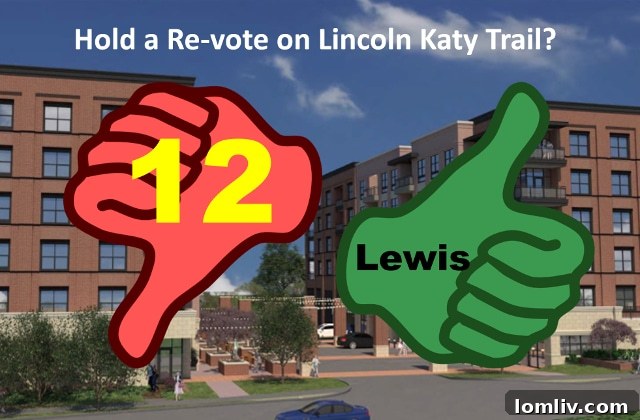
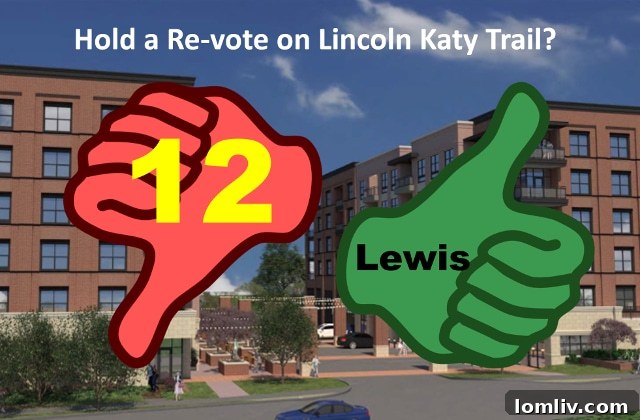
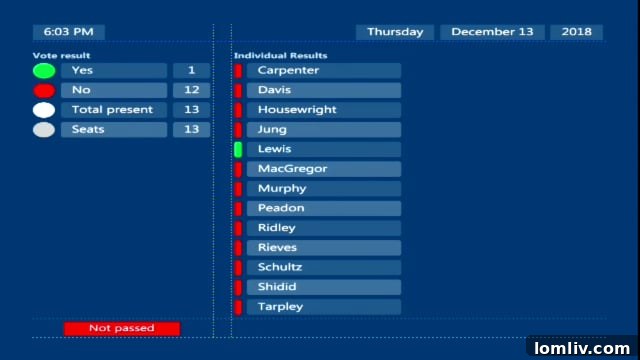
In the final tally, Commissioner Christopher Lewis found himself isolated, casting the sole vote in favor of a re-vote. Even Commissioner Tipton Housewright, who had initially seconded Lewis’s motion, ultimately sided with the majority after hearing the compelling arguments and recognizing the strong consensus among his peers. The decisive vote reaffirmed the Plan Commission’s role as a steadfast guardian of Dallas’s urban planning principles, emphasizing that decisions, once made through due process, hold significant weight and are not easily overturned. This outcome sends a clear message to developers: the CPC’s decisions are considered final, and attempts to circumvent them without compelling new evidence will likely be met with strong resistance, thus fostering stability and predictability in the development process.
The Road Ahead: What’s Next for the Lincoln Katy Trail Project?
The question that now looms large is: what fate awaits the Lincoln Katy Trail project? As previously speculated, there were indications that Lincoln Property Company might attempt to appeal its case directly to the Dallas City Council in January. However, this path has become significantly more challenging. With the recent string of setbacks and the new requirement for a three-quarters super-majority vote for passage at the City Council level, the hurdles for the project have escalated dramatically. This heightened requirement reflects a broader shift towards more rigorous oversight of major development projects, often influenced by community advocacy and a desire for more equitable urban growth, making it a much more difficult proposition for developers to push through controversial projects.
Will Lincoln Property Company, in the face of these formidable obstacles, finally pack up its tent and abandon its ambitious Katy Trail plans? While the mounting losses and the daunting super-majority requirement suggest a difficult road, experienced observers of Dallas real estate development know better than to bet against major players. Developers often possess remarkable resilience and a capacity for strategic pivots. They might choose to revise the project significantly, seek alternative sites, or explore other avenues to achieve their development goals. The saga of the Lincoln Katy Trail project is far from over, representing a microcosm of the dynamic and often contentious interplay between development, community interests, and municipal governance in a rapidly growing city like Dallas.
The Plan Commission’s unwavering decision to reject the re-vote reinforces the integrity of its processes and underscores the importance of finality in planning approvals. It highlights the delicate balance between fostering economic growth through development and safeguarding the character and infrastructure of existing neighborhoods. For Dallas, this decision could set a precedent for how future large-scale projects are evaluated, debated, and ultimately approved or denied, ensuring that every project is thoroughly vetted and decisions are respected, benefiting both residents and developers through clearer guidelines.

Unveiling Dallas’s Urban Fabric: High-Rises, HOAs, and Architectural Narratives
Remember: My focus extends deep into the intricate world of Dallas real estate, encompassing everything from the soaring ambition of high-rises and the complex dynamics of Homeowners Associations (HOAs) to the transformative journey of renovation projects. But my passion doesn’t stop there; I have a profound appreciation for the delicate balance required between preserving modern and historical architecture and embracing the progressive ideals championed by the YIMBY (Yes In My Backyard) movement. This comprehensive perspective allows me to offer nuanced insights into how projects like the Lincoln Katy Trail shape our city’s future while respecting its past, often bridging the gap between development needs and community desires.
My commitment to high-quality real estate journalism has been consistently recognized. In 2016, 2017, and 2018, the prestigious National Association of Real Estate Editors honored my writing with three Bronze awards for articles exploring diverse topics such as the evolution of housing styles (2016), the complexities of property taxes (2017), and a vivid account of a fire engulfing Preston Place condos (2018). Furthermore, my work received two Silver awards for insightful explorations into international real estate, including a captivating piece on a home in Marrakech (2016) and an analysis of second homeownership in Bermuda (2017). These accolades highlight my dedication to bringing well-researched, engaging, and impactful stories to life for a broad audience.
Do you have a compelling story about Dallas’s real estate scene, an architectural marvel worth spotlighting, or even a unique marriage proposal you’d like to share? I’m always eager to hear from my readers and delve into the fascinating narratives that define our built environment. Please don’t hesitate to reach out via email at [email protected]. While I encourage you to look for me on Facebook and Twitter for more insights and discussions, my online presence can be elusive – a challenge I playfully extend. Nevertheless, your engagement and stories are always welcome, contributing to the rich tapestry of Dallas real estate discourse!