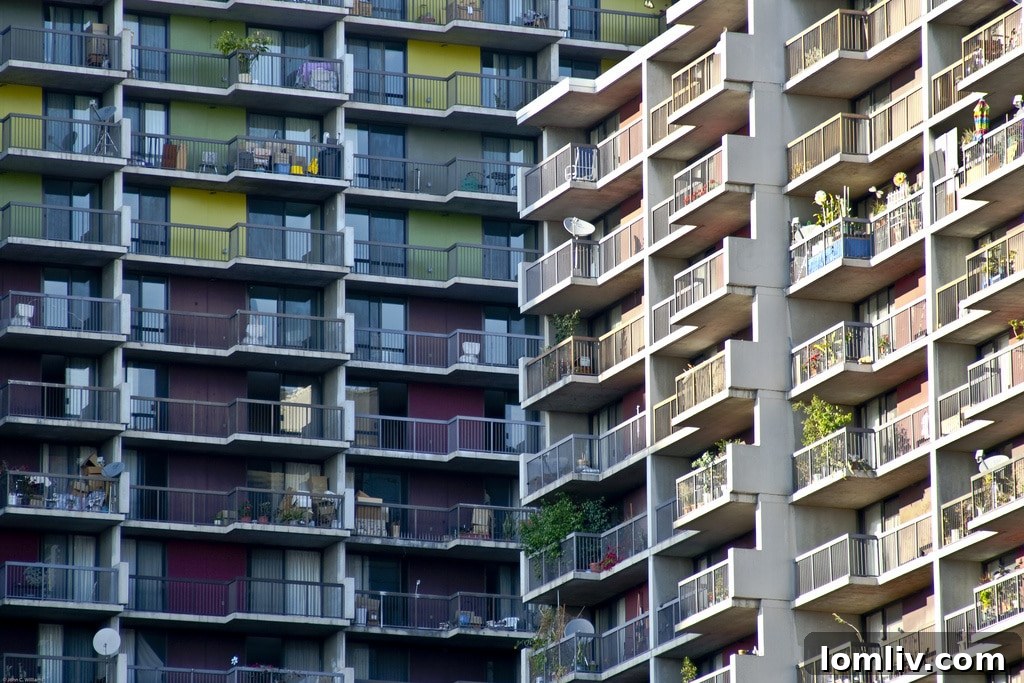
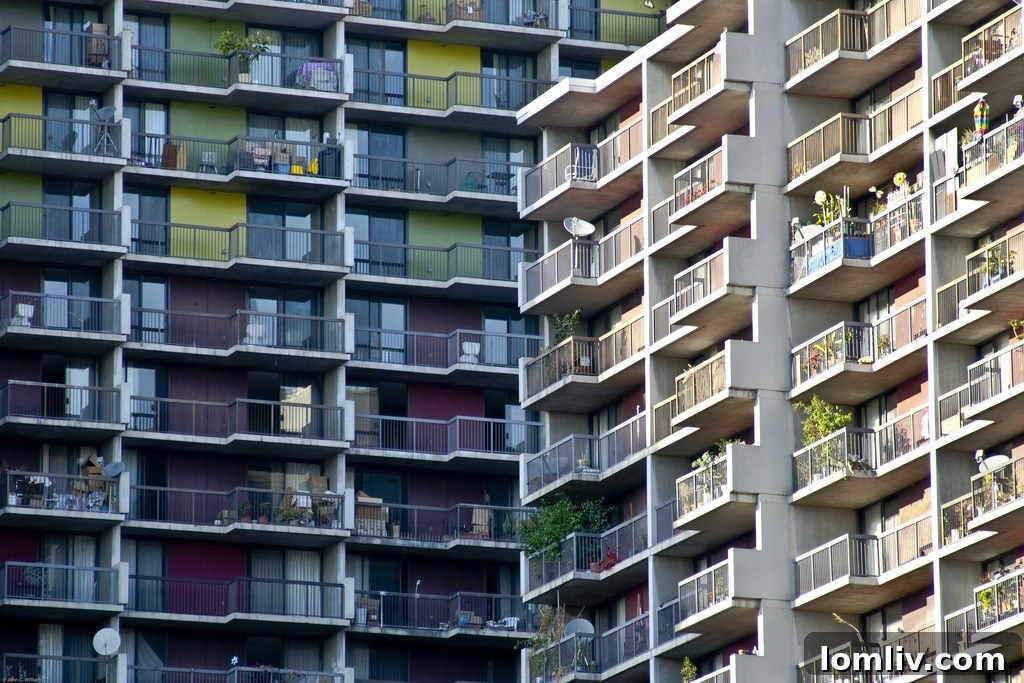
The escalating cost of housing has become a critical concern across the United States, and few cities exemplify this trend more starkly than Los Angeles. A recent study by UCLA researchers revealed an astonishing 141% surge in home prices in LA since the year 2000, marking it as the highest price increase recorded nationwide. This dramatic rise underscores a deepening affordability crisis, making homeownership increasingly out of reach for many residents and threatening the economic vibrancy of one of America’s largest metropolitan areas.
While Los Angeles leads this alarming trend, other major U.S. cities have also experienced substantial increases in housing costs, even without adjusting for inflation. Washington, D.C., saw a 105% jump, followed by San Diego at 101%, San Francisco at 89%, New York City at 73%, and Seattle at 67%. Chicago, while less dramatic, still recorded a 25% increase. Dallas, often perceived as a more affordable major city, barely made it onto this list with a 39% increase, an indication that even it is not immune to these national pressures. A crucial observation from the study highlights that all these other cities managed to build significantly more housing units than Los Angeles during the same period, suggesting a direct correlation between housing supply and price escalation.
So, what precisely is driving Los Angeles’s unprecedented housing price spike? According to the UCLA researchers, a key factor lies in what they term a “suburban mentality” prevalent among many LA buyers. This mindset, deeply rooted in a preference for detached single-family homes and sprawling properties, often leads residents to resist the development of denser, multi-family housing options like apartments and condominiums. Even in areas well-served by public transportation, such as near Metro rail systems, this resistance to urban density persists, effectively throttling the supply of new homes where they are most needed and accessible.
“We argue that one possible reason is that some Angelenos, especially rich ones, have a suburban mentality,” UCLA economist William Yu stated in his report. “This mentality propels them to make efforts to maintain the current status quo and go against developing their neighborhoods with higher-density housing, even near the Metro rail system.” This ‘Suburb Syndrome,’ as Yu describes it, creates a feedback loop where limited supply drives up prices, further entrenching the desire for exclusive, low-density living, despite its detrimental impact on overall housing affordability and urban development.
This scenario, while focusing on Los Angeles, begins to sound eerily familiar to those observing development patterns in other rapidly growing American cities, including Dallas. The parallels are striking, prompting a closer look at whether the “Suburb Syndrome” is also afflicting the Big D. Consider the Cityplace/Uptown Station in Dallas, a marvel of urban planning with its tri-level subway station featuring escalators descending ten stories below North Central Expressway. This station was designed to be a catalyst for significant commercial and residential development, further boosted by the expansion of the M-Line Trolley into the area. Logic dictates that such a prime location, primed for transit-oriented development (TOD), would attract high-density housing and vibrant mixed-use projects. Yet, almost directly across from this bustling transit hub, what materialized? A Sam’s Wholesale Club big-box warehouse store. This decision, prioritizing car-centric retail over dense residential or mixed-use development, represents a significant missed opportunity to leverage existing infrastructure for smart urban growth and housing supply.
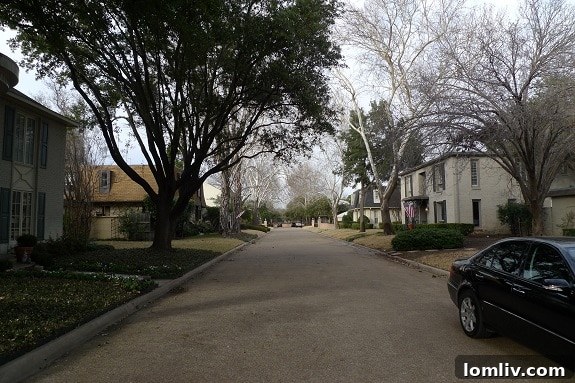
The phenomenon of resisting density in favor of maintaining a suburban aesthetic is not an isolated incident in Dallas. Take, for instance, a unique property featuring 60-year-old townhomes, strategically wedged between two of the country’s most demographically affluent communities. These townhomes, dating back to the post-World War II era, are now functionally obsolescent, struggling with aging infrastructure and design limitations. Similarly, nearby garden apartments, some converted into condominiums, face such severe maintenance issues that buyers often struggle to secure financing because homeowner associations lack sufficient funds for necessary repairs. The situation has become so dire that one unit remains on the market for an extended period, while half of the existing residents threaten legal action due to unresolved structural and financial woes. Despite the clear need for redevelopment to address these issues and modernize the housing stock, local neighbors vehemently oppose plans for replacement apartments, citing concerns that the new structures would be “too tall, too dense, and bring too much traffic” to their ‘hood. This resistance persists despite the undeniable fact that two high-rise buildings already stand just a few miles to the east, illustrating a seemingly arbitrary and often contradictory opposition to density.
Another prominent example of this pattern unfolds in Preston Center, a bustling commercial area. Here, a developer proposed to demolish an aging commercial building and replace it with a state-of-the-art luxury apartment complex. The proposed development promised ample parking, extensive amenities designed to cater to a discerning clientele, and high-end units tailored for baby boomers seeking urban convenience without sacrificing luxury – perhaps those with ranches and second homes outside the city. However, these plans were met with staunch opposition. Neighbors voiced familiar complaints: the luxury units would “choke the area with more traffic,” and, perhaps more surprisingly, “children of the divorced families living in these units will flood the Highland Park School District.” The perceived impact on school enrollment, stemming from a highly specific demographic assumption, became a significant talking point. Former Dallas Mayor Laura Miller famously chimed in, exaggerating the proposed building’s height by claiming it would be “higher than Reunion Tower,” effectively fanning the flames of opposition with dramatic rhetoric. This incident perfectly encapsulates how perceived threats to neighborhood character, often fueled by fear of change rather than objective data, can halt much-needed urban redevelopment.
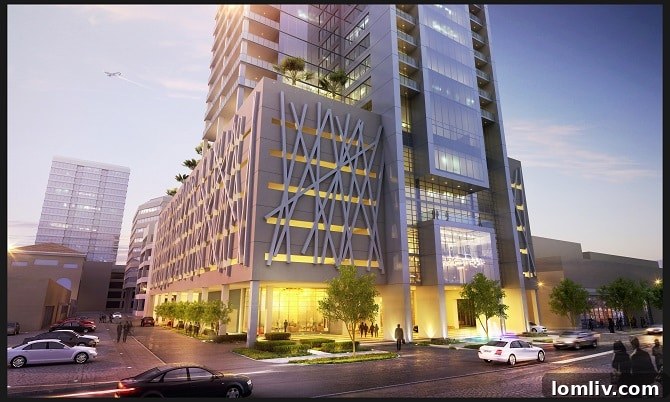
The list of development hurdles in Dallas continues with the contentious Saltillo Apartments project along the popular Katy Trail. The developers, Provident, found themselves embattled on multiple fronts, facing a concerted campaign of resistance. The town of Highland Park, an affluent enclave effectively nestled within the heart of Dallas, spearheaded opposition to the rezoning necessary for the new 250-unit apartment development. Their primary objection centered on the assertion that a larger complex would negatively impact Abbott Park, a tiny neighborhood green space. The cries of “TOO TALL! IT WILL BLOCK THE SUN!” echoed through community meetings, reflecting a deep-seated resistance to any structure that might alter the existing light and shadow patterns, regardless of the broader benefits of increased housing supply. Simultaneously, the influential Friends of the Katy Trail also opposed the development, arguing that it was “too tall, too dense,” and that the proposed 90-foot building was “too close to the Katy for comfort.” This dual opposition, from both a municipality and a powerful advocacy group, highlights the formidable challenges developers face when attempting to introduce density in established, well-resourced communities. The resistance escalated to a legal battle, with Highland Park even suing to try and stop the project, even after it had received approval from the Dallas City Council. This aggressive legal action underscores the extent to which some communities will go to prevent development they perceive as undesirable, regardless of its potential to address regional housing needs.
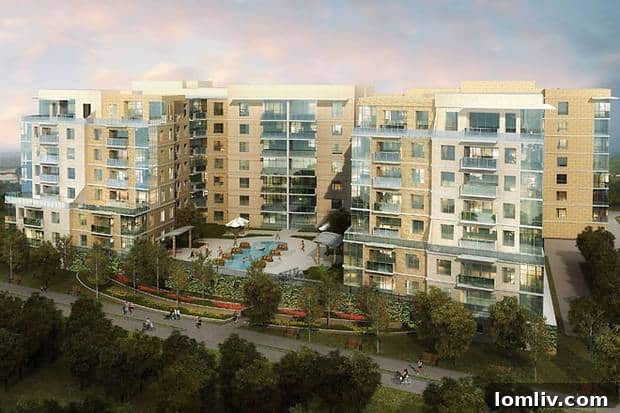
So, what does this accumulation of anecdotes signify for Dallas? Are we, despite our comparatively lower housing price inflation, mirroring Los Angeles’s challenges? While Dallas’s home prices haven’t surged by an astronomical 141% (a fortunate circumstance for many residents, for now), the city undeniably shares the same “Not In My Backyard” (NIMBY) mentality that is stifling urban development and pushing developers towards more accommodating, often far-flung, suburbs. This resistance to density, particularly within the inner loop, has profound consequences. It funnels housing options primarily to those of significant means, making truly affordable and diverse housing increasingly scarce in centrally located, amenity-rich areas. The outward push of development leads to greater suburban sprawl, longer commutes, increased traffic congestion, and a higher carbon footprint – paradoxically, the very issues NIMBY critics often claim to be fighting against. Cheaper housing, a critical component of a thriving and equitable city, remains elusive for a growing segment of the population.
Indeed, the parallels are stark, and the proposed solution remains consistent. As UCLA economist William Yu suggests for Los Angeles, if Dallas residents genuinely desire more affordable housing options, they must collectively embrace the concept of living a little closer to their neighbors. “To keep Los Angeles’ economy prosperous and to embrace more young talent in this great city, we suggest that ‘Suburb Syndrome’ in Angelenos’ minds needs to be cured,” Yu passionately argued. “And the medicine is that all of us need to understand some new realities, as Dorothy in ‘The Wizard of Oz’ said: ‘Toto, I’ve a feeling we’re not in Kansas anymore.'” This sentiment resonates deeply with Dallas’s current trajectory, emphasizing the urgent need for a paradigm shift in how urban growth and housing development are perceived and implemented.
While Dallas may not yet experience the “uber home price inflation” seen in LA, we certainly contend with a critical lack of housing inventory, an ever-expanding urban footprint that spreads “all over tarnation,” and a deep-seated affection for our freeways and fancy cars. Denser cities, contrary to popular belief, are often more economically vibrant and environmentally friendly. They can also be less congested, provided there’s a robust and efficient public transportation system, as exemplified by cities like San Francisco and New York City. Unfortunately, both Los Angeles and Dallas lag significantly in this crucial aspect, relying heavily on individual vehicle transportation. This car-centric dependency not only exacerbates traffic problems but also reinforces the resistance to dense, walkable communities. Could it be that Dallas’s historically “economically friendly real estate” – meaning lower prices compared to coastal hubs – has inadvertently fostered complacency, preventing us from adopting the necessary strategies for denser, more sustainable housing? The warning is clear: if Dallas continues to allow NIMBYism and a suburban mentality to dictate its urban planning, we may very well find ourselves succumbing to the same housing crises and affordability challenges that now plague Los Angeles. Embracing density, investing in public transit, and reforming outdated zoning laws are not just options; they are imperatives for Dallas’s sustainable and equitable future.