When navigating the vibrant Calgary real estate market, it’s easy to get swept up in the numbers. Buyers and sellers meticulously analyze prices, mortgage rates, market trends, and investment returns. While these financial components are undoubtedly critical, they represent only one facet of a property transaction. Real estate is fundamentally about ownership, and decisions made today have profound, lasting effects on your family, your assets, and your legacy. Every purchase or sale interacts directly with your personal legal framework, influencing inheritance, tax liabilities, and the long-term control of your wealth.
For homeowners, families, and savvy investors in Calgary, integrating estate planning into your real estate strategy is not a luxury—it’s a necessity. It provides the foresight to manage what happens before, during, and long after the keys change hands. A thoughtfully prepared estate plan ensures that your property decisions align with your life goals, safeguarding your assets for future generations and preventing unforeseen complications.
Thinking ahead can transform a simple transaction into a strategic move that strengthens your entire financial and legal foundation. Here are five compelling reasons why estate planning should be a top priority before you make your next real estate move in Calgary, Alberta.
1. Aligning Real Estate Transactions with Your Comprehensive Legal Plan
A house, condominium, or commercial building is not an isolated asset; it is a significant component of your total estate. As soon as you acquire a property, it becomes interwoven with your will, financial accounts, and other possessions. Therefore, any decision to buy or sell must be viewed through the lens of your overall estate plan to ensure cohesion and prevent future conflicts. Consulting with an estate planning professional before signing on the dotted line is crucial to guarantee that your real estate transaction supports, rather than undermines, your long-term objectives under Alberta law.
Consider the ripple effect of a single property deal. It can directly impact your will, requiring updates to specify who inherits the new asset or how the proceeds from a sale are to be distributed. It also affects your Enduring Power of Attorney, as the person you appoint will need clear authority to manage or sell this property if you become incapacitated. Similarly, your personal directive, tax strategies, and beneficiary designations may all need adjustments. If these legal instruments are not synchronized, a seemingly straightforward transaction can create a legacy of confusion, disputes, and costly legal battles for your loved ones.
For instance, buying a vacation property, selling a cherished family home, or transferring a title to a child might appear simple. However, each action carries significant legal weight. These moves can unintentionally alter inheritance distributions, create new tax obligations, or raise questions about your true intentions. A comprehensive estate plan ensures every piece fits together, providing a clear and legally sound roadmap for your family to follow.
2. Avoiding Costly Probate Delays That Can Derail a Sale
The probate process can be a significant roadblock in the administration of an estate, and its timing can be particularly damaging during a real estate transaction. In Alberta, probate is the court procedure that validates a will and officially grants the personal representative (or executor) the authority to act on behalf of the estate. If a property owner passes away while a sale is pending, the entire transaction is typically frozen. The sale cannot legally proceed until the court issues a grant of probate, a process that can take months.
This delay can be disastrous. An eager buyer may not be willing or able to wait, leading them to back out of the deal. Lenders can withdraw their financing approval if circumstances change, and market conditions can shift, reducing the property’s value. Even a simple refinance becomes impossible without the court’s authorization. The momentum is lost, and the estate can suffer significant financial losses. Proper estate planning is the best defense against this scenario.
By regularly updating your will, you ensure it reflects your current assets and wishes. Naming a primary and at least one backup executor prevents delays if your first choice is unable or unwilling to act. Crucially, you must ensure your chosen executor knows where to find all essential documents, including the property title, mortgage information, and your will. Proactive planning minimizes the risk of your time-sensitive real estate deal becoming entangled in legal limbo, ensuring a smoother transition for both your estate and the other party involved in the transaction.
3. Understanding How a Sale Can Shift Your Estate’s Balance
Selling a property does much more than convert a physical asset into liquid cash; it fundamentally alters the composition and value of your estate, which can have significant consequences for your beneficiaries. Many estate plans are carefully crafted to ensure a fair and balanced distribution of assets. For example, a will might leave a specific property to one child, with other assets of equivalent value designated for another to maintain equality.
Once that property is sold, the original plan is rendered obsolete. The cash proceeds now form part of the general estate, and without an updated will, they may be divided in a way that contradicts your original intentions, potentially creating unintentional inequality and family tension. This issue is common when selling a longtime family home or a revenue property. Furthermore, the sale can introduce major tax implications. In Canada, the sale of a principal residence is typically exempt from capital gains tax. However, selling a rental unit, a commercial building, or a vacation property will likely trigger a taxable capital gain, which can reduce the net value passed on to your heirs.
Engaging in estate planning before a sale allows you to thoughtfully revise your intentions. It provides an opportunity to decide how the proceeds should be managed. Should they be gifted to family members now? Reinvested in another asset? Placed in a trust for a minor or a spendthrift heir? Or simply divided among beneficiaries in your updated will? Answering these questions beforehand prevents confusion and ensures your estate is distributed precisely as you wish.
4. Recognizing How Ownership Structure Dictates Future Outcomes
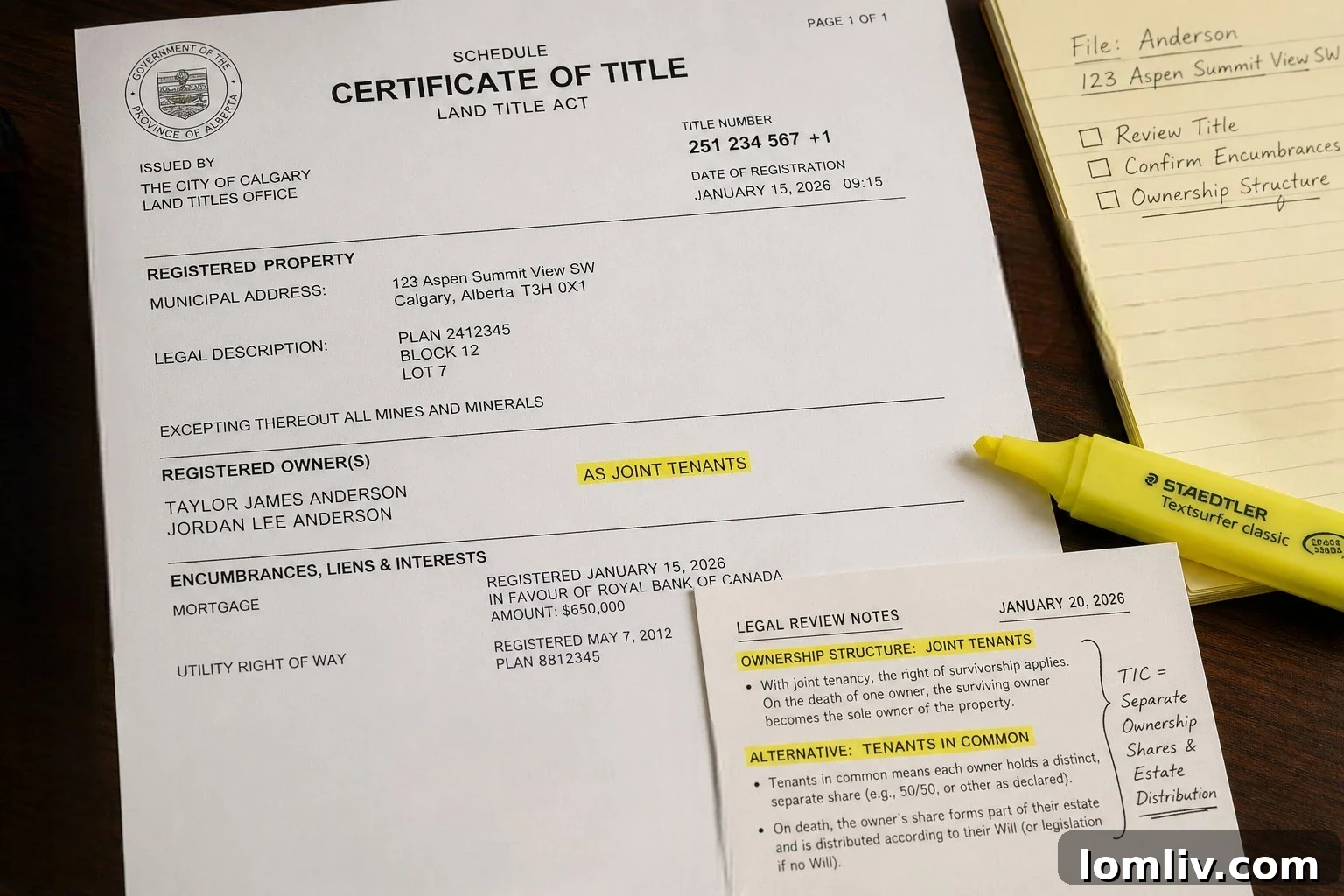
During the excitement of a property purchase, most buyers are focused on securing financing and closing the deal. A critical detail that is often overlooked is how the property title should be held. The way you structure ownership—whether in your name alone, with others as joint tenants, as tenants-in-common, or through a trust—has profound implications for inheritance, tax planning, and protection from creditors.
In Alberta, the two primary forms of co-ownership are joint tenancy and tenants-in-common, and they function very differently. Property owned as joint tenants includes a “right of survivorship.” This means that when one owner dies, their share automatically and immediately transfers to the surviving joint tenant(s), bypassing the will and the probate process entirely. This is a common structure for spouses.
Conversely, property owned as tenants-in-common does not include a right of survivorship. Each owner holds a distinct, divisible share of the property. When an owner dies, their share does not go to the other owners; instead, it becomes part of their estate and is distributed according to the terms of their will. This structure is often used for business partners or family members who want their individual stake to pass to their own heirs. Choosing the right structure is essential for achieving your goals. Estate planning helps you analyze your personal and financial situation to make an informed decision before the title is registered, avoiding complex and expensive legal work to correct it later.
5. Using Estate Planning as a Tool to Prevent Family Disputes
Real estate is rarely just about bricks and mortar; it is often intertwined with deep emotional and sentimental value. A family home can be a vessel of cherished memories, representing a lifetime of shared experiences. A vacation property may be the site of annual family gatherings. Because of this emotional attachment, property can become a major source of conflict among beneficiaries when a loved one passes away, especially if instructions are ambiguous or nonexistent.
Without a clear plan, disagreements can escalate quickly. One heir might want to keep the family home for sentimental reasons, while another may desperately need the cash from its sale to fund their own life goals. A third may feel entitled to a larger share because they lived in the home and contributed to its upkeep. These competing interests can lead to bitter, personal disputes that can permanently damage family relationships.
Estate planning is the most effective tool for preventing such conflicts. By creating a clear, legally binding written plan, you remove the guesswork. Your will or trust can provide specific instructions: should the property be sold immediately, with proceeds divided equally? Should one child be given the first right to buy out the others? Should it be placed in a trust to be used by all beneficiaries for a certain period? This clarity minimizes the potential for arguments and ensures decisions are based on your documented wishes, not on emotion or personal interests. It is a final gift of peace to your family.
The Bottom Line: A Strategic Approach to Calgary Real Estate
A real estate transaction in Calgary is more than a financial event; it is a pivotal moment that can reshape your legacy. It has direct consequences for your family’s future, the control of your assets, and your legal obligations. This is why estate planning cannot be an afterthought—it must be an integral part of your property strategy from the very beginning. By planning ahead, you approach every transaction with clarity, confidence, and control, minimizing risks and maximizing benefits for you and your heirs.
A special consideration for married homeowners in Alberta is the concept of dower rights. Under Alberta’s Dower Act, if a marital home is registered in the name of only one spouse, the non-owner spouse still retains an interest in the property. This means the titled spouse cannot sell, mortgage, or lease the property for more than three years without the written consent of the non-owner spouse. A transaction that appears straightforward can be halted or invalidated if the proper dower consent is not obtained. Integrating real estate and estate planning ensures that married couples address title structuring and dower rights proactively, preventing unexpected legal hurdles during a sale, refinance, or the eventual administration of an estate.