

The current state of the U.S. housing market has ignited a fervent debate among economists, real estate professionals, and homebuyers alike. Central to this discussion is the contentious term “bubble,” often used to describe rapidly appreciating asset values. When Dr. Jim Gaines, a distinguished research economist at the Texas Real Estate Research Center at Texas A&M University, was recently approached on the subject, it brought a sense of déjà vu. He had just concluded a similar discussion with fellow economists and a room full of Fort Worth real estate experts, underscoring the widespread concern and confusion surrounding market dynamics.
“In my opinion, the use of the term ‘bubble’ is fundamentally incorrect for describing today’s market conditions,” stated Dr. Gaines, directly addressing a recent report from the Federal Reserve Bank of Dallas. He elaborated, “Typically, a true price bubble is characterized by rampant price increases that defy logical economic fundamentals and are unsustainable over the long term. These increases often lack a solid foundation in supply and demand or economic growth.”
Dr. Gaines drew a clear distinction by recalling the catastrophic events that led to the 2008 housing market collapse, which subsequently triggered the Great Recession. In that period, the market was fueled by what he colloquially termed “funny money.” This referred to an era of lax lending standards where individuals were granted mortgages and home equity loans far exceeding their actual ability to repay, often without adequate documentation or credit checks. The sheer volume of these precarious loans created an illusion of widespread affordability and demand, artificially inflating home values across the nation.
“The surge in home prices during that pre-2008 era was entirely artificial, detached from genuine economic factors or sustainable income growth,” Dr. Gaines emphasized. The subsequent burst of this speculative bubble led to a wave of foreclosures, a credit crisis, and a profound economic downturn that left an indelible mark on the global economy for years.
In stark contrast, today’s vibrant market is driven by an entirely different set of forces. A colossal surge in demand, fueled by demographic shifts, low interest rates (until recently), and a post-pandemic re-evaluation of living spaces, is relentlessly colliding with an anemic supply of available homes. This imbalance is further exacerbated by an influx of cash-rich out-of-state buyers and large institutional investors who are acquiring properties at scale, often bypassing traditional financing and outbidding local homebuyers. This intense competition, coupled with limited inventory, inevitably pushes prices higher. The seeds of our current inventory crisis were actually sown after the 2008 crash; many homebuilders never fully recovered or returned to pre-recession construction levels, and the onset of the COVID-19 pandemic only served to compound these underlying structural issues, leading to widespread material and labor shortages.
“The last time the market experienced an oversupply situation akin to what led to the 2008 collapse was indeed that very period,” Dr. Gaines added, highlighting the fundamental difference between the two market conditions.
Given this context, it was particularly noteworthy to observe a recent Federal Reserve Bank of Dallas report that liberally employed the term “bubble” no less than eight times to characterize the prevailing market conditions. The report defined this state by stating, “An asset—in this case, housing—is identified as being in the primary expansionary phase of a bubble when its price increases are significantly out of step with established market fundamentals.” This divergence, according to the Dallas Fed, represents what they term “exuberance.” The question then arises: are current housing prices truly that detached from underlying economic realities, or is this a mischaracterization of a market responding to intense, verifiable demand and supply constraints?
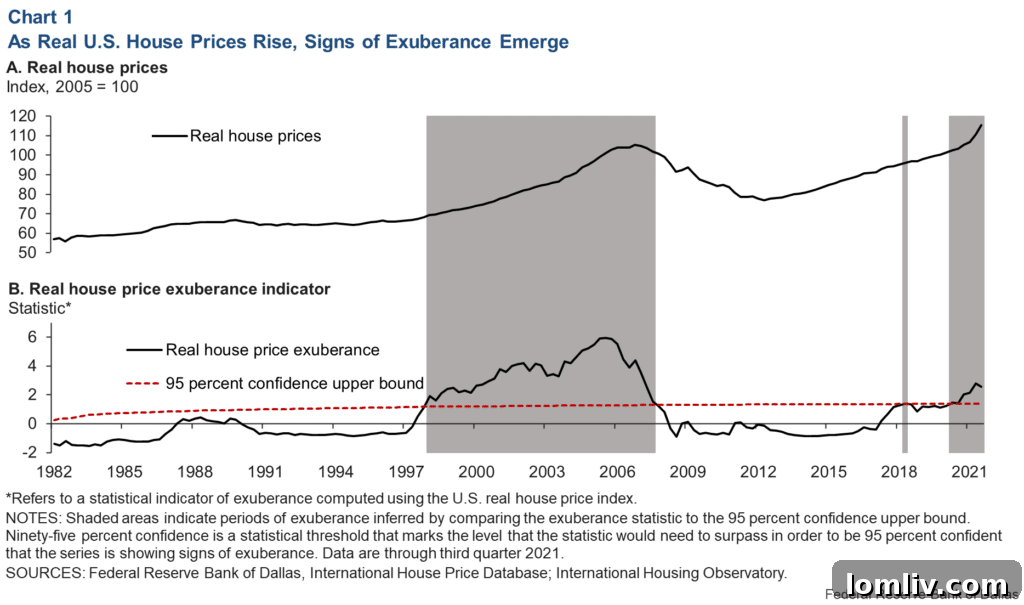
The term “bubble” is undoubtedly loaded with historical baggage and carries significant psychological weight. Its frequent use by a respected institution like the Federal Reserve Bank of Dallas naturally garnered substantial media attention and rapid dissemination across various news outlets. However, for many real estate professionals who are actively navigating this challenging market, the term “bubble” can feel sensationalized and somewhat clickbait-y. It certainly grabs headlines and secures eyeballs, but it may oversimplify a complex situation, causing unnecessary alarm among potential buyers and sellers who remember the devastating impact of the 2008 crash. The nuanced reality often gets lost in the dramatic headlines, making it difficult for the public to discern genuine market shifts from speculative anxieties.
Addressing the Genuine Crisis in Our Housing Market: Affordability and Scarcity
While the debate over the term “bubble” continues, it is crucial not to overlook the very real and significant challenges facing our housing market today, particularly concerning affordability and access. Joanna Utley (no relation to Dr. Gaines), a highly experienced team leader with the Land and Luxury Group at Compass Dallas, has witnessed the market’s evolution firsthand. “Since 2018, I’ve consistently heard predictions that the housing bubble was on the verge of bursting,” Utley recounted. “However, nothing truly felt fundamentally unhealthy or unsustainable until January 2022. That’s when we suddenly saw houses receiving 50 or more offers, properties routinely selling for $100,000 or even more over their comparable neighborhood sales, and virtually all inventory priced under $300,000 vanish from the market entirely.”
Her experience is not isolated. Across many desirable regions, particularly in high-growth areas like Dallas-Fort Worth, the competition for housing has reached unprecedented levels. This intensity is directly attributable to the paltry number of active listings available, which places immense strain on an already overheated market. The persistent presence of cash-flush out-of-state buyers and opportunistic investors, often seeking quick returns, further exacerbates this imbalance, driving up prices and reducing opportunities for traditional homebuyers. Yet, as Dr. Gaines succinctly points out, this situation is a classic case of basic economics: overwhelming demand coupled with severely constrained supply. Therefore, instead of focusing on potentially misleading “bubble” rhetoric, it would be more insightful to track metrics that accurately reflect whether current home price increases are justifiable and sustainable given these prevailing market conditions and the underlying economic health of a region.
A crucial metric for an objective assessment is the Home Price Index, diligently compiled by the Texas Real Estate Research Center at Texas A&M University. For the Dallas-Fort Worth-Arlington Metropolitan Statistical Area (MSA), this index provides a robust, apples-to-apples comparison of the true change in the price of homes available for sale. In the fourth quarter of 2021, the DFW-Arlington MSA experienced an astonishing 23.55 percent year-over-year increase in its Home Price Index. This figure stands in stark contrast to the previous year, when the index reported a comparatively modest 7.4 percent increase. To put these figures into a historical perspective and underscore the dramatic shift, the index registered a negative 2.02 percent change in the fourth quarter of 2008, precisely when the previous housing bubble had burst and prices were plummeting. This comparison highlights that while current appreciation is rapid, its underlying drivers are fundamentally different from the speculative boom that preceded the 2008 downturn.
Understanding the Multifaceted Factors Influencing Today’s Housing Market
The Dallas Fed report, despite its controversial use of the “bubble” term, did effectively underscore a critical point: economic conditions, particularly within the housing market, are rarely influenced by a single isolated factor. Instead, they are the result of a complex interplay of numerous market forces, as Dr. Gaines frequently emphasizes. Understanding these interconnected elements is crucial for a comprehensive market analysis.
“One of the most significant and lasting outcomes of the Great Recession was the enactment of the Dodd-Frank Wall Street Reform and Consumer Protection Act,” Dr. Gaines explained. This landmark legislation fundamentally reshaped the landscape of mortgage lending. “The criteria for obtaining a loan became significantly more stringent. Today, the vast majority of individuals borrowing money for a home are subjected to rigorous financial scrutiny, requiring them to conclusively demonstrate their capacity to repay their debts.” This critical change distinguishes the present market from the pre-2008 era, where a substantial portion of borrowers received loans they could not realistically afford, contributing directly to the widespread defaults that triggered the crisis. The current lending environment, characterized by stricter underwriting, provides a more robust foundation for current homeownership, even amidst rising prices.
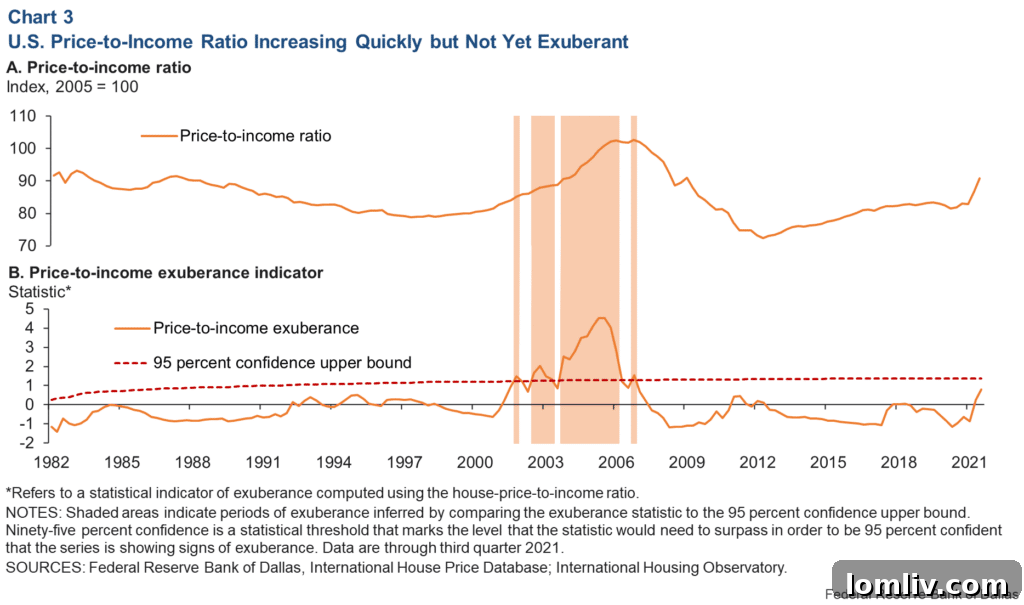
However, no market is immune to external shocks. A widespread and sustained period of significant job loss—mirroring the initial economic disruption observed at the onset of the pandemic—could introduce considerable complications for the broader economy and, consequently, for the stability of the housing market. Such a scenario could indeed precipitate a downturn. Dr. Gaines conceded that this specific condition, particularly if it led to a mass default among marginal borrowers, could potentially ignite a different kind of market challenge. Nevertheless, the current robust job market, characterized by low unemployment and consistent wage growth in many sectors, acts as a crucial buffer against such an outcome, supporting homeowners’ ability to meet their mortgage obligations.
Another undeniably pivotal factor, directly influencing purchasing power and market activity, is the trajectory of interest rates, which are meticulously managed by the Federal Reserve. Confronted with surging inflation, the Fed recently initiated its first interest rate hike in over three years, signaling that a series of further increases are likely forthcoming. As the federal funds rate rises, lenders typically adjust their mortgage rates upwards in response. Consequently, the era of historically low, near-rock-bottom interest rates that significantly boosted affordability and borrower access over the past few years may now be drawing to a close, fundamentally altering the calculus for prospective homebuyers.
The impact of these rising rates on affordability is already being acutely felt. Joanna Utley voiced concerns, stating, “For homes priced under $300,000, the monthly mortgage payments are rapidly becoming unaffordable for many with these rate hikes.” She pondered the challenging implications for a large segment of the population, adding, “I genuinely don’t know how individuals relying on a single family income will be able to locate affordable housing within a manageable 45-minute commute to the Dallas city center.” This underscores a growing crisis in housing accessibility, particularly for essential workers and first-time buyers.
Despite these valid concerns, Dr. Gaines offers a somewhat different perspective on the ultimate impact of rising interest rates. “While rates are increasing, I don’t anticipate them climbing sufficiently high to significantly dampen demand across the board,” he prognosticated. He acknowledged, however, that the Federal Reserve has a historical reputation for sometimes overreacting to economic indicators, which could introduce an element of unpredictability into future rate adjustments. Nonetheless, his assessment suggests that underlying demand remains robust enough to withstand moderate rate increases without triggering a market collapse.
So, considering all these factors, is the housing market truly in a “bubble” akin to 2008? Dr. Gaines’ definitive answer remains no. However, this does not imply a completely flat or stagnant market ahead. Instead, he anticipates some level of a market correction. This correction is unlikely to manifest as a sudden, dramatic crash, but rather as a deceleration in the rate of price appreciation, a potential increase in housing inventory, and a return to more balanced negotiating dynamics between buyers and sellers. It would signify a shift away from the intense bidding wars and waived contingencies that have defined the market for the past few years.
“What we are experiencing is not a bubble on the scale of what we witnessed in 2008,” Dr. Gaines reiterated, drawing a clear distinction between the speculative excesses of the past and the demand-driven dynamics of the present. “I firmly believe that for the remainder of this year, the market will continue to demonstrate considerable strength, albeit with adjustments.” This outlook suggests a resilient market that, while undergoing necessary recalibrations, is fundamentally sound, supported by strong employment, demographic trends, and a persistent supply deficit, particularly in high-growth regions like Dallas-Fort Worth.